Georgia Helmet Fine Amount
One of the most common worries for folks who love to hit Georgia’s trails or use their side-by-sides for work is staying on the right side of the law, especially when it comes to safety gear. No one wants to face a hefty penalty, and a lot of riders, particularly parents, often wonder what the exact financial cost might be if a helmet isn't worn as required. This guide is here to shed light on the specific fine amount in Georgia for helmet violations when operating an ATV or UTV, helping you understand the rules and avoid those unwelcome surprises.
Understanding Georgia's ATV Helmet Law for Riders Under 18
Navigating the rules for ATVs and UTVs in Georgia can sometimes feel like trying to find your way through a dense forest trail—a little confusing, with unexpected turns. One of the clearest and most strictly enforced rules concerns helmet use, specifically for our younger riders. It’s not just a suggestion; it’s the law, and it carries real weight.
Why the Law Focuses on Younger Riders
The state of Georgia, like many others, has a deep concern for the safety of its youngest citizens. When it comes to operating off-road vehicles, children and teenagers are inherently more vulnerable. They might lack the experience, reaction time, or judgment that an adult rider possesses. A moment of inattention, an unexpected obstacle, or even a sudden turn can lead to a serious accident, and head injuries are tragically common in such incidents. That's why the law takes a protective stance, aiming to reduce the severity of injuries should an accident occur. The focus on riders under 18 isn't about stifling fun; it's about safeguarding lives and preventing devastating, life-altering injuries that can result from unprotected head impacts. It’s a pragmatic approach to minimize risks for a demographic that might not fully grasp the dangers involved.
What the Law Mandates: Who Needs to Wear a Helmet
Georgia’s law is pretty straightforward: Any person under 18 years of age who operates or is a passenger on an all-terrain vehicle or multipurpose off-highway vehicle (MPOHV) must wear a protective helmet. This isn't limited to public roads or designated trails; the law applies broadly, covering riding on private land as well. So, whether your teenager is riding a quad in the back forty of your property, on a hunting club lease, or at a designated [Georgia ATV Trails: Where You Can Legally Ride] park, if they’re under 18, a helmet is legally required.
The type of helmet matters, too. It needs to be a protective helmet designed for motorsports use, typically meaning it meets safety standards like those set by the Department of Transportation (DOT) or the Snell Memorial Foundation. These aren’t just any old bicycle helmets; they’re specifically constructed to withstand the types of impacts common in ATV and UTV accidents. This rule applies equally to operators and passengers, meaning if your 15-year-old is driving and their 12-year-old sibling is a passenger in a side-by-side, both must have helmets securely fastened. It's a simple, non-negotiable step to ensure their safety while enjoying the thrill of off-road riding.
The Direct Cost: Georgia's $500 Helmet Violation Penalty
Let's cut right to the chase because this is often what people are most anxious about. When a law enforcement officer observes a rider under 18 operating or riding as a passenger on an ATV or MPOHV without a helmet, the consequences are immediate and financial. It’s not just a friendly reminder; it's a citation that carries a significant monetary penalty.
The Specific Fine Amount and Its Impact
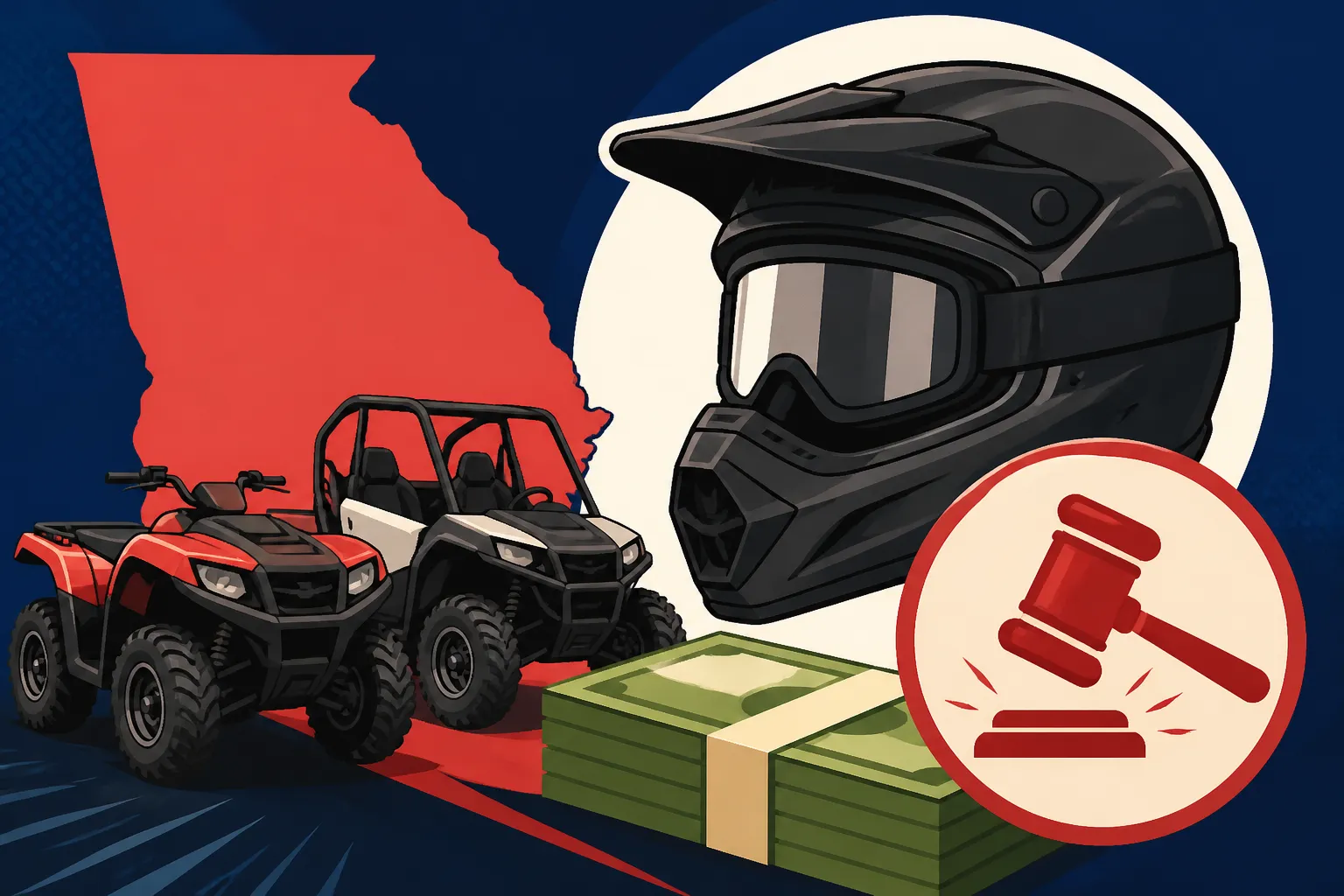
In Georgia, the specific fine for a helmet violation involving a rider under 18 is a flat $500. This is clearly spelled out in the law, making it one of the more substantial penalties for an off-road vehicle infraction. This isn't a variable fee that depends on the officer's discretion or the specific circumstances of the ride; it's a fixed amount designed to act as a serious deterrent. Imagine the shock of a $500 ticket just for a helmet oversight! For many families, that’s a significant hit to the budget, potentially disrupting plans for months.
It’s crucial to understand that this $500 is often just the base fine. When you factor in court costs, administrative fees, and any other surcharges that might be added by the specific county or municipal court, the total amount could easily climb even higher. What might seem like a minor infraction—especially to a teenager who feels invincible—can quickly become a major financial burden for the family responsible. This isn't just a slap on the wrist; it's a clear signal from the state that they take the safety of young riders very seriously. The goal is to make the cost of non-compliance high enough that it encourages universal adherence to the helmet law.
Beyond the Fine: Other Potential Consequences
While the $500 fine is the most direct and immediate consequence of a helmet violation, it's not always the only one. Depending on the specifics of the situation and the discretion of the issuing officer or court, other repercussions could arise. For instance, the violation often requires a mandatory court appearance, which means taking time off work or school, navigating the court system, and facing a judge. For a minor, this typically means their parent or legal guardian will also need to attend, adding another layer of inconvenience and stress.
Although a helmet violation itself might not directly impact your vehicle insurance rates in the same way an accident would, repeated offenses or combined citations (e.g., if the minor was also trespassing or riding in a prohibited area) could raise red flags. In more severe or repeat instances, especially if there are other violations, law enforcement might have the authority to impound the machine. While this isn't a standard outcome for just a helmet violation, it's a possibility if the overall situation is deemed particularly reckless or non-compliant with broader [Georgia ATV Road Law Explained] or [Georgia ATV Rules on Private Property]. The primary goal, however, remains enforcing the [Georgia's $500 Helmet Violation Penalty] to ensure maximum safety. It’s always best to err on the side of caution and ensure everyone, especially those under 18, is wearing appropriate head protection.
| Riding Scenario (Rider Under 18) | Helmet Required? | Common Exemptions? |
|---|---|---|
| Riding recreationally on private land | Yes | No |
| Riding on a public road where permitted | Yes | No |
| Operating for bona fide agricultural work | No | Yes ([Georgia Farm and Logging Helmet Exemption]) |
| Operating for commercial logging/mining | No | Yes ([Georgia Commercial Use Helmet Exemption]) |
| Passenger on any ATV/UTV | Yes | No |
Exemptions to the Helmet Rule: When It Doesn't Apply
While the helmet law for riders under 18 is quite broad, there are specific, narrowly defined exemptions that are important for riders and landowners to understand. These aren't loopholes to get around safety but rather acknowledgments of how these machines are used in certain working environments.
Agricultural and Commercial Use Exemptions
Georgia law recognizes that ATVs and UTVs are not solely recreational vehicles; they are often essential tools for work, particularly in agricultural and certain industrial settings. Because of this, the helmet requirement for riders under 18 does not apply if the vehicle is being operated for bona fide agricultural purposes or for the purpose of mining or logging.
Let's break that down a bit. For agricultural use, think about a teenager helping their parent on the family farm. This could involve hauling feed to livestock, checking fences, transporting tools for field maintenance, or moving irrigation equipment. In these scenarios, the machine is being used as a piece of farm machinery, and the context of its operation is typically within a controlled, private, or familiar environment. Similarly, the [Georgia Commercial Use Helmet Exemption] extends to activities like logging or mining, where the off-road vehicle is integral to the commercial operation. For instance, a young person assisting with timber management on a logging site or helping transport gear in a quarry would fall under this exemption. The intent here is to allow the use of these vehicles as necessary work implements without imposing a blanket helmet rule that might not be practical or relevant in specific, supervised working conditions.
The Importance of Understanding the Specifics
It's absolutely vital to understand that these exemptions are not a blanket pass to skip helmets. They are narrowly tailored to specific working conditions. If a law enforcement officer encounters a minor riding without a helmet, and they are simply joyriding on a farm road, even if it's private property, the agricultural exemption likely would not apply. The key phrase is "bona fide agricultural purposes" or "purpose of mining or logging." This means there must be a genuine work-related activity taking place that directly involves the use of the ATV or MPOHV as a tool.
Riders and parents should never assume an activity automatically falls under an exemption. If there's any doubt, it's always safer to wear the helmet. It's advisable to carry documentation if possible (e.g., proof of farm ownership, a hunting club lease agreement, or a statement from an employer) if you anticipate needing to demonstrate that an activity falls under an exemption. Law enforcement officers are trained to discern between genuine work use and recreational riding that might be attempting to masquerade as work. For all other scenarios, especially recreational riding on trails or [Georgia WMA Rules for ATV Riders], the helmet rule for under-18s stands firm. Companies like SuperATV understand these needs and offer utility-focused accessories for UTVs, making them more effective for farm work, but this doesn't change the safety gear requirements for riders.
Why Helmets Matter: Safety and Prevention
Beyond the legal fines and potential court costs, the most compelling reason to wear a helmet, or ensure a minor does, is plain and simple: safety. ATVs and UTVs, while incredibly fun and useful, are powerful machines that can be unforgiving in an accident.
The Risks of Riding Without Head Protection
Off-road riding, by its very nature, involves uneven terrain, sudden changes in direction, and the potential for unexpected obstacles. Rollovers are a common type of ATV and UTV accident, where the machine can overturn, throwing riders or pinning them underneath. Collisions with trees, other vehicles, or even stationary objects can also occur rapidly. In these scenarios, the rider's head is highly exposed.
Without a helmet, the risk of sustaining a serious head injury skyrockets. Even a seemingly minor tumble can lead to a concussion, while more severe impacts can result in skull fractures, traumatic brain injuries, or worse. These injuries can have long-lasting, even permanent, effects on cognitive function, motor skills, and overall quality of life. The brain is incredibly fragile, and a helmet acts as its primary shield, absorbing and distributing impact forces that would otherwise directly damage the skull and brain. It’s a small piece of equipment that makes an enormous difference in preventing catastrophic outcomes. When an [Georgia Accident Reporting for a UTV Crash] occurs, the first thing medical personnel will assess is the extent of any head trauma.
Choosing the Right Helmet and Gear
When it comes to helmets, not all are created equal. For ATV and UTV riding, you want a helmet specifically designed for motorsports or off-road use. Look for certifications like DOT (Department of Transportation) or Snell, which indicate the helmet has met rigorous safety standards for impact protection. A proper fit is paramount: the helmet should be snug but comfortable, not allowing for excessive movement. It shouldn't obstruct vision, and the chin strap should be securely fastened.
While helmets are legally mandated for minors, it's a wise practice for adult riders to wear them too. In addition to a quality helmet, consider other protective gear. Eye protection, such as goggles or a full face shield, is essential to guard against dust, debris, and insects. Sturdy riding boots, gloves, and long sleeves and pants can protect against abrasions, cuts, and minor impacts. Investing in good quality gear is an investment in your safety and enjoyment of the sport. Brands like SuperATV offer a wide range of accessories and safety gear, from helmets to full windshields and protection bars, designed to enhance both the safety and utility of your ride. Prioritizing safety through proper gear isn’t just about avoiding a fine; it’s about ensuring you and your loved ones can continue to enjoy the trails for years to come.
Disclaimer
This article is for general informational purposes only and does not constitute professional advice. Laws, prices and regulations vary by location and change over time. Consult a qualified professional for guidance on your specific situation.