Riding a Quad to a Georgia Deer Stand
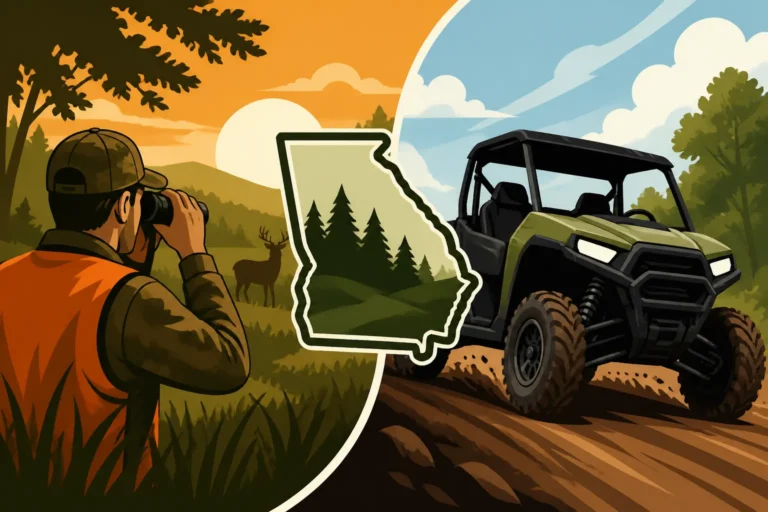
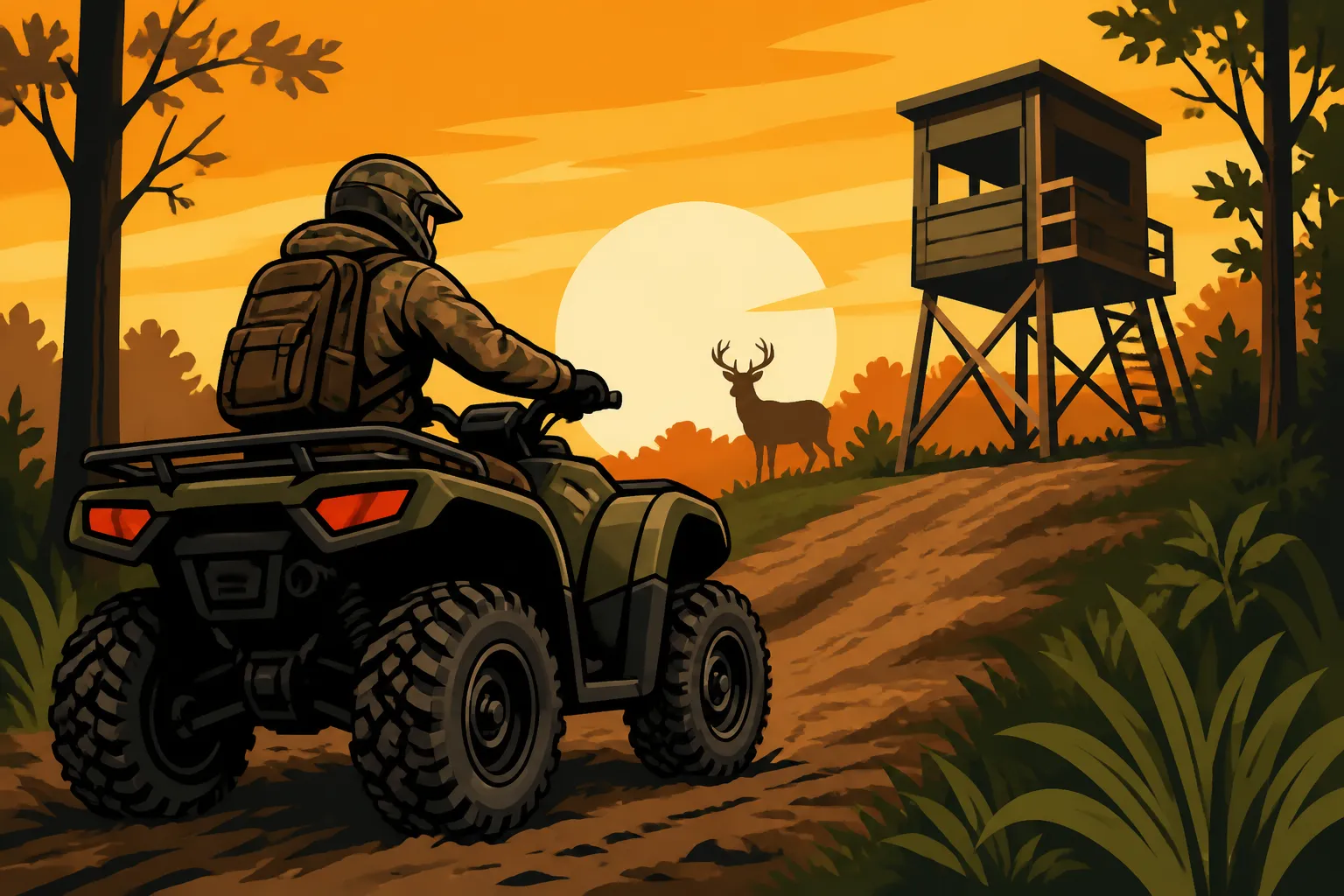
For many Georgia hunters, the dream scenario involves loading up the side-by-side or quad with gear, a cooler, and maybe even a hunting buddy, then driving it directly to a deer stand deep in the woods. It sounds convenient, practical, and a fantastic way to access those hard-to-reach spots, but the reality of Georgia's laws and land access rules can quickly turn that dream into a frustrating tangle of regulations. This guide is here to untangle those rules, helping you understand exactly where, when, and how you can use your ATV or UTV to get to your deer stand legally and responsibly in Georgia.
The Freedom of Private Land: Your Best Bet for Stand Access
If you're fortunate enough to hunt on your own land or have explicit permission to ride on private property, this is by far the simplest and most unrestricted way to use your ATV or UTV for deer stand access in Georgia. On private land, the state's stringent rules for public roads and wildlife management areas generally don't apply, giving you a lot more freedom to operate your machine as needed.
Navigating Your Own Land and Leased Property
When you own the land, you essentially make the rules regarding ATV and UTV use, within the bounds of general safety and nuisance laws. You can build trails, clear paths, and drive directly to your stands without worrying about permits, specific operating hours, or width restrictions. This is where your side-by-side really shines, allowing you to haul corn, move blinds, or even retrieve a deer without breaking a sweat. If you're using a UTV like a Polaris Ranger or a Can-Am Defender, the ample cargo space and towing capacity make quick work of these tasks, getting you to your stand with all your necessary gear.
For those who lease land for hunting, the situation is very similar, but with one crucial caveat: your rights are governed by the terms of your lease agreement. Always ensure that your lease explicitly allows for ATV or UTV use. Most hunting leases do, recognizing the practical benefits these machines offer for land management and game retrieval. However, some landowners might have specific stipulations, such as limiting use to certain trails, restricting riding during wet conditions to prevent soil erosion, or even specifying types of machines allowed. It's always best to have a clear understanding with the landowner to avoid any misunderstandings. You'll want to review your lease agreement closely to know your boundaries and avoid any trespass issues. [Georgia Trespass Law for ATV Riders] is something you'll want to understand.
Respecting Boundaries on Adjacent Lands
Even on private land, you must be hyper-aware of your property lines. It's surprisingly easy to accidentally cross onto a neighbor's property, especially in dense woods with unclear boundaries. This can lead to serious legal issues, even if unintentional. Always know your property lines, mark them clearly, and instruct anyone else riding with you to do the same. If you need to access your stand by crossing a neighbor's property, even a small corner, you absolutely must obtain explicit, written permission beforehand. Verbal agreements can be easily forgotten or disputed. Having a signed agreement that outlines where and when you can cross is vital. This holds true whether you're riding through [Georgia Rules for Riding a Pasture] or cutting across a neighbor's [Georgia Rules for Riding a Timber Road].
On private land, the biggest considerations for your ATV or UTV are usually practical ones: ensuring your machine is well-maintained, carrying a basic toolkit, and equipping it for the specific demands of hunting. This might mean adding a winch for tough spots, upgrading to more aggressive tires for muddy trails, or enhancing your cargo capacity. Many hunters outfit their machines with specialized racks for carrying bows or firearms, and even a small cooler can make a long day in the woods more comfortable. Just make sure any modifications, like those offered by companies such as SuperATV, are installed correctly and safely.
Wildlife Management Areas (WMAs): Strict Rules for Hunters
Hunting on Georgia's Wildlife Management Areas (WMAs) offers incredible opportunities, but it comes with a much stricter set of rules for ATV and UTV use. Unlike private land, WMAs are public properties managed by the Georgia Department of Natural Resources (DNR), and their regulations are designed to protect wildlife, habitat, and other users. This means you can't just drive anywhere you please. Trying to take your UTV off designated WMA roads or trails can result in significant fines and the loss of hunting privileges.
Designated Roads and Two-Hour Windows
The primary rule for ATVs and UTVs on Georgia WMAs is that they are generally restricted to designated WMA roads only. This is a critical distinction. You cannot create your own trails, cut across fields, or drive through pristine woods to reach your stand, no matter how close it seems. These designated roads are typically marked and maintained by the DNR. It's crucial to obtain a WMA map and study it carefully before you head out to understand exactly which roads are open to vehicular traffic. Many hunters discover that what they thought was a "road" might actually be a fire break or an unmarked path, which is off-limits.
Furthermore, even on designated roads, there are strict time limits. Most Georgia WMAs permit ATV and UTV use only within a specific "two-hour window" around sunrise and sunset. This means you can ride your machine to your stand up to two hours before official sunrise and retrieve it up to two hours after official sunset on designated hunt days. This restriction is in place to minimize disturbance to wildlife during peak activity periods and to ensure other hunters and users have a peaceful experience. Outside of these windows, your machine must be parked and you must be out of the woods on foot. [Georgia WMA Riding Before Sunrise] and [Georgia WMA Riding After Sunset] are important rules to commit to memory.
Hunting Days and Specific WMA Rules
Another key factor is that ATV and UTV use on WMAs is typically only permitted on designated hunt days and often only for specific game seasons. You can't just go joyriding on a WMA on an off-season weekend. The rules are tied directly to active hunting seasons, such as [Georgia WMA Deer Season Access] or [Georgia WMA Hog Hunt Access by Quad]. Each WMA can have slightly different regulations, so it is absolutely essential to check the specific WMA regulations for the area you plan to hunt before you go. These regulations are usually published annually by the Georgia DNR and are available online or at local DNR offices. A quick call to the local ranger district office for that specific WMA can save you a lot of grief.
The age restriction for operators on WMAs is also important: generally, you must be at least 16 years old to operate an ATV or UTV on a Georgia WMA road. [Georgia WMA Age Rule for Operators] is a non-negotiable point that deputies will enforce. While some private parks might have different age rules with adult supervision, WMAs stick to this minimum age. Also, always assume that if a WMA road is closed by a gate, it's off-limits to your machine, regardless of the time or season. Do not bypass gates or create new paths. For a deeper dive into these regulations, check out [Georgia WMA Rules for ATV Riders]. When it comes to hauling hunting gear, accessories from SuperATV like heavy-duty cargo boxes or gun boots can be invaluable, just ensure they don't exceed the machine's capacity or obstruct visibility on narrow WMA roads.
Here's a quick reference table for WMA access:
| Feature | Private Land (with permission) | Georgia WMA |
|---|---|---|
| Road Access | Generally unrestricted, depends on landowner | Designated WMA roads ONLY |
| Operating Hours | At landowner's discretion | Two hours before sunrise / after sunset (hunt days) |
| Seasonality | At landowner's discretion | Only on designated hunt days for specific seasons |
| Age Limit | Varies by landowner/supervision | 16 years old minimum |
| Trail Creation | Permitted with landowner approval | Strictly prohibited, stick to marked roads |
| Permits | None required (beyond hunting license) | Hunting license, WMA stamp, possible specific WMA permit |
| Penalties | Trespassing, civil issues | Fines, loss of hunting privileges, machine impoundment |
Public Road Access: A Minefield of Misconceptions
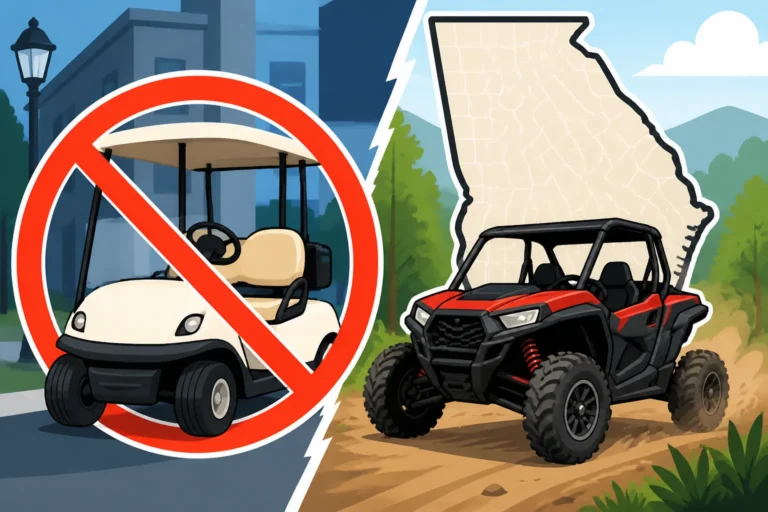
This is often the trickiest area for ATV and UTV owners in Georgia, and it's where many misconceptions lead to expensive tickets. The short answer is: most ATVs and UTVs are not street legal in Georgia for general road use. While there are some very specific exceptions, relying on them for routine deer stand access via public roads is fraught with risk.
County Roads and the MPOHV Law
Georgia law did establish a new category in December 2023 for "Multipurpose Off-Highway Vehicles" (MPOHVs), which can be registered and operated on specific county roads. However, this is not a blanket authorization for all ATVs and UTVs, and it comes with a strict list of requirements. To be considered an MPOHV and eligible for registration, a machine must meet a very precise set of criteria, including things like width limits, weight limits, payload capacity, a non-straddle seat, a steering wheel (not handlebars), minimum and maximum speed capabilities, seat belts, headlights, taillights, and mirrors. [Georgia MPOHV Eligibility: The Eight-Point Test] covers these in detail.
Even if your side-by-side (most ATVs won't qualify due to the handlebar and straddle seat rules) meets all these physical requirements and you successfully get it registered with a special MPOHV plate, you are still restricted to county roads only. This means no state highways, no city streets (unless a specific local ordinance allows it, which is rare for MPOHVs), and absolutely no interstates. Furthermore, you must adhere to all rules of the road, including having a valid driver's license, liability insurance, and obeying traffic laws. If you plan to register a UTV, you'll need to know [How to Register a UTV in Georgia] and all the associated requirements.
The Problem of Crossing Roads and State Highways
One common scenario for hunters is that their private land or WMA access might require crossing a state highway or a municipal road to get from one section of woods to another, or even just to reach the main entrance. Here's where it gets really complicated and risky. Even a registered MPOHV is not permitted on state highways. The law specifically defines where MPOHVs can operate, and state routes are excluded. While some local ordinances might exist for golf carts in specific communities like Peachtree City, these do not apply to MPOHVs or general ATVs.
For standard ATVs or UTVs that are not registered MPOHVs (which will be most of them), crossing any public road, even a county road, is generally illegal. The only exception typically recognized is for legitimate agricultural purposes, such as a farmer moving equipment directly across a road from one field to another adjacent field, but this is a very narrow exemption and does not apply to recreational hunting. Attempting to cross state routes or even secondary county roads not designated for MPOHV use can lead to hefty fines, impoundment of your machine, and even criminal charges. The deputy checking your papers on the side of the road will be very familiar with [Georgia Penalties for an Unregistered Road Machine].
Many hunters underestimate the enforcement of these laws, especially in rural areas. While you might occasionally see someone quickly dart across a road, it's illegal and carries significant risks. It's simply not worth the gamble when there are legal alternatives. If your deer stand access requires crossing any type of public road, the safest and only legal approach is to trailer your ATV or UTV across that section. For context, you might want to review [Georgia MPOHV Road Rules: County Roads Only] to understand the very limited scope of legal road use. Even for those with an MPOHV plate, it's worth remembering that [Georgia's ATV Road Access Law Sunsets in July 2027].
Essential Gear, Safety, and Responsible Hunting Practices
Beyond the legalities of getting to your deer stand, equipping your ATV or UTV properly and practicing responsible riding habits are crucial for a successful and safe hunting season in Georgia.
Equipping Your Machine for the Hunt
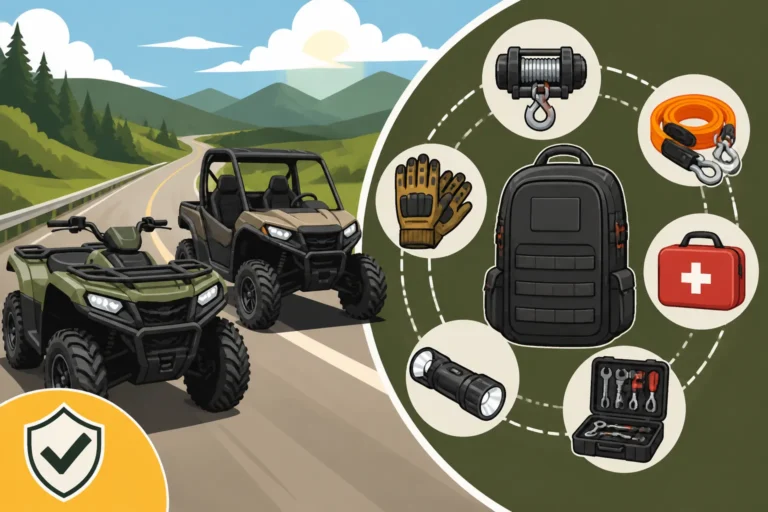
When you're out in the woods, whether on private land or a WMA, your machine needs to be ready for anything. Think about terrain, weather, and the specific demands of hunting. Here's a checklist of essential gear:
- Tires: Mud or all-terrain tires are often better than standard utility tires for navigating Georgia's varied terrain, especially the infamous red clay. Upgrading to a more aggressive tread can significantly improve traction.
- Winch: A winch is invaluable. Getting stuck in mud or high-centered on a log can ruin a hunt quickly. A reliable winch, perhaps from a brand like SuperATV, can get you unstuck and is also handy for dragging downed game.
- Lighting: Beyond factory headlights, consider adding auxiliary LED light bars. These are crucial for the pre-dawn and post-dusk hours when visibility is low, especially on unlit trails or WMA roads during that two-hour window.
- Storage: Secure cargo boxes, gun scabbards, or bow racks are essential for safely transporting your hunting equipment. You don't want your rifle bouncing around in the bed of your UTV. These also protect your gear from the elements.
- GPS/Maps: Even if you think you know the area, a reliable GPS or mapping app on your phone (with downloaded offline maps) is critical, especially on WMAs. Batteries die, and familiar landmarks can look different in the dark.
- Recovery Gear: A tow strap, shovel, and small first-aid kit are absolute must-haves. You never know when you or a hunting partner might need assistance.
Safety First: Helmets, Passengers, and Firearms
Safety should always be paramount. While Georgia has specific helmet laws for riders under 18 ([Georgia ATV Helmet Law for Riders Under 18]), wearing a helmet is a smart choice for all riders, regardless of age, especially in rugged terrain. A rollover or unexpected branch can cause serious injury.
When carrying passengers, ensure your machine is designed for it and that all passengers are using seatbelts if available. Overloading your machine or allowing too many riders can compromise stability and handling, leading to dangerous situations. Always carry any firearms unloaded and properly secured in a case or scabbard when transporting them on your ATV or UTV. [Georgia Rules for Carrying a Rifle on a Quad] outlines how to do this safely and legally.
Minimizing Impact and Being a Good Steward
Responsible riding means leaving no trace. Stick to established trails and roads to prevent erosion and habitat damage. Avoid riding in extremely wet conditions, as this can deeply rut trails and make them impassable for others. Pack out everything you pack in, and perhaps even a little extra trash you find.
Noise can also be a factor, particularly during hunting season. While most modern ATVs and UTVs are relatively quiet, avoid unnecessary revving or loud exhaust modifications that can disturb wildlife and other hunters. Being respectful of others using the land, whether it's another hunter, a hiker, or a landowner, ensures that these areas remain accessible for all. By following these guidelines, you can effectively and legally use your ATV or UTV to make your deer stand access much more efficient and enjoyable.
Disclaimer
This article is for general informational purposes only and does not constitute professional advice. Laws, prices and regulations vary by location and change over time. Consult a qualified professional for guidance on your specific situation.