Hunting Club Leases and Machine Use
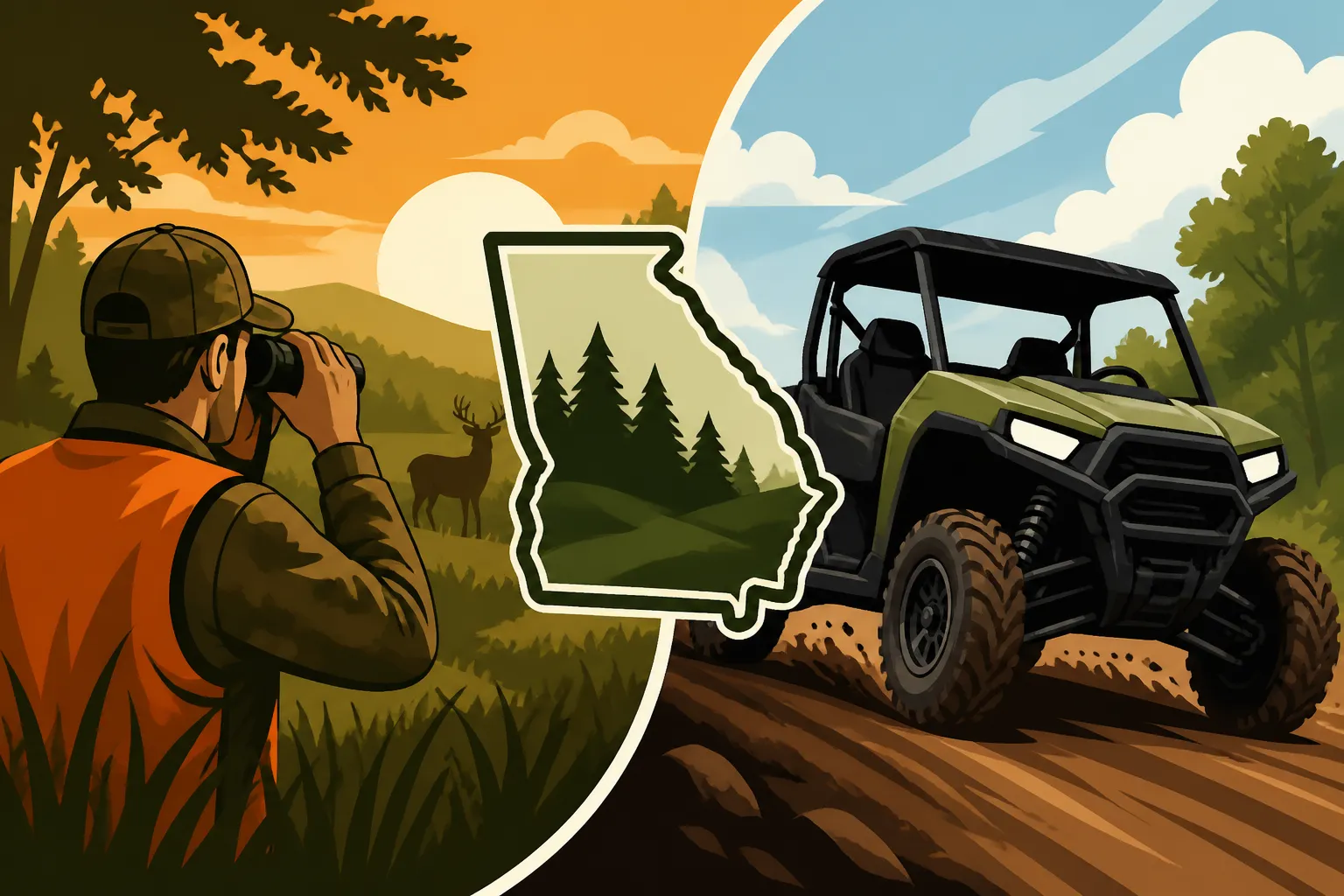
Navigating the rules for using your ATV or UTV on a hunting club lease in Georgia can feel like trying to find your way through thick brush in the dark. Many passionate hunters and outdoor enthusiasts invest in these machines to make their time in the woods more productive and enjoyable, only to be hit with a wave of questions: What's allowed? What's not? Can I drive my side-by-side on this particular road? This guide aims to clear up that confusion, offering practical insights into how Georgia law intersects with your hunting club's lease agreement when it comes to machine use.
Understanding Your Lease Agreement and Georgia Law
When you join a hunting club and gain access to their leased land, you're not just buying into a shared passion for the outdoors; you're also entering into a contractual agreement. The specific rules governing how you use your ATV or UTV on that land are often laid out in that lease, and understanding it is your first and most critical step.
What Your Hunting Lease Should Specify
Think of your hunting club lease agreement as the rulebook for your time on that particular property. While Georgia has general laws regarding private land use, the lease itself will almost always supersede or expand upon those generalities for the specific property in question. A well-written lease should clearly outline what types of vehicles are permitted – whether it's limited to ATVs and UTVs, or if even cars and trucks are allowed on certain paths. It might specify times of use, for instance, prohibiting machines during certain quiet periods or after dark, unless for game recovery.
The agreement should also detail where you can operate these machines. Are you restricted to existing roads and trails, or is cross-country travel permitted for specific purposes like stand placement or game retrieval? Some leases are very strict, allowing machines only on designated "main" roads, while others are more flexible, understanding that the rugged nature of hunting often requires getting off the beaten path. Look for clauses about environmental impact, such as avoiding excessive rutting, especially in wet conditions. If you're wondering about riding on particular parts of the property, such as "[Georgia Rules for Riding a Timber Road]" or "[Georgia Rules for Riding a Pasture]," your lease is the first place to look for answers specific to your club. Always, always read the fine print and ask for clarification from the club's leadership if anything is unclear. This proactive approach can save you a lot of headache later.
Georgia's General Rules for Private Land
Beyond your lease, it's important to remember that general Georgia law still applies, even on private land. While you won't be dealing with the complex "[Georgia MPOHV Registration Explained]" requirements or "[Georgia ATV Road Law Explained]" unless you venture onto public roads, certain behaviors are universally prohibited. For example, operating any motor vehicle, including an ATV or UTV, while under the influence of alcohol or drugs is illegal everywhere in Georgia, regardless of whether you're on your own land, leased land, or a public street. This is a significant point and one that often surprises new riders who assume "private land" means "no rules."
The landowner or leaseholder generally has the right to dictate what happens on their property. So, while you might not need a "[Georgia OHV Permits: What You Need Before You Ride]" for private land, if the landowner or club rules say you need a certain type of safety gear, then that's the rule you follow. In essence, private land means more freedom than public trails, but that freedom is tempered first by the lease agreement, then by general state laws, particularly those concerning safety and impairment. Knowing "[Georgia ATV Rules on Private Property]" is crucial, as it sets the baseline for what's expected even before club rules are considered. Keep in mind that straying onto neighboring properties, even accidentally, can lead to serious legal trouble under "[Georgia Trespass Law for ATV Riders]."
Common Machine Uses and Associated Rules on Leased Land
ATVs and UTVs are incredibly versatile tools for hunters, making tasks that were once back-breaking much easier and more efficient. From hauling gear to retrieving game, these machines are often indispensable to a modern hunting operation.
Transporting Gear, Game, and Club Members
One of the primary reasons hunters rely on ATVs and UTVs is for transportation. Imagine trying to lug a heavy treestand, multiple bags of feed, or a bulky blind deep into the woods without the help of a machine. These vehicles allow you to haul substantial loads of equipment, supplies, and even harvested game out of remote areas. Most club leases anticipate this use, allowing vehicles for practical purposes. However, specific rules might still apply. For example, your lease might specify that machines should be parked at a certain distance from active hunting areas to minimize disturbance, or that they should only be used during non-hunting hours for setting up.
Safety is paramount, especially when transporting passengers or heavy loads. Always ensure that any passengers are riding in designated seats, wearing appropriate safety gear (especially if the lease requires it, or for younger riders, as "[Georgia Under-18 Helmet Rule on Private Land]" might come into play depending on the scenario). Overloading a machine can severely impact its stability and braking, leading to dangerous situations. If you're transporting firearms, understand your club's specific guidelines, which might go beyond general state laws on "[Georgia Rules for Carrying a Rifle on a Quad]". Similarly, when it comes to "[Georgia Rules for Towing With a Side-by-Side]," know your machine's towing capacity and ensure any trailer is properly secured and loaded.
Road and Trail Access Within the Lease
Hunting leases often encompass a network of existing roads and trails. These can range from well-maintained gravel roads to barely visible two-tracks or old "[Georgia Rules for Riding a Timber Road]". Many leases grant members access to these paths for machine use, enabling quicker travel to stands, food plots, or observation points. However, the condition of these paths can vary wildly, and that's where your machine's capabilities – and your responsibility – come into play. Aftermarket parts from companies like SuperATV can be incredibly useful here, offering things like heavy-duty axles, reinforced A-arms, or full skid plate kits that protect your machine from rocks, stumps, and rough terrain encountered on less-maintained trails. These upgrades can mean the difference between getting stuck or breaking down and a smooth, productive trip.
Some leases might allow for limited "trail-blazing" for specific purposes, such as creating a new access path to a newly identified stand location or a feeder. This permission usually comes with strict caveats about minimizing environmental impact and getting prior approval. Excessive rutting, especially in wet conditions, can quickly damage sensitive ecosystems and lead to erosion. Club leadership will often expect members to stay on existing paths or to be highly judicious when creating new ones. Even on leased land, common sense and a respect for the property are vital. Whether you're traversing a former "[Georgia Rules for Riding a Chicken House Road]" or exploring a "[Georgia Rules for Riding a Pipeline Right of Way]", understanding the limits of your machine and the permissions of your lease is key to harmonious use.
Safety, Responsibility, and Respecting the Land
Using ATVs and UTVs on leased hunting land comes with a significant responsibility to operate safely, respect the property, and be a good steward of the environment. These machines can be powerful tools, but they demand cautious and considerate use.
Operator Responsibility and DUI Laws
It's a common misconception that private land is a free-for-all when it comes to alcohol and vehicle operation. This is simply not true. Georgia's DUI (Driving Under the Influence) laws apply to any person operating any motor vehicle, including ATVs and UTVs, anywhere within the state – even on private property. This means that if you're celebrating a successful hunt or unwinding at the camp and then decide to take your side-by-side for a spin down a private trail, you could be charged with DUI if your blood alcohol content is above the legal limit.
The consequences of a DUI conviction are severe, ranging from hefty fines and license suspension to jail time, not to mention the potential for serious injury or even death if you crash. Operating an ATV or UTV requires focus and quick reflexes, especially in rugged terrain. Alcohol and drugs impair judgment, coordination, and reaction time, making even familiar trails dangerous. Prioritize sober operation, always. Your safety, the safety of others, and your legal standing depend on it. For a full understanding of the implications, it's wise to review "[Georgia DUI Law and Off-Road Machines]".
Minimizing Impact and Maintaining the Lease
Being a member of a hunting club on leased land means you share in the responsibility of maintaining the property for everyone's benefit, including future generations of hunters and wildlife. Your ATV or UTV can have a significant impact on the land, both positive and negative, depending on how it's used. To minimize negative impact, always strive to stay on designated trails and roads. Avoid creating new ruts or widening existing trails, especially during wet periods when the ground is soft and easily damaged. Repeated passes over the same muddy spots can quickly turn a small puddle into an impassable bog, leading to erosion and making the trail unusable.
Consider the time of year and weather conditions. After a heavy rain, some trails might be too soft to ride without causing significant damage. If you do get stuck, recover your machine responsibly. Having recovery gear like a winch (many SuperATV products include or are compatible with winches) or a tow strap is far better than tearing up the ground trying to power your way out. Active participation in maintaining trails, such as clearing fallen trees or filling in washouts, demonstrates good stewardship and often earns you the respect of fellow club members and the landowner. Respecting the land extends to wildlife too; avoid unnecessary disturbance, especially during sensitive times like nesting seasons or during the rut.
When Roads on Leased Land Intersect Public Roads
This is where things can get particularly tricky and where many hunters run into legal issues without even realizing it. The rules governing your machine on private, leased land are distinct from the rules that apply when you interact with public roads.
Crossing County Roads or State Routes
It's a common scenario: your hunting lease might be bisected by a county road, or you might need to cross a short stretch of a public road to get from one section of your lease to another. This is where you absolutely must understand Georgia's laws regarding off-highway vehicle (OHV) use on public roads. Generally speaking, ATVs and UTVs are not street legal in Georgia for general road use. However, there are specific, limited exceptions, particularly for machines that meet the definition of a Multipurpose Off-Highway Vehicle (MPOHV) and are registered as such. Even with registration, travel is typically restricted to county roads and only for specific purposes, often requiring crossing rather than extended travel.
A critical distinction is between "crossing" a road and "traveling" on it. Even if you're only going a short distance, you're on a public road, and the rules apply. You need to know if your machine qualifies for a plate under "[Georgia MPOHV Eligibility: The Eight-Point Test]" and if your county allows such crossings. Furthermore, simply crossing a "[Georgia County Road Systems and Where They Run]" is very different from attempting to cross a "[Georgia UTV Rules Crossing a State Route]," which has much stricter limitations, often only allowed at designated points and perpendicular to traffic flow. If your machine isn't registered as an MPOHV, even a brief crossing can lead to a citation.
Georgia's Registration for MPOVHs and What It Means for Leased Land
Georgia's MPOHV registration, which started in December 2023, is a voluntary program designed to allow certain UTVs (and only UTVs, as ATVs are excluded) to be legally operated on county roads in specific, limited circumstances. It does not make your UTV street legal for all public roads, like state highways or interstates. The registration process itself is rigorous, requiring your machine to meet specific criteria regarding width, weight, speed capabilities, and safety features like seatbelts, headlights, brake lights, and rearview mirrors.
If your UTV meets these requirements and you choose to register it as an MPOHV, it primarily benefits you when you need to travel on or cross county roads that are part of the public road system. This could be immensely useful if your hunting club's leased land requires you to navigate a short stretch of public road to access different parcels or to get to a local gas station for fuel. However, this registration has little to no bearing on how you operate your machine within your leased land, as those rules are dictated by your lease agreement and general private property laws. You still wouldn't need a registration just to drive around inside the lease boundaries. It's a layer of legal compliance for when your machine's tires touch public pavement. Remember, this is a voluntary process, as explored in "[Georgia MPOHV Registration Is Voluntary]," but it’s the only way to legally use a UTV on most county roads in Georgia. For instance, you might consider adding "[Headlights, Brake Lights and Mirrors on the Checklist]" from a brand like SuperATV if your machine doesn't have them and you intend to register it for limited road use.
| Feature | On Leased Hunting Land (Private) | On Public County Roads (Registered MPOHV) |
|---|---|---|
| Primary Rule Source | Hunting Club Lease Agreement & General GA Private Property Law | Georgia MPOHV Regulations & County Ordinances |
| Registration Req. | Not generally required for internal use | Mandatory for legal operation on public roads |
| Vehicle Type | ATVs, UTVs (as allowed by lease) | UTVs only (ATVs explicitly excluded) |
| Road Access | Restricted by lease; usually on internal trails/logging roads | Limited to county roads; crossings often permitted |
| Speed Limits | Not legally defined; common sense/safety dictates | Must adhere to posted public road speed limits |
| Insurance | Recommended (often required by lease) | Mandatory liability insurance for registered MPOVHs |
| Driver's License | Not generally required for internal use | Required for MPOHV operation on public roads |
| DUI Laws | Always Apply | Always Apply |
| Helmet Laws | Applies to riders under 18 (GA law), or as per lease | Applies to riders under 18 (GA law) |
Disclaimer
This article is for general informational purposes only and does not constitute professional advice. Laws, prices and regulations vary by location and change over time. Consult a qualified professional for guidance on your specific situation.