Georgia Neighborhood Cart Ordinances
It can be incredibly confusing to figure out where and how you can actually drive your golf cart or other low-speed vehicle in your own Georgia neighborhood. Many folks assume that since it's "just a golf cart," they can zip around anywhere in their community. But the truth is, Georgia's laws are a patchwork, and while the state sets some basic guidelines, it's often your local city or county that truly dictates the rules of the road—or path! This guide is here to untangle the complexities of Georgia's neighborhood cart ordinances, helping you understand what to look for and how to stay compliant.
The State and Local Divide: Understanding Georgia's Golf Cart Laws
Let's start by acknowledging a common frustration: trying to make sense of the laws surrounding golf carts and similar low-speed vehicles in Georgia. It's not as simple as a yes or no answer for the entire state, and that's precisely where the confusion begins for many residents. While Georgia does have overarching state laws that define and regulate certain types of vehicles, the real nitty-gritty of where your golf cart can legally operate often comes down to very specific local ordinances passed by your city or county.
At the state level, Georgia recognizes "Personal Transportation Vehicles," or PTVs. This designation is crucial because it differentiates golf carts and similar machines from off-road vehicles like ATVs, which generally have completely different rules and are not intended for public road use. A PTV, according to state law, is typically a motor vehicle with a minimum of three wheels, capable of at least 20 miles per hour but no more than 35 miles per hour, and designed for transporting no more than eight people. It's the state that sets these fundamental definitions, and it also establishes some baseline requirements for operating PTVs on public roads where allowed, such as requiring headlights, taillights, brake lights, and rearview mirrors. However, the state doesn't just open all roads to PTVs; it grants local jurisdictions the authority to specify which roads or paths can be used and under what conditions. This is where the local ordinances come into play, filling in the gaps and tailoring the rules to the unique needs and characteristics of individual communities. You can dive deeper into the state rules with our guide on [Georgia Golf Cart Laws and PTV Ordinances].
It's absolutely vital to understand that this distinction between state and local authority means that what's perfectly legal for a golf cart in one Georgia town might get you a hefty fine in another, even if they're just a few miles apart. This local autonomy allows communities to decide what makes sense for their specific infrastructure, traffic patterns, and public safety concerns. For example, a city with a vast network of dedicated golf cart paths, like Peachtree City, will naturally have a different set of rules and allowances than a small rural county with no such infrastructure. The state provides the framework, but the local government paints the picture of where and how these vehicles can be used in your neighborhood.
How Local Ordinances Take Over and Shape Your Ride
When it comes to golf carts in neighborhoods, local ordinances truly are the boss. They interpret the state's broad definitions and then layer on specific rules that directly affect residents. It’s not just about convenience; it's about safety, managing traffic flow, and maintaining the quality of life within a community. Local governments don't just create these rules on a whim; they usually do so in response to community needs, growth, and the increasing popularity of golf carts as a mode of local transportation.
These local rules can cover a surprisingly wide array of topics. For instance, many cities require their own form of local registration or permitting for golf carts if you intend to operate them on any public property, even just neighborhood streets. This often involves a small fee and a sticker that proves your compliance. These aren't the same as state MPOHV registrations, which apply to a different class of vehicle entirely; these are purely local administrative requirements. The funds generated might even go towards maintaining those very paths you're riding on. Learning more about this can be found in [Georgia Golf Cart Registration by City].
Age restrictions for drivers are another common feature of local ordinances. While the state has general rules for motor vehicles, a city might specify that even on designated cart paths, drivers must be a certain age, often mirroring the state's learner's permit or full driver's license age, or requiring adult supervision for younger operators. These local rules often exist because carts, while seemingly benign, can still cause serious accidents if operated irresponsibly or by inexperienced drivers. Furthermore, equipment requirements can go beyond state minimums. A local ordinance might mandate turn signals, a horn, seat belts, or even specific reflective signage to increase visibility. This is where you might find yourself looking at aftermarket accessories from companies like SuperATV to ensure your cart meets all the specific requirements set by your local municipality.
Perhaps the most significant aspect of local ordinances is how they designate where golf carts can be driven. Many communities, especially those that embrace cart culture, have created specific golf cart paths or have explicitly designated certain low-speed neighborhood streets for cart use. These paths are designed to keep carts separate from faster vehicular traffic, enhancing safety for everyone. Conversely, some ordinances might specifically prohibit carts from certain busy roads or mandate specific crossing points for state routes. A fantastic example of a city that has fully embraced this is Peachtree City, which has an extensive network of cart paths and detailed local rules. You can find more about their specific approach in [Peachtree City Golf Cart Rules in Georgia]. These local regulations ensure that the convenience of golf carts doesn't compromise public safety or create chaos on busy streets.
Key Elements to Look For in a Local Ordinance
If you own a golf cart or are thinking about getting one for neighborhood use in Georgia, the most important thing you can do is proactively understand your local ordinance. Just "assuming" can lead to fines, inconvenience, or worse. Here are the key elements you should always scrutinize in your local city or county's rules:
Driver Age and Licensing Requirements
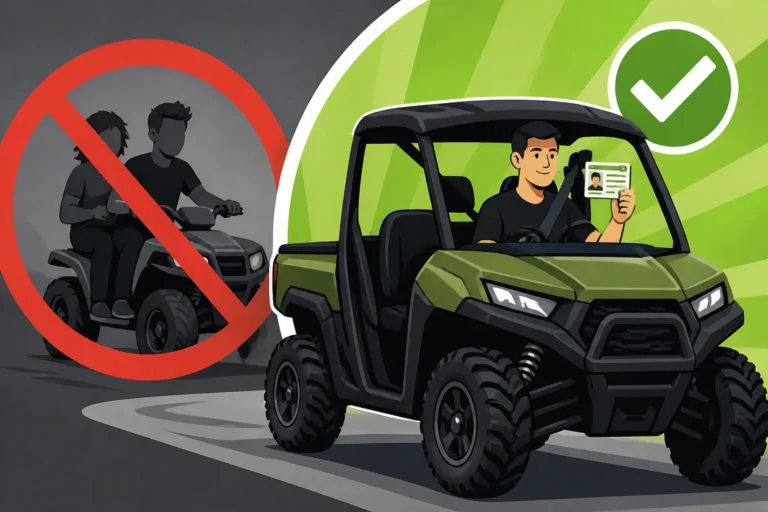
One of the first things to check is who can actually get behind the wheel. State law generally requires a valid driver's license for operating any motor vehicle on public roads. However, local ordinances can sometimes have nuances, especially concerning golf cart paths or for younger drivers under adult supervision. Some cities might allow a 12-year-old to drive with a licensed adult in the passenger seat, while others might stick strictly to requiring a Georgia driver's license for anyone operating a cart on public ways. It's a common area of confusion, so don't guess. Many ordinances specify that if you're driving on any public street, you need a valid driver's license, just as you would for a car. This is often tied to liability and ensuring drivers have a basic understanding of traffic laws. You can explore the broader context of age rules in [Georgia Golf Cart Age Rules].
Equipment Requirements Beyond State Law
While state law outlines basic equipment for PTVs, local ordinances can (and often do) add more specific demands. This is critical because failing to meet these can make your cart illegal for neighborhood use. Think beyond just headlights and brake lights. Does your city require turn signals? What about a horn? A windshield? Seat belts for all passengers? Sometimes, these requirements might necessitate aftermarket additions to your cart. For instance, if your local ordinance specifies amber turn signals or a specific type of rearview mirror, you might need to look to companies like SuperATV for a street-legal kit or individual components to bring your cart up to snuff. These mandates are usually driven by a desire to enhance safety and make golf carts more visible and predictable to other drivers and pedestrians. Remember, being seen and being able to signal your intentions are paramount on any shared roadway. Also, consider the rules for [Georgia Rules for Riding After Dark], as specific lighting beyond just headlights might be required by local law.
Designated Paths and Streets
This is often the most impactful part of any local golf cart ordinance. Few places allow golf carts on all public roads. Instead, ordinances usually designate specific low-speed streets or create entirely separate golf cart path networks. It's crucial to know exactly which roads are permissible, which are off-limits, and how you're allowed to cross higher-speed main roads or state routes. Some towns have clearly marked paths and tunnels, while others might simply permit cart use on residential streets with speed limits of 25 MPH or less. Crossing a main thoroughfare might only be allowed at specific intersections with appropriate signage. Misunderstanding these designations can lead to citations, especially if you accidentally venture onto a road where carts are prohibited. Familiarize yourself with the system; don't just assume your GPS knows where your cart can go!
Local Registration, Permitting, and Fees
Don't be surprised if your city or county requires its own specific registration or permit for golf carts. This is distinct from any potential state MPOHV registration that might apply to UTVs, for example. These local permits typically involve an application, proof of ownership, and a fee, after which you might receive a sticker or plate to display on your cart. These fees often go towards the upkeep of paths or local law enforcement efforts related to cart use. Renewals are usually annual or biennial. It's an administrative step that many new cart owners overlook, assuming that because their machine doesn't have a state title, it doesn't need any local paperwork either. Always check with your local city clerk's office or police department to understand their specific process and costs.
Insurance Requirements
While Georgia state law requires liability insurance for registered vehicles, local ordinances might also specify that golf carts operated on public ways carry a minimum amount of liability insurance. Even if it's not explicitly mandated by your local ordinance, carrying liability insurance for your golf cart is a tremendously good idea. Accidents happen, and if your cart causes damage to property or injury to another person, you want to be protected. The cost of golf cart insurance is generally quite reasonable, especially compared to the potential financial devastation of an uninsured accident. This is another area where you don't want to take chances, and it's always worth checking if your homeowner's policy offers any coverage for personal use, or if a separate policy is needed. While golf cart insurance might differ, the concept of liability is similar to [Georgia UTV Insurance Minimums].
Signage Requirements
Some local ordinances, particularly where golf carts share lower-speed public roads with cars, might require specific signage on your cart. The most common example is a slow-moving vehicle (SMV) triangle sign, but some cities might mandate other specific placards or reflective tape to increase visibility. A well-known example is [Georgia's 24 by 30 Inch Cart Signage Rule], which applies to personal transportation vehicles (PTVs) in certain contexts. This is a common-sense safety measure designed to alert other drivers that your cart is not capable of high speeds and requires extra caution. Always check if your local ordinance specifies any such requirements.
Navigating Specific Local Examples
When it comes to neighborhood cart ordinances in Georgia, the devil is truly in the details of your specific municipality. While Peachtree City is often held up as the gold standard with its expansive network of cart paths and well-established rules, it's far from the only community with specific regulations. Many other cities, particularly those with master-planned communities or a strong desire to promote alternative transportation, have developed their own unique approaches.
Consider communities like Senoia, known for its quaint downtown and popular film locations, or Fayetteville, which has also seen a rise in golf cart popularity. While they might not have the sheer mileage of dedicated paths that Peachtree City boasts, these cities often have ordinances designating specific residential streets as golf cart-friendly zones or outlining procedures for crossing main thoroughfares. You might find similar ordinances in neighborhoods within larger cities that have common areas or a desire to reduce car traffic for short trips. The core message here is: never assume that the rules you know for one city apply to another.
The only way to truly know the rules for your specific area is to consult the source. This means going directly to your city or county government's website, looking for their municipal code or ordinances section, or even calling the city clerk's office or the local police department. They are the ultimate authority and can provide you with the most up-to-date information. Look for sections related to "Personal Transportation Vehicles," "Golf Carts," or "Low-Speed Vehicles." Sometimes, these rules are part of a broader traffic or public safety ordinance. For instance, some cities, particularly those with a history of allowing golf carts, may have [Georgia Cities That Skipped the License Rule Before 2012] for certain PTV operations. Conversely, you might also find specific areas where [Georgia Cities That Ban Golf Carts Outright], making it even more important to verify before you ride. It’s also important to remember that these ordinances are living documents; they can be updated or changed, so it’s wise to periodically review them, especially if you hear of local discussions about golf cart use.
Here's a quick look at how various aspects of local ordinances can differ:
| Feature | Common Example (e.g., Suburban Town) | Alternative Example (e.g., Master-Planned Community) |
|---|---|---|
| Driver Age Requirement | Valid Georgia Driver's License (16+) required for any public road use. | Ages 15+ with a Learner's Permit and licensed driver; 12-14 with adult in front seat. |
| Local Registration Fee | Annual permit, $25-50. Sticker displayed on rear. | One-time permit, $150, valid for ownership. Plate displayed. |
| Required Equipment | Headlights, taillights, brake lights, horn, rearview mirror, seat belts. | All of the above, plus turn signals, windshield, and SMV sign. |
| Designated Paths/Streets | Permitted on roads 25 MPH or less within specific residential areas. | Extensive dedicated cart path network; crossing main roads only at marked intersections. |
| Hours of Operation | Sunrise to sunset only. | 24 hours on paths; restricted on roads after dark. |
| Non-Resident Use | Generally, not permitted on public roads unless registered in that city. | Day passes or visitor permits available for path access. |
Always confirm the specific rules with your local government entity. What works for a visitor in a community like [Peachtree City Non-Resident Cart Cost in Georgia] is likely very different from what's expected for a resident just a few miles away.
Disclaimer
This article is for general informational purposes only and does not constitute professional advice. Laws, prices and regulations vary by location and change over time. Consult a qualified professional for guidance on your specific situation.