Georgia Driver’s License Rules for MPOHV Operators
Navigating the world of off-road vehicles in Georgia can feel like trying to solve a riddle wrapped in an enigma, especially when you start thinking about taking your machine onto a public road. One of the biggest head-scratchers for many enthusiasts is whether you even need a driver's license to operate an MPOHV (Multi-purpose Off-Highway Vehicle) on those designated county roads. This comprehensive guide is here to untangle the confusion, lay out the specific driver's license requirements, and help you understand exactly what you need to know before you hit a paved surface.
Understanding What an MPOHV Is in Georgia
Before we dive into driver's license specifics, let's clear up what Georgia considers an MPOHV for road access purposes. It's not just any old ATV or UTV; there are very specific criteria that separate a machine eligible for limited road use from one that must stay strictly off-road. Many folks assume that if they can ride it in the dirt, it's all the same, but the state sees distinct differences, especially when public roads are involved.
The Georgia Definition: More Than Just a Side-by-Side
The term MPOHV might sound a bit official, but it's crucial for understanding the rules. Essentially, Georgia created this classification to allow certain side-by-side machines, specifically those that meet a strict set of safety and design requirements, to be registered and operated on county roads. This isn't about opening up every trail machine to the pavement; it's a very targeted allowance. It means your traditional quad, often referred to as an ATV, doesn't qualify for this road access, regardless of how many modifications you've made. The distinction is foundational, because if your machine isn't an MPOHV by Georgia's definition, then the whole conversation about driving it on public roads (and needing a license) changes dramatically. You can read more about [What MPOHV Actually Stands For] to fully grasp this.
This specific definition helps differentiate between recreational off-road use and limited on-road utility. For years, side-by-sides were stuck in a grey area, widely used for hunting, farming, and recreation, but legally barred from touching public asphalt even for a short hop. The MPOHV category attempts to bridge this gap, recognizing their utility for property owners and outdoors enthusiasts who need to travel short distances on specific public roads. It's a pragmatic approach, albeit one with a very narrow gate.
Key Physical Requirements for an MPOHV
To qualify as an MPOHV, your machine must jump through several hoops. We're talking about specific dimensions, seating arrangements, and factory-installed safety features. It's not enough to simply add a few things aftermarket; many of these need to be part of the original design. For instance, the machine cannot have handlebars; it absolutely [Georgia Requires a Steering Wheel, Not Handlebars]. It also cannot have a straddle seat, which immediately disqualifies most traditional ATVs. This is a big point of confusion for many riders, who mistakenly believe adding a steering wheel conversion kit or a bench seat to a quad will somehow qualify it.
Beyond those fundamental design elements, there are limits on width (no more than [Georgia's 80-Inch Width Limit for Registration]), gross vehicle weight (under [Georgia's 4,000-Pound Gross Weight Ceiling]), and payload capacity (at least [Georgia's 350-Pound Payload Requirement]). Then there are the speed requirements: it must be capable of 25 mph but not exceed 65 mph. Crucially, it must have factory-installed seat belts for all designated seating positions and be equipped with headlights, brake lights, and rearview mirrors. All these criteria are designed to ensure a basic level of safety and visibility for a vehicle sharing space, however limited, with other traffic. Ignoring these requirements isn't just a minor oversight; it means your machine isn't a legal MPOHV, and operating it on a public road would be a violation.
Driver's License Requirements for MPOHV Operators
Alright, so you've got an MPOHV, and you've managed to navigate the registration process. Now the burning question: what kind of license do you need to actually drive this thing on a Georgia county road? This is where many people get tripped up, thinking that because it's "off-highway," the usual rules don't apply. But when you're on a public road, even a designated county road, you're interacting with the same traffic laws as everyone else.
The Fundamental Requirement: A Valid Driver's License
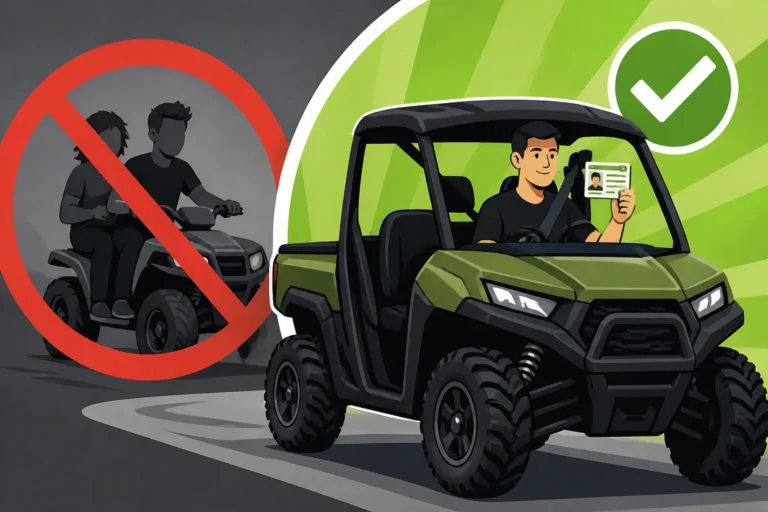
Here's the straightforward answer: yes, you absolutely need a valid Georgia driver's license to operate an MPOHV on any public road in Georgia. There's no special MPOHV endorsement, no unique permit that bypasses the standard driver's license requirement. If you wouldn't be able to legally drive a car or truck on that road, you can't drive your MPOHV on it either. This is a common point of frustration for younger riders or those who might have had their license suspended for various reasons, as they often assume the MPOHV classification grants some kind of exception. It doesn't.
Think of it this way: when your MPOHV is registered and you're operating it on a county road, you are, for all intents and purposes, considered a driver of a motor vehicle. Law enforcement expects you to possess the same basic qualifications as any other driver. This means your license must be current, not suspended, and not expired. The moment you pull onto a county road, even just to cross a state highway at a designated intersection, the standard rules of the road apply to you, and that starts with having a legal license in your wallet. [Do You Need a License to Drive a UTV in Georgia?] is a question often asked, and the answer is a resounding yes for road use.
Why No Special MPOHV Endorsement?
Unlike some states that might have specific designations for motorcycles or even certain types of scooters, Georgia has not created a special MPOHV license or endorsement. The logic behind this seems to be that operating an MPOHV on a county road, while perhaps a different experience than driving a sedan, still requires the same fundamental knowledge of traffic laws, road etiquette, and responsible driving behavior. The state has decided that a standard Class C driver's license (the common one for cars and light trucks) is sufficient proof of that general competency.
This approach simplifies enforcement for deputies and state patrol officers. They don't need to learn a whole new set of license codes or look for specific endorsements for what is, in the grand scheme of things, a limited-use vehicle on public roads. It's a blanket rule that ensures anyone operating a registered MPOHV on a county road has demonstrated a basic understanding of driving safety and laws through the standard licensing process. It's also why you'll find that [Georgia UTV Insurance Minimums] are tied to road use, just like any other vehicle. This consistency helps everyone understand the expectations.
Age and Supervision Rules for Younger MPOHV Riders
This section is particularly important for families and younger enthusiasts. The allure of driving a powerful side-by-side is undeniable, but Georgia has clear rules about age and supervision when it comes to operating these machines, especially on public roads. It's not just about having a license; it's also about maturity and legal responsibility.
Minimum Age for MPOHV Operation on County Roads
As we've established, if you're driving an MPOHV on a Georgia county road, you need a valid driver's license. This immediately sets the minimum age at 16, which is the earliest you can obtain a provisional Class D driver's license in Georgia. Before turning 16, even with a learner's permit, you are generally not permitted to operate an MPOHV on public roads. A provisional license comes with its own set of restrictions, such as limits on passengers and night driving, and those restrictions would also apply when operating an MPOHV. There's no special carve-out for these vehicles simply because they are "off-highway" by classification.
It's a strict rule, and for good reason. Public roads, even quiet county ones, present dynamic and often unpredictable situations. The decision-making skills, experience, and legal accountability that come with a full or provisional driver's license are deemed essential for safe operation. Trying to bend these rules, perhaps by letting a younger, unlicensed family member drive "just down the road" to a neighbor's house, could lead to significant legal trouble and safety risks. Law enforcement takes these age restrictions seriously, and the consequences of a violation can be severe. This is covered in more detail under [Georgia Minimum Age on a Public Road].
Exceptions and Private Property vs. Public Roads
It's absolutely critical to distinguish between private property and public roads when it comes to age and license requirements. On private land, the rules are generally set by the landowner, and state driver's license laws do not apply. This is where younger riders often gain experience and hone their skills. However, the moment even one tire touches a public right-of-way, the game changes. There are no "short cut" exemptions for public roads, even if you're just trying to get from one section of your property to another.
Some riders might point to golf cart rules in certain cities, where younger drivers are allowed on designated paths or streets. But an MPOHV is not a golf cart, and the rules are different. While a few cities like Peachtree City have unique ordinances for golf carts, these do not extend to MPOHVs. The Georgia state law is clear: a driver's license is required for MPOHV operation on county roads. If your child is under 16, their MPOHV must remain on private land or within a designated off-road park where such rules don't apply. This ensures that the responsibility of a licensed driver is always present when mingling with other vehicles on public thoroughfares.
Crossing State Highways and Interstates: License Implications
The ability to use county roads is a major benefit for MPOHV owners, but what happens when a state highway or even an interstate gets in the way? Georgia law does allow for crossing certain roadways, but these are highly regulated situations, and the driver's license requirement remains firm. This isn't a free pass to cruise down the shoulder of a major road; it's about navigating necessary intersections.
Designated Crossings and Driver Responsibility
Georgia law is explicit: MPOHVs are generally not allowed to operate on state routes or interstates. The only exception is to cross a state route at a designated intersection, and only then if you are traveling between county roads where MPOHV use is permitted. You cannot drive along a state route, even for a short distance. This often means planning your routes carefully and sometimes taking longer detours on county roads to avoid state highways entirely. The crossing privilege is not an invitation to extend your range on busier roads; it's a narrowly defined allowance for connectivity.
When making such a crossing, the driver of the MPOHV bears the full responsibility of a licensed motor vehicle operator. This means obeying all traffic signals, stop signs, yield signs, and general rules of the road. You must exercise extreme caution, anticipate other traffic, and ensure your machine is fully visible. Even though you're on an MPOHV, you are expected to operate it with the same care and adherence to law as if you were driving a car. This is not the time to be distracted or assume other drivers will automatically see you or understand your intentions. It's about protecting yourself and others on the road. For specific details, look into [Georgia Crossings at Designated Points].
Why Interstates Are Never an Option
Just to be unequivocally clear: MPOHVs are never permitted on interstates, not even for crossing. Interstates are high-speed, limited-access highways designed for conventional motor vehicles, and an MPOHV simply does not meet the safety or speed requirements for such an environment. Attempting to drive or even cross an interstate on an MPOHV would be an extremely dangerous and illegal act, leading to severe penalties and putting lives at risk. The speed differentials, the volume of traffic, and the lack of proper infrastructure for smaller, slower vehicles make interstates an absolute no-go zone.
The strict prohibition on interstates underscores the limited nature of MPOHV road access in Georgia. While convenient for connecting local areas, MPOHVs are not intended for inter-city travel or high-speed routes. The driver's license requirement on county roads ensures that at least a baseline level of driver competency exists for these machines, but that competency doesn't somehow elevate an MPOHV to the status of a highway-legal vehicle. Always remember the distinction: limited county road access, with zero tolerance for state routes (except designated crossings) and interstates.
Insurance and Liability: Beyond Just the License
Having a valid driver's license is your personal ticket to operating an MPOHV on Georgia's county roads, but it's not the only piece of the puzzle. Just like with any other motor vehicle, you need to be prepared for the financial responsibilities that come with potential accidents or damages. This is where insurance and liability come into play, offering a critical layer of protection for you and others.
Georgia Liability Insurance Tied to Registration
When you register your MPOHV with the Georgia Department of Revenue and get that coveted plate, you are also making a commitment to carry liability insurance. This isn't an option; it's a requirement tied directly to the registration process. The purpose of liability insurance is to cover damages and injuries you might cause to other people or their property if you are at fault in an accident while operating your MPOHV on a public road. Without it, you're not just risking financial ruin; you're also operating illegally.
The minimum insurance requirements for MPOHVs on Georgia roads are the same as for other motor vehicles. This typically includes bodily injury coverage per person and per accident, as well as property damage coverage. These minimums are designed to offer a basic level of protection, but many drivers opt for higher coverage limits to better safeguard their assets. It’s also important to ensure your policy specifically covers MPOHV use on public roads, as some off-road policies might only cover private land. Always confirm with your insurance provider to avoid any unpleasant surprises if an incident occurs. You'll want to check [Georgia Insurance Minimums for Road Use] for the exact figures.
Understanding Your Personal Liability
Beyond the mandatory liability insurance, it's crucial to understand your personal liability as an MPOHV operator. If you are involved in an accident and found to be at fault, you could be held financially responsible for damages exceeding your insurance coverage. This could include medical bills, lost wages, pain and suffering, and property repairs for the other parties involved. This risk is precisely why having a valid driver's license is so important – it’s a legal acknowledgment that you are deemed competent to operate a motor vehicle safely and responsibly.
Operating an MPOHV, particularly one modified with accessories from brands like SuperATV that enhance its capability, carries the same weight of responsibility as driving any other vehicle. While many MPOHV owners are careful and considerate, accidents can happen quickly, especially on unfamiliar county roads or when encountering unexpected traffic. Being licensed and insured is your first line of defense, not just against legal penalties but against potentially devastating financial consequences. It's about being prepared for the unexpected and demonstrating due diligence as a road user.
Penalties for Non-Compliance: What's at Stake?
Ignoring Georgia's driver's license rules and other MPOHV regulations isn't just a minor oversight; it can lead to significant legal and financial consequences. Law enforcement in Georgia takes these rules seriously, especially when it comes to public safety on roads. Understanding the potential penalties can serve as a strong reminder of why compliance is so important.
Driving Without a Valid License
If you're caught operating an MPOHV on a Georgia county road without a valid driver's license, you could face severe penalties. This isn't treated lightly. The charges could range from a misdemeanor offense, similar to driving a car without a license, to more serious charges if you're involved in an accident or have a suspended license. Penalties typically include fines, court costs, and potentially even jail time, especially for repeat offenders or if there are aggravating circumstances. Furthermore, your MPOHV could be impounded, leaving you with additional fees to retrieve it.
Beyond the immediate legal ramifications, having a driving without a license conviction on your record can have long-term impacts. It can affect your ability to get insurance, raise your premiums, and even make it harder to obtain or reinstate a driver's license in the future. The state of Georgia is clear that operating any motor vehicle on public roads, including registered MPOHVs, requires a licensed driver, and they enforce this vigorously. Ignoring this fundamental rule simply isn't worth the risk. For more details on this, you can check [Georgia Penalties for an Unregistered Road Machine], which often ties into being unable to register without meeting all other requirements.
Other MPOHV Violations
While the focus here is on driver's licenses, it's worth noting that other MPOHV violations can also carry hefty penalties. Operating an MPOHV on prohibited roads (like state highways or interstates), failing to have current registration and insurance, or not having the required safety equipment (headlights, brake lights, mirrors) can all lead to citations and fines. These fines can quickly add up, and repeat offenses can escalate the consequences.
Law enforcement, particularly the [Georgia Sheriff Enforcement on County Roads], is increasingly aware of the MPOHV rules and is equipped to enforce them. They understand the nuances of what is and isn't allowed. So, whether it's an issue with your license, your registration, or simply being on the wrong road, the penalties are designed to deter illegal operation and ensure public safety. It's not uncommon for officers to perform checks for things like appropriate plates and insurance, especially in areas known for MPOHV use.
When the Rules Change: The Sunset Provision
One of the most critical aspects of Georgia's MPOHV road access law is its "sunset" provision. This means the current rules allowing MPOHVs on county roads are not permanent; they have an expiration date. Understanding this future change is essential for anyone who plans to operate an MPOHV on public roads in Georgia.
Georgia's July 2027 Sunset on Road Access
The current law that allows MPOHVs to be registered and driven on Georgia's county roads is set to expire on July 1, 2027. This means that unless the Georgia General Assembly takes action to extend, modify, or make the law permanent, MPOHVs will no longer be permitted on county roads after this date. This isn't a speculative future; it's written directly into the current legislation. It's a significant detail that many MPOHV owners might not be fully aware of, and it could dramatically impact their ability to use their machines for practical purposes.
This sunset clause was likely included to allow lawmakers to assess the impact of the new MPOHV registration and road access rules. They'll be looking at safety data, enforcement challenges, and public feedback to decide whether to continue, amend, or discontinue the program. For now, the clock is ticking. This makes it crucial for riders to stay informed about potential legislative changes as that date approaches. You can learn more by looking into [Georgia's July 2027 Sunset on Road Access].
Implications for Driver's Licenses Post-Sunset
Should the law expire as planned on July 1, 2027, the implications for driver's license requirements are straightforward: they will become moot for MPOHV road operation. If MPOHVs are no longer permitted on county roads, then the need for a driver's license to operate them on those roads disappears entirely. At that point, MPOHVs would revert to being strictly off-road vehicles, confined to private property, designated trails, and off-road parks.
This future uncertainty highlights the temporary nature of the current road access. While it's great to have the ability to run your machine on county roads now, it's important to recognize that this privilege is not guaranteed indefinitely. As an MPOHV owner, staying engaged with legislative updates and advocating for continued road access if you value it will be important. For the time being, however, the existing rules, including the driver's license requirement, are firmly in place and must be followed.
Practical Tips for MPOHV Operators in Georgia
Understanding the letter of the law is one thing, but putting it into practice safely and responsibly is another. Here are some practical tips to ensure you're always in compliance and operating your MPOHV intelligently on Georgia's county roads.
Always Carry Your Documents
This might seem obvious, but it's surprising how many drivers forget this basic step. Whenever you're operating your MPOHV on a public road, make sure you have your valid Georgia driver's license, proof of MPOHV registration, and proof of liability insurance readily available. Law enforcement can, and often will, ask to see these documents during a stop or if you're involved in an incident. Having them organized and accessible, perhaps in a waterproof pouch on your machine, can make a significant difference in how smoothly any interaction with law enforcement proceeds.
Don't assume that just because you're on a dirt county road, you won't be stopped. Deputies patrol all types of public roads, and if they see an MPOHV operating, they have every right to check for proper licensing and registration. Being prepared saves time, hassle, and potential citations. It's part of being a responsible MPOHV operator and respecting the laws that grant you this limited road access.
Equip Your Machine for Visibility and Safety
While not directly tied to your driver's license, the physical condition and equipment of your MPOHV are critical for safe road operation and can also prevent issues with law enforcement. Ensure all your required safety features are in good working order: headlights, taillights, brake lights, and rearview mirrors. Regularly check your tires, brakes, and steering to ensure they are functioning correctly. Consider adding aftermarket accessories that enhance visibility, such as bright LED light bars or additional reflectors, especially if you anticipate riding during dawn, dusk, or in less-than-ideal weather conditions.
Companies like SuperATV offer a wide range of accessories that can improve both the functionality and safety of your MPOHV. While not all of them are "required," things like additional mirrors, turn signal kits (even if not strictly required by state law for MPOHVs, they greatly improve communication on the road), or a louder horn can contribute significantly to your safety. Remember, even on quiet county roads, you're sharing the space with cars, trucks, and farm equipment, and being seen and heard is paramount.
Plan Your Route and Know Your Local Ordinances
Before heading out on your MPOHV, especially if it's a new area, take a moment to plan your route. Identify which roads are county roads where MPOHVs are permitted, and which are state routes that you can only cross at designated points. Utilize mapping apps or local knowledge to avoid prohibited areas. Remember, interstates are always off-limits. Being familiar with [Georgia County Road Systems and Where They Run] can be a huge asset.
Furthermore, while state law governs the general MPOHV rules, some counties or local jurisdictions might have their own specific ordinances that could affect your riding. It's always a good idea to check with the local sheriff's office or county administration if you're unsure about specific local rules in an area. While most county roads are open where state law allows, local variations can exist, and being informed prevents accidental violations. This diligent planning, combined with your valid driver's license and proper insurance, ensures you're enjoying your MPOHV legally and safely.
MPOHV Driver's License Rules: A Quick Reference
To help consolidate the key takeaways, here’s a summary of the driver's license rules for MPOHV operators in Georgia in an easy-to-read table format. This isn't exhaustive, but it hits the main points discussed.
| Requirement Area | Georgia MPOHV Rules for Road Use |
|---|---|
| Driver's License | Absolutely required. Must possess a valid, non-suspended Georgia Class C (or provisional Class D) driver's license. No special MPOHV endorsement is needed. |
| Minimum Age | 16 years old (to obtain a provisional Class D license). No exceptions for younger riders on public roads, even with adult supervision. |
| Road Access | Limited to designated county roads only. Not permitted on state highways (except for designated crossings) or interstates. |
| Insurance | Mandatory liability insurance, meeting Georgia's minimum requirements for motor vehicles, is required and tied to the MPOHV registration. |
| Required Equipment | Must have factory-installed steering wheel (not handlebars), non-straddle seating, seat belts, headlights, brake lights, and rearview mirrors. |
| Sunset Provision | Current MPOHV road access law is set to expire on July 1, 2027, unless extended or made permanent by legislative action. |
| Key Distinction | MPOHV is not a golf cart, a traditional ATV (quad), or an LSV. Each has different rules. |
| Violations | Operating without a license, insurance, registration, or on prohibited roads can result in fines, court costs, impoundment of machine, and potential jail time. |
This table provides a snapshot of the essential information, making it easier to remember the core legal framework for MPOHV operation on Georgia roads.
Disclaimer
This article is for general informational purposes only and does not constitute professional advice. Laws, prices and regulations vary by location and change over time. Consult a qualified professional for guidance on your specific situation.