Licensed Drivers Only on an LSV
Navigating the rules for driving anything other than a standard car on Georgia roads can feel like trying to solve a puzzle with half the pieces missing, especially when you think about vehicles like Low-Speed Vehicles, or LSVs. Many folks assume these little cruisers are fair game for anyone to operate, but the truth is, Georgia has specific requirements for who can be behind the wheel. This guide will help clarify who exactly is allowed to operate an LSV on public roads in the Peach State, ensuring you stay on the right side of the law.
What Exactly is a Low-Speed Vehicle (LSV) in Georgia?
Before we dive into who can drive an LSV, it’s crucial to understand what Georgia defines an LSV as in the first place. This isn't just semantics; it's the foundation for all the regulations that follow. An LSV is a distinct category of vehicle, often confused with golf carts or even Motorized Play Off-Highway Vehicles (MPOHVs), which include many UTVs and side-by-sides. However, each has its own set of rules, and mistaking one for the other can lead to legal headaches.
Speed and Design Distinctions
In Georgia, a Low-Speed Vehicle is specifically designed to travel at a maximum speed of 25 miles per hour, but no less than 20 miles per hour. This speed range is what truly sets it apart. A typical golf cart, while often modified, usually operates at speeds much lower than 20 mph, and might not have the robust safety features required for an LSV. On the other end of the spectrum, many UTVs, which can be registered as [Georgia MPOHV Registration Explained], often have top speeds well over 25 mph, making them a completely different class of vehicle with different road access restrictions.
The design of an LSV is also very particular. It's built from the factory to meet specific federal safety standards that allow it to be used on certain public roads. This isn't about slapping a few extra lights on a golf cart; it's about a vehicle engineered for the task. While you might be used to adding robust aftermarket components, perhaps from a brand like SuperATV, to your off-road rig, LSVs come equipped from the factory with the necessities for low-speed street use. This distinction is paramount because it dictates where and how you can legally operate it. For more details on other types of vehicles, you can look into [Georgia Golf Cart Laws and PTV Ordinances] or [Georgia UTV Road Rules by County].
Key Safety Features of an LSV
The very definition of an LSV is tied directly to its integrated safety features. Unlike many off-highway vehicles that require additional modifications for even limited road use, LSVs are manufactured with these safety elements as standard. These aren't optional extras; they are non-negotiable requirements for the vehicle to be classified as an LSV and to be legally driven on public roads in Georgia.
These features typically include headlamps, stop lamps, turn signal lamps, taillamps, reflex reflectors, a rearview mirror (or mirrors, like on any proper vehicle), a parking brake, and a VIN. Critically, LSVs must also have seat belts at every designated seating position. These aren't optional extras like some SuperATV accessories; they're mandated. Think of it this way: if a vehicle doesn't have these components from the manufacturer, it likely isn't an LSV, no matter its speed. These safety features are in place to ensure that the LSV, despite its slower speed, can still be a predictable and visible participant in traffic, reducing risks for both its occupants and other drivers on the road.
The Georgia Driver's License Requirement for LSVs
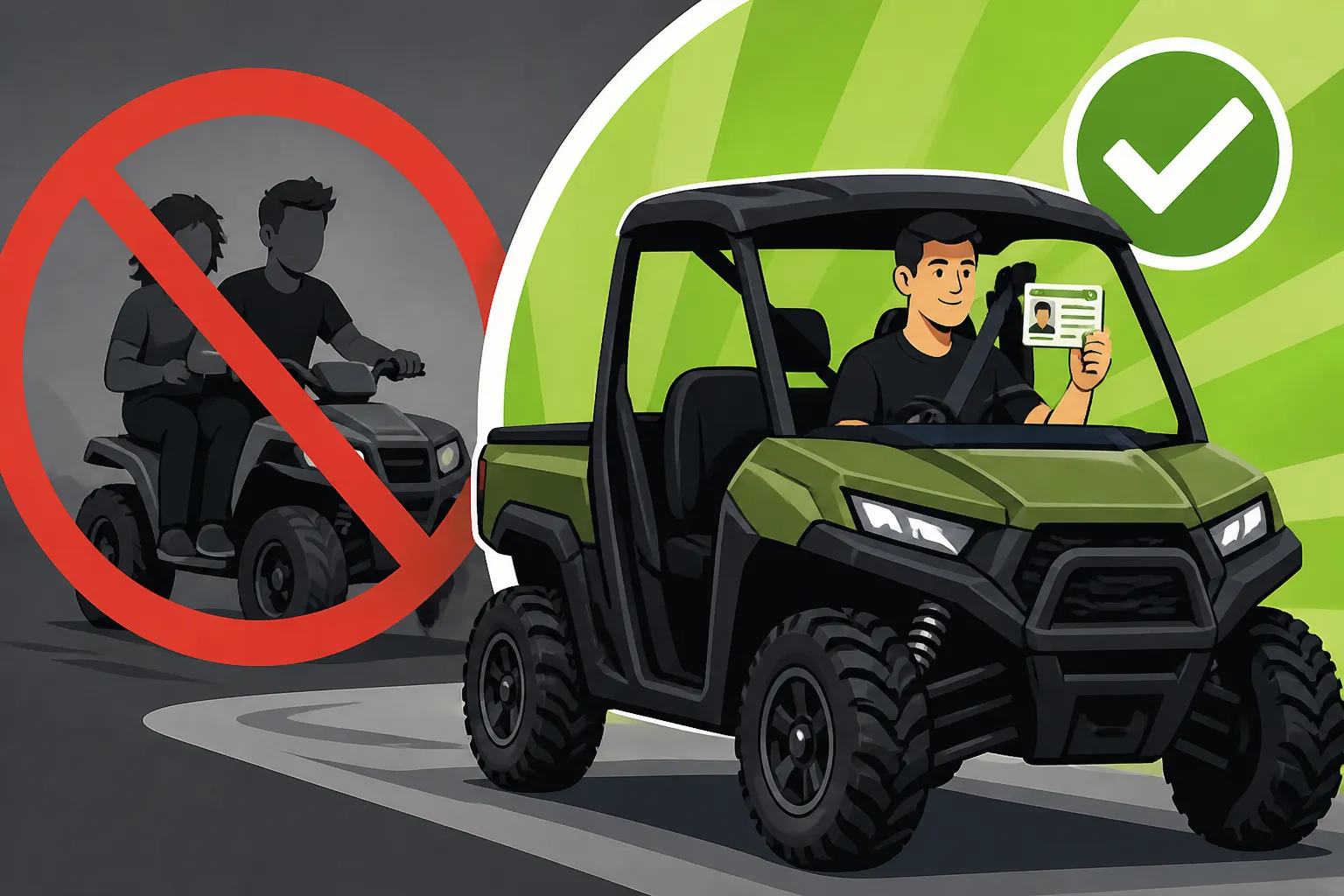
This is where much of the confusion lies for many aspiring LSV operators. Because LSVs are often lumped in with golf carts, people mistakenly assume that the same relaxed age or permit rules apply. However, Georgia law is very clear: operating an LSV on public roads requires a properly licensed driver. This isn't a suggestion; it's a legal mandate that carries significant implications if ignored.
Why a Full Driver's License is Necessary
The core reason a full, valid driver's license is required for operating an LSV is straightforward: these vehicles are sharing public roadways with cars, trucks, and other motor vehicles. Even though they are limited to lower speeds, LSVs are still subject to all traffic laws, signs, and signals. A licensed driver is presumed to have demonstrated knowledge of these traffic laws, the ability to operate a motor vehicle safely, and the maturity to make sound judgments in traffic.
Operating an LSV without a valid driver's license in Georgia is essentially the same as driving a regular car without one. You could face citations, fines, and potentially even vehicle impoundment. Beyond the legal penalties, there are serious safety concerns. An unlicensed driver may not understand right-of-way rules, how to navigate intersections, or react appropriately to unexpected road conditions. This puts not only the LSV operator at risk but also passengers and other motorists. It's about ensuring a minimum standard of competence and responsibility for anyone sharing public roads.
Age and Permit Limitations
Georgia law specifies that to drive an LSV, you must possess a valid Class C, Class D, or Class M driver's license. This means that a learner's permit alone, which allows supervised driving of a regular car, is not sufficient for operating an LSV. The logic here is consistent with the requirement for a full license: the driver must be capable of independent operation on public roads. This is a key distinction from some local golf cart ordinances where younger drivers might be allowed on specific paths under certain conditions or with a learner's permit, as explored in articles like [Georgia Golf Cart Age Rules].
The strictness regarding a full driver's license for LSVs highlights that they are not to be treated as toys or casual conveyances for anyone underage or still learning to drive. They are classified as motor vehicles for licensing purposes, and the state's intent is to ensure that only individuals who have proven their driving competence are behind the wheel. The specific language in Georgia law on [Georgia Low-Speed Vehicles Capped at 20 mph] underscores this point, emphasizing their integration into the road system under specific conditions, including operator licensing.
Understanding the Legal Landscape of LSVs on Georgia Roads
Once you have a clear understanding of what an LSV is and who can legally drive one, the next step is to know where you can drive it. The privilege of using an LSV on public roads comes with specific geographic and speed limitations, designed to integrate these slower vehicles safely into the existing traffic flow. Ignoring these boundaries can quickly turn a leisurely ride into a legal violation.
Where LSVs Can and Cannot Operate
In Georgia, LSVs are generally permitted on public roads where the posted speed limit is 35 miles per hour or less. This means you can typically cruise through many residential neighborhoods, small town streets, and certain county roads. This access is a significant benefit for communities where LSVs are popular for short-distance travel or community errands. However, this flexibility does not extend everywhere.
LSVs are strictly prohibited from operating on state highways, interstates, or any road where the speed limit exceeds 35 mph. While you might be able to [Crossing a Georgia State Highway on a UTV] at designated points with an MPOHV, the rules for LSVs are just as stringent. You cannot simply drive an LSV down a busy four-lane state route, even if you stay in the right lane. These restrictions are in place for safety, as the speed differential between an LSV and faster-moving traffic on highways would create extremely dangerous conditions. It's also important to remember that individual cities or counties may have additional ordinances that further restrict or even ban LSV use on their local streets, so it's always wise to check with your local government or review documents like [Georgia Neighborhood Cart Ordinances].
Speed Limits and Traffic Integration
The inherent speed limitation of an LSV—capped at 25 mph but also required to go at least 20 mph—plays a critical role in its integration with other traffic. When operating an LSV on a road with a 35 mph speed limit, you'll be moving slower than the flow of traffic. This means you must be extra vigilant, use proper hand signals if your turn signals are out, and pull over if you are impeding traffic significantly and a safe opportunity arises.
LSV drivers must adhere to all standard traffic laws, including obeying stop signs, traffic lights, and yielding the right-of-way. They are not exempt from these rules simply because they are driving a smaller, slower vehicle. In fact, due to their size and speed, visibility becomes even more crucial. While many enthusiasts deck out their UTVs with bright lights, perhaps from SuperATV, LSVs must have properly functioning headlights, taillights, and brake lights as standard equipment for road use. Understanding and respecting these traffic dynamics is key to safe and legal LSV operation on Georgia's public roads.
Navigating Enforcement and Staying Compliant
When you take an LSV onto Georgia's public roads, you're entering the same regulated environment as any other motor vehicle. Law enforcement officers, particularly county deputies (as highlighted in [Georgia Sheriff Enforcement on County Roads]), are trained to ensure that all vehicles, including LSVs, are operated safely and legally. Being prepared and understanding what they're looking for can save you a lot of hassle and potential penalties.
What Law Enforcement Looks For
When a law enforcement officer observes an LSV on a public road, they will typically check for several key compliance points. First and foremost, they'll verify the driver's credentials. As discussed, a full, valid driver's license (Class C, D, or M) is mandatory. There's no exception for LSVs; if you don't have one, you're operating illegally.
Next, officers will look for proper vehicle registration. Unlike many standard golf carts, LSVs are considered motor vehicles in Georgia and require a regular vehicle license plate and registration. They'll also check for current proof of liability insurance, which is a legal requirement for all registered motor vehicles in Georgia, including LSVs, as detailed in [Georgia UTV Insurance Minimums]. Finally, the officer will likely inspect the LSV's required safety equipment. This includes ensuring the headlights, taillights, brake lights, turn signals, seat belts, and mirrors are all present and in working order. Making sure your LSV’s essential safety gear, like lights and turn signals, are always in top working order is paramount, far more critical than deciding on a new SuperATV lift kit for your trail UTV. They might also observe your driving behavior to ensure you're obeying traffic laws and not impeding traffic in an unsafe manner.
Consequences of Non-Compliance
Operating an LSV without adhering to Georgia's laws can lead to a range of legal and financial consequences. The penalties for driving an LSV without a valid driver's license are similar to those for driving a car without one, potentially resulting in significant fines, a misdemeanor charge, and even the impoundment of your vehicle. Similarly, failing to have proper registration or proof of insurance can lead to citations and additional fines.
Beyond the immediate legal repercussions, consider the implications in the event of an accident. If you are involved in a collision while operating an LSV illegally—for instance, without a license or insurance—you could face severe personal liability. Your insurance company might deny coverage if the vehicle or operator was not in compliance with state laws at the time of the incident. It's not just about avoiding a ticket; it's about protecting yourself, your passengers, and your assets. Understanding [What a County Road System Includes] can help you determine the legal boundaries for your LSV, but ultimately, compliance with licensing, registration, and safety equipment rules is essential for worry-free enjoyment of your LSV on Georgia's roads.
| Feature | Low-Speed Vehicle (LSV) | Golf Cart (Standard) | Motorized Play Off-Highway Vehicle (MPOHV/UTV) |
|---|---|---|---|
| Driver's License | Required (Full Class C, D, or M) | Varies by local ordinance; often permit/age-based for paths | Required (Full Class C, D, or M) if on county roads |
| Speed Range | 20-25 mph | Typically < 20 mph | 25-65 mph |
| Road Access | Roads with speed limit 35 mph or less | Designated paths, local street ordinances | Designated county roads (MPOHV registered) |
| Registration | Required (Regular Vehicle Plate) | Not typically required (local exceptions) | Voluntary (Special MPOHV Plate) |
| Safety Features | Headlights, stop lights, turn signals, taillamps, reflectors, rearview mirror, parking brake, VIN, seat belts | Varies, often minimal, less regulated for public roads | Steering wheel, head/brake lights, mirrors, seat belts (for MPOHV registration) |
| Legal Definition | Defined by specific speed range and safety features for road use | Generally lower speed, often for private/path use | [What MPOHV Actually Stands For] – recreational vehicle |
Disclaimer
This article is for general informational purposes only and does not constitute professional advice. Laws, prices and regulations vary by location and change over time. Consult a qualified professional for guidance on your specific situation.