Cart Paths Versus Public Streets
It's incredibly easy to get confused by all the different ways we talk about vehicles like golf carts, side-by-sides, and ATVs here in Georgia, especially when it comes to where you can actually ride them. Many folks see a paved path and think, "Hey, my UTV could handle that!" or they hear about golf carts driving around town and assume their off-highway vehicle fits right in. This guide is here to clear up that confusion, specifically diving into the big difference between dedicated cart paths and public streets, and what that means for your machine in Georgia.
Understanding Georgia's Cart Paths: Not for Every Machine
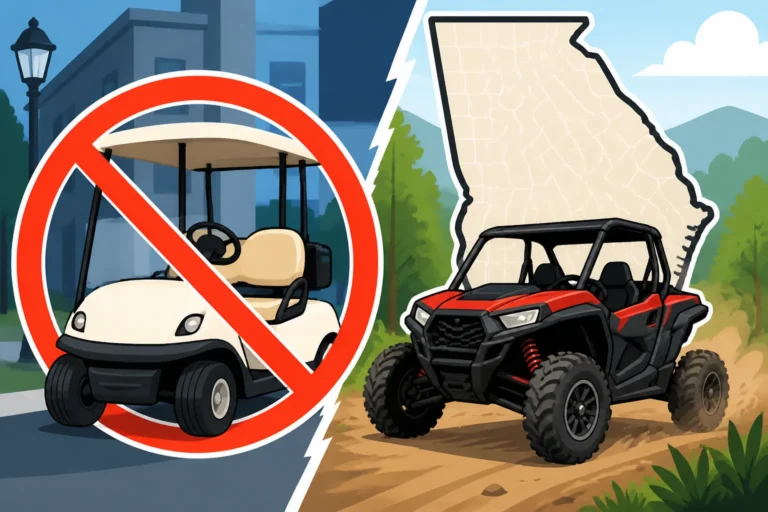
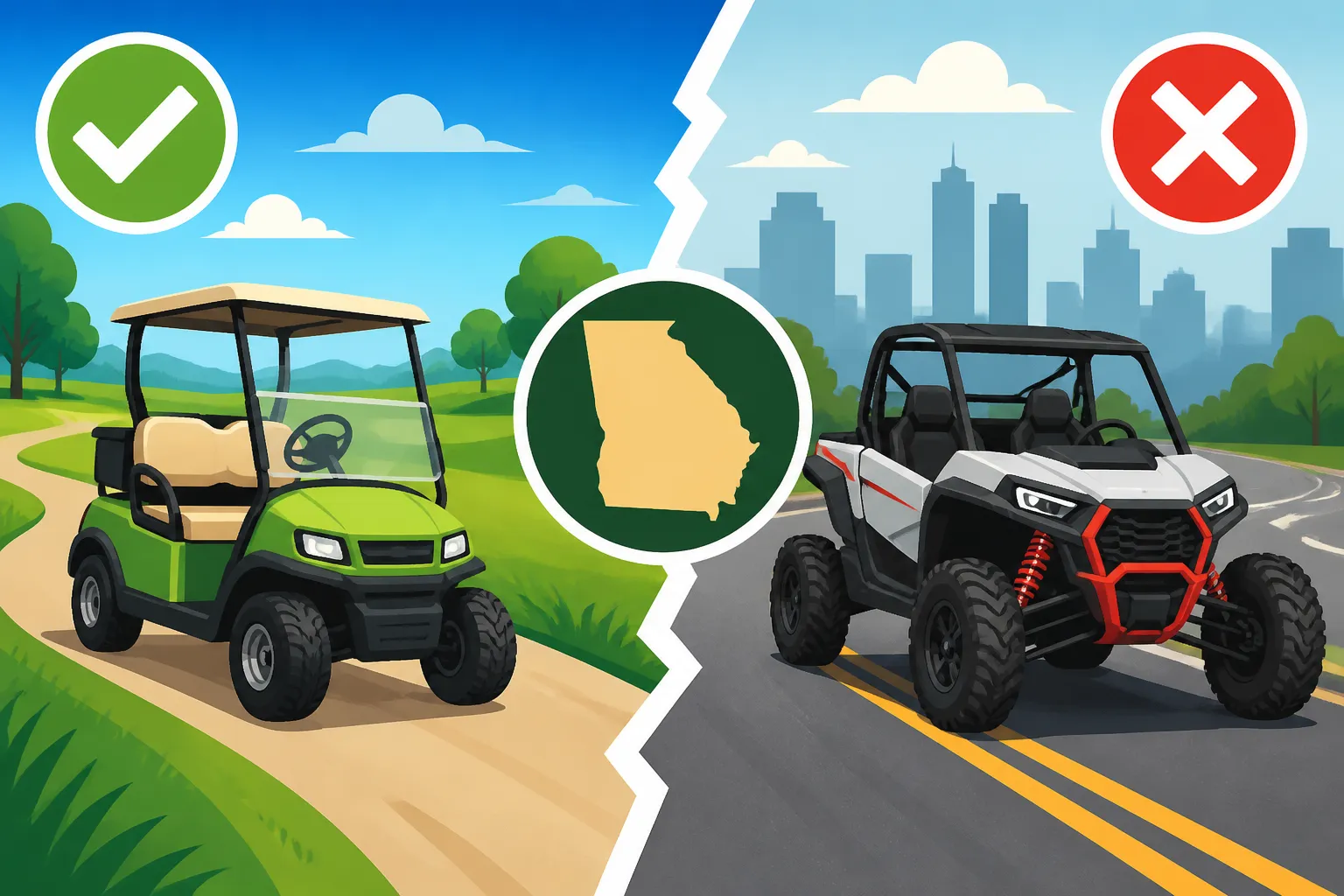
When you're out and about in certain Georgia communities, you'll see these charming, often winding, paved pathways that seem to connect everything from homes to shops to schools. They look inviting, don't they? And for many residents, they're a fantastic alternative to car travel. But it's crucial to understand that these aren't just "any" public thoroughfare; they are specifically designed and designated for a particular type of low-speed vehicle, primarily golf carts and personal transportation vehicles (PTVs).
What Exactly is a Cart Path?
A cart path, often found in planned communities or cities with specific ordinances, is essentially a miniature road network built exclusively for golf carts and other small, low-speed vehicles. Think of towns like Peachtree City, which is famous for its extensive network of [Peachtree City's 100 Miles of Georgia Cart Paths]. These paths are typically narrower than regular streets, often weave through green spaces, and connect neighborhoods directly to commercial areas, recreational facilities, and schools. They are built with the safety and operational characteristics of golf carts in mind – machines that are generally lightweight, slow-moving, and have specific design features that make them suitable for these environments. The rules governing these paths are local ordinances, varying from city to city, but they consistently emphasize slow speeds and often have age restrictions for drivers. They are designed to keep golf carts separate from faster-moving traffic for safety reasons.
The intent behind these paths is to promote a particular lifestyle: one where residents can easily get around without a car for short distances, reducing traffic congestion and fostering a sense of community. This is why you'll see families cruising to dinner, kids heading to practice, and retirees going to the grocery store on these paths. They serve a very specific purpose within these communities, and that purpose generally does not include the higher-powered, heavier, and often wider machines we associate with off-road recreation.
Why ATVs and Most UTVs Don't Fit Here
This is where a lot of the confusion happens. You might own a side-by-side that you use for hunting or farm work, or just trail riding, and it might even be registered as an MPOHV for county road use. It has seat belts, headlights, and maybe even turn signals you picked up from SuperATV. So, why can't it go on a cart path? The primary reasons boil down to design, speed, safety, and local regulations.
First, let's talk about design. ATVs are straddle-seat vehicles, and most UTVs, while they have side-by-side seating, are built for rugged off-road conditions. They often have higher ground clearance, aggressive tires, and powerful engines designed for tearing through mud or climbing steep hills, not for gently navigating a paved neighborhood path. Many UTVs, especially those with aftermarket modifications, can be wider than a standard golf cart, making them a tight or even impossible fit on paths designed for narrower vehicles. While some smaller, utility-focused UTVs might physically fit, their power and potential speed still present a safety issue.
Second, speed. Even if your UTV could physically fit, its minimum operating speed and maximum capabilities are usually far beyond what's safe or allowed on a cart path. Golf carts are typically capped at around 20-25 mph. Many UTVs can easily exceed this, even at low throttle, making them a hazard among the slower, more vulnerable golf cart traffic, pedestrians, and cyclists often found on these paths. Local ordinances specifically define what constitutes a golf cart or PTV, and most ATVs and UTVs simply do not meet these definitions, regardless of how "street-legal" they might seem for county roads. Attempting to ride your ATV or UTV on a cart path can lead to citations, fines, and potentially dangerous accidents, as these vehicles are just not intended for that environment.
Navigating Public Streets: Where Georgia's MPOHV Rules Apply
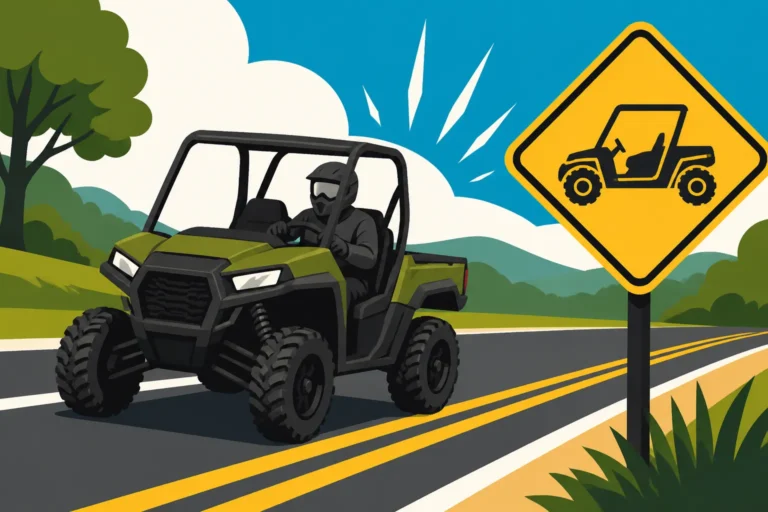
While cart paths are largely off-limits, Georgia has made provisions for certain types of off-highway vehicles, specifically MPOHVs (Multi-purpose Off-Highway Vehicles), to be registered and legally driven on a limited network of public roads. This is a recent development that has opened up new possibilities for UTV owners, but it comes with a very specific set of rules and distinctions that must be understood.
Differentiating County Roads from State Routes
This distinction is perhaps the most critical for any UTV owner hoping to gain road access in Georgia. The new MPOHV registration allows qualified machines to operate on county roads within the state. This means roads maintained by the local county government, typically marked by specific signage or simply understood through local knowledge. These are often the less-trafficked, rural routes that connect communities, farms, and recreational areas. Understanding [What a County Road System Includes] is vital, and it’s usually anything that isn’t a state route or an interstate.
However, it is absolutely essential to understand that MPOHVs are generally not permitted on state highways (which includes U.S. routes and Georgia state routes), or interstates. These are higher-speed, higher-volume roads that are under the jurisdiction of the Georgia Department of Transportation (GDOT) and Georgia State Patrol. Driving an MPOHV on a state highway, except for very brief, designated crossings, is illegal and dangerous. For example, you cannot take your UTV on a prolonged journey down U.S. Highway 41 or State Route 16. The law explicitly states [Why Georgia State Highways Stay Off Limits], emphasizing that these roads are designed for faster-moving, fully street-legal automobiles, and an MPOHV simply doesn't meet those safety and speed requirements for sustained travel. When you're considering a route, always think about the type of road you'll be on. If it has a state route number, it’s likely off-limits for more than a quick cross.
The Role of Georgia's MPOHV Registration
For your side-by-side or qualifying UTV to even touch a county road legally, it must go through the [Georgia MPOHV Registration Explained] process. This isn't just a formality; it's a comprehensive process that ensures your vehicle meets specific safety and design criteria. The state implemented this registration to allow certain larger, utility-focused off-highway vehicles to serve a practical purpose on county roads, often linking private properties or accessing remote hunting leases.
To qualify, your machine must pass an eight-point test, which includes requirements like having a steering wheel (no handlebars!), a non-straddle seat, seat belts, and meeting specific size and speed parameters. You'll need to demonstrate your machine has [Georgia Requires Seat Belts on a Registered Machine], functional [Headlights, Brake Lights and Mirrors on the Checklist], and falls within specific weight and width limits. Many UTV owners turn to aftermarket accessories to meet these requirements. For instance, SuperATV offers a range of mirrors, turn signal kits, and even DOT-approved windshields that can help bring a UTV up to the standards needed for MPOHV registration. It’s about equipping your machine with the necessary safety features to interact with other vehicles on a public road, even if it's just a quiet county road. Once registered, you'll receive a special MPOHV plate, similar to a car tag, which signals to law enforcement that your vehicle is approved for county road use. This registration also typically requires proof of liability insurance, ensuring that if an accident were to occur on a public road, there's coverage in place.
Key Distinctions and Avoiding Common Pitfalls
The landscape of off-highway vehicle use in Georgia is definitely not a simple one-size-fits-all situation. The rules for cart paths and public streets are distinct, serve different purposes, and are enforced differently. Understanding these nuances is crucial for enjoying your machine safely and legally.
Speed, Size, and Intent: The Defining Factors
When trying to figure out if your machine belongs on a cart path or a public street, it often comes down to three key factors: speed, size, and the original intent behind the vehicle and the path/road itself.
Speed: Golf carts and PTVs are designed for low-speed travel, typically topping out between 20-25 mph. This is why they're suitable for sharing paths with pedestrians and bicycles in contained communities. An MPOHV-registered UTV, on the other hand, can legally travel between 25 and 65 mph on county roads. Even if you drive your UTV slowly, its capability for higher speeds makes it inherently unsuitable and unsafe for paths where unexpected slower traffic is the norm. A UTV's power and acceleration are simply too much for the controlled environment of a cart path.
Size: Cart paths are often narrower, with tighter turns and sometimes even tunnels or bridge crossings built with the compact dimensions of a golf cart in mind. Many UTVs, especially modern side-by-sides from brands like Polaris, Can-Am, or Honda, can be significantly wider and longer than a golf cart, especially with aftermarket modifications such as wider a-arms or larger tires – components that SuperATV often specializes in for off-road performance. Trying to squeeze a wider UTV onto a narrow cart path isn't just difficult; it can damage the path, the vehicle, or lead to dangerous situations with oncoming golf cart traffic. The MPOHV rules for county roads do have width limitations (under 80 inches), which is a factor to consider when getting registered, but even that width is often too much for a dedicated cart path.
Intent: The intent behind cart paths is hyper-local, low-speed, neighborhood access, often in pedestrian-heavy areas. The intent behind Georgia's MPOHV legislation is to provide limited access for certain utility-focused off-highway vehicles on county roads for practical purposes like farm access or connecting properties. These are two completely different use cases and environments. Your UTV, even with all its safety upgrades, is designed for a more robust environment than a cart path.
Consequences of Misuse and Riding in the Wrong Place
Ignoring these distinctions can lead to a variety of headaches, from legal trouble to serious accidents. If you operate an ATV or UTV on a cart path where it's not allowed, you could face trespassing charges, citations for operating an unauthorized vehicle, or other local ordinance violations. These can result in significant fines and even impoundment of your machine. Similarly, if your MPOHV is not properly registered or if you're caught riding it on a state highway, you could face [Georgia Penalties for an Unregistered Road Machine] or a citation for illegal road use, which might even be a misdemeanor offense.
Beyond the legal ramifications, there are significant safety concerns. Riding a powerful UTV or ATV on a cart path puts slower golf cart users, pedestrians, and cyclists at risk. The difference in speed, weight, and braking capabilities can lead to severe collisions. On the flip side, riding an MPOHV on a state highway with high-speed car traffic is incredibly dangerous for the UTV operator, who lacks the protection and mass of a full-size automobile. The risk of serious injury or fatality in such an environment is extremely high. Always prioritize safety and adhere to the regulations designed to keep everyone safe on Georgia's diverse network of paths and roads.
Here's a quick breakdown to help keep things clear:
| Feature | Cart Paths (e.g., Peachtree City) | Public Streets (County Roads) | Public Streets (State Highways) |
|---|---|---|---|
| Primary Vehicles | Golf Carts, PTVs | Registered MPOHVs (UTVs), Cars, Trucks | Cars, Trucks, Motorcycles |
| ATV/UTV Legality | Generally NOT Allowed (unless specific PTV class) | Allowed for registered MPOHVs (with restrictions) | Generally NOT Allowed (except for crossing at designated points) |
| Speed Limit | Typically 20-25 mph (local ordinances) | Posted speed limits, up to 65 mph for MPOHVs | Higher speed limits, often 55-70 mph |
| Width Considerations | Designed for narrow golf carts | MPOHV must be under 80 inches wide | N/A (designed for full-size vehicles) |
| Required Features | Basic golf cart safety features | MPOHV registration, seat belts, lights, mirrors, etc. | Full DOT street-legal requirements |
| Jurisdiction | Local City Ordinances | County Government & State Law (MPOHV) | State Law (GDOT, State Patrol) |
| Common Use Case | Local community travel, recreation | Accessing property, farm use, connecting county areas | Through-traffic, long-distance travel |
Disclaimer
This article is for general informational purposes only and does not constitute professional advice. Laws, prices and regulations vary by location and change over time. Consult a qualified professional for guidance on your specific situation.