National Forest Roads and Designated Trails
It’s a common frustration among ATV and UTV enthusiasts in Georgia: you’re eager to hit the trails, but figuring out exactly where you can legally ride in our beautiful National Forests can feel like solving a complex puzzle. With varying rules, seasonal closures, and designated areas, knowing before you go is crucial. This guide will cut through the confusion, clarifying the regulations for using National Forest roads and designated trails so you can enjoy your ride responsibly and legally.
Navigating Georgia's National Forest Access Rules for OHVs
The expansive beauty of Georgia's National Forests, like the Chattahoochee-Oconee, offers incredible opportunities for outdoor recreation, including off-highway vehicle (OHV) riding. However, this isn't a free-for-all, open-range scenario. The U.S. Forest Service manages these lands with specific regulations to protect natural resources and ensure everyone can enjoy them safely. Understanding these rules is the first step to a great, hassle-free ride.
The Principle of Designated Trails and Roads
One of the most fundamental rules to grasp when planning your OHV adventure in Georgia's National Forests is the "designated routes" principle. This means you can't just drive your ATV or UTV on any old dirt road or through the woods wherever you please. Instead, you are required to stay on roads and trails that have been specifically designated and marked for motorized use. Think of it like a highway system for off-road vehicles – there are clearly defined paths, and venturing off them is illegal and damaging.
This system is in place for several critical reasons. Firstly, it helps to prevent soil erosion, especially on Georgia's often-steep terrain and sensitive red clay. Riding off-trail can quickly create deep ruts that accelerate erosion, pollute waterways, and harm delicate ecosystems. Secondly, it minimizes disturbance to wildlife. Designated routes help keep riders away from critical habitats, breeding grounds, or migratory paths. Thirdly, it reduces conflicts with other forest users, such as hikers, equestrians, and campers, ensuring a more peaceful experience for everyone. Always look for signage indicating where OHVs are permitted. If there's no sign, assume it's not an OHV route. This clear demarcation is essential for preserving the forest for future generations and for maintaining positive relationships between different user groups.
Common Reasons for Road and Trail Closures
It can be incredibly disappointing to plan a trip, load up your machine, drive to the trailhead, only to find the gate locked or a "closed" sign. However, these closures are implemented for very valid reasons and are for the safety of riders and the protection of the forest itself. One of the most common causes for temporary closure is adverse weather, especially heavy rain. Georgia's soil, particularly the heavy clay in many areas, becomes extremely vulnerable to damage when wet. Riding on saturated trails can lead to severe rutting, making them impassable and requiring costly, time-consuming repairs. The Forest Service often has a policy of closing trails after significant rainfall, sometimes for several days or even weeks, to allow them to dry out and harden. You can find more information about this in articles like [Georgia Trails That Close After Rain].
Other reasons for closures include planned maintenance and trail improvements, which might involve heavy machinery or construction that makes a trail unsafe for public use. Wildlife management efforts, such as protecting nesting areas or critical habitats during certain seasons, can also lead to temporary restrictions. Additionally, fire danger, especially during dry periods, might necessitate closures to prevent accidental wildfires sparked by hot exhausts or other equipment. Sometimes, a gate closure on a forest road might simply be a [Georgia Forest Roads Closed by a Gate] to restrict vehicle access to certain areas, even if they aren't OHV trails, for general resource protection or to prevent illegal dumping. Always check the status before you head out, and respect any closures you encounter, even if they don't seem immediately obvious.
Locating Official Maps and Up-to-Date Information
In today's digital age, there’s no excuse for getting lost or riding where you shouldn’t. The U.S. Forest Service provides excellent resources to help you plan your ride and stay informed. The absolute best place to start is the official website for the Chattahoochee-Oconee National Forests. Here, you'll typically find dedicated sections for OHV recreation, which include downloadable Motor Vehicle Use Maps (MVUMs). These maps are crucial because they clearly delineate which roads and trails are open to motorized vehicles, specifying vehicle types, seasonal restrictions, and any width limitations. They are the definitive guide for legal access.
Beyond the website, don't underestimate the value of contacting the local Ranger District office for the specific area you plan to visit. For example, if you're heading to Houston Valley, you'd contact the Conasauga Ranger District. These offices can provide the most current information on trail conditions, unexpected closures, and any recent changes to regulations that might not yet be reflected on printed maps. Many districts also have kiosks at popular trailheads with maps and important notices. Additionally, sites like Recreation.gov are often used for purchasing permits and can sometimes offer real-time updates on conditions or closures. Having a physical map in addition to any digital ones on your phone or GPS device is always a smart idea, especially since cell service can be spotty in remote forest areas.
Exploring Permitted OHV Trail Systems and Forest Service Roads
Georgia is home to some fantastic opportunities for off-road enthusiasts within its National Forests, but it’s critical to understand the nuances between dedicated OHV trail systems and general Forest Service roads. Not all dirt paths are created equal, and knowing the difference will keep you on the right side of the rules and ensure a safe, enjoyable experience.
Dedicated OHV Trail Networks and Their Specifics
Within the Chattahoochee-Oconee National Forests, you'll find a handful of specially designated OHV trail systems designed and maintained specifically for motorized off-road use. These are the primary destinations for most ATV and UTV riders. Some of the most popular include [Houston Valley OHV Trails in Georgia] near Dalton and [Beasley Knob OHV Trail System in Georgia] near Blairsville. Each of these systems has its own character, trail difficulty levels, and, importantly, specific rules.
For example, Houston Valley is renowned for its roughly 25 miles of trails, but it's crucial to note its [Georgia's 50-Inch Width Cap at Houston Valley]. This means machines wider than 50 inches, which includes many popular side-by-sides, are simply not allowed on its trails. Beasley Knob, on the other hand, offers about 18 miles of more challenging trails and is generally open to wider machines, but it often has a [Beasley Knob's January to April Closure in Georgia] for resource protection during the winter and early spring months. Other systems like Whissenhunt, Town Creek, Oakey Mountain, and Davenport OHV Trails also fall under [Georgia's Six National Forest OHV Systems], each with unique offerings and rules. These dedicated networks are meticulously maintained, often featuring clear signage, staging areas, and sometimes even restrooms. When planning to visit, it's wise to research the specific system's rules, especially regarding machine width and seasonal operating hours, to avoid disappointment.
Understanding Width Restrictions and Machine Compatibility
Width restrictions are one of the biggest gotchas for UTV owners, in particular, when planning to ride on National Forest trails. Many older or more technical trails were originally designed for ATVs, which are typically 50 inches wide or less. As side-by-sides (UTVs) grew in popularity and size, exceeding 60 or even 70 inches in width, these trails became incompatible. When a trail system has a 50-inch width limit, it's a hard and fast rule, and there’s no getting around it. Attempting to force a wider machine onto a narrow trail not only risks damage to your vehicle but also causes significant damage to the trail itself, widening it illegally and contributing to erosion.
Before you even load up your rig, take a moment to measure your machine from the widest points, usually the outside of your tires. Then, check the specific rules for the OHV trail system you intend to visit. Sites like Recreation.gov or the Chattahoochee-Oconee National Forests website will clearly state these limits. For example, if you have a larger side-by-side, you might be looking for trails that explicitly allow machines up to 60 or 64 inches wide, or you might need to adjust your plans. Aftermarket accessories, like wider wheels or long-travel suspension from brands like SuperATV, can dramatically improve your machine's performance and capability, but they can also increase your overall width. Always factor these modifications into your measurements when assessing trail compatibility. Adhering to these width restrictions is not just about avoiding a fine; it's about respecting the integrity of the trail system and the efforts made to maintain it.
Differentiating Between Open Forest Service Roads and Prohibited Areas
While dedicated OHV trail systems are the main event for many riders, you might also encounter Forest Service (FS) roads. These are typically gravel or dirt roads used for administrative access, timber harvesting, recreation access, and sometimes, public travel. It's crucial to understand that not all FS roads are open to OHV use. Many are open to street-legal vehicles only, and your typical ATV or UTV is generally not considered street-legal in Georgia, even if it has an [Georgia Plates for Off-Highway Vehicles] for specific county road access.
The MVUMs mentioned earlier are your definitive guide here. They distinguish between roads open to highway-legal vehicles, roads open to all vehicles (including OHVs that might not be street legal but are properly permitted), and roads that are closed or restricted. It's rare to find an FS road that allows an ATV or UTV that isn't part of a designated OHV system, especially if it leads into sensitive areas. Beyond specific roads, vast areas of the National Forest are designated as wilderness or non-motorized zones. These areas are strictly off-limits to all motorized vehicles, including ATVs and UTVs. They are set aside for hiking, backpacking, and quiet recreation, and entering them with an OHV is a serious violation. Always consult the official maps, know the difference between a designated OHV trail and a general FS road, and respect the boundaries of prohibited areas like the Cohutta Wilderness or the Chattahoochee River Corridor, where riding is expressly forbidden.
Essential Regulations and Responsible Riding Practices
Riding an ATV or UTV in Georgia's National Forests is a privilege, not a right. To ensure these beautiful natural spaces remain open and enjoyable for everyone, it’s vital that all riders adhere to a set of regulations and embrace responsible riding practices. These aren't just arbitrary rules; they are designed for safety, environmental protection, and a harmonious experience among all forest users.
Mandatory Permits and Machine Requirements
Before you even think about putting your tires on a National Forest trail, you absolutely need to acquire the necessary permits. In Georgia's National Forests, this typically means a Forest Service OHV permit. You can purchase these as day permits or annual permits, and they are generally required for each operator, not just per machine. You can find detailed information about [Georgia OHV Permits: What You Need Before You Ride], including where to purchase them, such as online via Recreation.gov or at various Ranger District offices. For example, the daily rate for a permit is quite affordable, but an annual permit provides better value if you plan on frequent visits to any of the six designated systems within the [Chattahoochee-Oconee National Forest Riding]. It's your responsibility to have this permit readily available while riding, either printed or on your phone, to show to a Forest Ranger if requested.
Beyond permits, your machine itself must meet certain requirements. A major one is a spark arrestor. This is a device fitted to your exhaust system that prevents sparks from escaping and potentially starting a wildfire. It's a non-negotiable item, and rangers will check for it. [Georgia Spark Arrestor Requirements] are strictly enforced. Additionally, most National Forests have sound limits for OHVs to minimize noise pollution and disturbance to wildlife and other forest users. While Georgia does not have a statewide ATV safety course requirement, taking a voluntary course is always a good idea, especially for new riders. Even if you upgrade your UTV with a lift kit and heavy-duty axles from SuperATV for tougher trails, these essential safety and permit requirements remain paramount.
Protecting the Environment: Tread Lightly and Leave No Trace
The principles of "Tread Lightly!" and "Leave No Trace" are cornerstones of responsible outdoor recreation, and they are especially critical for OHV riders in sensitive forest environments. "Tread Lightly!" encourages responsible use of motorized vehicles to minimize impact on the land. This means staying on designated trails, avoiding sensitive areas like wetlands or streams, and knowing the terrain to prevent rutting or erosion. Remember, the red clay found in much of Georgia's forests is particularly susceptible to damage when wet.
"Leave No Trace" goes hand-in-hand with this, emphasizing the importance of leaving the natural environment exactly as you found it, or better. This includes packing out all your trash, leaving no litter behind – not even biodegradable items like apple cores, which can take a long time to decompose and attract wildlife. It also means respecting wildlife by giving animals space, not feeding them, and keeping noise levels down. Avoid disturbing cultural or historical sites, and be mindful of your impact on vegetation. These practices ensure that the beautiful trails and natural areas remain pristine for everyone to enjoy, preserving the very reason we love to ride in the first place.
Safety Gear, Age Restrictions, and Passenger Rules
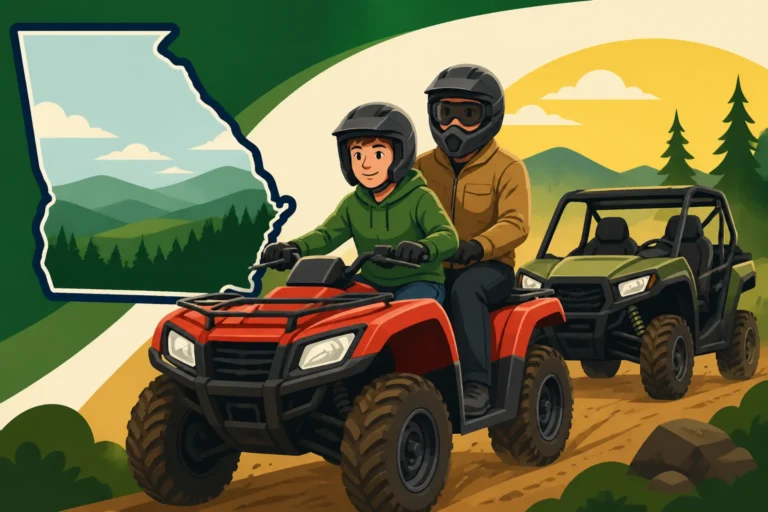
Safety should always be your top priority when riding an OHV, whether on private land or in a National Forest. For riders under 18 years of age, Georgia law mandates wearing a helmet on public lands, including National Forest trails. While adults are not legally required to wear a helmet on these trails (unless operating on a public road where an MPOHV plate is displayed), it is highly, highly recommended. A good quality helmet, eye protection, gloves, long pants, and sturdy boots are essential gear to protect you in case of a fall or collision.
Age restrictions for operators are also in place, particularly for younger riders. Generally, a rider must be at least 16 years old to operate an ATV on public roads or rights-of-way in Georgia, though rules on private land differ. On National Forest trails, while there isn't a specific state-mandated age for all trails, discretion and adult supervision for younger riders are always advised. Furthermore, side-by-sides often have seatbelt requirements, and ATVs are generally designed for single riders only, meaning passengers are usually prohibited unless the ATV is specifically designed and equipped with a designated passenger seat and footrests. Always ensure all passengers are safely secured and that your machine's capacity is not exceeded. These rules aren't meant to restrict fun; they are in place to prevent serious injuries and ensure that a day on the trails remains a safe and memorable experience for everyone.
Preparing for Your National Forest Riding Adventure
A successful and enjoyable National Forest OHV adventure in Georgia depends heavily on good preparation. It's not just about knowing where to go and what the rules are; it's also about preparing your machine, your gear, and yourself for the journey. A little foresight can prevent a lot of headaches out on the trail.
Pre-Ride Machine Checks and Essential Packing List
Before you even load your ATV or UTV onto the trailer, a thorough pre-ride inspection is non-negotiable. Check your tires for proper inflation and any signs of damage – a flat tire far from the trailhead is no fun. Inspect your brakes to ensure they are fully functional. Check fluid levels (oil, coolant, brake fluid) and ensure there are no leaks. Test all lights, including headlights, brake lights, and turn signals if your machine has them. Ensure your [Georgia Spark Arrestor Requirements] are met and that your exhaust system is in good repair. Finally, secure any loose items on your machine, like cargo boxes or racks. Investing in robust parts, such as heavy-duty A-arms or UTV bumpers from SuperATV, can provide extra peace of mind and protection against unexpected trail hazards.
Your packing list should go beyond just your machine. Always carry a first-aid kit, enough water for everyone, and high-energy snacks. A tool kit with essentials like wrenches, screwdrivers, tire repair kits, and a small air pump can be a lifesaver. Consider a small recovery strap or winch (and know how to use it safely). A fully charged cell phone (though service can be unreliable), a satellite messenger, or a two-way radio is crucial for communication. A physical map and compass, even if you have GPS, are excellent backups. Don't forget proper riding attire, including protective gear like a helmet, gloves, and sturdy boots.
Checking Current Trail Conditions and Weather Forecasts
Even the best-laid plans can be thwarted by unexpected trail closures or severe weather. Always, always, check the current trail conditions and the weather forecast for your specific riding area before you leave home. As discussed, [Georgia Trails That Close After Rain] are common, so if there's been significant rainfall in the days leading up to your trip, call the local Ranger District or check their website for closure updates. Many trail systems have specific opening and closing times, often [Georgia Trails Open Sunrise to Sunset], so be aware of those.
A clear, sunny forecast doesn't mean you're in the clear. Sudden thunderstorms can pop up quickly in Georgia, especially during the summer, turning trails into muddy messes or creating slick conditions. High heat and humidity can lead to heat exhaustion if you’re not prepared. Conversely, cold weather, especially in the North Georgia mountains, can bring unexpected ice or even snow. Knowing what to expect allows you to dress appropriately, pack extra layers, and modify your plans if necessary. Don't push your luck; if conditions are unsafe or trails are closed, reschedule your trip. The trails will still be there, and patience ensures a better, safer experience.
Emergency Preparedness and Communication Strategies
Riding in remote National Forest areas carries inherent risks, and being prepared for an emergency is paramount. Firstly, always let someone know your riding plans – your specific location, estimated departure and return times, and who you are riding with. This "float plan" is critical if you don't return as expected. As mentioned, cell service is often unreliable in many parts of the National Forest. A satellite messenger device, which can send texts or SOS signals even without cell service, is a wise investment for frequent backcountry riders. Two-way radios are great for staying in communication with others in your riding group.
In addition to your first-aid kit, consider carrying a tourniquet and knowing basic wilderness first aid. Familiarize yourself with how to quickly and safely extricate yourself or a riding partner from a difficult situation, such as being stuck in mud or having a minor rollover. Know how to contact emergency services and be able to provide clear, concise information about your location, which can be challenging without exact street addresses. This might involve using GPS coordinates from your phone or a dedicated GPS unit. Even with the most rugged parts and protective accessories on your UTV, like a full skid plate from SuperATV, accidents can happen. Thinking ahead about how you'll handle an emergency can dramatically improve outcomes and ensure a safer adventure.
Disclaimer
This article is for general informational purposes only and does not constitute professional advice. Laws, prices and regulations vary by location and change over time. Consult a qualified professional for guidance on your specific situation.