Ages 12 to 14 With a Guardian Riding
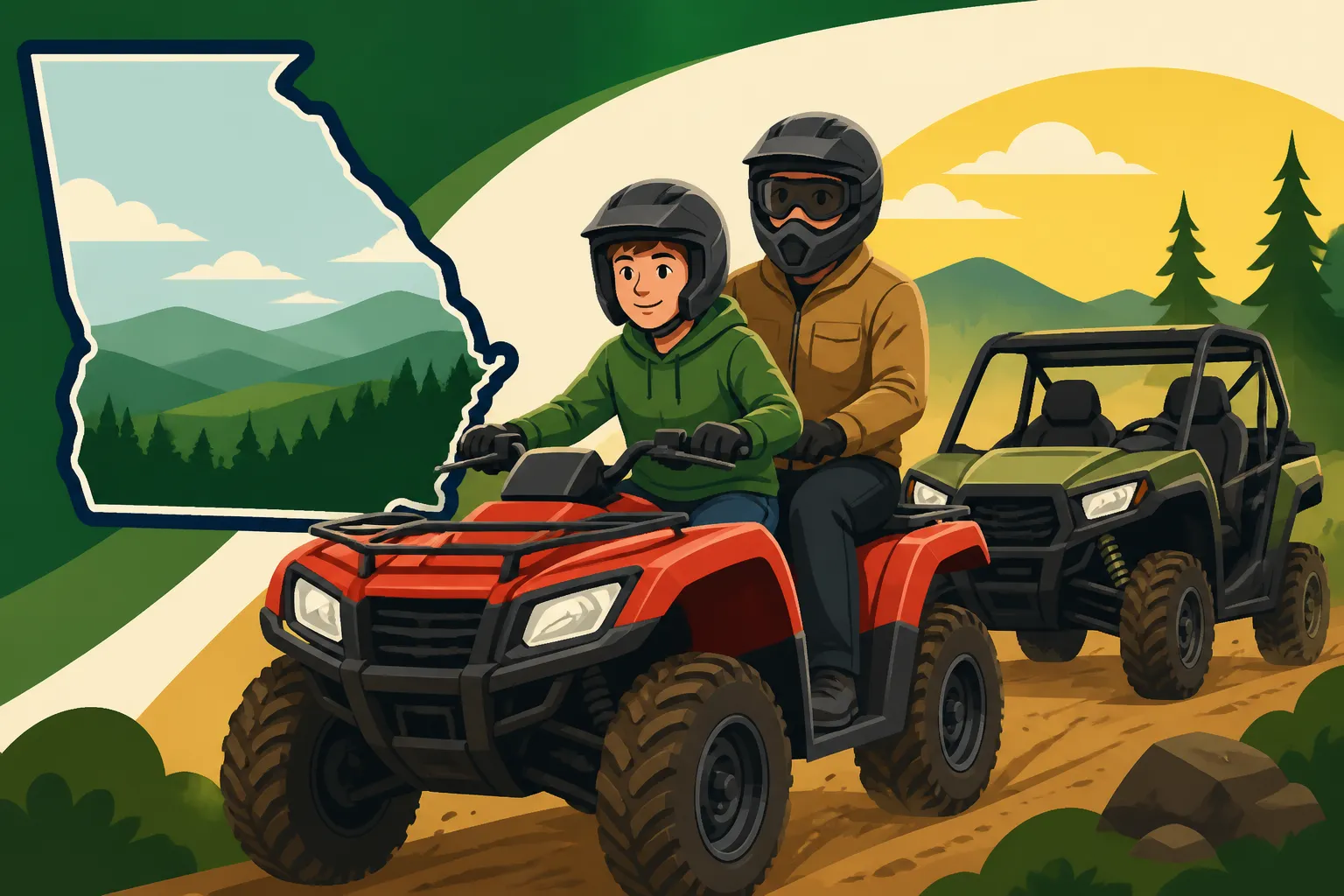
As a parent, the thought of your 12- to 14-year-old taking the reins of an ATV or UTV can bring a mix of excitement and deep-seated worry. Georgia's laws surrounding off-road vehicle use, especially for minors, are far from simple, leaving many families scratching their heads about what's actually allowed, particularly when an adult is right there with them. This guide aims to cut through that confusion, offering clear, empathetic, and realistic insights into what it means for a 12- to 14-year-old to ride with a guardian in the great state of Georgia.
The Nuances of Age and Supervision in Georgia Off-Road Law
Understanding Georgia's approach to youth riders isn't a one-size-fits-all situation. The rules change dramatically depending on the type of machine, where you're riding, and the specific age of the operator. It’s easy to assume that if a parent is present, anything goes, but that's a dangerous misconception. The state draws clear lines, and crossing them, even unknowingly, can lead to serious consequences.
Distinguishing Between ATVs, UTVs, and PTVs for Minors
First, let's untangle the alphabet soup of off-road vehicles. An ATV (All-Terrain Vehicle) is typically a quad bike, designed for a single rider who straddles the seat and steers with handlebars. Georgia has historically been very strict about ATVs on public roads, and for good reason—they're simply not built for that environment. In fact, Georgia generally [Why Georgia Will Not Register an Ordinary Quad], which means they are almost exclusively confined to private land or designated off-road parks. This distinction is crucial for minor operators.
UTVs (Utility Terrain Vehicles) or side-by-sides are a different beast entirely. They feature non-straddle seating, a steering wheel, and often seat belts, making them look and feel more like small cars. Since December 2023, Georgia has a specific class of registration for these, called MPOHVs (Multi-purpose Off-Highway Vehicles), which allows them on certain county roads. The requirements for an MPOHV are quite particular, notably, [Why Georgia's MPOHV Rules Demand a Non-Straddle Seat] and [Georgia Dirt Bikes and Three-Wheelers Are Excluded]. This means that while a UTV might be legally operated on a county road, the rules for a minor driving one are still stringent.
Then there are PTVs (Personal Transportation Vehicles), which is Georgia's legal term for most golf carts. These machines have their own set of rules, often determined by local ordinances, and are typically restricted to designated golf cart paths or specific low-speed municipal streets. The age limits for operating PTVs, especially with adult supervision, tend to be more lenient than for ATVs or MPOHVs. This is a critical distinction for parents because what's permissible for a golf cart often isn't for an ATV or even a registered UTV.
Georgia's Baseline Age Restrictions for Operators
When it comes to minors and off-road vehicles in Georgia, there's a foundational understanding that you need to grasp: the age of the operator significantly impacts where and how they can ride. On private land, the rules are generally less explicit about minimum age, focusing more on owner responsibility and safety. However, the moment an off-road vehicle touches public land—be it a county road or a designated path—state laws and local ordinances kick in, often with strict age and licensing requirements.
For registered MPOHVs (UTVs) on Georgia's county roads, the operator generally needs to be a licensed driver, which typically means at least 16 years old. This aligns with the [Georgia Minimum Age on a Public Road] for most vehicles. This isn't just a suggestion; it's a legal requirement designed to ensure that anyone operating a vehicle on a public roadway possesses the necessary skills, judgment, and legal accountability. The presence of a guardian as a passenger does not override this requirement for the operator. A 12- to 14-year-old, regardless of how skilled they are, typically cannot legally drive an MPOHV on a county road, even with a parent beside them.
Golf carts (PTVs) present a different scenario entirely. Many municipalities in Georgia, particularly those with extensive cart path networks like Peachtree City, have specific ordinances allowing younger operators, sometimes as young as 12 or 14, to drive these vehicles. However, these permissions almost invariably come with a crucial caveat: a licensed adult must be present in the vehicle, actively supervising. This isn't an option for ATVs or UTVs on county roads, but it's a common provision for PTVs, highlighting the legal differences between these types of machines. It's a prime example of how local rules for PTVs can diverge significantly from state-level MPOHV regulations.
Navigating County Roads and Pathways with 12-14 Year Olds
The dream of a family outing, with your middle schooler at the wheel of a side-by-side, can feel very appealing. However, the reality of Georgia's laws for operating these machines on public thoroughfares, even with an adult aboard, is often much more restrictive than many parents realize.
MPOHV Operation on County Roads with a Guardian
Let's talk about those registered UTVs, or MPOHVs, that are allowed on Georgia's county roads. While it's fantastic that Georgia now offers a pathway for these versatile machines to be used for transportation on certain public roads, it's absolutely critical to understand the rules when a minor is involved. For a 12- to 14-year-old, the answer is generally a firm "no" when it comes to operating a registered MPOHV on a county road, even with a guardian as a passenger. The law clearly states that the operator of an MPOHV on a county road must hold a valid driver's license. This means, in almost all scenarios, the operator needs to be at least 16 years old.
The presence of a guardian riding along as a passenger, while excellent for supervision and safety, does not magically confer a driver's license upon a minor. The "driver" of the vehicle is the one in the operator's seat, responsible for control and navigation. Therefore, a 12- to 14-year-old simply doesn't meet the [Georgia Driver's License Rules for MPOHV Operators] required for public road use. Trying to skirt this rule could lead to citations, fines, and even vehicle impoundment. It’s important to remember that these [Georgia MPOHV Road Rules: County Roads Only] exist for safety and accountability on shared public spaces.
This can be a tough pill to swallow for eager young riders and their parents, especially if they see others driving similar machines. However, the distinction is crucial for legal compliance and, more importantly, for safety. A public road environment, even a quiet county road, presents challenges that require an experienced and licensed driver to navigate responsibly.
Golf Cart (PTV) Access and Guardian Supervision
Here's where the concept of "ages 12 to 14 with a guardian riding" truly finds its place in Georgia law: golf carts, or Personal Transportation Vehicles (PTVs). Unlike MPOHVs, many local ordinances specifically address PTV operation by minors, often allowing 12- to 14-year-olds to drive on designated paths or approved streets, provided a licensed adult is in the passenger seat.
Take Peachtree City, for example, a well-known community famous for its extensive network of golf cart paths. Here, it is generally accepted that a 12- to 14-year-old can operate a golf cart on these paths if a licensed driver (a guardian, in this context) is also in the vehicle. This is explicitly covered in local [Peachtree City Golf Cart Rules in Georgia], which are designed to integrate PTVs safely into the community's transportation fabric. The "guardian riding" aspect is key; it's not enough for the adult to be in the vicinity or simply observing from afar. They must be physically present in the vehicle, ready to intervene if necessary.
The difference in rules for PTVs compared to ATVs or registered UTVs highlights the varying legal and safety perceptions of these machines. PTVs are generally lower speed, have a different operating dynamic, and are often restricted to environments specifically designed for their use. For many families, this is the realistic avenue for [Ages 12 to 14 With a Parent in the Seat] to experience driving a motorized vehicle in a relatively safe and legally sanctioned way. Before heading out, it's always wise to check the specific [Georgia Golf Cart Laws and PTV Ordinances] for the county or municipality you plan to ride in, as these rules can vary. However, if your vision involves your pre-teen driving a machine with an adult present, a golf cart on a designated path is often the most viable legal option.
Here’s a simplified comparison of age and supervision requirements across different machine types and locations:
| Machine Type | Location | Minimum Operator Age (Unsupervised) | Minimum Operator Age (With Licensed Guardian) | Notes |
|---|---|---|---|---|
| ATV | Private Land | Varies (No specific state law) | N/A | While no state law prohibits a 12-14 year old from riding on private land, supervision is always recommended. The guardian's presence is for safety/instruction, not to legalize operation. |
| ATV | Public Roads/Paths | Generally Prohibited | Generally Prohibited | ATVs are typically not street legal in Georgia, regardless of operator age or supervision. |
| UTV (MPOHV) | Private Land | Varies (No specific state law) | N/A | Similar to ATVs, private land rules are less stringent. Guardian presence is for safety/instruction. |
| UTV (MPOHV) | County Roads (Registered) | 16 (with valid driver's license) | 16 (operator must be licensed) | A 12-14 year old CANNOT legally operate a registered MPOHV on a county road, even with a licensed guardian as a passenger. The operator must hold a valid driver's license. |
| Golf Cart (PTV) | Private Land | Varies (No specific state law) | N/A | Less strict, but adult supervision is still highly recommended for safety. |
| Golf Cart (PTV) | Designated Paths/Streets | Varies by Local Ordinance (often 15-16 with permit) | Often 12-14 (with licensed adult in vehicle) | This is the primary scenario where a 12-14 year old can operate a vehicle on public access with a guardian. Rules are set by local ordinances (e.g., [Peachtree City's 100 Miles of Georgia Cart Paths]). |
Private Land Riding and the Role of the Guardian
Away from the complex web of road laws and local ordinances, private land offers a more straightforward, yet still safety-critical, environment for young riders. This is where many families introduce their 12- to 14-year-olds to the joys and responsibilities of off-road riding. The guardian's role shifts from a legal requirement for operation to one of paramount supervision and instruction.
Supervising Youth Riders on Private Property
On private property, the specific laws governing operator age for ATVs and UTVs are significantly less restrictive than on public roads or paths. There isn't a state-mandated minimum age for a 12- to 14-year-old to operate an ATV or UTV on land that you own or have permission to use. This freedom, however, comes with immense responsibility for the supervising guardian. While the law might not dictate an age, common sense and safety certainly do.
The guardian's primary role on private land is to ensure the minor's safety and to teach them proper riding techniques. This means providing direct, active supervision. It's not enough to be in the house while your child is out riding in the back forty. Active supervision means being present, observing their riding, providing instruction, and being immediately available in case of an incident. This is the ideal environment to hone skills, understand machine dynamics, and learn responsible riding habits without the added complexities of public road traffic or strict legal age limits. Even on private land, the [Georgia ATV Helmet Law for Riders Under 18] still applies, making helmets a non-negotiable piece of gear for all young riders.
Legal vs. Best Practice for Guardian Involvement
While Georgia law doesn't explicitly require a guardian to be in the vehicle or even within sight for a 12- to 14-year-old to ride on private land, best practice strongly dictates active involvement and proximity. Allowing a pre-teen to ride an ATV or UTV unsupervised, even on familiar private property, significantly increases the risk of serious injury. The legal absence of a specific age limit for private land operation should never be interpreted as an endorsement of unsupervised riding for minors.
The guardian's involvement should extend beyond just being present; it's about being an instructor and a role model. Teaching things like understanding terrain, safe speed limits, emergency braking, and how to assess risks are invaluable lessons. This active role helps develop responsible riders and mitigates the inherent dangers of off-road vehicles. Furthermore, in the unfortunate event of an accident, the guardian's level of supervision and instruction could be a critical factor in determining liability. So, while legally, a 12- to 14-year-old might be allowed to ride an ATV alone on private land, from a safety and parental responsibility standpoint, it's rarely a recommended course of action. The guardian's presence transforms potential risk into a learning opportunity.
Safety Considerations and the Guardian's Responsibility
Beyond the legal definitions and age requirements, the most critical aspect of allowing a 12- to 14-year-old to ride an ATV or UTV is safety. As a guardian, you are the first and last line of defense, responsible for mitigating risks and fostering a culture of responsible riding.
The Critical Need for Proper Safety Gear and Training
No matter the machine or the location, safety gear is non-negotiable for young riders. For anyone under 18 in Georgia, a helmet is legally required when operating an ATV, regardless of whether they are on public or private land. This isn't just a suggestion; it's the law, and violating it can lead to penalties, including a [Georgia's $500 Helmet Violation Penalty]. But beyond the helmet, comprehensive gear is crucial: eye protection (goggles or a face shield), gloves, long pants, long-sleeved shirts, and over-the-ankle boots can significantly reduce injuries from falls, debris, or rollovers. These items provide essential protection that simple street clothes simply cannot.
Formal training, while not always legally mandated in Georgia (for example, [Georgia Has No State ATV Safety Course]), is highly recommended. Many private parks or national organizations offer youth ATV safety courses that teach fundamental skills, proper riding techniques, and risk assessment. Even if a formal course isn't feasible, a guardian should dedicate ample time to structured, hands-on instruction. This goes beyond just showing them how to start and stop; it's about teaching situational awareness, understanding the machine's limits, and developing the judgment needed to ride safely. Continuous reinforcement of these lessons is vital as the rider gains experience.
Selecting the Right Machine and Supervising Effectively
Part of a guardian's responsibility is ensuring the 12- to 14-year-old is riding a machine appropriate for their size, strength, and skill level. A machine that's too large or too powerful can quickly become uncontrollable, leading to accidents. Many manufacturers offer youth-specific models that are designed with lower speeds, smaller dimensions, and lighter weights, making them much safer for developing riders. For UTVs, ensure that any modifications or accessories enhance safety. Brands like SuperATV offer a range of products, from full windshields to heavy-duty bumpers and even upgraded seatbelts, that can contribute to a safer riding experience, particularly for passengers. When you're considering a UTV for a young passenger, looking into these kinds of enhancements can make a big difference in peace of mind.
"Riding with a guardian" implies active, engaged supervision. This means:
- Direct Observation: The guardian should always be able to see the rider, especially when they are still learning or riding in challenging terrain.
- Clear Communication: Establishing hand signals or communication devices can be crucial, particularly if riding in areas where verbal communication is difficult.
- Pacing and Progression: Don't push a young rider beyond their comfort zone. Allow them to develop skills gradually, starting with simple terrain and progressing to more complex challenges as their abilities grow.
- Emergency Preparedness: Always have a first-aid kit, a fully charged phone, and a plan for emergencies. Know the exact location where your child is riding.
Ultimately, the goal is to instill a lifelong appreciation for safe and responsible off-road riding. By focusing on proper gear, training, appropriate machine selection, and active supervision, guardians can ensure that their 12- to 14-year-olds enjoy the thrill of ATVs and UTVs while minimizing the inherent risks. It's a journey of learning and growth, shared between parent and child, that builds skills, confidence, and unforgettable memories.
Disclaimer
This article is for general informational purposes only and does not constitute professional advice. Laws, prices and regulations vary by location and change over time. Consult a qualified professional for guidance on your specific situation.