Why a Georgia Helmet Violation Is a Misdemeanor
It's a beautiful sunny day, and you're out enjoying the Georgia countryside, maybe on a quiet dirt road or even just on your own sprawling property. The wind is in your hair, the engine is purring, and life feels pretty good. Then, a flashing blue light appears in your rearview mirror. You think, "No big deal, maybe a warning about dust," but what if that interaction turns into a criminal charge for something as seemingly minor as a missing helmet? For many riders, the idea that a helmet violation in Georgia can escalate to a misdemeanor is a genuine shock, often discovered only when facing the very real and serious consequences. This guide is here to unravel that legal knot, explain why Georgia takes helmet laws so seriously, and outline the exact impact a misdemeanor charge can have on your life.
Understanding Georgia's Helmet Law for ATV & UTV Riders
Georgia's off-road vehicle laws can feel like a labyrinth, full of specific rules that often differ depending on where you're riding and who's operating the machine. When it comes to helmets, it's not just a suggestion; it's a legal requirement for certain riders, and misunderstanding it can lead to far more trouble than just a simple ticket.
Who Needs to Wear a Helmet in Georgia?
The core of Georgia's helmet law for ATVs and UTVs centers around age. Specifically, if you are operating or riding as a passenger on an ATV or a registered MPOHV (Multipurpose Off-Highway Vehicle, which covers many side-by-sides) on public lands or public roads, and you are under 18 years of age, you are legally required to wear a helmet. This is a crucial detail that often catches people off guard. Many assume that if they're on private property, these rules don't apply. However, if the machine itself is registered for road use, or if you venture onto any public road or public land, the age-based helmet mandate kicks in.
It's easy to get frustrated with these distinctions. You might think, "I'm just riding a few hundred feet down a county road to get to another section of my property," or "My kid is a fantastic rider on our own land, why does the state care?" And honestly, those feelings are valid. But from the state's perspective, protecting young riders from head injuries is paramount, regardless of their perceived skill or the brevity of their public road exposure. The law is designed to create a blanket of safety for minors, even if it feels overly restrictive to some. This rule ties directly into the larger discussion of [Georgia ATV Helmet Law for Riders Under 18].
The "Why" Behind the Helmet Mandate
At its heart, the helmet law is about safety and public health. Head injuries from ATV and UTV accidents can be catastrophic, leading to permanent disabilities or even fatalities. While we all want to believe we're safe riders, accidents happen—a sudden rut, an unexpected obstacle, or even another rider's mistake can lead to a rollover or ejection. The state's interest is in minimizing these severe outcomes, especially for developing young minds.
Beyond the immediate physical protection, there are broader societal implications. Serious injuries place a burden on emergency services, healthcare systems, and families. Insurance companies also look at these laws closely; a lack of a helmet in an accident, even if not the direct cause, could complicate claims or lead to higher rates in the future. The state isn't trying to dampen your fun; it's trying to prevent life-altering tragedies. It's a proactive measure, albeit one that can feel intrusive when you're simply trying to enjoy the ride. The [Georgia Helmet Fine Amount] reflects this seriousness.
What Kind of Helmet is Required?
It's not enough to just wear any helmet; it needs to be one that meets specific safety standards. In Georgia, this generally means a helmet that is DOT-compliant. "DOT" stands for the Department of Transportation, and a DOT certification sticker means the helmet has met certain minimum performance standards for impact absorption, penetration resistance, and retention system strength.
You'll find various styles of DOT-approved helmets, from full-face helmets that offer maximum protection to open-face or modular designs. For off-road riding, many choose dirt bike-style helmets with extended visors to help with roost and sun glare, often paired with goggles. The key is that visible DOT sticker, usually on the back of the helmet. Always check for it. Don't fall for novelty helmets that don't carry this certification; they offer little to no real protection in a crash and won't satisfy the legal requirement. Choosing the right helmet is paramount, and while many brands are out there, you'll want to ensure it meets safety standards. Retailers like SuperATV offer a wide selection of DOT-approved helmets and other safety gear designed specifically for off-road enthusiasts. Your head is worth protecting, so investing in a quality, certified helmet is a non-negotiable part of responsible riding.
Why a Helmet Violation is More Than Just a Ticket: The Misdemeanor Status
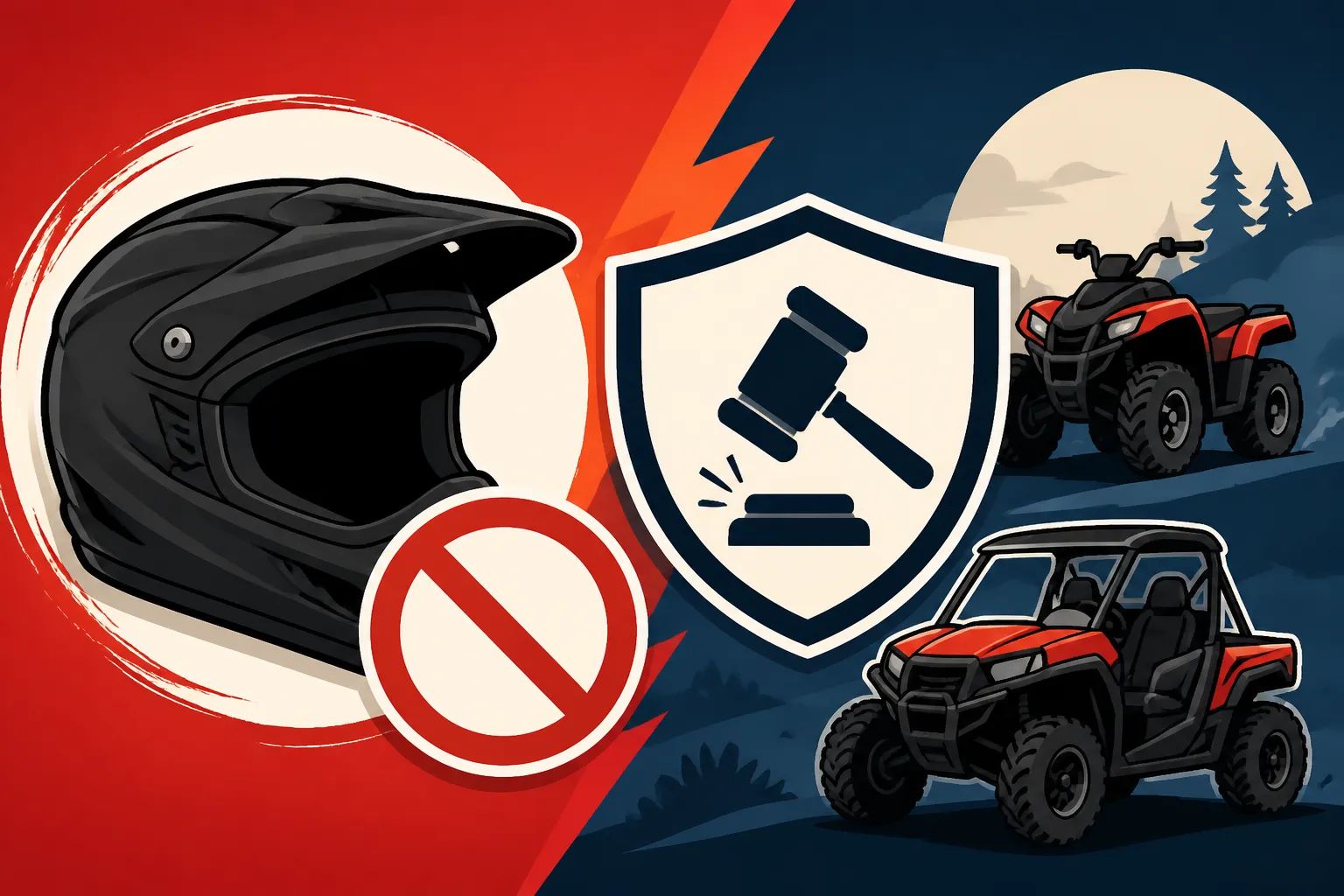
This is where the rubber meets the road, or perhaps, where the fun stops. Many people assume a helmet violation is just a minor traffic infraction, a slap on the wrist, something you pay off and forget about. In Georgia, however, for those under 18, it's far more serious. It's categorized as a misdemeanor, which carries a weight that can impact your life long after the dust settles.
Defining a Misdemeanor in Georgia Law
In Georgia, a misdemeanor is a specific class of criminal offense. It's not a felony (the most serious type of crime), but it's also not merely a civil infraction like a parking ticket or a minor speeding ticket that typically just involves a fine. A misdemeanor is a criminal charge, meaning it goes on your permanent criminal record. This distinction is crucial and often misunderstood.
When we talk about a misdemeanor, we're talking about potential penalties that can include more than just a fine. Under Georgia law (O.C.G.A. § 17-10-3), the punishment for a misdemeanor, unless otherwise specified, can include imprisonment for up to 12 months, a fine of up to $1,000, or both. For a helmet violation, while jail time is probably unlikely for a first offense, the possibility is there, and a hefty fine is almost guaranteed. More importantly, the legal process will involve a court appearance, potentially a public defender or hiring an attorney, and navigating the criminal justice system. This is a far cry from mailing in a check for a minor traffic offense.
The Immediate and Long-Term Consequences of a Misdemeanor
The impact of a misdemeanor conviction extends far beyond the initial court date. Immediately, you're looking at significant financial penalties. While the [Georgia Helmet Fine Amount] isn't specified in dollar figures here, understand that it will be a substantial fine, likely hundreds of dollars, plus court costs. You'll have to take time off work or school for court appearances, which can be disruptive and stressful. In some cases, depending on the circumstances, the officer might even have the discretion to impound the vehicle, adding towing and storage fees to your woes.
The long-term consequences are arguably even more concerning. A criminal record, even for a misdemeanor, can follow you for years. It can show up on background checks for employment, making it harder to get certain jobs or even rent an apartment. Some professional licenses might require you to disclose criminal convictions. While a helmet violation might seem minor, it can be seen as a disregard for safety laws, which can be a red flag for employers or educational institutions. It can also impact future insurance rates, as carriers might view you as a higher risk. This isn't just about a one-time penalty; it's about potential roadblocks to future opportunities. It's completely understandable to feel frustrated by the severity of this, especially if you or your child truly didn't realize the legal implications.
Who Enforces These Rules?
So, who's actually out there enforcing these helmet laws? It's not always just a specific "ATV police." In Georgia, enforcement can come from several different agencies, often depending on where the violation occurs.
Local law enforcement, such as county sheriff's deputies or municipal police officers, are primarily responsible for enforcing traffic and safety laws on public roads, including county roads where registered MPOHVs are permitted. They are the ones most likely to encounter riders on these access points and assess compliance. The fact that [Georgia Sheriff Enforcement on County Roads] is actively occurring means riders need to be vigilant.
Additionally, Georgia Department of Natural Resources (DNR) rangers often patrol state parks, wildlife management areas (WMAs), and other public lands where off-road vehicles might be operated. While WMAs have specific rules, if an ATV or UTV is being operated in an area where general state laws apply, DNR can certainly issue citations for helmet violations. These officers are well-versed in outdoor recreation laws.
When a deputy or officer pulls you over, they'll check the age of the operator and any passengers. If someone under 18 isn't wearing a DOT-compliant helmet, that's when the misdemeanor charge comes into play. They're not just looking for reckless driving; they're checking for basic safety compliance, especially concerning minors.
Avoiding the Helmet Headache: Practical Steps and Exemptions
Nobody wants a misdemeanor on their record, especially not for something that could be easily avoided. Understanding the law is the first step, but taking practical action is what truly keeps you out of trouble.
Always Gear Up, Especially for Younger Riders
The easiest and most effective way to avoid a helmet violation is simple: wear one. And not just any helmet, but a DOT-certified one. Even if you're an adult and not legally required to wear a helmet on private land, it's always the safest choice. Accidents can happen anywhere, and a helmet is your best defense against severe head trauma. For parents and guardians, this advice is doubly important. Not only do you set a good example, but you also ensure your minor children are protected and compliant with the law.
If you have a child who rides, make wearing a helmet a non-negotiable rule, every single time they get on the machine. This habit instills a safety-first mindset from a young age. Don't skimp on safety gear, especially helmets. Investing in quality protective equipment from trusted vendors, perhaps like the selection you'd find at SuperATV, isn't just about complying with the law; it's about protecting yourself and your loved ones from serious injury. A good helmet fits properly, is comfortable, and won't obstruct vision or hearing more than necessary. It's a small investment for potentially life-saving protection.
Key Exemptions to Georgia's Helmet Law
While the under-18 helmet rule is quite broad, there are specific, limited exemptions in Georgia law that riders should be aware of. These are not general loopholes to avoid the law, but rather narrowly defined situations where the helmet requirement is lifted.
The most common exemptions revolve around agricultural or farming purposes and commercial activity. For example, if a minor is operating an ATV or UTV as part of their job on a farm, directly performing agricultural duties (like checking fences, hauling feed, or spraying crops), they may be exempt from the helmet requirement. Similarly, if the machine is being used for specific commercial activities, such as logging or mining operations, an exemption might apply.
It's absolutely critical to understand that these exemptions are not for recreational riding, even if that riding happens to be on private farm land. The key is the purpose of the operation. If a minor is riding for fun, even on a farm, the helmet law still applies if they venture onto public roads. Always consult the specific Georgia statutes or a legal professional if you believe an exemption applies to your situation, as misinterpreting these can still lead to a misdemeanor charge. The [Georgia Farm and Logging Helmet Exemption] and [Georgia Commercial Use Helmet Exemption] spell out these specific situations.
Understanding Road Access and Helmet Rules
Navigating Georgia's rules for road access with an ATV or UTV is already complex. The addition of helmet laws adds another layer of consideration. If you choose to register your side-by-side as a Multipurpose Off-Highway Vehicle (MPOHV) to gain access to county roads in Georgia, you're essentially opting into a stricter set of rules, including those governing helmets for minors.
The moment your under-18 rider steps onto a county road in a registered MPOHV, they fall under the helmet mandate. This applies even if it's just to cross a state route at a designated crossing point, as outlined in [Georgia Crossings at Designated Points]. It doesn't matter if it's a dirt road, a paved county road, or a gravel path maintained by the county – if it's a public road, the law applies. Understanding [Georgia MPOHV Road Rules: County Roads Only] is vital for all registered riders, but especially for those with young passengers or operators.
For those who stick strictly to private land and unregistered machines, the state's public road helmet law technically doesn't apply. However, that doesn't negate the significant safety benefits of wearing a helmet, or the potential for liability in the event of an accident. Always prioritize safety, regardless of the letter of the law.
Here’s a quick overview of Georgia's helmet requirements and consequences:
| Feature | Applies To | Helmet Required? | Legal Status of Violation | Potential Penalties |
|---|---|---|---|---|
| Age | Operators & Passengers under 18 years old | Yes | Misdemeanor | Fines up to $1,000, up to 12 months jail, criminal record |
| Riding Location | Public roads (including county roads), public lands | Yes | Misdemeanor | Fines up to $1,000, up to 12 months jail, criminal record |
| Helmet Type | Must be DOT-compliant | Yes | Misdemeanor | Fines up to $1,000, up to 12 months jail, criminal record |
| Adults (18+) | On public roads/lands | No (but highly recommended for safety) | N/A | N/A |
| Private Land (Any Age) | Strictly private property, not crossing public access | No (but highly recommended for safety) | N/A | N/A |
| Exemptions | Minors engaged in agricultural/commercial work (specific conditions apply) | No | N/A | Must meet strict legal definitions of work, not recreational |
Remember, this article is for general informational purposes only and does not constitute professional advice. Laws, prices and regulations vary by location and change over time. Consult a qualified professional for guidance on your specific situation.