Driver’s License Requirements on a County Road
There's often a bit of a gray area, or at least a lot of confusion, when it comes to riding ATVs and UTVs on public roads in Georgia. Many folks assume that if they own a side-by-side, they can just hop on a county road, especially if they're just trying to get from one section of their property to another. But what about the driver? Does the person behind the wheel need a standard driver's license? This guide will clear up the rules surrounding driver's license requirements for off-highway vehicles on Georgia's county road systems, helping you understand when a license is a must and when your machine simply shouldn't be there at all.
Understanding Georgia's MPOHV and Licensing Basics
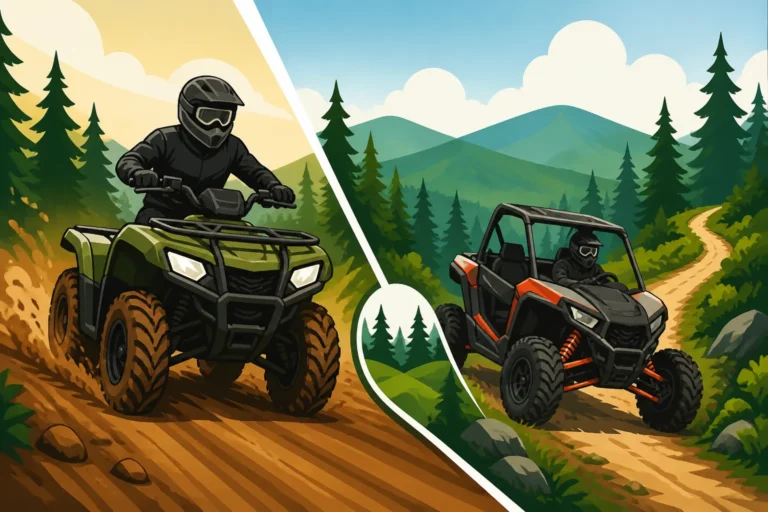
The biggest source of confusion surrounding off-road vehicles on public roads in Georgia stems from the distinction between a typical ATV (All-Terrain Vehicle) and what the state now recognizes as a Multi-purpose Off-Highway Vehicle, or MPOHV. For the most part, a traditional quad-style ATV is not designed or legally permitted for road use, and therefore, driver's license requirements for road use don't typically apply to them because they shouldn't be there in the first place. However, certain UTVs (Utility Task Vehicles) and side-by-sides can be registered as MPOHVs, and that's where the licensing conversation really begins.
Why MPOHV Registration Matters for Licensing
Before you even think about whether you need a driver's license to operate your off-highway vehicle on a Georgia county road, you first need to understand if your machine qualifies for road access at all. Georgia has specific criteria for MPOHV registration, which essentially transforms a qualifying UTV from an "off-road only" machine into one that can legally traverse certain public roads. Without this registration, your vehicle is considered an off-road machine, regardless of who's driving, and shouldn't be on the pavement.
This means that if you're riding a standard ATV, [Why a Four-Wheeler Cannot Be Registered in Georgia], you won't be dealing with driver's license requirements for county road use because the machine itself isn't eligible for those roads. The rules are designed specifically for the machines that meet the MPOHV definition, which generally includes side-by-sides with features like a steering wheel, seat belts, and non-straddle seating. [Georgia MPOHV Registration Explained] goes into detail about what qualifies.
The General Rule for Public Road Access
Simply put, if you want to operate any motor vehicle on a public road in Georgia, including a registered MPOHV, the operator must hold a valid driver's license. There's no special carve-out for MPOHVs that allows unlicensed drivers to operate them on county roads. This aligns with the fundamental principle of road safety and legal operation for all motor vehicles.
Think of it this way: once your UTV is registered as an MPOHV and you gain the privilege of riding on designated county roads, it falls under many of the same rules as other vehicles concerning driver competency. This includes having a license. It's a key piece of the puzzle, right alongside ensuring your machine is properly insured and displaying a valid plate. [Georgia Liability Insurance Tied to Registration] is another important aspect you'll need to consider.
The Specifics of Driving a Registered MPOHV on County Roads
For those fortunate enough to own a side-by-side that meets the state's stringent MPOHV criteria and have gone through the process of [Registering a Side-by-Side in Georgia], understanding the driver's license rules is paramount. It’s not just about having a license; it’s about having the right kind of license and understanding the age restrictions that go along with it.
Standard Driver's License Required for MPOHVs
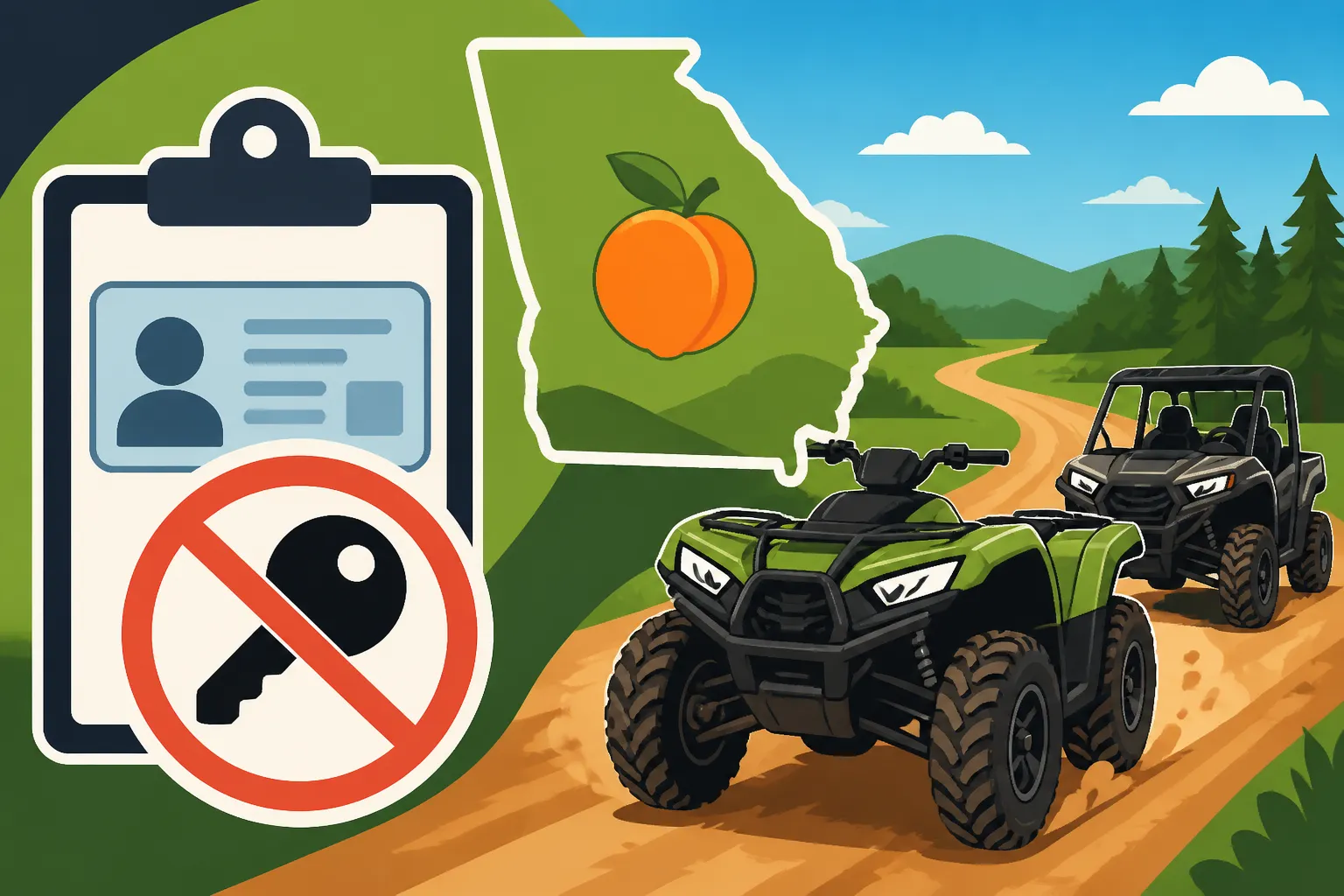
If your UTV is officially registered as an MPOHV and you're planning to take it onto a county road, the operator must possess a valid Georgia driver's license. This isn't a learner's permit, but a full, unencumbered driver's license. The state code is quite clear on this: operating a motor vehicle on a public roadway requires a licensed driver.
This requirement doesn't change based on how far you're going or how remote the county road might be. Whether you're crossing a state highway at a designated point or traveling a mile down a dirt county road, the operator needs to be licensed. Law enforcement officers, particularly county sheriffs, are increasingly aware of these new MPOHV rules and are enforcing them. [Georgia Sheriff Enforcement on County Roads] means you need to be prepared.
Age Restrictions for MPOHV Operators
The minimum age to operate a registered MPOHV on a county road system in Georgia aligns directly with the state's driver's licensing laws. This means an individual must be at least 16 years old to hold a Class C driver's license, which is the standard license required. Therefore, a 16-year-old with a valid Georgia driver's license can operate a registered MPOHV on designated county roads.
It’s important to note that this differs from rules that might apply to private land or even some golf cart ordinances in specific cities like Peachtree City. The MPOHV rules for county roads are stricter because you're sharing public thoroughfares with other vehicles. A 15-year-old with a learner's permit, for example, would typically not be allowed to operate an MPOHV alone on a county road, as they still require a licensed driver (21 or older) to be in the passenger seat, which may not even be feasible for some MPOHV configurations. [Georgia Minimum Age on a Public Road] outlines these age rules in more detail.
| Scenario | Machine Type | On County Road? | Driver's License Required? | Minimum Age (Licensed) |
|---|---|---|---|---|
| Driving a Registered MPOHV | UTV/Side-by-Side (MPOHV) | Yes | Yes | 16 (with full license) |
| Driving an Unregistered UTV | UTV/Side-by-Side (not MPOHV) | No | N/A (shouldn't be on road) | N/A |
| Driving a Standard ATV (Quad) | ATV | No | N/A (shouldn't be on road) | N/A |
| On Private Land | ATV/UTV | No | No (generally) | Varies by owner |
Age and Licensing Beyond the Standard Driver's License
While the primary rule is a valid driver's license for county road MPOHV operation, it's worth exploring how other scenarios or types of licenses might fit in, or more often, don't fit in. This section aims to clarify common misconceptions and emphasize the importance of adhering to the strict MPOHV framework.
Provisional Licenses and Their Limitations
A provisional license (Class D) in Georgia, typically issued to 16 and 17-year-olds, comes with certain restrictions, such as limits on passengers and driving hours. While it is a valid form of driver's license, the specific MPOHV rules do not explicitly address provisional licenses for these vehicles. However, since a provisional license is a driver's license, it generally satisfies the licensing requirement for an MPOHV operator on county roads.
Still, it's crucial for young drivers and their parents to be aware of the provisional license restrictions themselves. For instance, if a 16-year-old with a provisional license is driving an MPOHV on a county road with more than one non-family passenger, they could be in violation of their provisional license terms, regardless of the MPOHV's legal status. Always double-check the specific limitations of a provisional license before hitting the road.
What About Farm Use or Commercial Exemptions?
Georgia law does provide some exemptions for certain agricultural or commercial activities when it comes to operating equipment on public roads. However, these are very specific and generally apply to tractors, farm implements, or heavy equipment for short distances. They do not typically extend to ATVs or UTVs being used for general transportation on county roads, even if you are using your UTV on your farm.
The MPOHV registration is a separate pathway for specific UTVs to gain road access, and it carries its own set of rules, including the driver's license requirement. Do not confuse broad agricultural exemptions, which might allow an unlicensed 15-year-old to drive a tractor across a road for farm work, with the MPOHV rules for side-by-sides. If you are operating a UTV as an MPOHV, the driver's license rule applies. If you're using a UTV for legitimate farm work that might qualify for an exemption, ensure you fully understand the letter of the law and are not relying on hearsay.
Consequences of Unlicensed Operation and Driving Non-Compliant Machines
Ignoring the driver's license requirements for MPOHV operation on county roads, or attempting to drive a non-compliant off-road machine on public roads, can lead to serious legal and financial repercussions. It's not just a slap on the wrist; these violations can result in significant penalties and complications.
Penalties for Driving Without a License
Operating any motor vehicle on a Georgia public road without a valid driver's license is a serious offense. If you are caught driving a registered MPOHV on a county road without a license, you could face fines, court appearances, and potentially even vehicle impoundment. This is the same consequence someone driving an unlicensed car or truck would face.
Furthermore, if an accident occurs while an unlicensed driver is operating an MPOHV on a county road, the legal ramifications can escalate dramatically. Insurance coverage might be voided, leaving the driver and owner personally liable for damages and injuries. It's simply not worth the risk. [Georgia Ticket Cost for Illegal Road Riding] and [Georgia Impound Rules After a Violation] are not something you want to experience.
Risks of Driving Unregistered or Non-Compliant Machines on Roads
Even if you do have a valid driver's license, operating an off-road machine that is not registered as an MPOHV on a county road is illegal. This applies to traditional ATVs and UTVs that do not meet Georgia's [Georgia MPOHV Eligibility: The Eight-Point Test]. These machines are simply not allowed on public roads, with very limited exceptions such as direct crossings at designated points, and only then under strict conditions.
Companies like SuperATV offer a wide range of accessories for UTVs, and while many owners modify their machines for performance or aesthetics, it's critical to remember that adding aftermarket parts alone doesn't make an unregistered UTV street legal in Georgia. The machine must first meet the MPOHV criteria and then be properly registered with the Georgia Department of Revenue. Without that, having a driver's license is irrelevant because the vehicle itself is not permitted on the road. The best-case scenario for driving an unregistered, non-compliant machine on a county road is a citation; the worst involves serious accidents, injuries, and immense legal liability. [Georgia Penalties for an Unregistered Road Machine] can be quite substantial.
Disclaimer
This article is for general informational purposes only and does not constitute professional advice. Laws, prices and regulations vary by location and change over time. Consult a qualified professional for guidance on your specific situation.