Liability Coverage a Deputy Will Ask About
It can be incredibly confusing trying to figure out all the nuances of getting your side-by-side or ATV legal for county roads here in Georgia. One minute you're just riding on private land, and the next you're thinking about official state requirements like registration and, yes, liability insurance. It's easy to worry about what might happen if a deputy pulls you over and asks about your coverage. This guide is here to walk you through exactly what liability insurance means for your off-road machine in Georgia and what a law enforcement officer expects to see.
The Mandate for Liability Insurance on Georgia's County Roads
For years, many of us happily rode our ATVs and UTVs exclusively on private property, never giving a second thought to things like vehicle registration or insurance beyond what our homeowner's policy might cover. But then, Georgia made some changes, opening up the possibility for certain types of off-highway vehicles (what they call MPOHVs) to legally access county roads. And with that access came new responsibilities, mirroring those of traditional street-legal vehicles. It's a big shift, and understanding the 'why' behind it helps make the 'what' clearer.
Why Georgia Now Requires MPOHV Insurance
The ability to operate a qualified MPOHV on designated Georgia county roads is a relatively new development, one that many of us in the off-road community have welcomed. However, this privilege comes with a crucial stipulation: if your machine is registered to be on the road, it must be insured. This isn't just a suggestion; it's a direct reflection of how Georgia handles all other vehicles permitted on its public roadways. The state wants to ensure that if an accident occurs, there's a financial safety net in place to protect innocent parties. It's about accountability and shared responsibility when you enter the public sphere.
Think about it this way: if you're driving your car down a county road, you absolutely need liability insurance. The state’s logic is that if your MPOHV, like a Polaris Ranger or a Kawasaki Mule, is also on that same county road, it should adhere to similar standards of financial responsibility. This is why when you go through the process outlined in [Georgia MPOHV Registration Explained], you'll find that proving you have insurance is a critical step. Without it, you simply won't get that registration or the permission to ride those county roads.
This requirement helps bridge the gap between recreational use on private land and integrated use on public infrastructure. It ensures that the peace of mind isn't just for the rider, but for everyone else sharing those roads, whether they're in a car, on a bicycle, or simply walking. The intent is to prevent situations where an accident involving an MPOHV leaves victims with no recourse for medical bills or property damage, which is a very real and significant concern for lawmakers.
What "Liability Coverage" Actually Means for Your Machine
When we talk about "liability coverage," it's essential to understand exactly what it's designed to protect. In the simplest terms, liability insurance is there to cover damages and injuries you cause to other people or their property. It's not about fixing your machine if you roll it or paying for your medical bills if you take a tumble. That's where other types of coverage come in, which we'll touch on later. But for the legal requirement, liability is the star of the show.
Imagine you're cruising down a gravel county road and, through no fault of your own, you misjudge a turn and clip the corner of a farmer's fence, causing a few hundred dollars in damage. Or, perhaps more seriously, you get into a low-speed collision with another vehicle, and their driver sustains an injury requiring a doctor's visit. In these scenarios, your liability insurance would step in to cover the costs associated with repairing that fence or paying for the other driver's medical expenses, up to your policy limits. Without it, those costs would fall squarely on your shoulders, and let's be honest, those can add up incredibly fast.
This coverage is fundamental because it provides a baseline of protection for anyone else you might encounter while legally operating your MPOHV on a public road. It’s what [Georgia Liability Insurance Tied to Registration] is all about. It gives you, and by extension the state, a level of assurance that you won't leave someone else high and dry if an unfortunate incident occurs. It's a crucial component of responsible MPOHV ownership, especially if you plan to venture beyond private property lines.
What a Deputy Will Look For When You're Pulled Over
If you're out enjoying those permissible county roads on your registered MPOHV, the last thing you want is an unexpected stop by a deputy. While most interactions will be friendly and simply for verification, it's vital to be prepared for what they might ask about regarding your insurance. Having your ducks in a row can make a potentially stressful situation much smoother and quicker.
Proof of Insurance on Demand
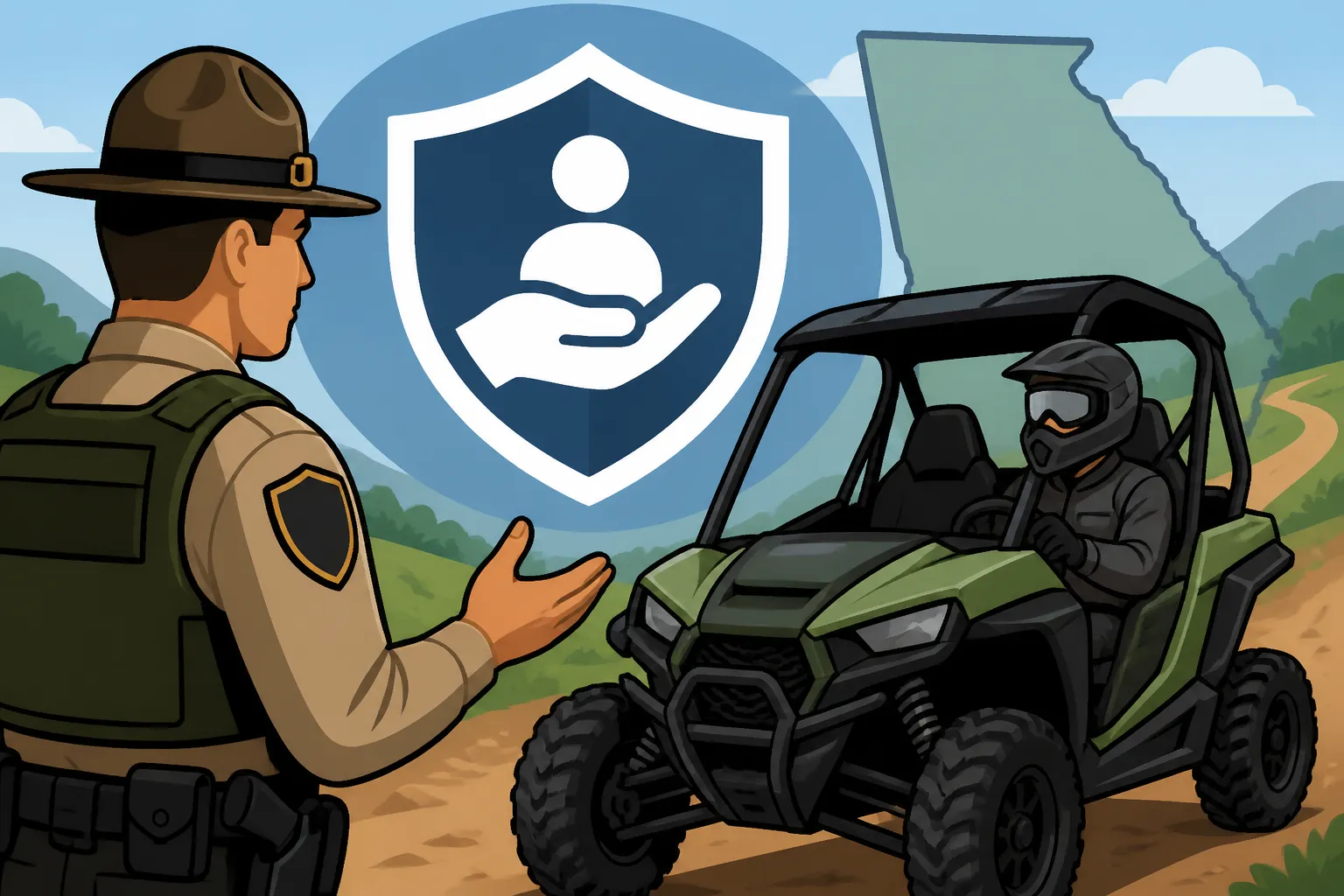
Just like with your regular car, when a Georgia deputy pulls you over while you're operating your MPOHV on a county road, one of the very first things they'll ask for is your proof of insurance. This isn't unique to off-road vehicles; it's standard procedure for any vehicle on a public road. They need to confirm that you are carrying the legally mandated coverage.
Your proof of insurance can come in a few common forms. Many insurance companies still issue physical insurance cards that fit perfectly in your wallet or glove box. However, in this digital age, many providers also offer digital versions that you can pull up on your smartphone. Regardless of the format, the key is accessibility. You need to be able to present it quickly and clearly to the officer. Don't make them wait while you dig through a pile of receipts or struggle to load an app with no cell service. Having it neatly organized with your registration paperwork, perhaps even in a small waterproof pouch on your machine, is an excellent practice. This simple step is a core part of the [Georgia Registration Paperwork Checklist] for a smooth experience.
Failing to provide proof of insurance can lead to a citation, even if you technically have coverage. It's the "on-demand" part that matters. So, before you even roll out of your driveway onto that county road, double-check that your proof of insurance is right where you can easily grab it. This minor preparation can save you a lot of hassle and potential fines down the road.
Verifying Your Coverage is Active and Valid
Beyond just seeing a piece of paper or a screen, a deputy's main concern is verifying that the liability coverage you're presenting is indeed active and valid for your specific MPOHV. They're looking for a current policy date, confirmation of your machine's details, and that the coverage meets Georgia's minimum requirements. While they typically won't delve into the specifics of your policy limits on the spot, they need to ensure that the policy isn't expired or canceled.
Most often, the deputy will simply note the policy number, effective dates, and the name of the insurance carrier from your card or digital document. If there's any doubt or if the information seems outdated, they might run a quick check through their dispatch to confirm the policy's status. This is why maintaining [Continuous Insurance and Renewal Time] is so critical. An expired policy, even by a day or two, can be just as problematic as having no policy at all in the eyes of the law.
They aren't looking to play insurance agent; they just need to ensure that you, as an operator of a registered MPOHV on a public road, are upholding your legal responsibility. It’s about ensuring that the safety net is truly there. Any modifications you've made to your machine, like a lift kit or heavy-duty bumper from SuperATV, won't typically be a concern for them in this context, but ensuring your insurance company is aware of significant upgrades is always a good idea for your own comprehensive coverage. Their focus is purely on the legal requirement for minimum liability.
Meeting Georgia's Minimum Insurance Requirements for MPOHVs
Understanding that liability insurance is required is one thing; knowing the specifics of what Georgia expects in terms of coverage amounts is another. These figures are not arbitrary; they are set to provide a baseline level of protection for anyone involved in an accident caused by your registered MPOHV on a county road.
The Specific Dollar Amounts Georgia Expects
Georgia, like most states, mandates specific minimum liability limits for vehicles operating on its public roads. While I can't provide exact dollar figures that might change over time, I can explain the shape of these requirements. You'll typically see these limits expressed in a split format, often like "A/B/C" – for example, 25/50/25 or similar. These numbers represent:
- A (Bodily Injury per Person): The maximum amount your insurance will pay for injuries sustained by one person in an accident you cause.
- B (Bodily Injury per Accident): The maximum amount your insurance will pay for all injuries in an entire accident you cause, regardless of how many people are hurt (but still subject to the "per person" limit).
- C (Property Damage per Accident): The maximum amount your insurance will pay for damage to property in an accident you cause. This could be another vehicle, a fence, a utility pole, or any other physical property.
These are the absolute minimums. It's always a good idea to discuss these with an insurance agent, as they can explain the current figures and help you understand the potential benefits of carrying higher limits. While these minimums are what a deputy will be looking for you to meet to comply with the law, they might not always be enough to cover the full costs of a serious accident. For the most up-to-date and precise figures, you should always consult the official Georgia Department of Driver Services (DDS) guidelines or speak directly with a licensed insurance professional. This is the cornerstone of [Georgia Insurance Minimums for Road Use].
How to Get Your MPOHV Insured
Getting your MPOHV insured is usually a straightforward process, especially if you already have an existing auto insurance policy. Your first and often best step is to contact your current auto insurance provider. Many major insurance companies that cover cars and trucks also offer specialized policies for recreational vehicles, including side-by-sides and ATVs. Bundling your policies can sometimes even lead to discounts, which is always a bonus!
If your current provider doesn't offer MPOHV coverage, or if you're looking for more specialized options, there are numerous insurance companies that focus specifically on off-road vehicles. These companies often understand the unique risks and uses of machines like UTVs and can offer policies tailored to those needs. When you're speaking with an agent, be transparent about how you plan to use your machine – whether it's primarily for trail riding, farm work, or cruising county roads – as this can affect your coverage options and premiums.
Factors that influence your insurance premiums typically include the make, model, and year of your machine, its estimated value, your driving history, where you live, and what kind of coverage you select. If you've outfitted your UTV with significant aftermarket parts, such as a heavy-duty winch or custom suspension from SuperATV, be sure to discuss these with your insurance agent. Some policies might offer additional coverage riders for accessories, ensuring that your full investment is protected beyond just the base machine. It's a simple conversation that ensures you're adequately covered, whatever adventures you pursue.
Avoiding Common Pitfalls and Staying Legal
Nobody wants to deal with fines, penalties, or the aftermath of an accident without proper coverage. Understanding the consequences of riding uninsured and knowing what other insurance options exist can help you stay legal and protect your investment in your MPOHV.
The Consequences of Riding Uninsured on County Roads
Riding your registered MPOHV on Georgia county roads without the required liability insurance can lead to some pretty serious headaches. It’s not just a minor slap on the wrist; the state takes uninsured driving seriously, regardless of whether it’s in a car or a side-by-side. If a deputy pulls you over and you cannot produce valid proof of insurance, you’ll likely receive a citation. This can mean substantial fines, and in some cases, your MPOHV could even be impounded. Imagine the hassle and expense of retrieving your machine from impound, on top of paying a hefty fine and then still needing to secure insurance! This is a very real scenario that contributes to [Georgia Penalties for an Unregistered Road Machine] because often an uninsured machine is also unregistered.
Beyond the immediate legal repercussions, the financial consequences if you're involved in an accident can be catastrophic. If you cause an accident and don't have liability insurance, you are personally responsible for all the damages and injuries. This could mean thousands of dollars in property repair bills, medical expenses for the injured parties, and even legal fees if they decide to sue you. All those costs would come directly out of your pocket. It's a risk that far outweighs the cost of an insurance policy. The whole point of the system is to protect everyone, and when you opt out, you expose yourself to immense personal liability.
This is why, as much as we love the freedom of off-roading, operating a machine on public roads comes with a different set of rules and responsibilities. It’s not about stifling fun, but ensuring safety and financial accountability for everyone. So, make sure your insurance is current and accessible every single time you venture out onto those county roads.
Beyond Liability: Considering Additional Protections
While liability coverage is the only legally mandated insurance for operating your MPOHV on Georgia county roads, it's far from the only type of protection available. Many owners choose to invest in additional coverage options to safeguard their valuable machines and their own well-being. Thinking about comprehensive, collision, and uninsured/underinsured motorist coverage is a smart move for complete peace of mind.
- Collision Coverage: This pays for damages to your MPOHV if it collides with another vehicle or object (like a tree or a ditch). If you've invested a significant amount in your machine, perhaps customizing it with parts from SuperATV, collision coverage is invaluable. Without it, a single rollover or impact could leave you with a damaged machine and no way to pay for repairs.
- Comprehensive Coverage: This protects your MPOHV from non-collision-related incidents, such as theft, vandalism, fire, or damage from natural disasters (like a fallen tree or hail). If you park your side-by-side in a shed or garage, especially if it's left unattended for periods, this coverage is essential for protecting against risks that aren't tied to riding.
- Uninsured/Underinsured Motorist Coverage: This protects you if you're hit by another driver who either has no insurance or not enough insurance to cover your damages and medical bills. While you're required to have liability insurance for your MPOHV, not everyone else on the road does, or they might only carry the bare minimum. This coverage acts as a critical safety net for you in those unfortunate scenarios.
Considering these additional coverages is a personal choice, but for many MPOHV owners, the added protection is well worth the investment. It transforms your insurance from a mere legal requirement into a comprehensive shield for your finances, your health, and your cherished machine. When you're out on the county roads, knowing that you're fully protected allows you to focus on the ride itself, rather than worrying about what might happen. Understanding these layers of protection is key to truly enjoying the freedom that [Are Side-by-Sides Street Legal in Georgia?] offers.
| Coverage Type | What It Primarily Covers | Is It Legally Required in Georgia (for MPOHVs on roads)? |
|---|---|---|
| Liability (Bodily Injury) | Injuries you cause to other people | Yes |
| Liability (Property Damage) | Damage you cause to other people's property | Yes |
| Collision | Damage to your MPOHV from an accident or rollover | No (Optional, but highly recommended) |
| Comprehensive | Damage to your MPOHV from non-collision events (theft, fire, etc.) | No (Optional, but highly recommended) |
| Uninsured/Underinsured Motorist | Your injuries/damages if hit by an uninsured/underinsured driver | No (Optional, but highly recommended) |
Disclaimer
This article is for general informational purposes only and does not constitute professional advice. Laws, prices and regulations vary by location and change over time. Consult a qualified professional for guidance on your specific situation.