Georgia Rules for Clearing a Road After a Storm
When a severe storm tears through Georgia, leaving behind a devastating trail of downed trees, tangled power lines, and widespread debris, the immediate aftermath can feel overwhelming for property owners and rural communities alike. In these moments, many naturally look to their rugged ATVs and UTVs as indispensable tools for quickly clearing blocked paths and restoring vital access. Yet, the impulse to jump in and help, while noble, often clashes with Georgia's specific regulations regarding off-road vehicles on public roads, even in emergencies. This guide will walk you through the nuances of using your side-by-side or quad for storm cleanup, ensuring you understand both the legal boundaries and the safest, most effective ways to contribute.
When Good Intentions Meet Georgia Law: The Complicated Reality of UTVs on Storm-Damaged Roads
It’s an age-old dilemma: a crisis strikes, and you have the means and the heart to help, but suddenly you're wondering if your good deed could land you in legal hot water. This is a very real concern for Georgia residents with ATVs and UTVs after a major storm. While your side-by-side might be perfectly suited for dragging limbs or hauling debris, its legal status on public roads, even those choked with wreckage, is a complex issue.
Understanding the "Public Road" Conundrum
Georgia law, specifically when it comes to off-road vehicles, makes a clear distinction between private property and public roads. Generally speaking, ATVs and most UTVs are not designed or legally permitted for street use. The state has recently introduced a specific registration for Multipurpose Off-Highway Vehicles (MPOHVs) – essentially a limited class of side-by-sides – allowing them on county roads under very specific conditions. However, even with this new registration, the rules are tight.
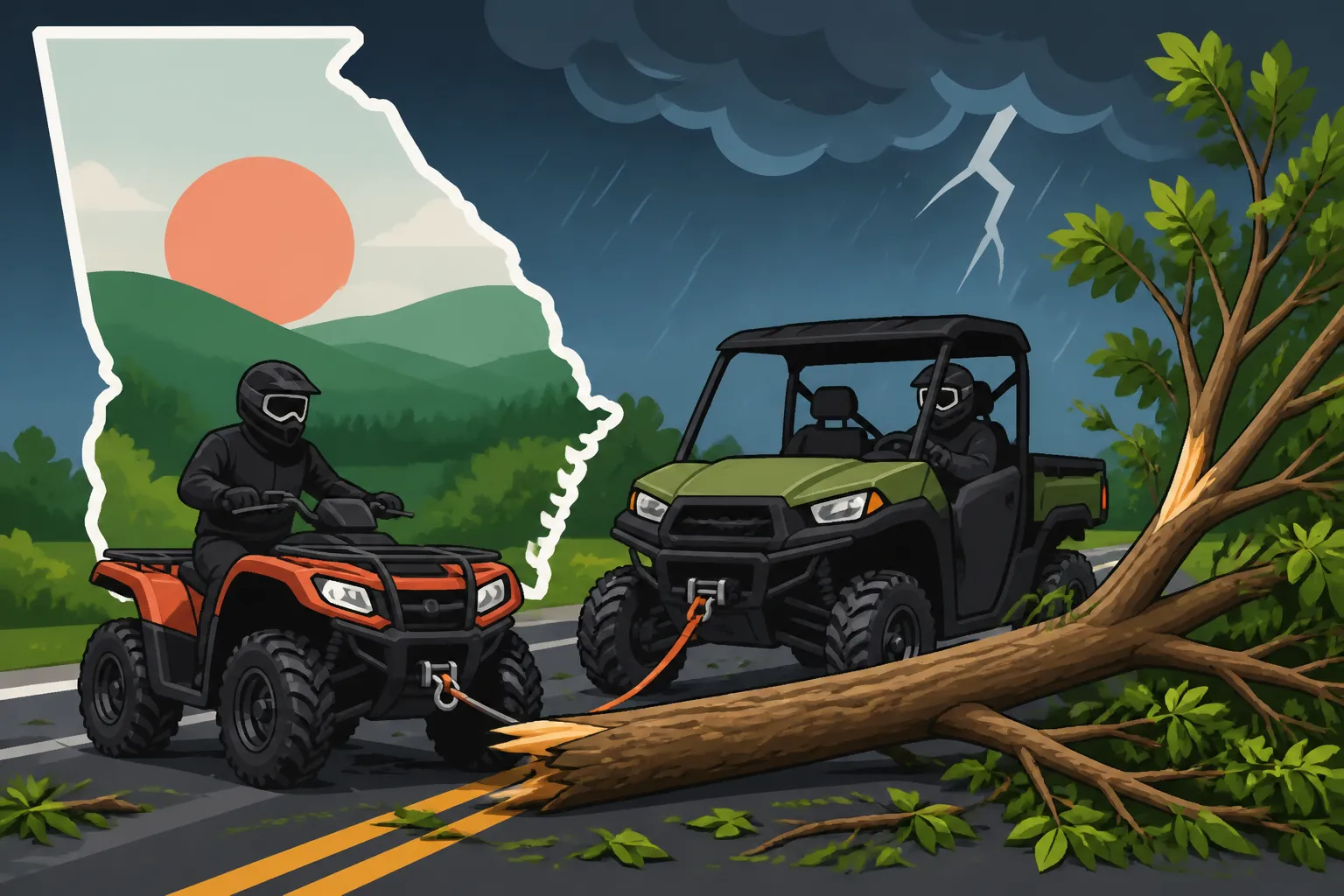
Imagine your local county road, usually a quiet stretch of asphalt or packed dirt. After a hurricane or an ice storm, it might be impassable, littered with massive oak branches and snapped utility poles. Your instinct is to hook up a chain to your UTV and start pulling. But here's the rub: if your UTV isn't specifically registered as an MPOHV, and doesn't meet all the stringent requirements, operating it on that public county road, even to clear storm debris, could technically be a violation. Law enforcement, stretched thin during these emergencies, might be focusing on safety and traffic control, but they still have a job to do. Understanding [Georgia MPOHV Registration Explained] is crucial here, as it dictates where and how these machines can legally operate on roads. If your machine doesn't qualify for this special plate, then legally, it shouldn't be on the county road at all, storm or no storm.
The Emergency Exemption Debate
You might wonder, "Doesn't an emergency situation create an exception?" This is a grey area that often leads to frustration. While emergency responders, utility crews, and other authorized personnel will certainly be using specialized equipment, including modified utility vehicles, the average citizen on their personal ATV or UTV typically doesn't automatically gain an "emergency exemption" for public road use. There isn't a blanket rule that says "all off-road vehicles are street-legal after a hurricane."
Consider a scenario where you've got a neighbor down the road who needs immediate access for an emergency vehicle, or perhaps a tree is blocking the path to deliver crucial supplies. You have a capable side-by-side, maybe even one outfitted with a heavy-duty SuperATV winch kit, and you could easily clear that obstruction. In practice, local law enforcement might exercise discretion, especially in truly life-or-death situations where no other means are available. However, relying on this discretion is risky. It's far safer to assume the standard rules still apply unless explicitly instructed otherwise by official emergency services. Operating a machine that doesn't meet the requirements for [Georgia Plates for Off-Highway Vehicles] could put you in a tough spot if an officer decides to enforce the letter of the law.
Equipping Your Machine for Responsible Storm Cleanup: Tools and Best Practices
If you're going to use your ATV or UTV for storm cleanup, whether on your own private property or, with proper authorization, on public access points, preparation is key. This isn't just about raw power; it's about having the right gear and knowing how to use it safely and effectively.
Essential Gear for Debris Removal
When it comes to tackling storm debris, your ATV or UTV can be an incredible asset, but only if it's properly equipped. First and foremost, a reliable winch is almost non-negotiable for moving heavy limbs, logs, or other obstructions. Many riders opt for a heavy-duty winch from brands like SuperATV, known for their robust build and pulling power. Make sure your winch is properly installed, regularly maintained, and that you understand its capacity and safe operating procedures. Never exceed the rated pulling capacity of your winch or your vehicle.
Beyond the winch, consider these essentials:
- Chains and Straps: High-quality recovery straps and chains are vital. Avoid using cheap tow ropes that can snap under heavy loads, creating dangerous projectiles.
- Chainsaw and Safety Gear: A good chainsaw is critical for breaking down larger debris. Always pair this with appropriate personal protective equipment (PPE): helmet with face shield, hearing protection, chaps, and gloves. Keep your chainsaw sharp and fueled.
- Hand Tools: Axes, loppers, and handsaws are great for smaller branches and precise cuts.
- Work Gloves: Protect your hands from splinters, sharp edges, and fatigue.
- Shovel and Rake: For clearing smaller debris, mud, and leaves.
- First-Aid Kit: Accidents happen, especially during strenuous cleanup. A well-stocked kit is non-negotiable.
- Communication Device: A fully charged cell phone, or even a two-way radio if service is spotty, is crucial for coordinating with others or calling for help.
When using your UTV for towing, such as pulling a trailer loaded with storm debris, ensure you're aware of your machine's towing capacity and remember that [Georgia Rules for Towing With a Side-by-Side] typically apply only on private land, or on designated MPOHV-legal roads, and not usually on state highways.
Operating Safely and Effectively
Operating an ATV or UTV during storm cleanup requires heightened awareness and caution. The environment is inherently more dangerous than a typical trail ride.
- Assess the Damage: Before you even start your engine, thoroughly assess the area. Look for downed power lines (assume they are live!), unstable structures, hidden hazards like sharp metal or glass, and weakened trees that could still fall.
- Work with a Spotter: Never attempt to clear large debris alone. A spotter can provide an extra set of eyes, guide winch operations, and ensure safety clearances.
- Visibility is Key: Wear bright, high-visibility clothing. If working during low light conditions or if you anticipate being out after dark, ensure your machine has adequate lighting and consider adding auxiliary lights, which SuperATV also offers. [Georgia Rules for Riding After Dark] are stricter on public roads, so if you're working on private land, you still want to ensure you're seen.
- Avoid Overloading: Do not try to move objects that are too heavy for your machine or your recovery equipment. Overloading can damage your vehicle, snap ropes, or cause rollovers.
- Stay Hydrated and Take Breaks: Cleanup is physically demanding. Drink plenty of water and take frequent breaks to avoid exhaustion and heat-related illness.
- Know Your Limits: If a task seems too dangerous or too large, call in professionals. Your safety and the safety of others always come first.
Prioritizing Safety and Coordination During Post-Storm Operations
The chaos of a post-storm environment can make it tempting to just grab your keys and start helping. However, a structured, safety-first approach is vital to prevent further accidents and ensure your efforts are truly beneficial.
Coordinating with Local Authorities
The absolute best way to use your ATV or UTV for community cleanup efforts on public lands or roads is to coordinate directly with local emergency management agencies, county road departments, or even volunteer organizations like your local CERT (Community Emergency Response Team). These groups often have a coordinated plan and can identify specific needs and areas where volunteers with appropriate equipment can safely and legally assist.
For instance, your county emergency manager might be able to designate specific, low-traffic [Georgia County Road Systems and Where They Run] where private citizens with MPOHVs can assist with minor debris removal after critical infrastructure has been secured and main routes cleared. They can also provide essential safety briefings, highlight hazardous areas (like active power line repairs), and ensure that your efforts align with the broader recovery plan. Uncoordinated efforts, even well-intentioned ones, can sometimes get in the way of professional responders or even create new hazards. If you are operating a machine that falls under [What MPOHV Actually Stands For] and is properly registered, ask local officials if and where you can lend a hand.
Critical Safety Considerations for All Cleanup Efforts
Beyond the general safety tips for operating your machine, the unique hazards of a storm-damaged landscape demand extra vigilance.
- Downed Power Lines: Treat all downed power lines as live. Maintain a significant distance (at least 35 feet) and report them immediately to emergency services. Never drive over them or attempt to move them yourself.
- Gas Leaks and Other Hazards: Be aware of the smell of natural gas, which can indicate a leak. Report it and evacuate the area. Also, watch out for sharp debris, broken glass, nails, and other hidden dangers that can puncture tires or cause injury.
- Water Hazards: Flooded areas can hide deep holes, sharp objects, and strong currents. Never drive your ATV or UTV through moving water or areas where you cannot see the bottom. The ground underneath could be washed out, or you could encounter unseen debris.
- Fatigue and Impairment: Storm cleanup is exhausting, both physically and mentally. Do not operate heavy machinery, including your ATV or UTV, if you are overly tired or under the influence of alcohol or drugs. Remember, [Georgia DUI Law and Off-Road Machines] applies even on private land, let alone if you're on a public road, authorized or not.
- Personal Protection: Always wear appropriate PPE, including a helmet, eye protection, gloves, sturdy boots, and long sleeves/pants. Visibility vests are also highly recommended.
- Fire Safety: Be extremely careful with chainsaws and other fuel-powered tools. The risk of fire from spilled fuel or hot exhaust is elevated, especially in dry, debris-laden environments. Keep a fire extinguisher readily available.
Looking Ahead: Long-Term Readiness and Community Resilience
Storms are an inevitable part of living in Georgia. While immediate cleanup is critical, taking steps to prepare yourself, your equipment, and your community for future events can make a huge difference in the long run.
Preparing Your UTV for Future Disasters
Think of your ATV or UTV not just as a recreational vehicle, but as a potential asset for disaster response. Regular maintenance is paramount. Ensure your battery is healthy, tires are in good condition, and all fluids are topped off. Consider investing in durable, trail-rated tires from a reputable manufacturer, as they will better withstand punctures from storm debris. Adding a robust front bumper and perhaps a cargo bed extender or small utility trailer can significantly increase your machine's hauling capacity for debris or emergency supplies. Companies like SuperATV offer a wide array of heavy-duty accessories that can transform a recreational machine into a formidable workhorse.
Beyond the machine itself, prepare a "storm kit" for your UTV. This might include:
| Item | Purpose |
|---|---|
| Winch & Recovery Gear | Pulling heavy debris, self-recovery |
| Chainsaw & PPE | Cutting logs and branches (with training!) |
| Basic Tool Kit | Minor repairs, tightening bolts |
| First-Aid Kit | Addressing injuries |
| Water & Non-Perishable Food | Hydration and sustenance for extended operations |
| Fuel (in approved container) | Extending operating time for your UTV or chainsaw |
| High-Visibility Vest | Ensuring you are seen by others, especially in low light |
| Communication Device | Staying in touch with family, friends, or emergency services |
| Headlamp/Flashlight | Working after dark or in obscured areas |
| Work Gloves | Protecting hands from sharp debris |
Having [Georgia Liability Insurance Tied to Registration] is also critical. While it won't directly help you clear a road, it provides essential protection if an accident occurs involving your registered MPOHV.
Building Community Resilience
Individual preparation is powerful, but community-wide readiness is even more so. Get involved with local initiatives focused on disaster preparedness. Your knowledge of off-road vehicle capabilities and local terrain can be invaluable. Participating in local emergency planning meetings or joining a volunteer group that trains for disaster response can provide you with the formal authorization and coordination needed to use your UTV effectively and legally when the next storm hits.
Understanding specific local ordinances and connecting with your county road department before an emergency can clarify what roles, if any, private citizens with UTVs might be able to play in clearing roads. While your personal ATV or UTV might not gain a free pass onto every public road, being a known, trained, and prepared volunteer within an organized response framework means your machine can become a true asset, rather than a potential liability, in the critical hours and days following a severe weather event. This proactive approach ensures that when the storm subsides, you're not just ready to ride, but ready to truly help your community rebuild.
Disclaimer
This article is for general informational purposes only and does not constitute professional advice. Laws, prices and regulations vary by location and change over time. Consult a qualified professional for guidance on your specific situation.