Municipal Streets You May Only Cross
It can be incredibly confusing and frankly, downright frustrating, trying to figure out where you can and cannot legally ride your ATV or UTV in Georgia. Many riders dream of easy access, but the reality is a patchwork of rules, especially when you encounter city limits. This guide aims to clear up the specific rules around using your off-highway vehicle on municipal streets in Georgia, explaining when a quick crossing is permissible and when it absolutely is not.
The Core Rule: Crossing, Not Riding, Municipal Streets
One of the biggest misunderstandings we see among off-highway vehicle owners in Georgia is about where their machines can legally operate on public land. It’s easy to assume that if you can ride on some roads, you can ride on all of them. But that’s simply not the case, and ignoring the distinctions can lead to some pretty hefty fines and headaches.
Understanding Georgia's Limited Road Access for MPOHVs
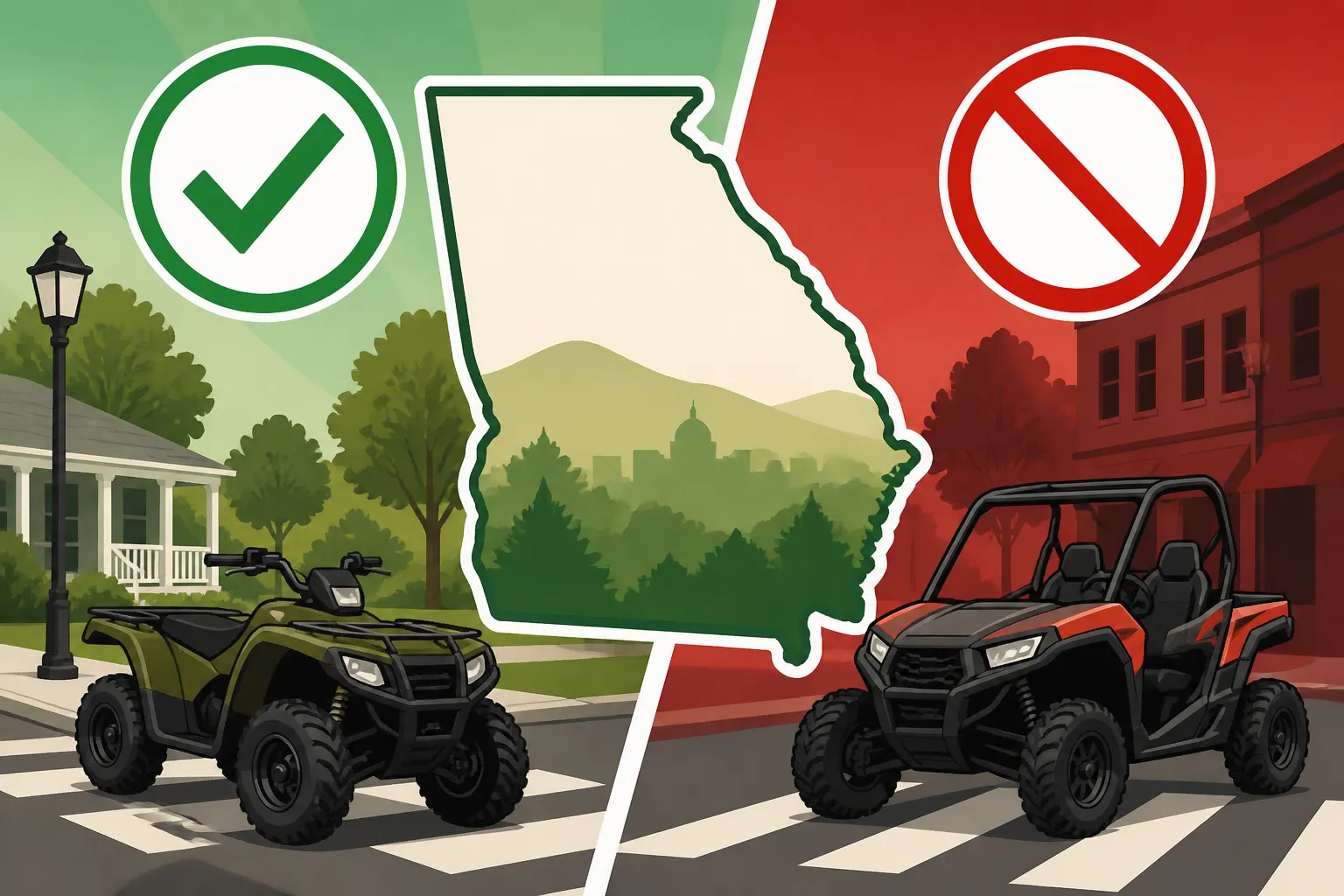
Let's cut right to the chase: your ATV or UTV, even if it's a registered multi-purpose off-highway vehicle (MPOHV), is generally not intended for continuous travel on paved public roads, especially not within the bustling streets of a city or town. The registration for an MPOHV in Georgia, which we’ve detailed in [Georgia MPOHV Registration Explained], primarily opens up access to county roads. These are typically the less trafficked, often unpaved or rural routes that fall under county jurisdiction, not city limits.
So, while you might have your shiny new registration plate and feel ready to hit the pavement, it’s crucial to understand that municipal streets—those roads managed by a city or town—operate under a different set of rules. Your MPOHV registration doesn't grant you carte blanche to cruise through downtown Atlanta, Macon, or even a smaller town like Dahlonega. The state law provides a narrow exception, allowing for crossing certain roads, but that’s a far cry from regular riding. It’s a point of contention for many riders, but it's the law as it stands.
The "Quickest, Most Direct Route" Principle
When the law talks about crossing a municipal street, it’s not giving you a loophole to extend your ride. Instead, it’s a very specific, limited allowance. Think of it this way: you're trying to get from one section of your property to another, or from your private land to a county road that happens to be intersected by a brief stretch of city street. The intention is to enable necessary passage, not recreational travel.
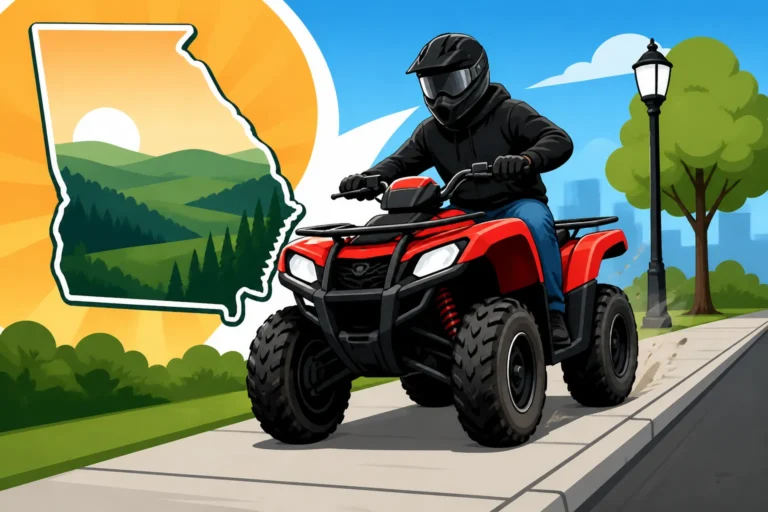
The key phrase here is the "quickest, most direct route." This means you should minimize the distance and time your off-highway vehicle spends on that municipal street. Imagine you're riding on a county dirt road and it dead-ends into a city street, with another stretch of county road or private land just across it. That's a permissible crossing. You can cross the city street directly, go straight across an intersection, and continue your journey on the other side. What you absolutely cannot do is turn right or left down that city street, even for a short block, just because it seems more convenient. That would be considered "riding," not "crossing," and that's where you run into trouble. It's about getting from point A to point B with the least possible interaction with city traffic, minimizing any potential disruption or safety hazard.
Why the Distinction Between County Roads and Municipal Streets Matters
The legal framework behind this distinction comes down to jurisdiction. State law has carved out a path for counties to allow registered MPOHVs on their road systems, often recognizing the rural nature of many counties and the utility use of these vehicles for agriculture, hunting, or property management. This flexibility is detailed when you look at [What a County Road System Includes].
However, cities and towns, known as municipalities, generally retain the authority to regulate traffic and vehicle types within their corporate limits. Many cities, concerned about safety, noise, and general traffic flow, have ordinances that specifically prohibit or heavily restrict ATVs and UTVs on their streets. These ordinances often exist even if the state allows for MPOHV registration. So, even if your side-by-side meets all the eligibility criteria for MPOHV registration, that doesn't override local city laws against riding through town. This difference is a major source of frustration for riders who see their registered machine as "street legal" everywhere. But it’s vital to remember that "street legal" in Georgia for an MPOHV means county road legal, with very specific and limited exceptions for crossing municipal streets. It's a nuance that can catch unsuspecting riders off guard.
Navigating the Legalities of Crossing Municipal Streets
Even when you're just making a quick hop across a city street, there are still rules and expectations you need to meet. It’s not a free-for-all just because it’s a short distance. Thinking about safety and legal compliance for even these brief moments is crucial to avoiding tickets or accidents.
Essential Equipment for Crossing Safely and Legally
Even for a brief crossing of a municipal street, your MPOHV needs to be properly equipped and visible. If your machine is registered as an MPOHV, it means it already passed a basic equipment inspection. This includes having functioning [Headlights, Brake Lights and Mirrors on the Checklist], and factory-installed seat belts. These aren't just suggestions; they're legal requirements for any registered MPOHV interacting with public roads, even fleetingly.
Beyond the minimum, consider enhancing your visibility. Many city streets are busier than rural county roads, and drivers might not be expecting an off-highway vehicle. Bright colored flags, additional reflective tape, or even upgrading your lighting can make a huge difference. Companies like SuperATV offer a range of aftermarket mirrors and lighting solutions that can significantly improve your machine's visibility, making those quick, direct crossings much safer for everyone on the road. Remember, the goal is to be seen and to act predictably, minimizing any potential for confusion or collision. And don't forget personal safety gear; if you're under 18, the [Georgia ATV Helmet Law for Riders Under 18] still applies, regardless of how short the ride is.
Driver's License and Insurance Requirements for Road Interaction
This is a non-negotiable point: if you are operating any motorized vehicle on a public road in Georgia, even for a moment to cross a street, you must possess a valid driver's license. There's no exception for a quick jaunt or a short crossing. The question of [Do You Need a License to Drive a UTV in Georgia?] is unequivocally "yes" when you're on public pavement. Operating without one can lead to serious legal consequences, far beyond a simple traffic ticket.
Furthermore, if your MPOHV is registered, it must carry liability insurance. This isn't just a good idea; it's a legal requirement tied directly to the registration. The state sets minimum coverage levels, and a deputy can ask for proof of insurance at any time, even if you’re just making a crossing. Understanding [Georgia UTV Insurance Minimums] is vital, as operating without insurance can result in hefty fines, suspension of driving privileges, and even impoundment of your vehicle. Treat every interaction with a public road, no matter how brief, as if you're driving a car – because in the eyes of the law, you're operating a licensed motor vehicle that must adhere to fundamental traffic laws like stop signs, traffic lights, and yielding the right-of-way.
The Role of Local Ordinances and Law Enforcement Discretion
This is where things can get particularly tricky and frustrating for riders. While state law allows for crossing municipal streets under specific conditions, local city and town ordinances can add their own layers of regulation. Some cities might have very explicit rules against any off-highway vehicle on their streets, even for crossing, or they might have specific hours or designated crossing points. It’s always a good idea to check with the local city hall or police department if you plan to frequently cross within a specific municipality.
Furthermore, law enforcement officers always have discretion. Even if you believe you are following the letter of the law for a quick, direct crossing, an officer might interpret your actions differently, especially if your machine draws undue attention, you appear to be riding casually, or if your machine isn't obviously equipped for road use. The goal should always be to make your crossing as uneventful and by-the-book as possible. If you are stopped, be polite, explain your route, and have your license, registration, and proof of insurance ready. Ignoring these local nuances and the potential for a deputy's watchful eye can quickly turn a quick crossing into a legal headache.
Common Scenarios and Misconceptions About Crossing
Let's clear up some common areas of confusion that often lead riders into trouble. The rules aren't always intuitive, and it's easy to mistake one type of road access for another.
The Difference Between Municipal Streets and "Designated" Paths (Like Golf Cart Paths)
A very common misconception is that if a city has designated paths for golf carts, ATVs and UTVs can use them too, or that these paths fall under the "crossing a municipal street" allowance. This is almost never the case. Golf cart paths, such as [Peachtree City's 100 Miles of Georgia Cart Paths], are specifically designed and designated for low-speed personal transportation vehicles (PTVs) like golf carts, not the more powerful and often wider ATVs and UTVs.
The legal definitions for these vehicles are distinct. While PTVs are often restricted to lower speeds and specific paths, MPOHVs are a different class entirely, with different equipment and access rules. [Georgia Golf Cart Laws and PTV Ordinances] clearly delineate these differences. An MPOHV, even a registered one, should not be on a golf cart path unless there is explicit local signage stating otherwise – and such signage is exceedingly rare. Trying to use a golf cart path with your side-by-side will likely result in a citation, as it’s a misuse of a designated pathway and a potential safety hazard for golf cart operators. These paths are part of a city's infrastructure, distinct from its general municipal streets, and your MPOHV registration does not grant you access.
Avoiding Penalties: What Not to Do When Encountering City Limits
The most straightforward way to avoid penalties when encountering city limits is to understand that a "crossing" is not a "ride." Do not use municipal streets as shortcuts, joyrides, or extended travel routes. If your intention is anything other than the quickest, most direct path across to another legal riding area, you are likely in violation of the law.
Driving down a municipal street for recreation, even for a short distance to get to a gas station that isn't immediately across the road, is generally illegal. Such actions can result in significant fines and legal consequences, similar to those outlined in [Georgia Penalties for an Unregistered Road Machine] for general illegal road use, even if your vehicle is registered. In some cases, repeated or egregious violations can even lead to your machine being impounded, a scenario no one wants to face as detailed in [Georgia Impound Rules After a Violation]. Always err on the side of caution. If you need to travel extensively within city limits, your best bet is to trailer your machine. Many experienced riders make the choice to trailer rather than risk a ticket or accident when navigating urban areas.
Future Changes: The Sunset Date and What It Means for Crossing
It's also important for all Georgia ATV and UTV riders to be aware of a critical date looming on the horizon. The state law that currently allows MPOHVs on county roads and, by extension, permits these limited crossings of municipal streets, has a sunset clause. [Georgia's ATV Road Access Law Sunsets in July 2027].
This means that as of July 1, 2027, the rules could change dramatically. The current allowances for MPOHV registration and road access may expire or be significantly altered unless new legislation is passed. While it's too early to predict exactly what will happen, riders need to stay informed about any potential legislative updates or changes in enforcement. What is permissible today, even for a quick street crossing, might not be after this date. This is why keeping an eye on updates from the Georgia Department of Driver Services (DDS) and local advocacy groups is paramount for anyone who relies on these limited road access provisions.
Below is a quick comparison to help visualize the distinctions between county roads and municipal streets for MPOHV use in Georgia:
| Feature/Action | County Roads (with MPOHV Registration) | Municipal Streets (with MPOHV Registration) |
|---|---|---|
| Primary Use Allowed | Riding for transportation, utility, or recreation (if allowed by county) | Limited to "quickest, most direct" crossing only |
| Continuous Travel | Generally permissible (if allowed by county ordinance) | Generally not permissible; will result in citation |
| Driver's License Required | Yes | Yes |
| Insurance Required | Yes (liability insurance tied to MPOHV registration) | Yes (liability insurance tied to MPOHV registration) |
| Required Equipment | Headlights, brake lights, mirrors, seatbelts (for MPOHV registration) | Headlights, brake lights, mirrors, seatbelts (for MPOHV registration); increased visibility recommended |
| Local Ordinances | Counties can opt-in/opt-out of road access | Cities generally prohibit riding; may have specific rules for crossings or outright bans |
| Golf Cart Paths | Not allowed | Not allowed |
| Sunset Date Impact | Subject to expiration of current law in July 2027 | Crossing allowance also subject to expiration of current law in July 2027 |
Disclaimer
This article is for general informational purposes only and does not constitute professional advice. Laws, prices and regulations vary by location and change over time. Consult a qualified professional for guidance on your specific situation.