Riding a Quad on a Sidewalk
It's tempting, isn't it? You've got your quad, you just need to get a few hundred yards down the road to a friend's house or to access your private land, and the sidewalk seems like a perfectly harmless, even safer, route than fighting traffic. You might think, "It's not a road, so it's not illegal, right?" But here in Georgia, that line of thinking can quickly lead to trouble. This guide is here to clear up the common misconception about using sidewalks for your ATV or UTV and explain why it's simply not an option, detailing the real legal and safety consequences you could face.
The Blunt Reality: Why Sidewalks Are Off-Limits for Quads in Georgia
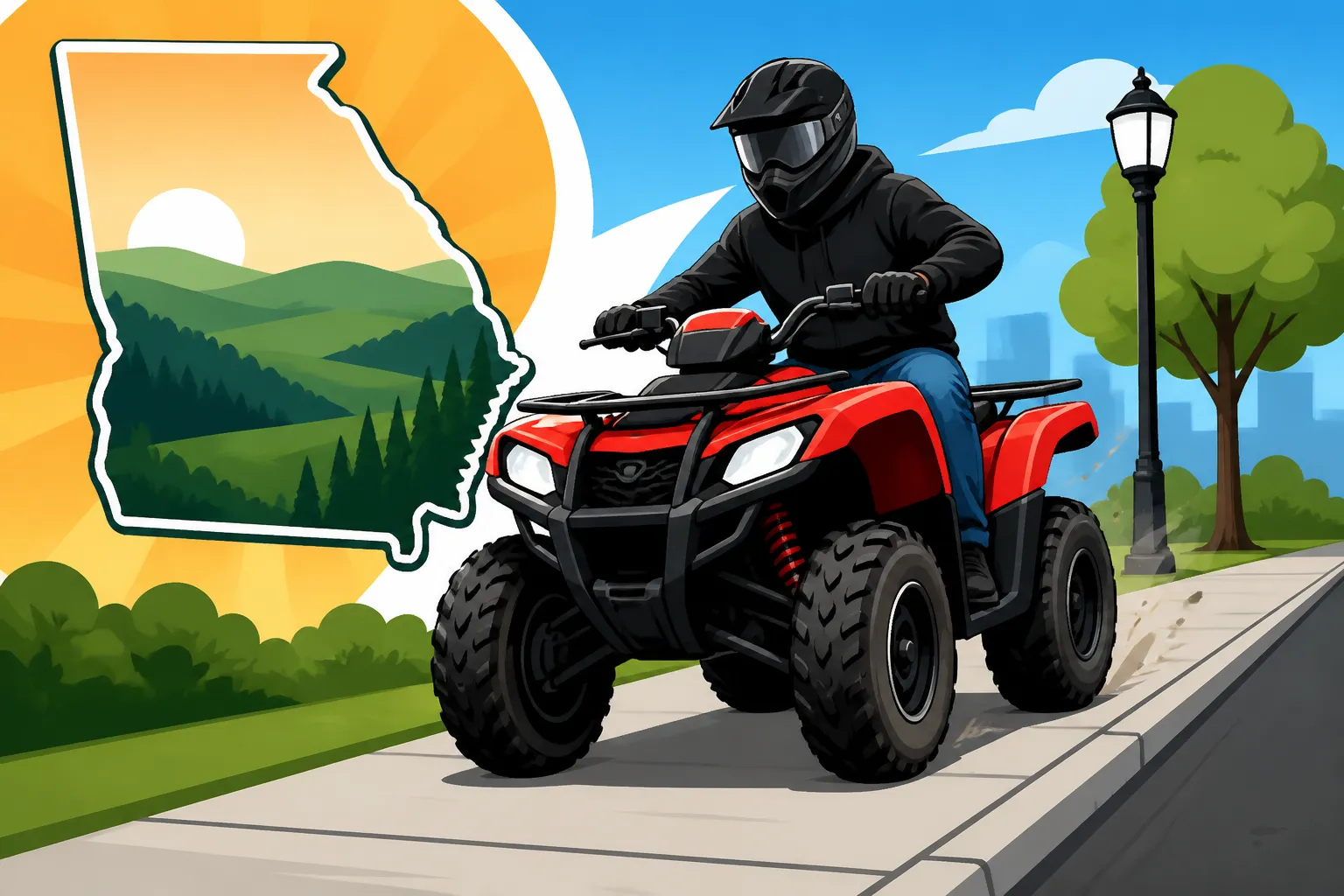
Let's cut right to the chase: operating an ATV or UTV on a public sidewalk in Georgia is a definite no-go. It's one of those things that seems convenient in the moment but carries significant legal and safety risks. While the rules for off-highway vehicles can sometimes feel a bit like a maze, this particular pathway is clearly marked as forbidden territory for machines not designed for pedestrian use.
What Georgia Law Says About ATVs and Roadways (and Sidewalks)
In Georgia, ATVs are fundamentally classified as off-road machines. They are designed for rugged terrain, trails, and private property – not paved public rights-of-way. This distinction is crucial because it means they are generally not considered "street legal" in the same way a car or motorcycle is. And when it comes to sidewalks, the law is even more explicit. Sidewalks are an integral part of the public right-of-way, specifically dedicated to pedestrian traffic. They are an extension of the pedestrian environment, and using a motorized vehicle like a quad on them is a direct violation of their intended purpose and traffic laws. Think of it this way: sidewalks aren't just narrow roads without cars; they're pathways reserved for people walking, running, or pushing strollers. Using a powerful, heavy machine like an ATV on them completely disrupts that. This is part of the larger conversation about [Are Side-by-Sides Street Legal in Georgia?] and highlights that even if a UTV can be registered for some road use, sidewalks are universally off-limits.
When we talk about Georgia law, the definition of an "all-terrain vehicle" or ATV, and its use on public ways, is pretty clear. These machines are not built with the same safety features or operational characteristics as street-legal vehicles. They lack the visibility, quiet operation, and precise steering required for navigating crowded pedestrian areas safely. Even if you're the most careful rider in the world, the law doesn't make exceptions for intent; it focuses on the vehicle's classification and the designated use of the public space. Trying to skirt around these rules by using a sidewalk is not just frowned upon; it can lead to very real legal repercussions that are far more inconvenient than trailering your machine.
Safety Concerns for Riders and Pedestrians
Beyond the letter of the law, there are profound safety reasons why ATVs and UTVs shouldn't be on sidewalks. Picture a child running out from behind a bush or a senior citizen slowly making their way. The speed and weight of a quad make it incredibly dangerous in such a scenario. ATVs are powerful machines, often capable of reaching high speeds very quickly. On a narrow sidewalk, which might also have uneven sections, cracks, or obstacles, this power is a recipe for disaster. The risk of losing control, especially if an unexpected pedestrian appears, is extremely high.
Moreover, the noise of an ATV can startle pedestrians, leading to unpredictable movements. Unlike a bicycle, which provides auditory cues that are easily understood in a pedestrian environment, an ATV's engine noise can be disorienting and alarming. If an accident were to occur, the consequences could be catastrophic for pedestrians, potentially causing severe injuries or worse. For the rider, too, a sidewalk isn't designed for the handling characteristics of an ATV. Unexpected dips, curbs, or even simple cracks can throw a rider off balance, especially if they hit an obstacle they weren't expecting. It’s a lose-lose situation, jeopardizing both the rider's safety and the well-being of innocent pedestrians simply trying to enjoy their walk.
Understanding Georgia's Rules for Off-Highway Vehicles
So, if sidewalks are out, where can you ride your quad legally in Georgia? It’s important to distinguish between the various types of off-highway vehicles and their permitted uses. The rules are designed to keep everyone safe and ensure these powerful machines are used in appropriate environments.
Where Quads Can Be Legally Ridden in Georgia
The primary places for riding traditional ATVs and many UTVs in Georgia are on private property with the owner's permission, and designated public and private OHV trails. Georgia boasts several fantastic trail systems within its national forests, like those found in the Chattahoochee-Oconee National Forest, and a growing number of private off-road parks. These areas are specifically designed to handle the unique characteristics of off-highway vehicles, offering challenges and experiences tailored to the machines. You can find detailed information on these spots in guides like [Georgia ATV Trails: Where You Can Legally Ride].
For some UTVs and side-by-sides that meet very specific criteria, Georgia law does allow for voluntary registration as a Multipurpose Off-Highway Vehicle (MPOHV). This registration can permit limited use on certain county roads. However, it's absolutely crucial to understand that even an MPOHV registration does not extend to sidewalks. The rules for MPOHVs are strict, covering things like width, weight, speed capabilities, and safety features like seatbelts and steering wheels. A typical quad or sport ATV simply doesn't meet these requirements, as discussed in [Why a Georgia Sportsman Cannot Be Registered]. Therefore, if you're riding a traditional quad, even thinking about an MPOHV registration won't open up sidewalk access, nor would it allow you to ride on county roads. If you're ever curious about what happens if you try to get around the system, consider [What Georgia Does With a Registration You Cancel] to understand the administrative consequences.
The Legal Ramifications of Sidewalk Riding
The consequences of riding a quad on a public sidewalk in Georgia can be far-reaching and quite unpleasant. First and foremost, you're looking at potential citations and fines. Law enforcement officers, whether local police or county deputies, are well aware that ATVs are not permitted on sidewalks or most public roads. A ticket for illegal operation on a public way can be costly, and those fines add up quickly, especially if there are additional charges like reckless endangerment or property damage.
Beyond fines, your quad could be impounded. Imagine having your prized machine hauled away, incurring towing and storage fees on top of everything else. It's a massive headache and an expensive lesson. You can learn more about this possibility in [Georgia Impound Rules After a Violation]. Furthermore, if you cause any property damage – even something as seemingly minor as rutting up a grassy area next to the sidewalk or damaging a sprinkler head – you'll be financially responsible for the repairs. And the most severe consequence: if you injure a pedestrian, you could face criminal charges, significant civil lawsuits, and potentially life-altering legal battles. Most standard insurance policies for ATVs are designed for off-road use or very limited, legally permitted road use, and they will almost certainly not cover damages or injuries sustained during an illegal act like riding on a sidewalk. This means you could be personally liable for tens, if not hundreds, of thousands of dollars in medical bills and legal fees, emphasizing the importance of understanding [Georgia UTV Insurance Minimums] and what they actually cover.
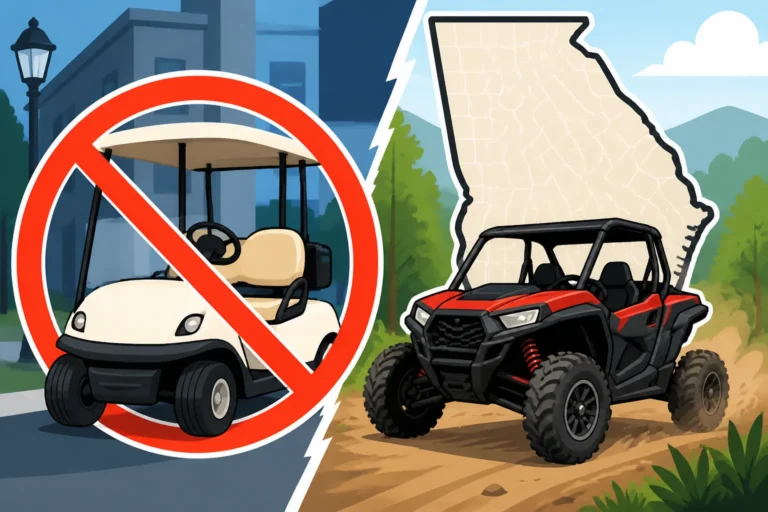
Golf Carts vs. Quads: A Common Misconception
It's easy to see golf carts zipping around certain communities and assume, "If they can do it, why can't my quad?" This is a crucial distinction that often leads to confusion, but the legal and practical differences are immense.
Why Golf Carts Can Sometimes Use Specific Paths (and Quads Can't)
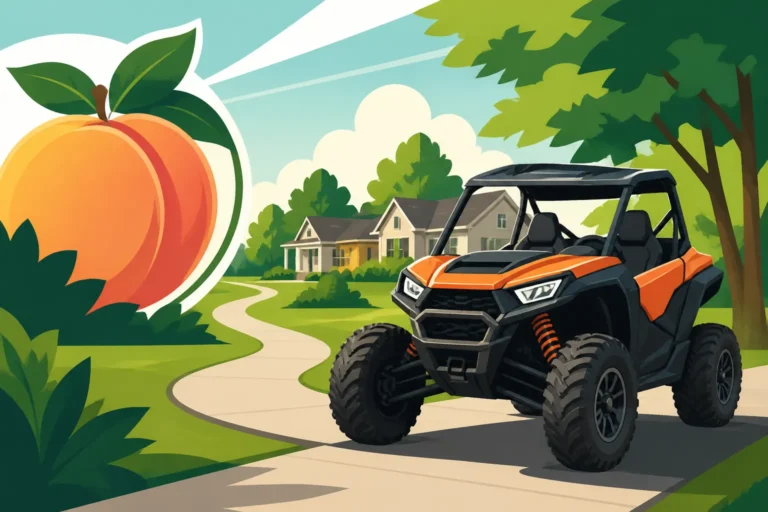
The key difference lies in local ordinances and vehicle design. Some Georgia cities, most notably Peachtree City, have very specific and often extensive networks of multi-use paths designed to accommodate golf carts as a primary mode of local transportation. These paths are explicitly designated for golf cart use by local law and are often separated from main roadways, sometimes even featuring tunnels under busy intersections. The rules in these towns allow for licensed drivers to operate golf carts on these paths, and often on specific, low-speed public streets. You can explore this further by looking into [Peachtree City Cart Registration Fees in Georgia].
Golf carts, by their nature, are designed for low speed, are relatively lightweight, and are typically much quieter, especially electric models. They are built for leisurely transport, not aggressive off-road performance. They have different tire types, suspension systems, and overall structural integrity compared to an ATV. Crucially, their use on these paths is permitted by specific local ordinance, meaning the city council or county commission has passed a law explicitly allowing it. This is a vastly different scenario than an ATV, which is universally defined as an off-road machine in Georgia and for which no such municipal allowances typically exist for public sidewalk use. It’s important to understand [Georgia Golf Cart Laws and PTV Ordinances] to see just how distinct these regulations are from those governing ATVs and UTVs.
The "Gray Area" Temptation and Why to Avoid It
The temptation to think of sidewalks as a "gray area" or to believe "it's just for a minute" is strong, especially when convenience calls. You might rationalize that no one will see you, or that the risk is minimal for such a short distance. However, this is precisely where many people find themselves in trouble. Law enforcement patrols, concerned citizens, or even traffic cameras can spot you in an instant. A quick trip can turn into a costly encounter with a deputy or police officer faster than you think. The "just this once" mentality is dangerous because it normalizes an illegal and unsafe behavior, potentially leading to repeat offenses or, worse, an accident.
It's about respecting not just the law, but also the safety and peace of mind of your community. When off-highway vehicles operate where they shouldn't, it creates a negative perception for all riders, potentially leading to even stricter regulations down the line. It erodes trust and can make it harder for legitimate riding opportunities to be established or maintained. Ultimately, the perceived convenience of a short sidewalk ride is simply not worth the significant legal and financial risks, nor the potential harm to others and to the reputation of the riding community.
Responsible Ownership: Alternatives to Sidewalk Riding
As responsible ATV and UTV owners, our goal should always be to enjoy our machines safely and legally. Instead of looking for shortcuts like sidewalks, there are established methods for transport and plenty of fantastic places to ride in Georgia.
Transporting Your Quad Safely and Legally
The most straightforward and legal way to move your quad from one place to another that isn't designated private riding land is by transporting it. This usually means using a trailer specifically designed for ATVs or loading it securely into the bed of a pickup truck. When trailering, ensure your machine is properly secured with heavy-duty tie-downs, front and back, to prevent any shifting during transit. Make sure your trailer's lights are functioning, and that you understand the weight limits and towing capacity of your vehicle. For detailed information on ensuring your trailer is up to snuff, you might want to review [Registering the Trailer Separately].
If you're using a truck bed, ensure the tailgate can support the weight and that the quad is positioned correctly and securely tied down. Always double-check your straps before heading out, especially after the first few miles, as they can sometimes loosen. Reputable brands like SuperATV offer a variety of robust tie-down straps, cargo nets, and even specialized truck bed extenders that can help you transport your ATV or UTV safely and legally, ensuring your machine stays put no matter the bumps in the road. Investing in good transport equipment is far cheaper and less stressful than dealing with a citation or an accident caused by improper transport.
Finding Legal and Safe Riding Opportunities
Instead of trying to sneak a ride on a sidewalk, focus your energy on finding legal and enjoyable places to ride. Georgia offers a diverse landscape with options for every type of rider. The Chattahoochee-Oconee National Forest provides several designated OHV trail systems, requiring a permit but offering miles of well-maintained trails. Additionally, Georgia has an increasing number of private off-road parks, like Iron Mountain Resort or Highland Park, that cater specifically to ATV and UTV riders. These parks often have different difficulty levels, amenities like camping, and are designed for maximum fun and safety.
Connecting with local ATV/UTV clubs is another excellent way to discover new riding spots, participate in organized rides, and learn from experienced riders about local regulations and etiquette. These groups often have access to private land or organize trips to legal riding areas. By seeking out these legitimate opportunities, you not only enjoy your machine without legal worries but also contribute positively to the riding community. Always make sure you understand the rules for whatever area you plan to ride in, whether it's a private park or a WMA, and remember to check current conditions.
Educating Yourself and Others
Being a responsible ATV or UTV owner means staying informed about the laws and regulations in your area. Laws can change, and what might be acceptable in one county or state could be strictly prohibited in Georgia. Resources like the Georgia Department of Natural Resources (DNR) website and the Motor Vehicle Division of the Georgia Department of Revenue are excellent places to find official information. Understanding [Where Georgia's MPOHV Rules Are Written Down] can give you a better grasp of the overall framework governing off-highway vehicle use.
Furthermore, educate fellow riders and enthusiasts. If you see someone contemplating an illegal or unsafe act, politely inform them of the risks and guide them towards legal alternatives. By being a good ambassador for the sport, we help ensure that riding opportunities remain open and that the public maintains a positive view of ATV and UTV enthusiasts. When everyone adheres to the rules, it benefits the entire community, ensuring that we can all continue to enjoy our machines for years to come without unnecessary restrictions or legal entanglements.
| Feature/Use Case | ATV (Traditional Quad) | Registered MPOHV (Side-by-Side/UTV) | Golf Cart (PTV) |
|---|---|---|---|
| Primary Design | Off-road, sport/utility | Off-road, utility/recreation, potentially street-adapted | Low-speed, recreational, specific path use |
| Public Sidewalk Use | NEVER PERMITTED | NEVER PERMITTED | NEVER PERMITTED |
| County Road Use | GENERALLY NOT PERMITTED | Limited, with specific MPOHV registration | Limited, by specific local ordinance (e.g., Peachtree City) |
| Designated OHV Trails | PERMITTED (with permits/fees) | PERMITTED (with permits/fees) | NOT PERMITTED (not suitable/designed) |
| Private Property Use | PERMITTED (with owner permission) | PERMITTED (with owner permission) | PERMITTED (with owner permission) |
| Steering Type | Handlebars | Steering Wheel | Steering Wheel |
| Seat Type | Straddle | Non-straddle, bench/bucket | Bench/bucket |
| Legal Classification | Off-road vehicle | Multipurpose Off-Highway Vehicle (MPOHV) | Personal Transportation Vehicle (PTV) |
Disclaimer
This article is for general informational purposes only and does not constitute professional advice. Laws, prices and regulations vary by location and change over time. Consult a qualified professional for guidance on your specific situation.