Peachtree City’s 100 Miles of Georgia Cart Paths
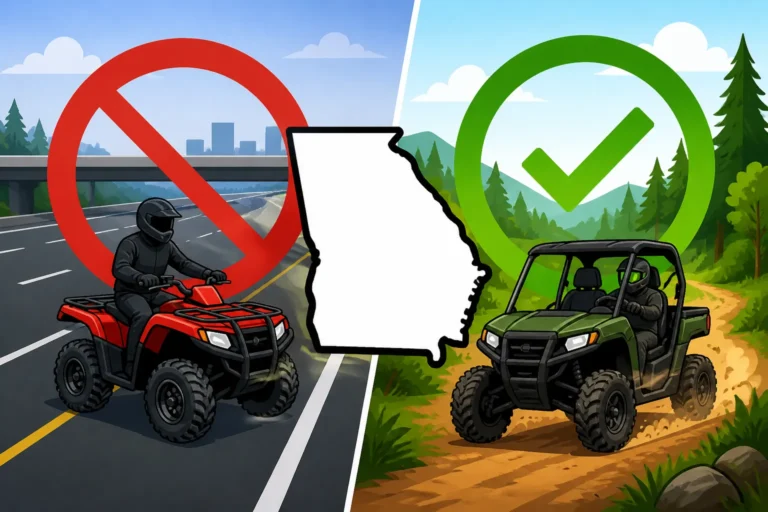
If you've ever dreamt of cruising your ATV or UTV through a quaint Southern town on miles of designated paths, Peachtree City, Georgia, often springs to mind. It's famous for its extensive network of golf cart paths. However, the reality for most off-highway vehicle (OHV) owners can be a bit of a letdown. This guide is here to help you understand exactly what Peachtree City's path system is designed for, why your ATV or many UTVs might not fit the bill, and where you can legally and safely enjoy your machine in Georgia.
The Unique Appeal of Peachtree City's Path Network
Peachtree City is an anomaly, a planned community that embraced the golf cart as a primary mode of local transportation decades ago. This foresight has created a truly special environment, but it's crucial to understand its origins and intent.
What Makes Peachtree City Different?
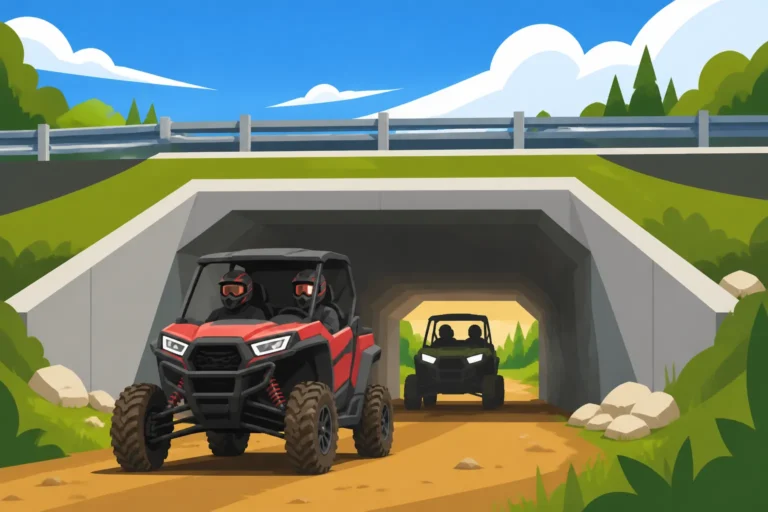
Imagine a town where you can run most of your daily errands without ever touching a car. That's the vision Peachtree City realized. From its inception, the city was meticulously designed around a multi-modal transportation system, with golf cart paths playing a central role. This isn't just about recreation; it's about practical mobility for residents. The city has invested heavily in infrastructure like tunnels under major roads and dedicated bridges, all to keep cart traffic flowing smoothly and safely, separated from vehicular traffic wherever possible. This unique planning has fostered a distinct lifestyle, where children can get to school, adults can commute to work, and families can enjoy local amenities, all via their golf carts. It's a charming concept that draws many visitors, and a big part of why the city is often featured in discussions about innovative urban planning.
How Extensive is the Network?
Peachtree City boasts over 100 miles of paved paths, winding through neighborhoods, connecting shopping centers, schools, parks, and even the city hall. This isn't just a handful of disconnected trails; it's a comprehensive, interwoven web designed for seamless travel. These paths are generally smooth, well-maintained, and clearly marked, resembling miniature roads rather than rugged off-road trails. They're built for low-speed, light-duty vehicles like golf carts and bicycles, with gentle grades and wide turns. The network allows residents to travel virtually anywhere within the city limits, making it a truly walkable and "cartable" community. The paths contribute significantly to the city's identity and its appeal as a family-friendly place to live.
Understanding Personal Transportation Vehicles PTVs vs. Off-Road Vehicles OHVs
The key to understanding Peachtree City's path rules lies in recognizing the fundamental difference between the vehicles they were designed for and the off-road machines we typically associate with "ATV" and "UTV."
What is a PTV in Georgia's Eyes?
In Georgia, what Peachtree City refers to as a "golf cart" broadly falls under the state's definition of a "Personal Transportation Vehicle" or PTV. A PTV is generally a motor vehicle that can travel at least 20 miles per hour (mph) but no more than 35 mph, is designed to carry no more than eight passengers, and is not designed to be operated on interstate highways. Crucially, they are often designed for recreational purposes, like golf courses, or for short-distance travel within planned communities. Think of a standard golf cart, or an upgraded version often seen in resort towns. These vehicles typically have an enclosed passenger compartment, bench seats (not straddle seats), a steering wheel (not handlebars), and are relatively lightweight. They are built for pavement and gentle slopes, with suspension systems and tires suited for smooth surfaces. The state's general [Georgia Golf Cart Laws and PTV Ordinances] define the parameters for these machines, and cities like Peachtree City then enact specific ordinances that govern their use within their municipal boundaries.
Why ATVs and Most UTVs Don't Fit the PTV Mold
Here's where the rubber meets the road, or rather, where the knobby tire doesn't meet the cart path. Most ATVs (All-Terrain Vehicles) and many UTVs (Utility Terrain Vehicles, or side-by-sides) are fundamentally different from PTVs in design, intent, and legal classification. ATVs, by definition, are designed for off-road use, typically featuring a straddle seat, handlebars, and a narrow, aggressive stance built for navigating rugged terrain. They are explicitly excluded from road registration under Georgia law and are certainly not designed for paved paths where bicycles and golf carts travel. You can read more about why [Why Georgia Will Not Register an Ordinary Quad].
UTVs are a bit more complex, as some modern models blur the lines with features that could be considered "road-friendly" such as steering wheels and bench seats. However, the vast majority of UTVs are still built with significant ground clearance, aggressive suspension, and powerful engines intended for challenging off-road conditions, hauling heavy loads, or sports performance. They are often wider, heavier, and faster than typical PTVs, making them unsuitable and potentially dangerous for shared-use cart paths. Even for the state's MPOHV (Multipurpose Off-Highway Vehicle) registration, which allows some UTVs on some county roads, there's a strict [Georgia MPOHV Eligibility: The Eight-Point Test] that many UTVs simply don't pass, let alone meeting the requirements for a PTV path. The sheer difference in weight, speed, and maneuverability between an ATV or a large UTV and a golf cart makes them incompatible with the intended use and safety standards of the Peachtree City path system.
| Feature | PTV (Golf Cart) | OHV (ATV/Most UTVs) |
|---|---|---|
| Primary Design | Low-speed, paved surfaces, light transport | Off-road, rugged terrain, utility/sport |
| Seating | Bench seats, side-by-side | Straddle (ATV) or bench/bucket (UTV) |
| Steering | Steering wheel | Handlebars (ATV) or steering wheel (UTV) |
| Width | Generally narrower, fits paths | Often wider, exceeds path limits |
| Weight | Lighter, path-friendly | Heavier, can damage paths |
| Tires | Turf/street-oriented | Aggressive knobby, off-road |
| Speed | Capped at 20-35 mph | Varies widely, often much faster |
| Road Legality | Specific ordinances for local roads/paths | Generally off-road, limited county road access |
Navigating Peachtree City's Rules and Restrictions
Peachtree City has specific ordinances governing who can operate vehicles on their paths and what kind of vehicles are allowed. These rules are designed to ensure safety and maintain the integrity of their unique transportation system.
Age and Driver's License Requirements on the Paths
Operating any vehicle, including a golf cart, on public paths in Peachtree City comes with specific age and licensing requirements. Generally, a licensed driver aged 16 or older can operate a golf cart on the paths. For younger individuals, there are often provisions for supervised operation. For instance, someone with a valid Georgia learner's permit (typically aged 15) may be allowed to drive a golf cart if accompanied by a licensed driver 21 years of age or older in the passenger seat. Children as young as 12 may be allowed to operate a golf cart on the paths if they are accompanied by a parent or guardian who is a licensed driver in the front passenger seat. However, it's critical for anyone considering driving on these paths to check the very latest [Peachtree City Golf Cart Rules in Georgia], as these rules can change and are strictly enforced to protect all path users, including pedestrians and cyclists. Ignoring these rules not only puts you at risk of a citation but also jeopardizes the safety of everyone on the path.
Registration and Fees for Path Users
While golf carts aren't registered with the state of Georgia in the same way cars are, Peachtree City does have its own municipal registration system and associated fees. This local registration is how the city keeps track of the vehicles using its path network and helps fund maintenance and enforcement. Residents of Peachtree City typically pay a nominal fee for their golf cart registration, which might be valid for a multi-year period. However, for non-residents, the fees can be substantially higher. This is often a point of surprise for visitors hoping to bring their golf cart or PTV to explore the city. The non-resident fee is designed to account for the use of city infrastructure by those who don't contribute to the local tax base. Before you even consider bringing a golf cart into Peachtree City, you absolutely need to consult the city's official website or contact their municipal offices to understand the current [Peachtree City Non-Resident Path User Fees at Peachtree City] and registration process. There's no exception for unregistered vehicles on the paths, and enforcement is quite visible.
General Path Etiquette and Safety
The 100 miles of paths in Peachtree City are shared spaces, used by golf carts, pedestrians, cyclists, and even joggers. This requires a strong sense of etiquette and adherence to safety rules to prevent accidents. Speed limits on the paths are typically low, often around 15-20 mph, much slower than even a modest UTV might travel. Riders are expected to yield to pedestrians, maintain safe distances, and follow all traffic signs, including stop signs at path intersections. Night riding is permitted, but vehicles must have proper headlights and brake lights, and drivers are encouraged to use reflective materials. The city also has rules about the number of passengers, ensuring everyone has a proper seatbelt if the vehicle is equipped. It's a low-speed, family-friendly environment, and any vehicle or behavior that disrupts this peaceful coexistence is quickly addressed by local law enforcement. For instance, while a SuperATV light bar might be fantastic for off-road night adventures, its intensity might be inappropriate for a shared-use cart path where other users are present. Adhering to the spirit of the path system is just as important as following the letter of the law.
The Hard Truth: Why Your ATV or Many UTVs Aren't Welcome
It's a common misconception that because some UTVs look like souped-up golf carts, they can traverse Peachtree City's paths. Unfortunately, the reality is much stricter, primarily due to fundamental design differences, safety concerns, and local ordinances.
Design Disqualifiers for Off-Road Machines
When it comes to Peachtree City's path network, the "off-road" nature of most ATVs and many UTVs is their biggest disqualifier. These paths are not designed to handle the weight, width, or aggressive tires of typical off-road machines. For example, a common requirement for the state's MPOHV registration is a maximum [Georgia's 80-Inch Width Limit for Registration], but even that width would be far too wide for many of Peachtree City's cart path sections and tunnels, which are built for much narrower golf carts. ATVs, with their straddle seats and handlebars, are immediately out because they don't fit the PTV definition. Many UTVs, while having steering wheels and side-by-side seating, often exceed the path's structural and practical limitations in terms of size and weight. They simply don't fit the physical envelope of the paths, nor do they align with the low-impact, light-use design. Trying to force a larger, heavier machine onto these paths can lead to damage to the asphalt, curbing, and even the underpasses, which are not built to withstand the same stresses as a public road.
Safety Concerns and Path Integrity
The primary reason for restricting ATVs and UTVs on Peachtree City's paths boils down to safety and the preservation of the path infrastructure. Imagine a situation where a high-horsepower UTV, even operating at a "slow" speed, encounters a child on a bicycle or a family strolling with a baby carriage around a blind corner. The difference in mass, stopping distance, and potential for injury is immense compared to a slow-moving golf cart. The paths are designed for a specific traffic flow and speed profile, and introducing faster, heavier, and more powerful vehicles fundamentally alters that safety equation. Furthermore, the aggressive tires of most off-road vehicles, while great for dirt, can cause accelerated wear and tear on paved surfaces. The sheer weight of larger UTVs can also stress bridge structures, underpass ramps, and the asphalt itself, leading to costly damage and maintenance. Peachtree City prioritizes the safety of all its path users and the longevity of its unique infrastructure, which directly leads to the exclusion of vehicles deemed inappropriate for this delicate balance.
Local Ordinances and Enforcement
Peachtree City's ability to regulate its cart path system stems from its municipal authority to enact local ordinances that are stricter than state law, provided they don't contradict it. In this case, the city has clearly defined what constitutes a "golf cart" or PTV eligible for path use, and by extension, what does not. These ordinances are specific about vehicle types, dimensions, and operational characteristics. Local law enforcement, including the Peachtree City Police Department, actively patrols the path system. They are well-versed in these local rules and are not hesitant to issue citations for violations. This means that attempting to ride an ATV or an ineligible UTV on the paths will likely result in a ticket, potentially significant fines, and the requirement to remove your vehicle. The enforcement presence is quite visible, and the community is also very protective of its path system, meaning that non-compliant vehicles are quickly noticed and reported. It's simply not a place where off-road vehicles, by their very nature, are permitted.
Exploring Alternatives: Where to Legally Ride Your ATV or UTV in Georgia
While Peachtree City's paths are off-limits for most ATVs and UTVs, that doesn't mean Georgia lacks opportunities for off-road adventure. In fact, the state offers several legitimate avenues for enjoying your machine, provided you know where to look and understand the relevant regulations.
Georgia's MPOHV Registration and County Road Access
For certain types of UTVs, Georgia now offers a specific MPOHV (Multipurpose Off-Highway Vehicle) registration. This program, which began in December 2023, allows UTVs that meet strict criteria to be legally operated on designated county roads within the state. This is a significant development for UTV owners who wish to use their machines for practical purposes, like commuting to a hunting stand or accessing remote property. However, it's absolutely crucial to understand that this is not a blanket "street legal" status. The requirements are detailed and comprehensive, covering everything from minimum and maximum speed limits to specific safety equipment like seat belts, headlights, brake lights, and rearview mirrors. It also requires the vehicle to have a steering wheel and a non-straddle seat, immediately disqualifying all traditional ATVs. Furthermore, it strictly prohibits travel on state routes, interstates, or within municipal limits unless specific local ordinances allow it. If you're considering this for your UTV, you'll want to dive deep into information like [Are Side-by-Sides Street Legal in Georgia?] and [Georgia Plates for Off-Highway Vehicles] to understand all the nuances and ensure your machine qualifies for [Georgia MPOHV Registration Explained]. This option provides limited, controlled road access, a far cry from the free-reign path access that Peachtree City offers to golf carts.
Dedicated Off-Road Parks and Trails
If you're looking for true off-road adventure, Georgia is home to a fantastic array of dedicated private parks and public trail systems specifically designed for ATVs and UTVs. These are the places where your machine can truly shine, tackling mud, hills, rocks, and winding trails without worrying about local ordinances meant for golf carts. Private parks like [Iron Mountain Resort: Georgia's Biggest Private Park] offer hundreds of miles of diverse trails, ranging from beginner-friendly loops to extreme rock crawling. They often provide amenities like camping, cabins, wash stations, and even repair services. Many of these parks are designed to accommodate a wide range of vehicles, including large side-by-sides, and some even have specific [Georgia ATV Trails That Allow Side-by-Sides].
Additionally, Georgia's national forests, particularly the Chattahoochee-Oconee National Forest, host several well-maintained OHV trail systems. These include popular spots like [Houston Valley OHV Trails in Georgia] and [Beasley Knob OHV Trail System in Georgia]. While these public trails often have stricter rules regarding vehicle width (e.g., [Georgia's 50-Inch Width Cap at Houston Valley]), spark arrestors, and operating hours, they offer incredible natural beauty and challenging terrain. You'll generally need a Forest Service OHV permit to ride these trails, which can often be purchased online or at local ranger stations. For a comprehensive overview, explore resources like [Georgia ATV Trails: Where You Can Legally Ride] to find the perfect spot for your next adventure. Many riders also outfit their UTVs with custom parts from companies like SuperATV to enhance their performance and durability specifically for these types of challenging environments.
Private Property Riding
Perhaps the most straightforward and least restrictive option for ATV and UTV riding in Georgia is on private land with the owner's explicit permission. This could be your own property, a friend's land, a hunting club lease, or land owned by timber companies that grant specific access. On private land, many of the state and local road-use restrictions don't apply, giving you more freedom to ride as you please, within reason and always respecting the landowner's wishes. This is often where many enthusiasts start, learning to ride and honing their skills in a controlled environment. However, even on private land, it's crucial to be mindful of noise, environmental impact, and safety. Always ensure you have clear, documented permission to avoid trespassing issues. Whether it's carving out your own trails or using existing logging roads, private property can offer an excellent venue for off-road recreation, allowing you to maximize the utility and fun of your ATV or UTV without the complexities of public road laws or specialized path systems.
Disclaimer
This article is for general informational purposes only and does not constitute professional advice. Laws, prices and regulations vary by location and change over time. Consult a qualified professional for guidance on your specific situation.