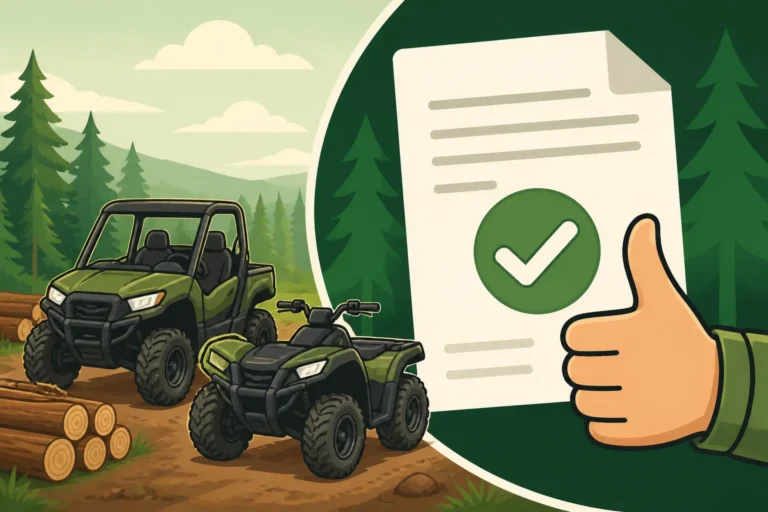
Riding a Quad Through a Subdivision
It's a common dilemma many off-road enthusiasts face: you've got your ATV or side-by-side sitting right there, and the quickest way to get from your garage to a neighbor's house, or maybe just around your large property, seems to be a quick spin down your subdivision street. But before you even think about firing it up and rolling onto that asphalt, we need to talk about the reality of riding a quad or UTV through a subdivision in Georgia. This guide will walk you through the legal nuances, HOA hurdles, and practical considerations so you can make informed decisions and avoid potential headaches.
The Complex Reality of Riding ATVs on Subdivision Streets in Georgia
Let's cut right to the chase: Georgia law is pretty clear that ATVs and most UTVs are not designed or legally permitted for general use on public roads. Subdivision streets, while they might feel like private property because they're within your neighborhood, often fall under the category of public rights-of-way, or at the very least, are treated as such by local law enforcement. This distinction is absolutely critical.
Georgia's Stance on ATVs and Public Roads
In Georgia, an All-Terrain Vehicle (ATV) is broadly defined as any motorized vehicle designed for off-highway use, traveling on three or more low-pressure tires. These machines are built for dirt, mud, rocks, and trails, not paved roads shared with cars and trucks. The state's Motor Vehicle Code does not classify them as "street legal" in the same way a car or motorcycle is. This means they generally lack the required safety equipment—things like DOT-approved tires, turn signals, mirrors, and specific lighting—that would allow them to be registered for road use. You might have seen some discussions around [Are Side-by-Sides Street Legal in Georgia?] or [Georgia ATV Road Law Explained], and the consistent theme is that for most quads and UTVs, road use is highly restricted or outright prohibited.
There's a relatively new exception for specific types of Utility Terrain Vehicles (UTVs) that meet stringent criteria to be registered as "Multipurpose Off-Highway Vehicles" (MPOHVs). This voluntary registration allows these very specific machines to operate on certain county roads. However, this designation comes with a long list of requirements, from weight and width limits to steering wheel type and factory-installed seat belts. Critically, even if your UTV qualifies for MPOHV registration, its use is typically limited to county roads and not municipal streets or state highways. And this distinction often applies to subdivision streets, too. So, even with an MPOHV plate, cruising through your residential streets might still be a no-go depending on how those roads are classified. For more on this, check out [Georgia MPOHV Road Rules: County Roads Only].
The Murky Definition of "Public" vs. "Private" Streets in a Subdivision
This is where things can get a bit confusing for homeowners. You pay your HOA fees, you live in a private community, so surely the roads inside are private, right? Not always. Many subdivision roads, even those within gated communities, are dedicated to the county or city once the development is completed. This means they are maintained by public funds (your taxes!) and, more importantly, are subject to public traffic laws and law enforcement. If a local sheriff's deputy or city police officer can drive down your street, it's highly probable that it's considered a public road.
The key determinant is usually whether the roads have been "accepted" by the county or city for public maintenance. If they have, then any vehicle operating on them must comply with the Georgia Motor Vehicle Code. If the roads truly remain private—meaning they are maintained by the HOA and not publicly accessible without specific permission—then the rules might shift, but you're still not entirely in the clear. Even on genuinely private roads, you're bound by the property owner's (in this case, the HOA's) rules and generally accepted safe operating practices. And while law enforcement might not enforce traffic laws in the same way, they can absolutely intervene for reckless operation, noise complaints, or if someone gets injured.
To be absolutely sure about your specific subdivision, it's wise to contact your county's public works department or the city's planning office and ask about the status of the roads in your neighborhood. Don't just assume; investigate.
Navigating Homeowners Association (HOA) Regulations
Even if, by some slim chance, your subdivision's streets are genuinely private and not subject to public road laws, you still have another major hurdle: your Homeowners Association. HOAs exist to maintain community standards, property values, and resident harmony. And trust me, ATV and UTV use in residential areas is a prime target for HOA regulations and neighborly disputes.
Deciphering Your HOA's Covenants and Bylaws
Every HOA has a set of Covenants, Conditions, and Restrictions (CC&Rs) or bylaws that dictate what you can and cannot do within the community. These are the rules you agreed to when you bought your home. It's incredibly common for these documents to have specific clauses regarding recreational vehicles, ATVs, UTVs, or motorized vehicles in general. They might:
- Prohibit all motorized recreational vehicles from being operated on common areas, including streets and shared green spaces.
- Restrict operation hours (e.g., no riding before 9 AM or after 7 PM) to minimize noise disturbances.
- Designate specific areas where such vehicles can be used (which is rare in a typical subdivision).
- Require vehicles to be stored out of sight, such as in a garage, rather than parked openly.
- Impose fines for violations of these rules.
It's your responsibility to know what's in your HOA documents. If you're unsure, get a copy from your HOA board or property management company and read through it carefully. Don't rely on hearsay or what a neighbor thinks the rules are. Violating HOA rules can lead to hefty fines, legal action from the HOA, and can even place a lien on your property. You can learn more about this specific issue in [Georgia HOA Rules About Side-by-Sides].
Addressing Neighbor Concerns and Maintaining Community Harmony
Beyond the black-and-white rules, there's the very real social aspect of living in a community. Even if your machine is technically allowed (which, again, is unlikely on public roads and often restricted by HOAs), noise, dust, and perceived safety risks can quickly make you unpopular with your neighbors. Many people move to residential areas for peace and quiet, and the sound of a roaring engine or spinning tires is often the antithesis of that.
Consider these common neighbor concerns:
- Noise: ATVs and UTVs, especially those with aftermarket exhaust systems (even some stock ones!), can be quite loud. Repeated noise can lead to complaints to the HOA, local law enforcement, or directly to you. [Georgia Noise Complaints About Quads] is a real issue for authorities.
- Dust and Dirt: If your subdivision has unpaved areas or you're kicking up dust on dirt shoulders, this can spread to neighbors' homes, cars, and landscaping.
- Safety Concerns: Parents with young children often worry about high-speed vehicles zipping through residential streets, regardless of how carefully you think you're riding. The sight of an ATV can raise alarms.
- Property Damage: While rare, accidents can happen, from scraping a mailbox to damaging a lawn. Even without direct impact, repeated use on grassy areas can cause ruts.
Being a good neighbor means considering the impact of your actions. If you're constantly causing disturbances, you can bet that complaints will follow, leading to potential enforcement actions from both the HOA and law enforcement. Before you even consider riding, think about how your actions affect the community you live in.
Understanding the Consequences: Legal and Social Repercussions
Ignoring the rules, whether they're state laws or HOA covenants, can lead to a host of unpleasant consequences. These aren't just theoretical; they're very real penalties that can hit your wallet, your driving record, and your standing in the community.
Potential Fines and Enforcement Actions
If you operate an ATV or an unregistered UTV on a public road in Georgia, including most subdivision streets, you could face:
- Traffic Citations: These can come with fines that vary by county and specific offense. It's not uncommon for these fines to be hundreds of dollars.
- Misdemeanor Charges: Depending on the specific violation (e.g., reckless driving, operating an unregistered vehicle), you could face more serious charges.
- Vehicle Impoundment: Law enforcement has the authority to impound your machine if it's being operated illegally. Getting it back means paying towing and storage fees, on top of any fines. Check out [Georgia Impound Rules After a Violation] for more context.
- HOA Fines: As mentioned, your HOA can levy significant fines for violating their covenants, which can quickly add up. These fines might even be higher than a traffic ticket.
- Insurance Issues: If you're involved in an accident while illegally operating your ATV on a public road, your insurance policy might deny coverage. This could leave you personally liable for damages, medical bills, and legal fees, which could be catastrophic. Make sure your off-road machine is appropriately covered, especially if you have an MPOHV plate for county road access. For registered machines, [Georgia Liability Insurance Tied to Registration] is a must.
Law enforcement, particularly local sheriff's deputies, are increasingly aware of off-road vehicle laws, and they do enforce them. A quick ride to the mailbox might seem harmless, but the risk of getting caught and facing these penalties is significant.
The Impact on Your Reputation and Community Standing
Beyond the legal and financial hits, there's the social cost. Being known as "that person" who disregards community rules and disturbs the peace can strain relationships with neighbors and make your daily life less enjoyable. It can lead to:
- Direct Confrontations: Neighbors might approach you directly, leading to uncomfortable and potentially escalating situations.
- HOA Pressure: Your neighbors might collectively petition the HOA or board members, leading to stricter enforcement or new rules specifically targeting ATV/UTV use.
- Increased Scrutiny: Once you're on the radar, even minor infractions might be reported more quickly.
- Difficulty Selling Your Home: While perhaps extreme, a reputation for being a problematic neighbor could, in theory, impact property desirability if it becomes widely known.
Maintaining good community relations is vital. Before any actions that might disrupt the peace, consider talking to your neighbors or your HOA about your intentions. However, be prepared that for ATV use on subdivision streets, the answer will likely be a resounding "no."
Responsible Ownership: Alternatives to Subdivision Riding
So, if riding your quad through a subdivision is largely off-limits and fraught with legal and social risks, what are your options for enjoying your machine in Georgia? The good news is that Georgia offers fantastic opportunities for off-road recreation if you know where to look. Responsible ownership means finding legal and designated places to ride and ensuring your machine is equipped for safety and minimal environmental impact.
Finding Legal and Designated Riding Areas
The absolute best way to enjoy your ATV or UTV in Georgia is to take it to a designated off-road park or trail system. These locations are designed specifically for these machines, offering a variety of terrains and challenges in a safe and legal environment.
- National Forests: Georgia's Chattahoochee-Oconee National Forest offers several OHV trail systems, such as Houston Valley, Beasley Knob, and Whissenhunt. These require a permit (daily or annual) and have specific rules regarding machine width, helmets for minors, and operating hours. They are often closed seasonally or after heavy rain to prevent trail damage.
- Private Parks: Georgia is home to a number of excellent private off-road parks like Iron Mountain Resort and Highland Park Off-Road Resort. These parks often have hundreds of miles of trails, ranging from beginner-friendly to extreme, and some even offer amenities like cabins, camping, and wash stations. They usually charge an entrance fee and require waivers.
- Private Property: If you own a large tract of private land or have explicit written permission from a landowner, you can ride your ATV or UTV there. This is the simplest and most legally sound option, as long as you respect property boundaries and don't create excessive noise for nearby residents. Remember, even on private land, common sense and safety rules apply, especially regarding helmets for riders under 18. For more info on private land access, you might want to read [Georgia Rules for Riding a Pasture] or [Georgia Trespass Law for ATV Riders].
- County Roads (for MPOHVs): As discussed, if your UTV qualifies as an MPOHV and is properly registered, you can use it on designated county roads. This is a very specific use case and does not generally apply to traditional ATVs or even all UTVs. Always verify the road status and understand the specific MPOHV requirements before considering this option.
Using a trailer to transport your machine to these locations is the standard and recommended practice. It keeps you off public roads where your machine isn't welcome and ensures you're riding where it's safe and legal.
Equipping Your Machine for Safe and Respectful Use
When you are able to ride, whether on private land or at a dedicated park, equipping your machine properly is paramount. This not only enhances your safety but also demonstrates responsible ownership.
- Safety Gear: Helmets are non-negotiable for all riders, especially those under 18 where it's legally mandated even on private land. Eye protection, gloves, sturdy boots, and long sleeves/pants are also highly recommended.
- Spark Arrestor: Most off-road trail systems and private lands require a U.S. Forest Service-approved spark arrestor on your exhaust. This prevents hot carbon particles from escaping and potentially starting wildfires.
- Noise Reduction: While designated riding areas might have different sound limits than subdivisions, being mindful of noise is always good practice. If your machine is particularly loud, consider aftermarket mufflers that are designed to reduce decibels. Brands like SuperATV offer a variety of exhaust systems and accessories that can help manage sound while still allowing for performance.
- Visibility: Especially if you're ever on a county road with an MPOHV plate, good lighting, brake lights, and rearview mirrors are essential for visibility and safety. Even on trails, bright LED lights can be a lifesaver if you're out late or in dense woods. SuperATV is a great resource for lighting upgrades and mirrors.
- Maintenance: A well-maintained machine is safer, performs better, and is less likely to break down or cause issues. Regular oil changes, tire checks, and brake inspections are crucial.
- Proper Tires: Ensure your tires are appropriate for the terrain you'll be riding. Aggressive knobbies are great for mud, but they can quickly chew up soft ground and asphalt.
Remember, responsible ATV/UTV ownership in Georgia is all about knowing the rules, respecting your community, and seeking out the amazing legal riding opportunities the state has to offer. Trying to sneak a ride through your subdivision is rarely worth the risk.
| Aspect of Riding | Generally Prohibited | Generally Allowed (with conditions) |
|---|---|---|
| Subdivision Streets (Public) | Yes (unless MPOHV and explicitly allowed by local ordinance, which is rare for residential streets) | No |
| Subdivision Streets (Private, HOA-maintained) | Yes (usually by HOA covenants) | Only if HOA covenants specifically permit it (highly unlikely) |
| Designated OHV Parks/Trails | No | Yes (with permits/fees, safety gear, specific machine requirements) |
| Private Land (owned by you or with permission) | No | Yes (with owner's permission, respecting noise/safety) |
| County Roads (for MPOHVs) | No | Yes (only if UTV meets all MPOHV criteria and is registered) |
| State Highways/Interstates | Yes | No |
Disclaimer
This article is for general informational purposes only and does not constitute professional advice. Laws, prices and regulations vary by location and change over time. Consult a qualified professional for guidance on your specific situation.