Commercial Activity and the Helmet Exemption
It can be incredibly confusing to navigate Georgia's laws surrounding off-road vehicles, especially when you use your ATV or UTV for more than just weekend trail rides. Many people assume a helmet is always required, but if you’re operating your machine as part of a commercial activity, you might be surprised to learn there’s an exemption. This guide will thoroughly break down Georgia's helmet exemption for commercial use, helping you understand when it applies, what it means, and what you still need to consider for safety and legal compliance.
Understanding Georgia's General Helmet Law for Off-Roaders
Before we dive into the specifics of commercial exemptions, it’s crucial to understand the baseline rules that apply to most ATV and UTV riders in Georgia. The state’s laws are primarily focused on protecting younger riders, recognizing their increased vulnerability and inexperience. It's a common-sense approach designed to minimize severe injuries when enthusiasm might outweigh caution.
The Mandate for Riders Under 18
Georgia law is quite clear: any person under the age of 18 operating or riding as a passenger on an ATV or UTV must wear an approved helmet. This isn't just a suggestion; it's a legal requirement put in place for a very good reason. Think about it—younger riders, especially those new to operating powerful machines, are still developing their coordination, judgment, and reaction times. They might be more prone to taking risks or misjudging terrain, and a helmet provides a critical layer of protection in the event of a rollover or impact. Imagine a scenario where a 16-year-old is eagerly learning to ride a new side-by-side on a family farm. While they might feel invincible, a sudden loss of control on uneven ground could easily lead to an accident. The helmet rule is there to safeguard them during those learning experiences and beyond. For more on this, check out [Georgia ATV Helmet Law for Riders Under 18].
This mandate extends beyond just the operator; any passenger under 18 also falls under this rule. So, if you have a child riding with you in a UTV, even if you’re the adult operator, they still need to be properly helmeted if they haven’t reached their 18th birthday. It’s about protecting all minors involved with these vehicles, regardless of who is steering. This rule applies whether you're on private land, a designated trail, or even a county road where MPOHV registration allows limited use. The state recognizes the inherent risks of these powerful machines and prioritizes the safety of its youngest citizens.
Penalties for Non-Compliance
Ignoring the helmet law for minors isn't just a minor oversight; it carries a significant penalty in Georgia. If a law enforcement officer observes a rider under 18 without a helmet, the consequences can be quite severe. The violation is considered a misdemeanor and can result in a fine. This isn't a slap on the wrist; we're talking about a substantial financial penalty that serves as a deterrent. The state has set the [Georgia's $500 Helmet Violation Penalty] specifically to underscore the seriousness of this safety regulation. It’s a clear message to parents and guardians that ensuring their children wear helmets isn't optional.
Beyond the immediate fine, there are other considerations. A citation can mean court appearances, potential legal fees, and the hassle of dealing with the legal system. It's not just about the money; it's about the time and stress involved. Furthermore, if an accident were to occur and a minor was unhelmeted, it could complicate insurance claims or even expose the supervising adult to additional liability. The law is designed to prevent injuries, but it also carries real consequences for those who don't abide by it. Therefore, understanding these penalties is just as important as knowing the rules themselves, especially when considering any exemptions.
Diving Deep into the Commercial Activity Exemption
Now that we've covered the general rule, let's explore one of the key exceptions that can apply to adult riders: the commercial activity exemption. This is where the line between recreational use and working with your machine becomes very important, as it directly impacts helmet requirements.
What Qualifies as "Commercial Activity"?
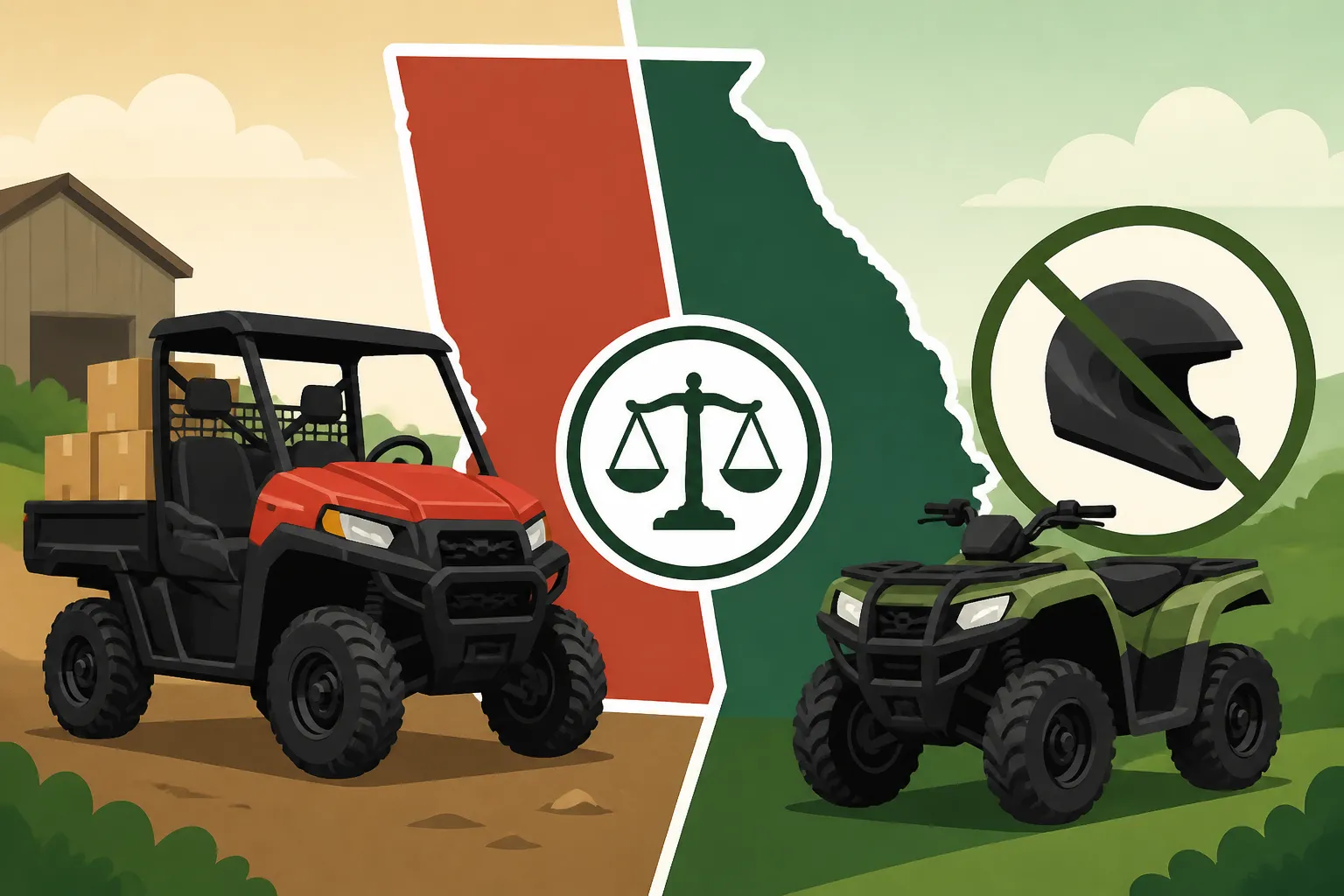
This is the million-dollar question for many ATV and UTV owners. In Georgia, "commercial activity" in the context of the helmet exemption refers to the use of the off-road vehicle as an integral part of a business or enterprise where the primary purpose is generating income or fulfilling a professional service. It's not just about doing "work" with your machine, but doing it for a specific business purpose.
Think of a landscaping company using a UTV to haul tools, mulch, or workers across a large property for a paying client. Or a construction crew relying on a side-by-side to transport equipment and materials around a job site. Perhaps it's a utility company inspecting power lines on rugged terrain, or a surveyor reaching remote markers. These are clear examples where the ATV or UTV isn't being ridden for fun, but rather as a tool of the trade, directly contributing to the commercial operation. The exemption, explicitly outlined in [Georgia Commercial Use Helmet Exemption], acknowledges that in these professional settings, the nature of the work often dictates different safety considerations and equipment, or that the vehicle's design (like a UTV with a cab) offers alternative forms of protection. Companies like SuperATV provide a host of accessories, from heavy-duty cargo beds to full cabs, that are often utilized in these exact commercial scenarios, reinforcing the utility aspect of these machines.
It’s important to distinguish this from simply using your machine to do chores on your own property, even if you sell produce from that property. If you're using your UTV to clear brush on your personal farm, even if that farm is a business, you might fall under the agricultural exemption rather than the commercial one, or simply be on private land where helmet rules are different for adults anyway. The key is whether the specific act of operating the ATV/UTV is part of a direct, income-generating service or product delivery for a defined business.
The Rationale Behind the Exemption
Why would Georgia create an exemption for commercial use when the general rule emphasizes helmet safety for minors? The reasoning often boils down to practicality, the nature of professional work environments, and the design of the vehicles themselves. In many commercial settings, operators are typically adults who are trained, experienced, and often have additional safety equipment or vehicle modifications that contribute to their protection.
For example, a construction worker operating a utility side-by-side might be working at slow speeds, within a controlled environment, and wearing a hard hat, steel-toed boots, and high-visibility clothing. The constant mounting and dismounting required for certain tasks might make continuous helmet use impractical and cumbersome, potentially even creating new hazards by reducing peripheral vision or causing fatigue. Furthermore, many commercial UTVs come equipped with factory-installed roll-over protection systems (ROPS) and seatbelts, which offer a significant level of protection in the event of an incident. These features, combined with the professional training and experience of the operator, often lead legislators to conclude that the helmet mandate can be safely waived for adult commercial users. This logic is similar to why the state has a separate [Agricultural Work and the Helmet Exemption], acknowledging the specific needs and environments of working professionals.
This exemption isn't about promoting carelessness; it's a recognition that different work environments require tailored safety protocols. While a recreational rider on a challenging trail might benefit most from a helmet, a utility worker performing specific tasks might find other safety measures equally or more effective, especially when balancing safety with operational efficiency. Companies like SuperATV often design products, such as cab enclosures and heavy-duty bumpers, with these work scenarios in mind, offering protection that might supplement or even supersede the need for a traditional helmet in some commercial contexts.
Practical Considerations and Proving Commercial Use
Even with a valid exemption for commercial activity, simply being engaged in work isn't always enough. You need to be prepared to demonstrate that your use falls under the exemption, especially if you encounter law enforcement. It’s also wise to remember that an exemption doesn’t negate the importance of safety.
Documentation and Proof for Law Enforcement
Should a Georgia deputy stop you while you're operating an ATV or UTV without a helmet, and you claim commercial use, you'll need to be ready to back that up. Simply stating, "I'm working," might not be sufficient. Law enforcement officers are trained to ensure compliance with all regulations, and they'll want clear evidence that you meet the criteria for an exemption.
What kind of proof might you need? This could include carrying a copy of your business license, current work orders, invoices related to the job you're performing, or even a letter from your employer on company letterhead detailing your work duties and the necessity of using the off-road vehicle for those tasks. If you’re a sole proprietor, perhaps a business card, a recent contract, or documentation showing the nature of your business operations would be helpful. Imagine a scenario where you're on a remote access road, inspecting a pipeline right-of-way for your utility company, and a sheriff’s deputy pulls you over. Being able to show your company ID, a work order for that specific location, and explaining your role immediately provides the context needed. For broader understanding of what might be checked, consider [What a Deputy Checks at a Georgia OHV Trailhead], though the specific context here is road use rather than designated trails. This foresight can save you significant time and prevent a potential citation.
Keeping these documents readily accessible, perhaps laminated in a waterproof pouch on your machine or in a secure compartment, is a smart practice. The goal is to provide undeniable evidence that your current operation of the ATV or UTV is for a legitimate commercial purpose, thereby satisfying the requirements for the helmet exemption. This proactive approach ensures smoother interactions with law enforcement and helps you avoid unnecessary legal headaches.
Safety Best Practices, Even When Exempt
It’s crucial to understand that being legally exempt from wearing a helmet for commercial activity does not mean you are exempt from the risks inherent in operating an ATV or UTV. The laws are minimum standards, not comprehensive safety guidelines. Even if the law doesn't require it, a helmet remains one of the most effective pieces of personal protective equipment for head injuries.
Many commercial operators, understanding these risks, still choose to wear helmets or other protective gear. Depending on the nature of the work, you might opt for a hard hat if overhead protection is paramount, or a lightweight helmet if constant mobility is key. Consider the terrain you'll be covering, the speeds you'll be traveling, and the potential for rollovers or impacts. Companies like SuperATV offer a range of aftermarket accessories that can significantly enhance safety, even if a helmet isn't worn. These might include full cab enclosures for impact and environmental protection, reinforced roll cages for enhanced structural integrity, five-point harnesses for better occupant retention, and even full windshields that protect against debris.
Beyond helmets, other safety practices are non-negotiable for commercial operators. Always wear your seatbelt, ensure your vehicle is properly maintained, and conduct pre-operation checks. Understand the weight and towing limits of your machine, especially when carrying tools or materials. Drive at appropriate speeds for the conditions and your workload, and never operate while impaired. While the law might grant you an exemption, your personal safety and the safety of your crew should always be the top priority. Think of it this way: an exemption from a rule is not an exemption from physics.
Distinguishing Commercial Use from Other Exemptions and Recreational Riding
The legal landscape for ATV and UTV use in Georgia can feel like a maze, with various exemptions and specific rules that depend on the activity, location, and even the type of vehicle. It's vital to understand how the commercial activity exemption differs from other categories to ensure you're always in compliance.
Farm and Logging Exemptions
Georgia law also provides specific helmet exemptions for individuals engaged in bona fide agricultural or logging operations. While these activities often are commercial in nature, the law sometimes treats them with distinct exemptions due to their unique operational environments and traditional uses of off-road equipment. For instance, a farmer using a UTV to check fences, transport feed, or spray crops on their own land might fall squarely under the [Georgia Farm and Logging Helmet Exemption]. The rationale is similar to the broader commercial exemption: these are typically adult operators performing essential work, often at slower speeds, and in environments where a helmet might interfere with other necessary tasks or visibility.
The key distinction, or sometimes overlap, is in the scope of the activity. An agricultural exemption might be tied specifically to working on a farm or timberland, whereas the broader commercial exemption could apply to a wider array of businesses, from utility work to construction to event management, even if they aren't directly farming or logging. In many cases, a commercial farming operation could fall under both agricultural and commercial exemptions. The critical thing for the operator is to understand which specific exemption they are relying on and to be able to articulate and prove it if questioned. This can sometimes be confusing, as the intent behind the machine's use is paramount in determining the applicability of these exemptions.
The Fine Line: When "Work" Isn't Commercial
This is where many people can inadvertently run into trouble. Just because you're using your ATV or UTV for a "work-like" task doesn't automatically mean it qualifies as "commercial activity" for the helmet exemption. For example, if you're a homeowner using your side-by-side to clear storm debris from your backyard, haul firewood, or transport tools for a DIY project, this is generally considered personal use, even though it feels like "work." Unless you are operating a storm cleanup business for paying clients, your personal efforts do not fall under the commercial exemption.
Similarly, volunteering for a non-profit organization, such as using your quad to help clear trails for a local club, while certainly commendable and hard work, would typically not be classified as commercial activity. The determining factor is whether the activity is undertaken for profit or as part of a formal, income-generating business enterprise. [Georgia ATV Rules on Private Property] primarily dictates helmet use for minors on private land, but for adults, if the activity isn't commercial, the general helmet exemption for adults in commercial settings doesn't apply. If you're riding to a deer stand on your own land, even if you’re carrying hunting equipment, that's generally recreational or personal use, not commercial. Companies like SuperATV sell robust winches and plows perfect for personal land maintenance, but using them for your own chores won't invoke the commercial helmet exemption. Understanding this nuance is crucial to avoid mistakenly assuming an exemption applies when it doesn't.
Here's a quick reference table to help clarify helmet requirements and exemptions in Georgia:
| Scenario | Age of Operator/Passenger | Helmet Required? | Key Consideration | Relevant Exemption (if applicable) |
|---|---|---|---|---|
| Recreational Riding (Trail/Private Land) | Under 18 | Yes | State law protects minors | N/A |
| Recreational Riding (Trail/Private Land) | 18 and Over | No | Generally not required for adults on private/designated trails | N/A |
| On County Road (Registered MPOHV) | Under 18 | Yes | State law protects minors | N/A |
| On County Road (Registered MPOHV) | 18 and Over | No | Generally not required for adults unless specific rules apply | N/A |
| Commercial Activity (Any Age) | Under 18 | Yes | Commercial exemption applies to adult operators | N/A (Minority rule overrides) |
| Commercial Activity (18 and Over) | 18 and Over | No | Part of an income-generating business or professional service | [Georgia Commercial Use Helmet Exemption] |
| Agricultural Work (18 and Over) | 18 and Over | No | Bona fide farm or logging operation | [Georgia Farm and Logging Helmet Exemption] |
| Personal Land Maintenance (18 and Over) | 18 and Over | No | Considered personal use, not commercial | N/A |
| Riding to a Hunting Blind (18 and Over) | 18 and Over | No | Considered personal use, not commercial | N/A |
Understanding these distinctions is paramount to staying on the right side of the law. Always err on the side of caution, and if there's any doubt about whether an exemption applies, wearing a helmet is always the safest choice. Keep in mind general safety rules like [Georgia DUI Law and Off-Road Machines] always apply, regardless of helmet exemptions. Also, if you plan to use a machine for commercial purposes, be sure to understand things like [Georgia Sales Tax on a Farm Machine] or other financial implications.
The commercial activity exemption in Georgia offers a degree of flexibility for adult ATV and UTV operators who rely on these machines as tools for their trade. However, it's not a blanket pass to disregard safety. Understanding what truly qualifies as "commercial activity," being prepared to provide documentation, and always prioritizing safety through informed choices and additional protective gear, even when not legally mandated, are the hallmarks of a responsible operator. Whether you’re a utility worker, a contractor, or a surveyor, knowing these specific rules can help you navigate Georgia's diverse off-road vehicle laws with confidence. Remember that general operator rules, such as [Georgia Driver's License Rules for MPOHV Operators] and [Georgia Insurance Minimums for Road Use] for registered machines, still apply. Always be prepared, ride safely, and ensure your activities are properly documented.
Disclaimer
This article is for general informational purposes only and does not constitute professional advice. Laws, prices and regulations vary by location and change over time. Consult a qualified professional for guidance on your specific situation.