County Road Systems on a Map
It's a common headache for Georgia MPOHV owners: you've got your machine ready, maybe even registered, but trying to figure out exactly which roads are fair game can feel like decoding a secret map. Many riders feel a real sense of frustration, wanting to enjoy their side-by-sides responsibly but often left guessing about the precise boundaries of legal travel. This guide aims to clear up that confusion, helping you confidently identify and navigate Georgia's county road systems.
What Exactly Constitutes a County Road in Georgia?
When you’re preparing to take your registered MPOHV out for a spin, the very first question that often pops into your head is, "Am I even supposed to be here?" The legal definition of a county road in Georgia is crucial for MPOHV owners because, under the current law, these are the only public roadways where your machine is generally permitted to travel. It's not just any paved or unpaved surface; it's a specific classification that determines your legal access.
County roads are maintained by the respective county government and are typically intended to connect communities, provide access to rural areas, or serve local traffic within the county's jurisdiction. They can range from bustling two-lane highways connecting small towns to quiet, unpaved routes winding through farmlands or dense woods. The key identifier isn't necessarily the road's condition or surface type, but rather its administrative designation. Understanding this distinction is paramount to avoiding potential legal issues and enjoying your ride without worry.
Differentiating County Roads from State Routes and Interstates
One of the biggest challenges for MPOHV riders is learning to tell the difference between a county road and other road classifications. On paper, it seems simple enough, but out in the real world, especially in rural areas, the lines can feel a little blurry. State routes are managed by the Georgia Department of Transportation (GDOT) and are generally major arteries connecting cities and regions. Interstates, of course, are the big multi-lane highways designed for high-speed, long-distance travel. Your MPOHV, even if registered, is explicitly forbidden from these state routes and interstates, except for specific, clearly designated crossings on state routes. [Crossing a Georgia State Highway on a UTV] is a very specific maneuver, not a general allowance for travel.
You’ll typically spot state routes by their distinctive white shield signs with black numbers. For example, you might see a sign for "GA-20" or "SR 140." These are immediate red flags for MPOHV owners—you should not be driving your machine along these roads. Interstates are even more obvious with their familiar blue and red shields. County roads, on the other hand, don't have a uniform shield system across the entire state. They might have small, often green or blue, signs with numbers or names, or sometimes no specific sign at all, relying on local knowledge or less formal markers. This lack of consistent signage for county roads is where much of the confusion stems from, making it tough to differentiate them solely by visual cues on the fly. You'll often find yourself asking "Is this really a county road?" as you approach an intersection.
The Legal Framework for MPOHV Access
The ability to ride your MPOHV on Georgia's county roads isn't just a suggestion; it's outlined in state law, specifically regarding "Multi-Purpose Off-Highway Vehicles" (MPOHVs). This legislation created a pathway for certain types of off-highway vehicles, primarily side-by-sides, to be registered and then legally operated on county roads. However, this access comes with a specific set of rules and limitations. For instance, you can't just jump on any road; you must ensure your machine meets all the [Georgia MPOHV Eligibility: The Eight-Point Test] requirements to even get it registered in the first place.
Beyond registration, there are ongoing operational rules. You need to adhere to the standard rules of the road, including traffic laws, speed limits, and displaying your [Georgia Plates for Off-Highway Vehicles] clearly. It's also important to remember that this road access is not permanent; [Georgia's July 2027 Sunset on Road Access] means that unless renewed or changed by future legislative action, the ability to ride MPOHVs on county roads is slated to expire. This creates a bit of an anxious feeling for many owners, wondering about the long-term viability of their road-riding privileges. Knowing the underlying laws helps you understand why these distinctions between road types are so critical.
How to Identify County Roads on Various Maps
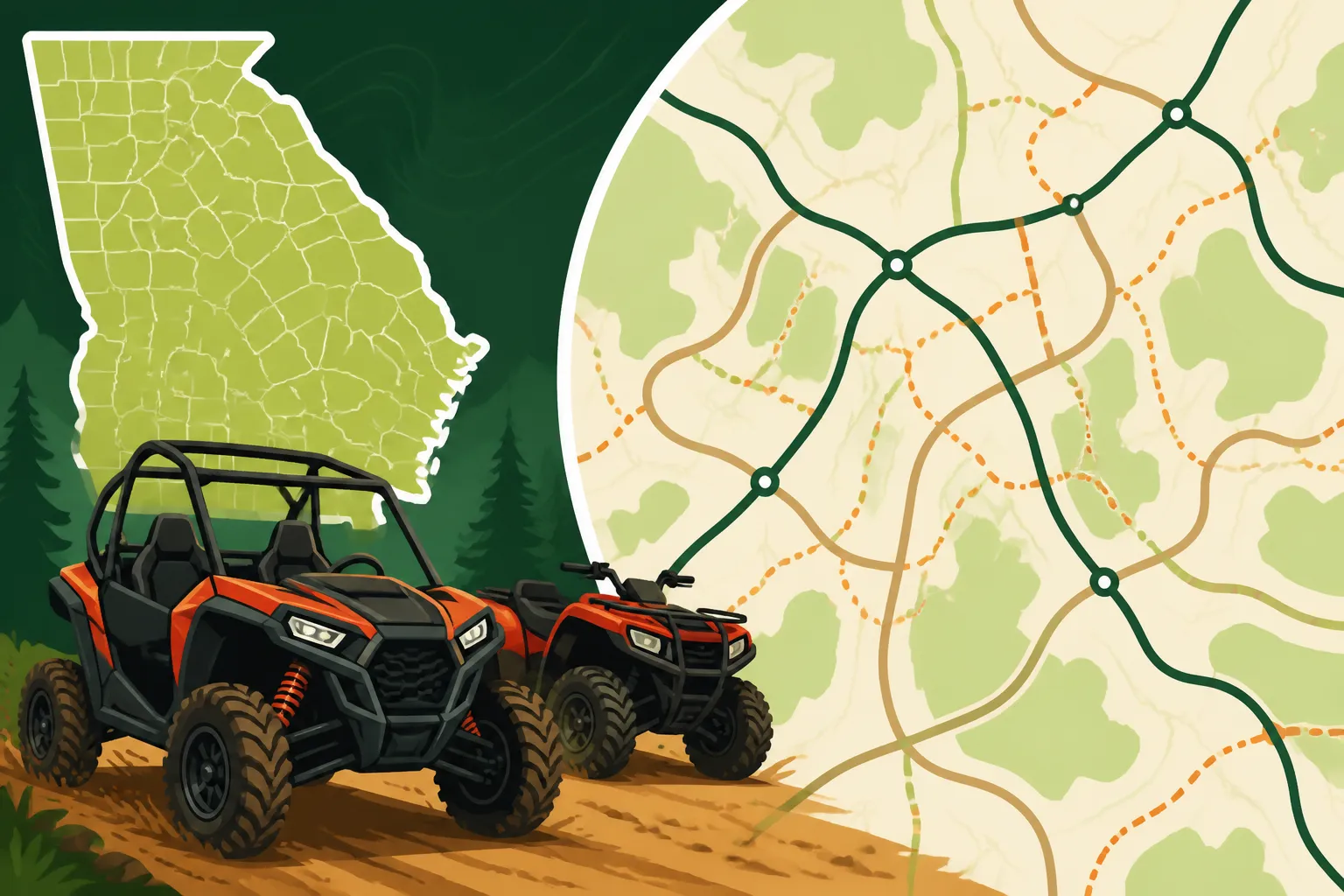
Given the lack of consistent physical signage for county roads, mapping tools become your best friend. Relying solely on your intuition or the appearance of a road can lead to trouble, as a well-maintained gravel road could be a county road, a private road, or even a section of a state route in certain contexts. Learning how to effectively use both digital and traditional maps is a critical skill for any MPOHV owner planning to explore Georgia's backroads. This proactive approach ensures you're riding legally and safely, avoiding the dreaded situation of being pulled over on a road you shouldn't be on.
Using Online Mapping Tools for Road Classification
In our modern world, digital navigation apps are indispensable, and they can be incredibly helpful for identifying county roads. While these tools don't always explicitly label a road as "county road," they use color codes, road numbers, and administrative boundaries that provide strong clues. Major thoroughfares, such as state routes and interstates, are almost always clearly marked with their numeric designations and often appear in bolder colors. The roads that connect to these larger arteries, especially those with less prominent numbering or simply named by local communities, are often your county roads. When zooming in, look for municipal boundaries; roads exclusively within a county's jurisdiction, not connecting major cities in a broader regional sense, are strong candidates.
Many digital mapping services allow you to toggle different map layers or satellite views, which can give you additional context. A road that changes from a paved surface to gravel or dirt but continues to be depicted as a public thoroughfare on the map is frequently a county road. Be mindful, however, that while these tools are excellent for planning, they sometimes lack the most up-to-date information on very minor or newly designated roads. Always cross-reference with local knowledge or other sources if you're uncertain, especially when venturing into very remote areas. Aftermarket parts providers like SuperATV often recommend using reliable GPS units alongside smartphone apps for off-road navigation, recognizing the limitations of relying on just one source.
Interpreting Physical Road Maps and Signs
Despite the rise of digital tools, traditional paper maps, especially detailed county maps or Forest Service maps, still hold immense value. These maps are often printed with very clear distinctions between state-maintained roads and county-maintained roads, using different line weights, colors, or specific symbols. For instance, a Georgia county map might show state routes in red or blue, while county roads are depicted in black or a lighter color. The legend on the map will be your guide, providing the key to understanding these distinctions. It's a bit of a throwback, but having a physical map as a backup, especially in areas with spotty cell service, is always a smart move.
When you're out on the road, pay close attention to any physical signs, even if they're not the official state route shields. Small green or white street signs indicating a road name, rather than a highway number, are typical for county roads. Also, observe the road's condition and maintenance. While some county roads are beautifully paved, others may be gravel or dirt. If you see county road crews working, or signs indicating county services (like trash collection routes), these are strong indicators you're on a county-maintained path. Keep an eye out for bridges and culverts; sometimes these structures will have small plaques or markings indicating which entity is responsible for their maintenance, offering another clue.
Here’s a quick overview of road types and what to look for:
| Road Type | Typical Appearance & Signage | MPOHV Access Status in Georgia (Current Law) | Key Identifier |
|---|---|---|---|
| Interstate | Multi-lane, high-speed, blue/red shield (e.g., I-75, I-20) | NEVER Allowed | High-volume, limited-access, controlled exits/entrances |
| State Route | Paved, often 2-4 lanes, white shield with black numbers (e.g., GA-19) | NEVER for travel; CROSSINGS ONLY | Maintained by GDOT, connects major towns/regions |
| County Road | Paved or unpaved, often narrower, local name signs (e.g., Smith Rd) | GENERALLY ALLOWED (if registered & eligible) | Maintained by county, serves local traffic |
| Private Road | Varied, may have "Private Property" signs, gates | NEVER (without explicit permission) | No public access, maintained by property owner |
| Forest Service Road | Dirt/gravel, may have USFS signs, often gated | PERMITTED (in designated areas, with permit) | Maintained by US Forest Service, specific rules apply |
Navigating Restrictions and Practical Riding Tips
Simply identifying a county road isn't the end of the story; there are still rules to follow and best practices to adopt to ensure a safe and legal ride. Many MPOHV owners face the dilemma of wanting to explore without unknowingly breaking the law or putting themselves in danger. It’s not enough to know where you can go; you also need to know how to behave once you’re there. This means being informed about local ordinances, understanding speed limits, and ensuring your machine is properly equipped for public road use. This foresight not only protects you but also helps maintain positive relations with other road users and local communities.
Understanding Local Ordinances and Speed Limits
While state law generally permits registered MPOHVs on county roads, individual counties in Georgia retain the authority to pass their own ordinances that might further restrict or regulate MPOHV use within their specific jurisdiction. This is where things can get tricky, as what's perfectly legal in one county might have different rules in the next. For example, a county might impose stricter nighttime riding rules, or designate specific roads that are off-limits even if they are technically county roads. It’s your responsibility as the operator to check with the county sheriff's office or local government website for any such ordinances before you ride. [Georgia UTV Road Rules by County] can vary, and being caught unaware is never a good experience.
Furthermore, speed limits on county roads apply just as they would to any other vehicle. While your MPOHV might be capable of higher speeds, many county roads are winding, unpaved, or have blind turns that make high-speed travel dangerous. You are expected to operate your machine safely and adhere to all posted speed limits, and where no speed limit is posted, common sense and local conditions should dictate your speed. Exceeding reasonable speeds can not only lead to a citation but can also alienate residents who share these roads, potentially leading to increased scrutiny and calls for stricter regulations. Remember, you're sharing the road, and courtesy goes a long way.
Safety Considerations and Equipment
Operating an MPOHV on public roads brings with it a whole new set of safety considerations compared to off-road trail riding. You are now sharing the space with cars, trucks, and other vehicles, which are often larger and faster. Visibility is paramount, especially on dusty gravel roads or during dawn and dusk hours. Ensure your headlights, brake lights, and turn signals are fully functional and visible to others. Adding extra reflective tape or an orange safety flag, particularly for those lower-profile machines, can significantly improve your presence on the road. Many riders opt for aftermarket accessories from companies like SuperATV to enhance their machine’s road safety features, such as improved mirrors or additional lighting. [Georgia Equipment a Road Machine Must Carry] is a detailed list worth reviewing.
Beyond your machine's equipment, personal safety gear is crucial. While Georgia doesn't have a universal helmet law for adults operating MPOHVs on county roads, wearing a helmet is always a wise decision, especially for younger riders, as [Georgia ATV Helmet Law for Riders Under 18] is strictly enforced. Eye protection, gloves, and sturdy footwear are also highly recommended to protect against debris and in the event of an accident. Always buckle up, ensure any passengers are secured, and avoid distractions. Your safe operation on these shared roads is not only about legal compliance but about protecting yourself and others.
Planning Your Route and Avoiding Pitfalls
Successfully navigating Georgia's county road systems with your MPOHV requires more than just knowing where the roads are; it demands careful planning and a proactive approach to potential issues. Many riders jump into an adventure without fully considering all the variables, only to find themselves in a tricky situation far from home. A little preparation goes a long long way in ensuring your ride is enjoyable, safe, and entirely within legal bounds. Think of it as a pre-flight checklist for your MPOHV adventure.
When to Consult Local Authorities
Despite all your careful mapping and research, there will inevitably be times when you encounter an ambiguous roadway or have a specific question about a local rule. This is precisely when you should not hesitate to reach out to local authorities. Your county sheriff's office or the local county commission office can provide clarification on specific ordinances or the classification of a particular road. They are the best source of definitive, up-to-date information on local regulations that might impact your MPOHV use.
It’s far better to make a quick phone call or send an email before you ride than to face a potential citation or accident afterward. For instance, if you're planning to ride through an unincorporated area that borders a city, it's smart to confirm whether any city ordinances might accidentally apply to a portion of your route, even if you intend to stay on county roads. While [Georgia Sheriff Enforcement on County Roads] is a reality, deputies are generally helpful when you're proactively seeking to comply with the law. Building a good relationship with local law enforcement by demonstrating your commitment to responsible riding can also be beneficial for the entire MPOHV community.
What to Do If You Encounter Ambiguous Roadways
You've planned your route, you've checked your maps, but inevitably, you might find yourself on a road that just doesn't feel right. Maybe the signage disappears, or the road conditions change abruptly, making you question its status. In these situations, the safest course of action is always to assume the more restrictive rule applies. If you're unsure if a road is a county road or a state route, err on the side of caution and turn around or find an alternate route. Getting a [Georgia Ticket Cost for Illegal Road Riding] is a headache you certainly want to avoid.
Never assume that because a road is unpaved or in disrepair, it's automatically a county road suitable for MPOHVs. Similarly, a well-maintained road without clear state route markers might still be a state route. If you see signs indicating "No Trespassing" or "Private Road," respect those warnings immediately. It’s also important to have a backup plan. Always carry a fully charged phone with a mapping app and, if possible, a physical map, so you can re-orient yourself if you take a wrong turn or encounter an unexpected road closure. Being prepared for the unexpected is key to responsible MPOHV operation, ensuring your adventures remain fun and legal.
Disclaimer
This article is for general informational purposes only and does not constitute professional advice. Laws, prices and regulations vary by location and change over time. Consult a qualified professional for guidance on your specific situation.