Under 12 and Why They Cannot Drive
It's a common dilemma for families who love the outdoors: you've got your side-by-side or UTV, the kids are practically begging to get behind the wheel, and you're left wondering, "How young is too young?" Especially here in Georgia, where the rules for taking these machines onto county roads can feel like a tangled mess of regulations, understanding the age restrictions is paramount. This guide will clarify why, under Georgia law, children under 12 years of age absolutely cannot operate a Multi-Purpose Off-Highway Vehicle (MPOHV) on any public road, helping you keep your young ones safe and on the right side of the law.
The Core Rule: Georgia's Minimum Age for MPOHV Road Use
Navigating Georgia's off-highway vehicle laws can feel like threading a needle, especially when you factor in age. While the thrill of riding can be infectious for youngsters, the state has clear, strict guidelines about who can operate these machines on public roads. It's not just a suggestion; it's a legal requirement designed for safety.
Why Under 12 is the Absolute Minimum for Public Roads
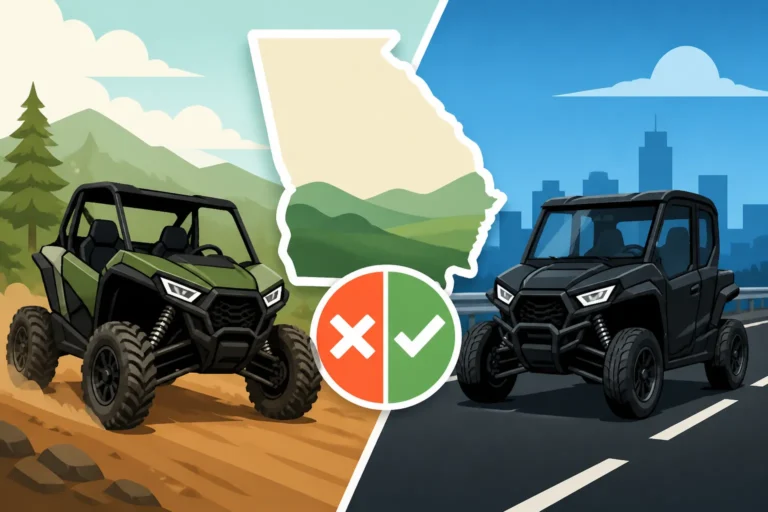
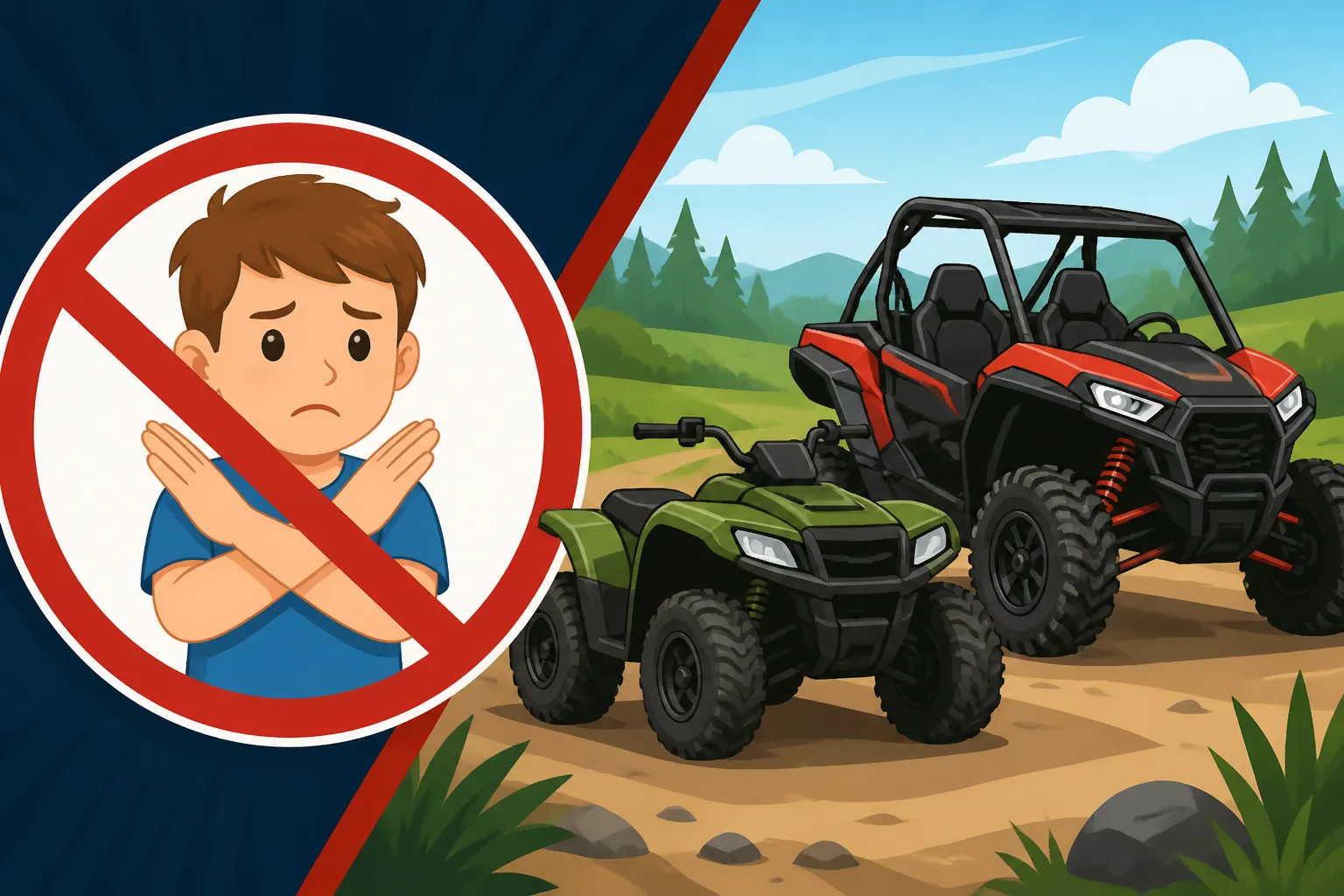
Let's get straight to it: In Georgia, if you're riding an MPOHV – that's your side-by-side or UTV – on any county road, the operator must be at least 12 years old. This isn't a vague recommendation or a local ordinance; it's written directly into the state's vehicle code. The intent behind this specific age minimum is clear: public roads, even unpaved county roads, present inherent risks that require a certain level of maturity, judgment, and physical capability that most children under 12 simply haven't developed yet. Think about the complexities of sharing the road with other vehicles, dealing with unexpected obstacles, or reacting to sudden changes in terrain – these aren't tasks for a developing mind. The law is designed to protect both the child operating the machine and others who might be on the road.
Furthermore, this 12-year-old minimum isn't tied to having a driver's license or a learner's permit, because a registered MPOHV isn't a street-legal car. However, it is the absolute floor for operating these machines on the public road system that Georgia has opened up. Any operator, even a 12-year-old, needs to understand and follow all applicable traffic laws, including signaling, yielding, and maintaining a safe speed. This legal age limit covers all "operators," meaning anyone actively controlling the vehicle. It's not enough to have an adult in the passenger seat; the person physically steering, accelerating, and braking must meet this age threshold.
Understanding "Operating" vs. "Riding"
It's crucial to distinguish between "operating" a machine and merely "riding" in it. The law specifically prohibits anyone under 12 from operating an MPOHV on a public road. This means they cannot be in the driver's seat, gripping the steering wheel, and manipulating the pedals or controls. They cannot be the one in charge of the machine's movement.
However, the law generally allows children under 12 to be passengers in an MPOHV, provided they are safely secured and seated appropriately for the vehicle. Most side-by-sides are designed with multiple seats and seat belts, making them suitable for carrying passengers. So, while your 8-year-old cannot drive your Polaris Ranger down the county road to the hunting club, they can absolutely be buckled into the passenger seat alongside you. The key is that a legal, age-appropriate operator must be in control. This distinction is vital for families who want to enjoy the outdoor experience together without breaking the law. Always ensure your side-by-side is equipped with proper [Factory Seat Belts and the Eligibility Check] if you plan to carry passengers, and that everyone remains seated and belted while the vehicle is in motion.
Exceptions and What They Don't Cover
You might be thinking, "What about my own land?" And that's a fair question, as the rules for private property are quite different. The 12-year-old age restriction for MPOHV operation strictly applies to public roads and other public lands where such machines are permitted, such as designated trails in some state or national forests (though specific age rules may apply there as well). On private land that you own, or land where you have explicit permission from the landowner, the state's age restrictions for road use generally do not apply.
This means that if you're on your own sprawling farm or a friend's private hunting lease, you can, at your discretion, allow a child younger than 12 to operate an ATV or UTV. However, even in these private settings, parental supervision, appropriate safety gear (like helmets, which are legally required for [Georgia ATV Helmet Law for Riders Under 18] even on private land), and machines suitable for the child's size and skill level are absolutely essential. Just because it's legal doesn't mean it's safe without proper precautions. The critical takeaway is that the moment your wheels touch a county road, a public right-of-way, or any other public land, the 12-year-old minimum for operators kicks in, without exception.
The Dangers and Why These Rules Exist
It's easy to view legal restrictions as inconvenient hurdles, especially when you see your enthusiastic child eager to take the wheel. However, Georgia's age requirements for operating MPOHVs on public roads are rooted in serious safety concerns, directly addressing the inherent dangers of these powerful machines and the complex environments they might encounter. These aren't arbitrary rules; they're designed to protect the most vulnerable.
Developmental Readiness and Vehicle Control
Operating an MPOHV – particularly a side-by-side or UTV – demands a significant level of physical coordination, strength, and cognitive processing that is still developing in children under 12. These machines, even smaller utility models, are heavy and powerful. They accelerate quickly, can turn sharply, and require precise control of the steering, brakes, and throttle. A child's physical stature might not allow them to comfortably reach all the controls, or to exert the necessary force to steer effectively, especially in an emergency. Their reaction times are generally slower than an adult's, and their ability to quickly process multiple sensory inputs – like engine noise, approaching vehicles, and changing terrain – is still maturing.
Beyond the physical, there's the cognitive aspect. Children under 12 are still developing their judgment and risk assessment skills. They might not fully grasp the consequences of sudden braking, turning too fast, or misjudging a dip in the road. Even when riding off-road, navigating a trail requires anticipation, problem-solving, and a keen awareness of the machine's capabilities. When you add the unpredictable nature of a public road, these demands multiply exponentially, highlighting why the legal minimum age is a practical safeguard. Companies like SuperATV offer a range of aftermarket parts that can enhance vehicle safety and performance, but no upgrade can replace the need for an operator with the necessary developmental readiness.
Traffic Situational Awareness
Public roads, even quiet county roads, are dynamic environments. They are shared spaces where the unpredictable can happen in an instant. Operating an MPOHV on these roads requires constant situational awareness, the ability to anticipate potential hazards, and the judgment to react appropriately. A child under 12 typically lacks the developed peripheral vision, depth perception, and cognitive processing speed to effectively monitor for other vehicles, pedestrians, cyclists, or even stray animals. They might not fully understand traffic laws like right-of-way, stop signs, or the importance of staying to one side of the road.
Consider a scenario: a child under 12 is operating a side-by-side on a county road. Suddenly, a log truck appears around a blind curve. An adult operator might instantly react by braking, pulling over, or preparing for evasive action. A child, lacking experience and fully developed judgment, might freeze, overcorrect, or simply not perceive the danger until it's too late. The speed at which events unfold on a public road demands an operator who can consistently make split-second, safe decisions. This is precisely why [Georgia UTV Road Rules by County] are in place, and why operator age is such a critical component of those rules.
The Tragic Consequences of Underage Operation
Unfortunately, the statistics on ATV and UTV accidents involving children paint a stark picture. Underage operation, especially on public roads, is a leading cause of severe injuries and fatalities. These machines, while fun and versatile, are not toys. They are powerful vehicles, and accidents can happen quickly and without warning. When a child who is not developmentally ready is at the controls, the risk dramatically increases. Injuries can range from broken bones and head trauma to permanent disability or death.
The emotional and financial toll on families after such an accident is immense, not to mention the legal ramifications for parents or guardians who permitted the underage operation. The Georgia law setting the 12-year-old minimum is a direct response to these dangers, aiming to prevent such tragedies. It's a proactive measure to ensure that those operating MPOHVs on public ways possess at least the fundamental physical and mental capacities to do so as safely as possible. Prioritizing safety means respecting these age limits and understanding that they are there for a very real and serious reason.
What Parents Can Do: Safe Alternatives and Education
While the desire to share the excitement of off-roading with your children is completely understandable, safety and legality must always come first. When Georgia law states that kids under 12 cannot operate an MPOHV on public roads, it's not meant to spoil anyone's fun, but rather to protect young lives. The good news is there are plenty of ways to introduce your children to the world of off-roading safely and responsibly, without breaking the law or putting them at undue risk.
Private Land Riding with Supervision
The safest and most appropriate environment for children under 12 to learn how to operate an ATV or UTV is on private property, under direct and constant adult supervision. This could be your own land, a friend's farm, or a designated private off-road park that permits such activities and has specific youth areas. On private land, you control the variables: the terrain, the speed, and the presence of other vehicles. This allows for a controlled learning environment where a child can develop fundamental riding skills without the added pressure and dangers of public roads.
Start in an open, flat area to practice basic controls like accelerating, braking, and steering. As their confidence and skill grow, you can gradually introduce more challenging terrain. Always ensure the child is wearing appropriate safety gear, including a properly fitted helmet, eye protection, gloves, long pants, and sturdy boots. Even on private land, where the law allows younger riders, the [Georgia Under-18 Helmet Rule on Private Land] still applies. Remember, the goal is to build skills and confidence in a way that minimizes risk, allowing them to progress safely.
Age-Appropriate Machines and Training
It’s tempting to let a child "grow into" a larger machine, but this is a dangerous practice. Always match the machine to the rider's age, size, and experience level. Manufacturers often produce youth-model ATVs and UTVs specifically designed for smaller frames and less experienced operators, often with speed limiters that can be adjusted as skills improve. These machines are lighter, have lower top speeds, and are easier for a child to control. Avoid letting a child operate a full-sized adult machine; it's simply too much vehicle for them to handle safely.
Beyond the right machine, consider formal training. While [Georgia Has No State ATV Safety Course] requirement, there are many excellent voluntary ATV safety courses offered by organizations. These courses teach critical riding techniques, safety awareness, and responsible operation. Even if your child isn't old enough to get behind the wheel, learning about safety from an early age can instill good habits. For younger kids, being a passenger in a multi-seat side-by-side with an experienced, legal operator is a great way to experience the outdoors. Ensure they understand [Georgia Rules for Passengers on a Side-by-Side], including staying seated and belted.
Understanding Georgia's Broader UTV Road Rules
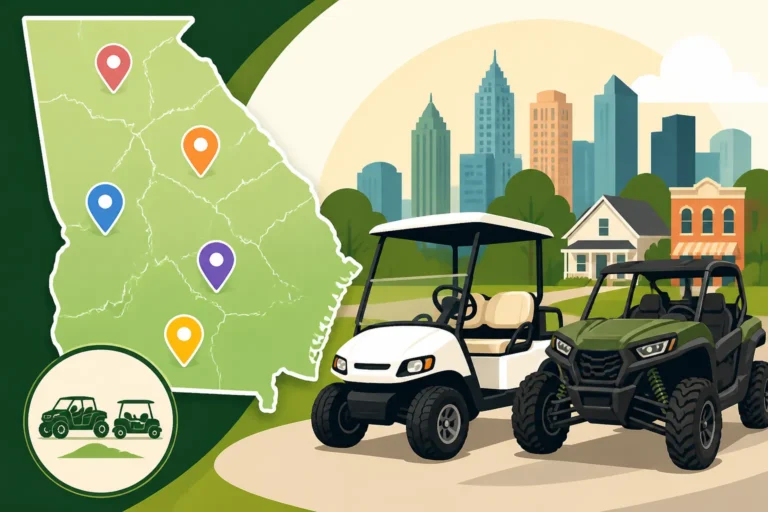
For parents and guardians, it's not just about the child's age but also about understanding the full scope of Georgia's MPOHV rules for public road use. When your child does reach the minimum age of 12 and you decide to allow them to operate a registered side-by-side on a county road, they must adhere to all the same regulations as an adult operator. This includes understanding speed limits, traffic signs, and the specific types of roads that are permissible. For instance, registered MPOHVs can typically only be used on county roads, and state highways or interstates are almost always off-limits, save for specific designated crossings. You can find more details in [Georgia UTV Road Rules by County].
Here's a quick reference table outlining key age-related operating restrictions for various vehicle types in Georgia (note: this focuses on operating on public roads/paths, not private land):
| Vehicle Type / Location | Minimum Operator Age (Public Road/Path) | Notes |
|---|---|---|
| MPOHV (Side-by-Side/UTV) on County Road | 12 Years Old | No driver's license required, but must follow traffic laws. |
| Golf Cart / PTV on designated path/street (Ordinance Dependent) | 12-15 (with adult) / 16 (alone) / 18 (some cities) | Varies significantly by local ordinance (e.g., Peachtree City). Often requires licensed driver presence for younger operators. [Georgia Golf Cart Age Rules] |
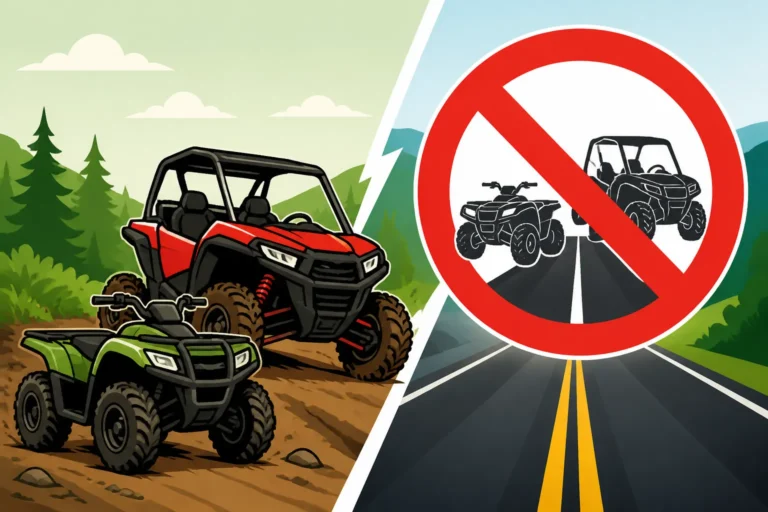
| ATV (Quad) on any Public Road | Not Permitted | ATVs (straddle-seat machines) are not considered "street legal" in Georgia. |
| LSV (Low Speed Vehicle) on Public Road (under 35 mph speed limit) | 16 Years Old | Requires a valid driver's license. |
Understanding these distinctions is vital. Allowing a 12-year-old to drive a side-by-side on a county road, or a 15-year-old to drive an LSV, means they are responsible for adhering to all traffic laws just as any licensed driver would be. For the latest details, always check [Georgia Driver's License Rules for MPOHV Operators] as rules can change.
Penalties and Enforcement for Underage Operators
Ignoring Georgia's age restrictions for MPOHV operation on public roads isn't just a minor oversight; it carries real legal consequences. Law enforcement takes these rules seriously because they are directly tied to public safety. As a parent or guardian, you have a responsibility to know and follow these laws, not only to protect your child but also to avoid potential fines, legal issues, and even more severe repercussions.
Legal Consequences for Guardians and Operators
If a child under 12 years of age is caught operating an MPOHV on a Georgia public road, the consequences can fall on both the child and the supervising adult, or the adult who allowed the operation. While the specific penalties can vary depending on the county and the discretion of the enforcing officer, they often involve fines and potential charges. For the child, it might be a citation for operating a vehicle illegally. For the adult, it could be a citation for allowing an unlicensed or underage person to operate a vehicle, or even more serious charges if an accident occurs.
Think about the liability: if a child under 12 causes an accident while illegally operating an MPOHV on a public road, the legal and financial ramifications for the responsible adult could be substantial. This could include damages to property, medical expenses for injured parties, and potentially devastating lawsuits. Insurance might not cover incidents that occur while violating state law, leaving you personally responsible for all costs. This is why these age rules aren't just about traffic control; they're a critical component of liability and public safety.
The Role of Law Enforcement on County Roads
Georgia's county sheriff's deputies and other local law enforcement agencies are the primary enforcers of MPOHV rules on county roads. They are familiar with the specific regulations that allow side-by-sides to operate on these roads and, importantly, the limitations. When a deputy spots an MPOHV on a county road, they are trained to check several things: whether the machine is properly registered as an MPOHV, if the operator meets the age requirements, if all safety equipment is in place (like lights and mirrors), and if the vehicle is being operated safely. [Georgia Sheriff Enforcement on County Roads] is a real and consistent presence, particularly in rural areas where MPOHV use is more common.
If a deputy pulls over an MPOHV and finds an operator under 12, they will likely issue a citation. They might also require the machine to be trailered or retrieved by an adult who can legally operate it. In cases of repeated violations or dangerous operation, they could even impound the machine. The goal of enforcement is not simply to punish but to prevent accidents and ensure that everyone using public roads, whether in a car or an MPOHV, does so safely and legally. Understanding these enforcement realities should reinforce the importance of adhering to Georgia's minimum age requirements.
Disclaimer
This article is for general informational purposes only and does not constitute professional advice. Laws, prices and regulations vary by location and change over time. Consult a qualified professional for guidance on your specific situation.