Georgia Insurance Minimums for Road Use
Riding your side-by-side or ATV on Georgia's county roads can be a fantastic way to enjoy the outdoors, but the rules, especially around insurance, can feel like a tangled mess. Many folks get confused about whether their off-road machine even needs insurance if they're only using it on public roads for short hops. This guide will cut through that confusion, explaining Georgia's specific insurance minimums for registered off-highway vehicles and why understanding them is crucial for every rider.
Understanding Georgia's MPOHV Classification for Road Use
Before we dive deep into insurance, it's absolutely vital to grasp the foundational concept: Georgia now allows certain off-highway vehicles (OHVs) to be registered for limited road use as "Multipurpose Off-Highway Vehicles" (MPOHVs). This isn't about making every single quad street legal; it's a specific pathway for utility-focused side-by-sides that meet strict criteria. If your machine doesn't qualify for this MPOHV registration, then any discussion of "road use insurance" is moot, because it shouldn't be on those roads in the first place. The whole system is designed to provide a legal framework for machines that were originally off-road but can safely operate on specific public roads if they meet safety and equipment standards.
What Qualifies a Machine for MPOHV Registration?
The MPOHV classification is quite specific, and it's where many people stumble. It's not enough to simply want to drive your UTV on the road; your machine has to physically meet a rigorous eight-point test. This checklist covers everything from its width and weight to its speed capabilities and seating configuration. For example, your machine must have a steering wheel, not handlebars. This immediately rules out traditional ATVs or dirt bikes, which are designed for a straddle seat and handlebars, but there's a specific eligibility point that requires [Why Handlebars Disqualify a Machine]. It also needs to have a non-straddle seat, seat belts, and be capable of speeds between 25 and 65 mph. There are also limits on the machine's overall width and weight, specifically [Georgia's 80-Inch Width Limit for Registration] and [Georgia's 4,000-Pound Gross Weight Ceiling]. Without meeting these points, including specific lighting requirements like headlights and brake lights, you simply cannot get your machine registered for road use in Georgia. Companies like SuperATV offer a range of accessories that can help equip a UTV with the necessary safety features to meet some of these requirements, but the core design of the vehicle itself must conform.
This eligibility process is designed to ensure that only machines built with certain safety features and operational characteristics, more akin to a small utility vehicle than a recreational quad, are allowed onto public roads. The Georgia Department of Revenue's guidelines are clear: if your machine doesn't pass the physical inspection at your county tag office, it won't receive the MPOHV registration. This strict adherence to criteria helps differentiate these vehicles from true off-road-only machines, defining a clear boundary for what can and cannot legally operate on county roads.
The Importance of Voluntary MPOHV Registration
It's crucial to understand that MPOHV registration in Georgia is entirely voluntary. No one is forcing you to register your side-by-side. However, if you choose to ride your eligible machine on authorized county roads, this registration becomes absolutely mandatory. Think of it this way: operating an unregistered MPOHV on a county road is essentially the same as driving an unregistered car—it's illegal, and it comes with consequences. [Georgia MPOHV Registration Is Voluntary] for private land use, but for public road access, it's the key that unlocks that privilege. Without it, you’re just riding an off-road vehicle where it shouldn't be.
The voluntary nature highlights that the state recognizes the primary purpose of these machines is often off-road. But for those who genuinely need or desire to use them for utility or short-distance travel on public county roads, the MPOHV registration provides a legal pathway. This registration is directly tied to the requirement for liability insurance. No registration, no legal road use, and thus no need for specific road-use insurance—but also no legal way to access those roads.
The Mandate: Georgia's Liability Insurance Requirement
Once your machine qualifies and you've completed the [Georgia MPOHV Registration Explained], you are legally obligated to carry liability insurance. This isn't just a suggestion; it's a non-negotiable part of the privilege of operating on Georgia's county roads. Just like a car, your registered MPOHV must be continuously insured. This liability coverage is there to protect other drivers and their property in case you are at fault in an accident. It's about protecting the public from the financial burden that can arise from a collision involving your machine.
What Georgia Law Enforcement Looks For
When a Georgia deputy pulls over a registered MPOHV on a county road, one of the first things they'll ask for, after your driver's license and registration, is proof of insurance. They're not just looking for any insurance card; they're verifying that the policy is current and covers the specific MPOHV you're operating. Remember, just because you have liability insurance on your family car doesn't mean it extends to your side-by-side, especially one that's registered for limited road use. Your insurance policy needs to specifically list your MPOHV and confirm it meets the state's minimum requirements for liability coverage. [Georgia Liability Insurance Tied to Registration] means that these two elements—registration and insurance—go hand in hand. If you're stopped and cannot produce valid proof of insurance for your registered machine, you're looking at a citation, which can quickly become an expensive headache, far outweighing the cost of the insurance itself.
Law enforcement officers are trained to identify valid insurance policies and ensure they are active. They understand the new MPOHV regulations and will expect to see compliance. This isn't a casual check; it's a serious matter of road safety and financial responsibility. Keeping your insurance card (or digital proof) readily accessible when riding on public roads is just good practice and can save you a lot of trouble.
Minimum Coverage Amounts You Need
Georgia law mandates specific minimum liability coverage amounts for any motor vehicle operating on public roads, and this applies directly to your registered MPOHV. These minimums are often expressed in a "25/50/25" format, which can sound like a secret code if you're not familiar with it. Let's break it down:
- $25,000 for bodily injury liability per person: This means your insurance will pay up to $25,000 for medical expenses, lost wages, and other damages for one person injured in an accident where you are at fault.
- $50,000 for bodily injury liability per accident: This is the maximum your insurance will pay for all medical expenses, lost wages, and other damages for all people injured in a single accident where you are at fault, regardless of how many individuals are hurt.
- $25,000 for property damage liability per accident: This covers damages to other people's property—like their car, fence, or mailbox—up to $25,000 in an accident where you are at fault.
These are the absolute bare minimums. While they meet the legal requirement, they often fall short of covering the actual costs associated with serious accidents. Imagine hitting a brand-new truck; $25,000 for property damage might barely scratch the surface of repair costs. Or, think about multiple people in another vehicle requiring extensive medical care; $50,000 could be depleted very quickly. These minimums are often referred to as "Georgia Insurance Minimums for Road Use."
Beyond the Minimum: Why More Coverage Makes Sense
While meeting Georgia's minimum liability requirements is legally necessary, it's often not financially prudent. In the event of a serious accident where you are at fault, those minimums can be exhausted rapidly, leaving you personally responsible for the remaining balance. And let's be honest, side-by-sides are powerful machines, and accidents can happen quickly and be quite severe. Investing in more robust coverage isn't just about adhering to the law; it's about safeguarding your financial future and providing genuine peace of mind when you're out enjoying those county roads.
Protecting Your Investment with Comprehensive and Collision
Your MPOHV is likely a significant investment, whether you use it for work around the farm, hunting, or simply for recreation. Liability insurance only covers damages you inflict on others. It does nothing to cover damage to your machine. This is where comprehensive and collision coverage come into play, offering a much broader safety net for your valuable equipment.
- Collision coverage will pay for damages to your MPOHV if you hit another vehicle or object (like a tree or a ditch), regardless of who is at fault. This is incredibly important given the dynamic nature of off-road riding, even on relatively tame county roads. A sudden swerve, a missed turn, or even an unexpected encounter with road debris can quickly turn an enjoyable ride into a costly repair bill. Companies like SuperATV offer heavy-duty bumpers and protection, but even those can only do so much in a significant impact.
- Comprehensive coverage protects your machine from damages that aren't collision-related. Think about theft, vandalism, fire, natural disasters (like a tree falling on it), or even hitting an animal on the road. For many riders, especially those who store their machines outdoors or in less secure locations, theft is a real concern. [Georgia Comprehensive Coverage for a Quad] can provide that vital protection against a wide range of non-collision incidents, ensuring that if the worst happens, you're not left to absorb the entire loss yourself. Considering the price of many modern UTVs, self-insuring against these risks can be incredibly risky.
Uninsured/Underinsured Motorist Coverage for Peace of Mind
Here's a scenario that keeps many people up at night: what if you're driving responsibly, but another driver, who either has no insurance or insufficient insurance, causes an accident with your MPOHV? Without Uninsured/Underinsured Motorist (UM/UIM) coverage, you could be left with significant medical bills and repair costs, with little recourse against the at-fault driver.
- Uninsured Motorist (UM) coverage steps in when the at-fault driver has no liability insurance. It helps pay for your medical expenses, lost wages, and damage to your MPOHV (if you opt for property damage UM) when that driver can't.
- Underinsured Motorist (UIM) coverage comes into play when the at-fault driver has some liability insurance, but their policy limits aren't high enough to cover all your damages. Your UIM coverage would then make up the difference, up to your policy limits.
Given that some drivers on Georgia roads unfortunately operate without sufficient coverage, UM/UIM is a crucial addition that protects you and your passengers. It’s an investment in your financial security against the irresponsible actions of others. When riding on county roads, you're sharing the space with all types of vehicles and drivers, so this extra layer of protection is genuinely worth considering.
How Your Insurance Policy Works on Georgia Roads
Getting an insurance policy for your MPOHV once it's registered for road use isn't vastly different from insuring a car, but there are some nuances specific to these types of vehicles. You'll need to work with an insurance provider who understands OHVs and their unique risks, especially when they are transitioning to limited road use. It's not just about signing up; it's about understanding what you're paying for and what you're covered for.
Getting a Quote and What to Expect
When you're ready to get a quote for MPOHV insurance, you'll want to have some specific information handy. Insurers will typically ask for details about:
- Your machine: Make, model, year, Vehicle Identification Number (VIN), and any significant modifications. The VIN is particularly important as it's the unique identifier for your MPOHV.
- Your driving history: Any past accidents, tickets, or claims you've made.
- Your usage: How often you plan to ride on public roads versus private land, and for what purposes (recreational, farm, etc.). Some insurers might offer different rates or policy types based on primary usage.
- Your location: Where you live and where the machine will be stored.
- Desired coverage: Whether you want just the minimum liability or a more comprehensive package including collision, comprehensive, and UM/UIM.
Because MPOHVs are a relatively newer category for road use, some mainstream auto insurers might not be as familiar with them. You might find better options with companies that specialize in recreational vehicles, motorcycles, or off-road equipment. Don't be afraid to shop around and get multiple quotes. Rates can vary significantly, even for the same coverage, depending on the provider. When asking for [Georgia Insurance Quotes for a $15,000 Machine], be sure to specify it's for an MPOHV registered for road use, not just an off-road-only machine.
Maintaining Continuous Coverage and Renewals
Georgia law requires continuous liability insurance for any registered MPOHV operating on public roads. This means there can't be any lapse in coverage. If your policy expires, or if you cancel it, your machine effectively becomes unregistered for road use. An insurance lapse can have serious repercussions, including fines and potential suspension of your MPOHV registration.
- Renewal notices: Your insurance company will typically send you renewal notices well in advance of your policy's expiration date. Pay attention to these! It's your responsibility to ensure your policy stays active.
- Payment: Make sure your premiums are paid on time. Non-payment is one of the quickest ways to lose your coverage.
- Updating information: If you move, sell your MPOHV, or make significant modifications that could affect its value or safety, inform your insurance provider. For example, if you add a new SuperATV lift kit or portal gears, this could impact the assessed value or risk profile of your machine, so it's good to keep your insurer in the loop.
Missing a renewal or allowing your policy to lapse can lead to penalties and leave you exposed financially if an accident occurs during the uninsured period. [Continuous Insurance and Renewal Time] is not just an administrative detail; it's a legal requirement that protects you and others on the road.
Consequences of Riding Uninsured on Georgia's County Roads
The temptation might be there to skip insurance, especially if you only plan to ride your UTV on county roads infrequently. However, the risks and penalties associated with riding an uninsured MPOHV on public roads in Georgia are substantial and can far outweigh any perceived savings. It's a gamble that almost never pays off, potentially leading to legal trouble and immense financial strain.
Penalties and Fines You Could Face
Operating an unregistered MPOHV on Georgia's county roads is against the law, and if it's registered but uninsured, that's another serious violation. The penalties can be significant:
- Fines: You'll face substantial monetary fines for operating an uninsured vehicle. These fines are often non-negotiable and can quickly accumulate, adding up to hundreds or even thousands of dollars.
- Suspension of MPOHV Registration: Your MPOHV registration can be suspended, meaning you'll lose your legal privilege to ride your machine on county roads until you rectify the insurance issue and pay any reinstatement fees.
- Impoundment of your machine: In some cases, law enforcement can impound your MPOHV, requiring you to pay towing and storage fees on top of any fines before you can retrieve it. This can quickly become a very expensive ordeal.
- Court appearances: You may be required to appear in court to address the charges, taking up your valuable time and potentially leading to additional court costs.
- Increased future insurance rates: Once you do get insurance, having a lapse or a citation for driving uninsured can significantly increase your premiums, making future coverage much more expensive.
[Georgia Penalties for an Unregistered Road Machine] or an uninsured one are designed to deter non-compliance and maintain public safety on the roads. These are not minor infractions and can create a lasting negative record.
Financial Devastation After an Accident
Beyond the immediate legal penalties, the most devastating consequence of riding uninsured is the financial fallout after an accident. If you're involved in a collision while uninsured and you're found to be at fault, you are personally responsible for all damages.
- Medical bills: This includes the medical expenses of anyone injured in the other vehicle, your passengers, and potentially even yourself. Emergency room visits, surgeries, rehabilitation, and long-term care can quickly run into hundreds of thousands of dollars.
- Property damage: You would be responsible for repairing or replacing the other vehicle involved, any damaged public property (like guardrails or signs), and potentially even structures if you veered off the road. Modern vehicles are incredibly expensive to fix or replace.
- Lawsuits: The injured parties or their insurance companies can sue you directly to recover their costs. A judgment against you could lead to wage garnishment, liens on your property (like your home), and other severe financial impacts that can last for years or even decades.
- No coverage for your own machine: Remember, if you only have liability (which you wouldn't have if uninsured), your own MPOHV would not be covered for damages, meaning you'd have to pay out of pocket for any repairs or replacement.
The financial risk is immense. A single accident can wipe out savings, impact your credit, and lead to a lifetime of debt. Insurance, even at the minimums, acts as a critical buffer against this kind of financial ruin.
Special Considerations for Specific Scenarios
While the core rules for MPOHV registration and insurance are clear, certain situations can add layers of complexity. It's important to consider these nuances to ensure you remain fully compliant and protected, especially if your usage patterns or residency change.
Farm Use and Commercial Exemptions
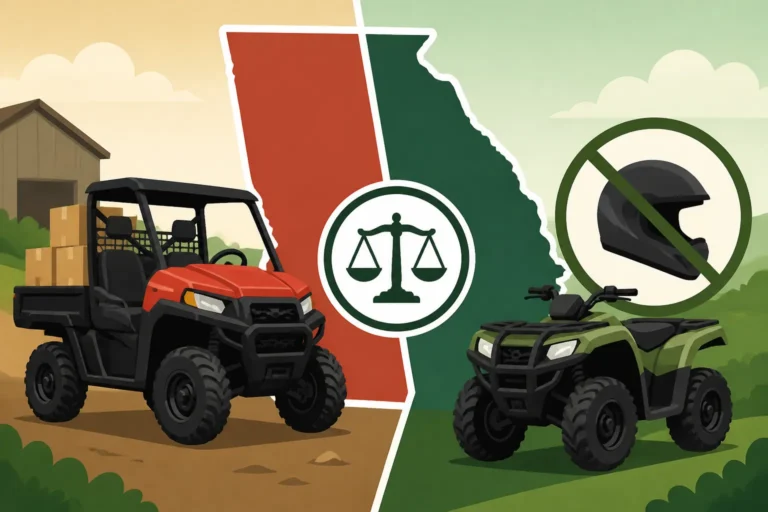
Georgia law sometimes provides specific exemptions for vehicles used exclusively for agricultural or commercial purposes, but it's crucial not to misinterpret these in the context of MPOHV road use. While some agricultural vehicles might have certain privileges on public roads for specific tasks, these are generally distinct from the MPOHV registration process. An MPOHV registered for road use is still subject to the insurance mandate, even if its primary purpose is farm work or commercial activity. The nature of its operation on a public road triggers the insurance requirement.
For example, a side-by-side used to haul feed from one field to another across a public county road might need to be registered as an MPOHV and thus insured. The "farm use" aspect doesn't automatically exempt it from liability insurance if it's on a road system open to the public. If you operate a business fleet of MPOHVs or a hunting club uses multiple machines, each registered MPOHV will require its own proof of insurance. Always clarify with your county tag office and an insurance provider about the specific rules pertaining to your commercial or agricultural use if you intend to operate on public thoroughfares.
Out-of-State Riders and Reciprocity
What if you're visiting Georgia from another state and want to ride your registered UTV on Georgia's county roads? The concept of "reciprocity" often comes up. Generally, if your vehicle is legally registered and insured for road use in your home state, Georgia may recognize that registration and insurance for short-term visits. However, this is not a guarantee, and it often depends on whether your home state has similar MPOHV laws and insurance requirements.
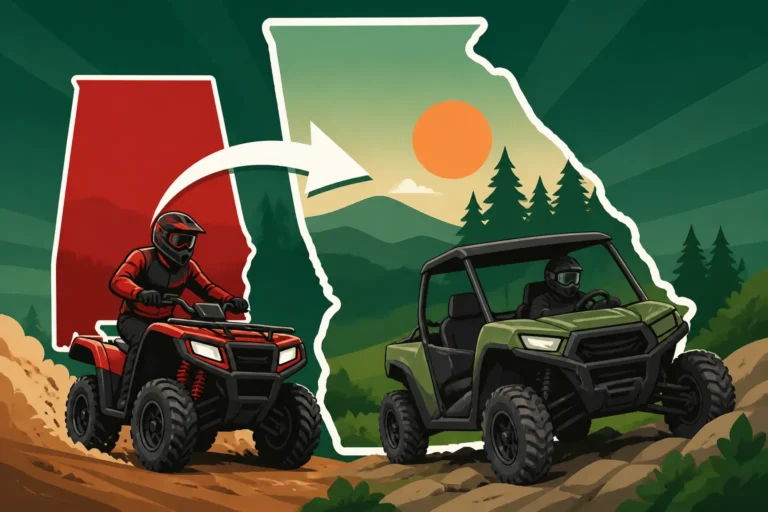
It's always best to check with the Georgia Department of Revenue or a local law enforcement agency before you arrive. If your home state doesn't have a similar MPOHV classification or your machine isn't insured for road use there, you could still be in violation of Georgia law. For example, [Georgia Visitors From Alabama] or [Georgia Visitors From Florida] might find that their state's rules for UTVs on roads are quite different, and what's legal at home might not be here. The safest approach for out-of-state riders planning to operate on Georgia's county roads is to verify current regulations and ensure your insurance policy explicitly covers you for road use in Georgia, or to obtain a temporary Georgia-compliant policy if necessary. Don't assume your existing policy is sufficient; always confirm to avoid unexpected issues.
Disclaimer
This article is for general informational purposes only and does not constitute professional advice. Laws, prices and regulations vary by location and change over time. Consult a qualified professional for guidance on your specific situation.