Georgia Commercial Use Helmet Exemption
It can be incredibly frustrating to try and navigate the patchwork of rules and regulations surrounding ATV and UTV use in Georgia, especially when your machine isn't just for recreation, but for making a living. Many folks operating their side-by-sides or quads for work purposes often wonder if they still have to adhere to the same helmet laws as a casual weekend rider. This guide aims to cut through that confusion and clarify Georgia's specific helmet exemption for commercial use, helping you understand your obligations.
Understanding Georgia's General Helmet Law for Off-Road Vehicles
Before we dive into the specifics of commercial exemptions, it's really important to get a solid grasp on the baseline rules that apply to most ATV and UTV riders in Georgia. These laws are put in place for safety, and while they might feel restrictive at times, they're designed to protect people, especially younger riders.
Who the Law Applies To: Age Restrictions and Public Roads
Generally speaking, Georgia has a very clear stance on helmet use for off-road vehicles. The primary concern is often focused on younger riders and situations where these machines might encounter public roadways. If you're riding an ATV or UTV, even on private land, Georgia's laws cast a wide net, particularly when it comes to minors. This isn't just about what you can do, but what you must do to stay compliant and safe. For adults, the rules primarily kick in if you happen to be on a public road where MPOHV registration allows for limited access. However, for anyone under a certain age, the helmet requirement is almost universal, reflecting a statewide commitment to protecting young riders from serious head injuries. It's a fundamental safety measure that most states echo, and Georgia is no different in prioritizing the safety of its youth.
The "Under 18" Rule: A Crucial Starting Point
This is perhaps the most critical piece of the helmet law puzzle for many families and businesses alike. In Georgia, if you are under 18 years of age, you are legally required to wear an approved helmet when operating or riding as a passenger on an ATV or UTV. This rule applies across the board, whether you're tearing up trails in the [Chattahoochee-Oconee National Forest Riding] or just cruising around your own property. There's no wiggle room here for personal choice or parental discretion if the rider is under 18. This strict age-based mandate underscores the state's recognition of the heightened risk faced by younger, often less experienced, operators and passengers. It's a non-negotiable safety measure designed to minimize severe injuries in the event of an accident, making sure that even a simple tip-over doesn't turn into a life-altering event. Knowing this "under 18" rule is the foundation for understanding any exemptions, including those for commercial use. For more on this, you can check out [Georgia ATV Helmet Law for Riders Under 18].
Penalties for Non-Compliance: What's at Stake
Ignoring Georgia's helmet laws, especially the one concerning riders under 18, isn't just a slap on the wrist. The state takes these safety regulations seriously, and there are real consequences for those who don't comply. A violation of the helmet law can result in a fine, which can certainly sting your wallet. Beyond the immediate financial penalty, there's also the potential for increased scrutiny from law enforcement and, in some cases, even more serious repercussions if the lack of a helmet contributes to an injury in an accident. It's not uncommon for a [Georgia Helmet Fine Amount] to be significant enough to make you think twice about skipping the safety gear. Moreover, insurance companies may look unfavorably on claims involving non-compliance with safety laws, potentially affecting your coverage or rates down the line. It's always best to err on the side of caution and ensure everyone, especially minors, is properly geared up before any ride. For a detailed look at the financial consequences, explore [Georgia's $500 Helmet Violation Penalty].
Defining "Commercial Use" in Georgia for UTVs and ATVs
Now, let's get to the heart of the matter for many working Georgians. The term "commercial use" might seem straightforward, but in the eyes of the law, it has specific boundaries that determine whether or not a helmet exemption applies. It’s not just about using your machine for any kind of work; it's about qualifying for a very particular legal definition.
What Qualifies as Commercial Activity: More Than Just "Work"
When the Georgia General Assembly crafted these laws, they weren't thinking about someone using their UTV to haul firewood for personal use, even if that feels like "work." The "commercial use" exemption is specifically for individuals who are actively engaged in tasks directly related to a recognized business, trade, or profession where the off-road vehicle is an essential tool for that enterprise. This means the primary purpose of the ATV or UTV at that moment must be for the furtherance of a commercial endeavor, not merely a recreational activity that happens to involve some physical labor. Think about operations where the machine is indispensable for transportation of tools, materials, or personnel across challenging terrain as part of a job. It's about the economic function of the vehicle in a professional capacity, truly integrated into a business's daily operations.
Examples of Exempt Commercial Use: Real-World Scenarios
To make this less abstract, let's consider some concrete examples where the commercial use helmet exemption would likely apply in Georgia. Imagine a land surveyor using their UTV to transport equipment and crew through dense timberland to mark property lines. Or perhaps a pipeline inspection company whose technicians rely on side-by-sides to access remote sections of a right-of-way, carrying specialized sensors and repair tools. Another common scenario might be a utility company worker who needs to access power lines located deep within an easement, using a UTV loaded with repair components. Even tour operators who provide guided [Georgia ATV Trails: Where You Can Legally Ride] experiences, where the UTV is an integral part of their service delivery, might fall under this umbrella, transporting clients or support gear. In these instances, the vehicle isn't just being driven; it's being deployed as a piece of commercial equipment, similar to a work truck, but one suited for off-pavement conditions. These are the kinds of activities where the machine is truly a means to an economic end, not an end in itself for leisure.
What Does NOT Count as Commercial Use: Common Misconceptions
Just as important as knowing what does qualify is understanding what doesn't. Many people mistakenly believe that any activity involving labor or generating some income automatically falls under "commercial use." However, that's often not the case in the eyes of Georgia law for this exemption. For example, if you're helping a friend move furniture with your side-by-side and they pay you a small amount, that typically wouldn't qualify as a commercial enterprise for this specific exemption. Similarly, using your UTV to tend to your personal garden, even if you sell some of the produce at a roadside stand, might not meet the strict definition if the primary nature of the UTV's use is personal rather than an integrated part of a formal, ongoing commercial farming operation. The key differentiator is often the scale, regularity, and formal structure of the business. Recreational use, even when it involves carrying gear for a weekend hunt, does not become commercial simply because you might be selling some harvested game later. It's about the primary, sustained economic purpose of the vehicle in the context of a legitimate business operation.
The Specifics of the Georgia Commercial Use Helmet Exemption
So, you're pretty sure your use case fits the "commercial activity" definition. Great! But understanding the exemption goes deeper than that. There are specific legal texts and conditions that dictate how this exemption is actually applied. It’s not just a blanket pass; there are nuances you need to be aware of to ensure you're truly compliant.
Where the Law is Written: Navigating the Legal Code
For those who like to dig into the specifics, Georgia's laws are laid out in the Official Code of Georgia Annotated (O.C.G.A.). The helmet exemptions for ATVs and UTVs, including the commercial use clause, are typically found within the sections pertaining to motor vehicles and traffic, specifically those that address off-road vehicles. While I can't provide the exact code numbers, knowing that it's embedded within the state's legal framework means it's a formal and enforceable provision, not just a guideline. This legal text outlines not only the general helmet requirements but also the specific conditions under which certain exemptions, such as those for commercial, agricultural, or logging activities, can be invoked. Understanding that this isn't just a suggestion, but a part of state statute, emphasizes the importance of knowing these rules. This is where you'd find the precise wording that governs what is and isn't permitted, so if there's ever a question, the legal text is the ultimate authority.
How to Prove Commercial Use: Documentation and Evidence
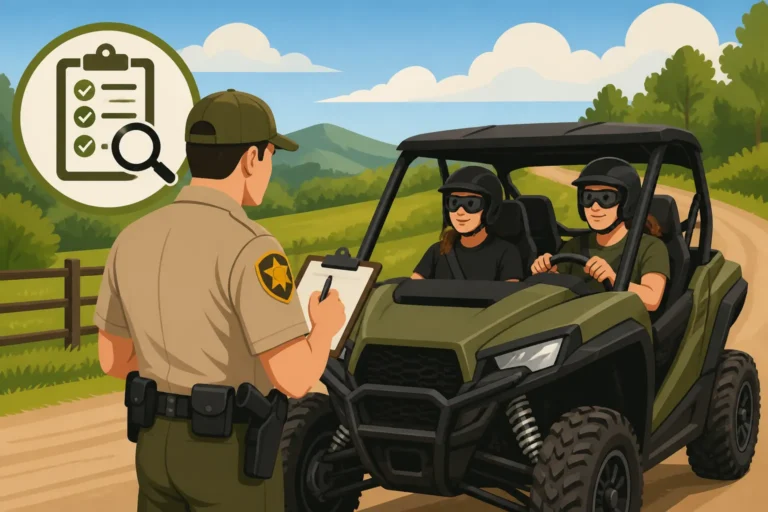
Let's say a Georgia deputy pulls you over while you're operating your UTV without a helmet, confident that your activity falls under the commercial use exemption. How do you back that up? This isn't just about stating your case; it's about providing tangible proof. You'll want to have documentation on hand that clearly supports your claim of commercial activity. This could include business licenses, proof of employment or contract for the specific job, invoices, work orders, or even signage on your vehicle indicating your business name and purpose. For instance, if you're a landscaper, having your business name on the UTV, along with a current work order for the property you're on, would be strong evidence. If you're transporting SuperATV equipment for a specific job site, having the manifest or purchase orders for those items readily available could also help. The goal is to leave no doubt that the activity you're engaged in is genuinely commercial and that the UTV is an integral part of that work. Without clear documentation, your claim might not hold up, potentially leading to a citation.
The "Actively Engaged" Clause: Timing Matters
One of the most critical aspects of the commercial use exemption is the "actively engaged" clause. This means the exemption only applies when you are actively using the ATV or UTV for the commercial purpose. It's not a blanket exemption that covers you 24/7 just because you own a business. For example, if you're a surveyor using your UTV to reach a worksite, you might be exempt from wearing a helmet while traversing the rough terrain to get to your survey points. However, if you then decide to take a joyride on your lunch break or after hours, that recreational use would likely not be covered by the exemption, and the general helmet laws would apply. The moment your activity shifts from a direct commercial task to personal or recreational use, the exemption typically ceases to apply. This distinction is crucial because it means you need to be mindful of your activities and whether they truly align with your commercial purpose at all times. It highlights that the exemption is tied to the activity, not just the owner or the vehicle itself.
Practical Implications for Businesses and Operators
Understanding the letter of the law is one thing, but running a business that utilizes ATVs or UTVs brings a whole host of practical considerations. While the commercial use helmet exemption offers flexibility, it doesn't absolve businesses of their broader responsibilities concerning safety, employee training, and insurance.
Employee Safety and Training: Beyond the Exemption
Even if Georgia law provides a helmet exemption for commercial use, a responsible business owner should always prioritize the safety of their employees. Just because you don't have to wear a helmet doesn't mean it's not a good idea, especially in hazardous work environments. Forward-thinking companies will implement their own internal safety policies that might still require helmet use, alongside other personal protective equipment (PPE) like eye protection, gloves, and appropriate footwear. Providing comprehensive [Georgia Safety Course Options That Exist] for all operators, regardless of their experience level, can significantly reduce the risk of accidents. This training should cover not only safe operation of the specific machinery but also hazard recognition, emergency procedures, and proper vehicle maintenance. Equipping machines with safety accessories, perhaps from a reputable brand like SuperATV, such as roll cages, upgraded seatbelts, or fire extinguishers, further demonstrates a commitment to employee well-being. Ultimately, preventing injuries protects both your employees and your business from costly downtime and potential liability issues.
Insurance Considerations for Commercial Operations
Operating ATVs and UTVs for commercial purposes introduces a different level of risk than recreational use, and your insurance coverage needs to reflect that. Standard personal ATV/UTV insurance policies are almost certainly inadequate for commercial applications. You'll need to work closely with your insurance provider to ensure you have comprehensive commercial general liability (CGL) insurance that specifically covers the use of off-road vehicles in your business operations. This policy should cover potential property damage, bodily injury to employees, clients, or third parties, and any other liabilities that could arise from an accident involving your machines. It's vital to be upfront with your insurer about all the ways your ATVs or UTVs are used commercially, as misrepresenting their use could lead to denied claims. Understanding [Georgia UTV Insurance Minimums] for road-registered machines is a starting point, but commercial operations will likely need far more robust coverage. Don't assume your existing business auto policy covers these vehicles; often, they are specifically excluded. Proactive communication with your agent is key to avoiding expensive gaps in coverage.
Maintaining Compliance: Regular Reviews and Best Practices
Compliance with Georgia's commercial use helmet exemption, and all other related laws, isn't a one-time checkmark; it's an ongoing process. Laws and interpretations can change, and your business operations might evolve over time. It's a smart practice to regularly review your policies and procedures, perhaps annually, to ensure they align with current state regulations and industry best practices. This includes updating employee training, checking vehicle registrations (if applicable, like for [Georgia MPOHV Registration Explained]), and verifying insurance coverage. Keeping meticulous records of vehicle maintenance, operator training, and incident reports can also be invaluable if questions about compliance ever arise. Implementing a culture of safety where employees are encouraged to report concerns without fear of reprisal can further strengthen your compliance efforts. A simple checklist that covers all aspects of ATV/UTV use in your business—from pre-operation inspections to licensing and safety gear—can be an effective tool for maintaining consistent compliance.
Comparing Commercial Exemptions to Other Exemptions (e.g., Farm Use, Logging)
The commercial use helmet exemption in Georgia isn't an isolated rule. It exists alongside other specific exemptions, primarily for agricultural and logging operations. While they share a common goal of accommodating work-related use, understanding their similarities and differences is crucial for proper application.
Similarities and Differences with Farm and Logging Exemptions
Georgia's legal framework recognizes that certain industries rely heavily on off-road vehicles for their core operations, making blanket helmet mandates impractical or unnecessary in specific contexts. Both commercial, farm, and logging exemptions aim to address this by carving out exceptions to the general helmet rule, particularly for adult operators. The primary similarity is that all these exemptions are tied to active engagement in specific, recognized work-related activities. They are not for recreational use, and they typically do not apply to minors, who generally always require a helmet regardless of the activity.
However, the differences lie in the nature of the work being performed. [Georgia Helmet Exemption for Farm Work], for instance, is specifically tailored for activities directly related to farming, such as planting, harvesting, feeding livestock, or maintaining fields. This includes a broad range of agricultural tasks where the UTV or ATV is acting as a piece of farm equipment. Similarly, the logging exemption is for those engaged in the timber industry, transporting logs, clearing land for logging, or moving equipment within a timber operation. Commercial use, as we've discussed, is a broader category that encompasses any other legitimate business, trade, or profession where the off-road vehicle is an essential tool. While a logging company is a commercial entity, its specific activities fall under the more narrowly defined logging exemption. A landscaping business or a surveying company, however, would typically fall under the general commercial use exemption.
Understanding the Nuances: Why Distinctions Matter
The reason for these distinct categories isn't just bureaucratic red tape; it's about providing clarity and ensuring the exemptions are applied appropriately. Each industry has unique operational characteristics and safety considerations, and the law attempts to reflect that. For example, the types of terrain, typical speeds, and specific hazards encountered on a farm might differ from those in a logging operation or a general commercial site. By creating these separate categories, the state provides clearer guidance for law enforcement and operators on when an exemption is valid. Misinterpreting which exemption applies could lead to confusion, disputes, or even citations. It's about ensuring that the intent of the law—to facilitate specific types of work while maintaining a baseline of safety—is met without being overly broad or restrictive. Understanding these nuances helps businesses choose the right path to compliance and avoids the pitfalls of assuming one type of work is covered by a different exemption.
When Exemptions Overlap: A Complex Web
Sometimes, the lines can feel a little blurry. For instance, a large-scale farm might also operate a commercial landscaping division that uses ATVs for property maintenance, or a logging company might also provide land clearing services that could be considered general commercial work. In such cases, it's crucial to evaluate the specific activity being performed at the moment the ATV or UTV is in use. If a farm employee is moving hay bales, the farm exemption applies. If that same employee is then using the same UTV to transport tools for a commercial landscaping job on a neighboring property, the commercial use exemption might be more relevant. The key is to avoid a "one size fits all" mentality. Each specific task and its primary purpose should be assessed against the criteria for the applicable exemption. When in doubt, it's always best to err on the side of caution and ensure helmet use, or consult with legal counsel familiar with Georgia's off-road vehicle statutes. The goal is to be consistently compliant, regardless of how diverse your commercial operations might be. [Exemptions for Farm and Commercial Work] delves into this further.
| Exemption Type | Primary Purpose | Applies to Minors (Under 18)? | Helmet Required (Adults)? | Key Distinctions |
|---|---|---|---|---|
| Commercial Use | Carrying out duties for a business, trade, or profession | Generally NO | NO (when actively engaged) | Broadest category for non-farm/logging business activities. Requires proof of active commercial operation. |
| Farm Use | Activities directly related to agricultural production | Generally NO | NO (when actively engaged) | Specific to planting, harvesting, livestock, crop management, etc. Often tied to agricultural exemption tags. |
| Logging Use | Activities directly related to timber harvesting | Generally NO | NO (when actively engaged) | Specific to cutting, hauling, or managing timberland. |
| General Use (Recreational) | Leisure, recreation, sport | YES (always) | Generally YES (if under 18 or on public roads) | Applies to personal enjoyment. Helmets are mandatory for minors and often on any public road access. |
Disclaimer
This article is for general informational purposes only and does not constitute professional advice. Laws, prices and regulations vary by location and change over time. Consult a qualified professional for guidance on your specific situation.