Georgia Farm and Logging Helmet Exemption
It can feel like a real tangled mess trying to keep up with all the rules and regulations when you're just trying to get work done out on your property, whether that's tilling a field or hauling timber. One minute you're thinking about the best way to tackle that tricky patch of land, and the next you're wondering if you're even allowed to ride your ATV without a helmet. This guide is here to untangle the specific Georgia helmet exemptions that apply when you're using your ATV or UTV for bona fide farm or logging work, helping you understand when you can legally ride without head protection and, more importantly, when you really shouldn't.
Understanding Georgia's General Helmet Law for ATVs and UTVs
Before we dive into the specific exemptions, it's really important to grasp the baseline rules for helmets in Georgia. Most folks know there are age restrictions, but the nuances of where and when those rules apply can get a bit hazy. It’s not just about what you’re doing, but also who’s doing it.
The Under-18 Rule on Public and Private Land
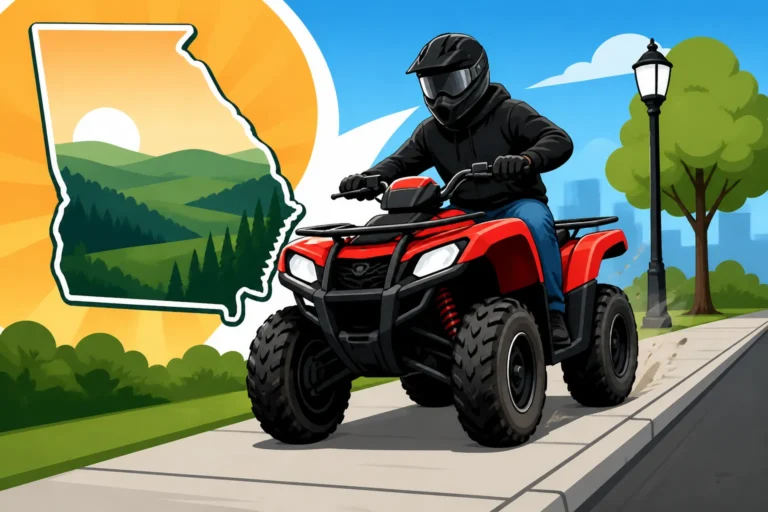
Georgia law takes a pretty clear stance when it comes to younger riders. If you're operating an all-terrain vehicle and you're under 18 years old, the law generally requires you to wear a protective helmet. This isn't just a suggestion; it's a mandate. And here's where it often surprises people: this rule isn't limited to public lands or designated trails. It extends to private property as well. So, even if your teenager is just zipping around the back forty on your own land, they're technically still supposed to be helmeted if they're under 18. This is a crucial point many parents miss, often assuming "private land, private rules." The intent behind this is pure safety, especially for developing riders who might not have the experience or judgment to handle unexpected situations.
For example, imagine your 16-year-old son is helping you move some fencing materials on your farm. He's a good rider, been doing it for years, and you're right there with him. But if he's operating the ATV, the law still dictates a helmet. This rule is designed to protect minors from head injuries, which can be devastating. It's not about stifling fun, but about acknowledging the inherent risks of off-road vehicle operation, even on familiar terrain. You might find more detailed information on this topic in articles like [Georgia ATV Helmet Law for Riders Under 18] or [Georgia Helmet Rule on Your Own Land].
Penalties for Non-Compliance
Breaking the helmet law in Georgia isn't just a slap on the wrist. If an authorized law enforcement officer observes a rider under 18 without a helmet where one is required, they can issue a citation. This isn't typically just a minor traffic ticket; it's often classified as a misdemeanor. What does that mean for you or your family? Well, a misdemeanor conviction can come with fines, potentially significant court costs, and it goes on a person's record. This can have longer-term implications beyond the immediate financial hit.
Consider a scenario where a local deputy spots a group of teenagers riding ATVs on a rural county road without helmets, and one of them is 17. That deputy isn't just going to give a warning; they're likely to issue a citation. The resulting fine could be substantial, reaching up to $500 in some cases, not including additional court fees. This is why understanding [Georgia's $500 Helmet Violation Penalty] is so vital. It underscores that these aren't trivial rules but serious components of Georgia's off-road vehicle safety regulations, designed to deter risky behavior and protect riders, particularly the younger ones. It’s a stark reminder that while these machines are incredibly useful, they also demand respect for safety guidelines.
The Specifics of the Farm and Logging Helmet Exemption
Now, let's talk about the specific relief some riders might find from the general helmet requirements, particularly if they're engaged in certain types of work. Georgia law recognizes that ATVs and UTVs aren't just for recreation; they are indispensable tools for many livelihoods.
Defining "Agricultural" Use
The exemption for agricultural use isn't just for anyone with a garden hose and a tomato plant. It specifically applies to individuals operating ATVs or UTVs "for the purpose of farming or agricultural operations." This is a key phrase. It generally means activities directly related to the cultivation of land, raising livestock, growing crops, or other forms of food or fiber production. Think of tasks like hauling feed to cattle, spraying pesticides on crops, pulling small implements for tilling, or even transporting tools for fence repair across a large pasture.
For instance, if you're using your side-by-side to check on your herd of goats or to carry supplies to a remote irrigation pump on your pecan farm, that would typically fall under agricultural operations. This isn't about joyriding through a field; it's about legitimate, work-related functions that are integral to the farm's operation. The law understands that sometimes, the practicalities of farm work, like needing to frequently dismount and remount or operating in tight, low-speed maneuvers, make helmet use less practical, or even a hindrance, compared to recreational trail riding. Articles like [What Counts as Agricultural Activity] provide more depth on what qualifies.
Defining "Logging" and "Commercial" Use
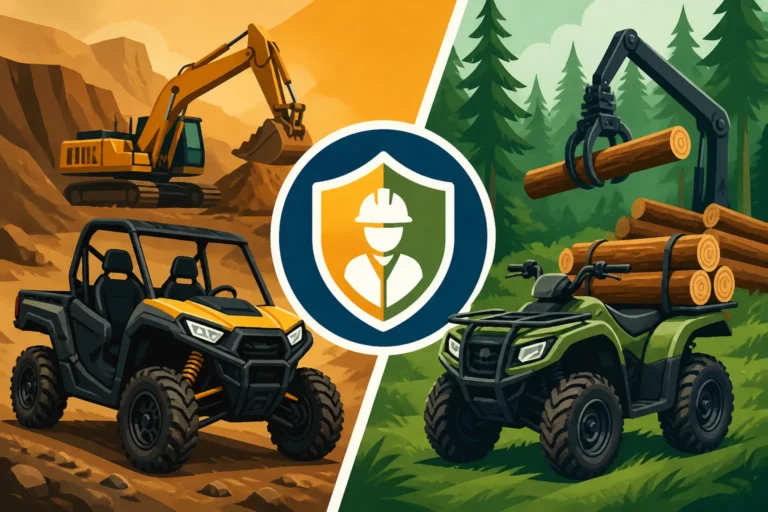
Similar to agricultural use, the law provides an exemption for "logging operations" and other "commercial activity." Logging operations involve the harvesting, processing, and transportation of timber. This could mean using your UTV to scout timber stands, transport chainsaws and fuel to a cutting site, or pull small logs out of difficult terrain. The "commercial activity" aspect is broader, encompassing any work-related use where the machine is an essential tool for a business operation, beyond just farming or logging.
Imagine a small landscaping business using a UTV to move heavy bags of mulch or loads of gravel around a client's property, or a land surveyor using a quad to navigate remote property lines. These are commercial uses where the machine is part of a legitimate business function. The critical distinction here is that the machine is being used as a tool for income-generating work, not just for personal errands or recreational fun. It highlights the state's recognition of these machines as industrial equipment in certain contexts, rather than solely recreational vehicles. For example, a heavy-duty UTV with accessories from a brand like SuperATV, designed for hauling and tough terrain, would be perfectly suited for such commercial tasks. This exemption often aligns with [Georgia Commercial Use Helmet Exemption].
Key Differences from Recreational Riding
It cannot be stressed enough that these exemptions are not a blanket pass to ride without a helmet anytime you're off-road. The pivotal difference lies in the purpose of the ride. If you're hitting the trails at a private park, exploring forest service roads for leisure, or simply cruising around your property for enjoyment, you and any underage passengers are still subject to the general helmet laws. The exemption is tied directly to the nature of the activity: work.
Think about it this way: if you're riding your UTV to clear a fallen tree from a fence line that's part of your farm's boundary, that's agricultural work. If you then decide to take a scenic detour through your woods just for fun, the helmet exemption for that portion of the ride may no longer apply, especially if there's an underage rider involved. This distinction is crucial for legal compliance and, frankly, for your own safety planning. The law isn't suggesting that farm or logging work is inherently less dangerous; rather, it acknowledges the practical realities of performing those specific tasks. It’s about the context of the ride.
Who Qualifies for This Exemption and Who Doesn't
Understanding the spirit of the law is one thing, but knowing whether you specifically qualify for the helmet exemption in a given situation is paramount. There are specific criteria and common misunderstandings that can lead to confusion.
The Role of the Operator's Age
While the farm and logging exemption provides relief from helmet requirements, it doesn't necessarily override all other age-related regulations. For the most part, the helmet exemption applies to operators of any age when engaged in the specified agricultural or logging activities. However, it's still worth noting that other rules, like those governing minimum age for operating an ATV/UTV on public roads (if applicable and registered as an MPOHV) or even on certain private lands, may still be in play. The exemption specifically addresses the helmet requirement, not the underlying eligibility to operate the machine itself.
For example, a 16-year-old actively engaged in legitimate agricultural work on family land might be exempt from wearing a helmet for that task. However, if that same 16-year-old were to then take the UTV onto a county road, even if registered as an MPOHV, they would still need to adhere to [Georgia Driver's License Rules for MPOHV Operators] and all other applicable road rules, which might include specific age or licensing requirements for public road use. The helmet exemption is very narrowly tailored to the work activity itself.
Proof of Agricultural/Logging Activity
This is where it gets practical. If you're ever questioned by law enforcement about why you or an underage rider isn't wearing a helmet, you'll need to be able to demonstrate that you were, in fact, engaged in a bona fide agricultural or logging operation. What constitutes "proof"? It's not usually a formal document you carry, but rather the context and observable evidence.
This could mean:
- The nature of your property: Is it clearly a working farm, timberland, or commercial business site?
- The equipment you're carrying or towing: Are you hauling tools, fencing, feed, logs, or other materials directly related to farm/logging work?
- The task you're performing: Are you actively plowing, planting, spraying, checking livestock, felling trees, or clearing brush?
A good example might be a farmer moving round bales of hay with a UTV equipped with a bale spear. The machine, the load, and the location (a hayfield) all clearly point to an agricultural operation. On the other hand, if you're just riding an ATV through a wooded section of your property with no tools or clear work purpose, it would be difficult to claim agricultural or logging exemption. This isn't a loophole; it's a specific allowance for productive work.
Situations Where the Exemption Doesn't Apply
It's just as important to understand when this exemption doesn't apply, as misunderstanding this can lead to citations or, worse, injuries.
- Recreational Riding: As mentioned, any riding for leisure, sport, or general recreation, even on private land, does not qualify for the exemption. If you're out exploring trails with friends or family, helmets are still generally required for riders under 18.
- Non-Commercial Transport: If you're using your ATV/UTV to simply transport yourself or others around your property for non-work-related reasons (e.g., driving to a fishing pond, visiting a neighbor, or just getting from your house to your barn without specific work tasks in mind), the exemption doesn't typically apply.
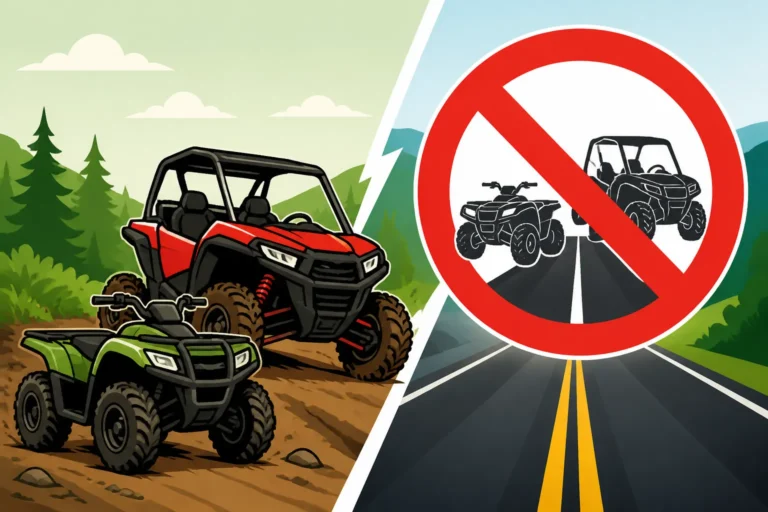
- Road Use (General): While some UTVs might be registered as MPOHVs for specific county road access (see [Georgia MPOHV Registration Explained]), the helmet exemption is tied to the activity (farm/logging), not necessarily the location. If an MPOHV is being used on a county road for a purpose other than agricultural or logging operations, the standard helmet rules for underage riders would likely revert to the general state laws.
- Non-Qualifying Businesses: If your business doesn't involve farming, logging, or similar heavy commercial work where the ATV/UTV is an indispensable tool (e.g., using it for promotions at a non-agricultural event), the commercial exemption might not hold up.
In essence, the exemption is very much about the "what" and "why" of your ride. If the core purpose isn't genuinely farm or logging work, assume the general helmet rules still apply.
Practical Implications and Considerations for Riders
Beyond the legal definitions, there are real-world considerations for anyone utilizing this exemption. It's not just about avoiding a fine; it's about making smart choices for your safety and livelihood.
Safety First, Exemption Second
Even when legally exempt from wearing a helmet, prioritizing safety should always be your top concern. Head injuries are no joke, and while farm and logging tasks often involve lower speeds, the terrain can be unpredictable, and rollovers or collisions with obstacles are always a risk. Just because you can ride without a helmet doesn't mean you should. Many experienced farmers and loggers still opt for helmet use, especially when performing higher-risk tasks or operating in unfamiliar areas.
Think about the environment: Are you working in dense woods where a branch could swing back unexpectedly? Are you on uneven ground where a tip-over is a possibility? Is there heavy machinery operating nearby? These factors should all play into your decision, even if the law gives you an out. Consider it a personal risk assessment. After all, a helmet from a reputable manufacturer can prevent life-altering injuries, and that peace of mind is invaluable, far outweighing any minor inconvenience.
Interaction with Law Enforcement
Should you encounter law enforcement while operating under the exemption, being polite, cooperative, and able to clearly articulate your activity is key. Officers are there to enforce safety, and while they should be aware of these exemptions, they might need you to explain your situation. Having visible evidence of your work (e.g., tools, materials, appropriate attire) will help.
A brief, clear explanation like, "Officer, I'm moving fencing supplies to repair a section of fence on my timber property," coupled with visible tools, can often resolve any questions quickly. Avoiding confrontation and providing a straightforward account of your agricultural or logging activity will go a long way. Understanding [Georgia Law Enforcement Inspection for a Branded Plate] might give you an idea of the types of interactions you could have, even if it's about registration rather than helmets. Remember, they are doing their job to keep everyone safe.
Insurance Considerations
While the helmet exemption addresses legal compliance, it doesn't absolve you from liability in the event of an accident. Your insurance policy is a separate, crucial layer of protection. If you or an employee is injured while operating under the exemption, or if there's damage to property, you'll want to ensure your coverage is robust enough. Some policies might have clauses related to safety equipment, even if the law exempts you.
It’s always a good idea to discuss your specific farm or logging operations and ATV/UTV use with your insurance provider. Confirm that your current policy covers work-related accidents, especially if you have employees, and inquire about any specific conditions regarding safety gear. A policy that provides adequate [Georgia UTV Insurance Minimums] or higher will protect your assets and provide medical coverage for injuries, regardless of helmet use status. Don't assume anything; confirm it with your insurer.
Beyond the Exemption: Other Safety Measures
Even with a helmet exemption, a truly responsible off-road vehicle operator understands that a helmet is just one piece of the safety puzzle. A holistic approach to safety on the farm or in the woods is always the best strategy.
Beyond Helmets: Essential Gear
While helmets might be optional in certain work scenarios, other safety gear remains critically important.
- Eye Protection: Goggles or safety glasses protect against dust, debris, branches, and insects, which can impair vision and cause injury. A momentary lapse of vision could lead to a serious accident.
- Gloves: Protect hands from blisters, cuts, and scrapes, and provide a better grip on controls.
- Long Sleeves and Pants: Heavy-duty clothing can shield skin from scratches, abrasions, and sun exposure. Consider materials like denim or specialized riding gear.
- Sturdy Footwear: Boots that cover the ankles provide support and protection from potential impacts, crushing injuries, and sharp objects. Flip-flops or open-toed shoes are absolutely a no-go.
- Hearing Protection: If you're running a chainsaw or other loud equipment alongside your UTV, hearing protection is essential to prevent long-term damage.
Combining these elements creates a much safer working environment, regardless of whether a helmet is required by law. It’s about building a comprehensive defense against the inherent risks of working outdoors with powerful machinery.
Vehicle Modifications and Accessories
The right accessories can significantly enhance safety and utility for farm and logging operations. Many specialized parts are designed precisely for these demanding environments.
- Roll-Over Protective Structures (ROPS): Most modern UTVs come with integrated ROPS, but ensuring they are intact and not damaged is crucial. For ATVs, aftermarket roll bars are sometimes available, though less common.
- Seat Belts: If your UTV has seat belts, use them every time. They are designed to keep you inside the protective cage in case of a rollover. [Georgia Requires Seat Belts on a Registered Machine] for MPOHVs, but their importance goes beyond registration.
- Winches: An essential tool for logging and farming, a winch (like those offered by SuperATV) can help recover stuck vehicles, move heavy objects, or clear trails safely, reducing the need for risky manual labor.
- Skid Plates and A-Arm Guards: Protect the underside of your machine from impacts with rocks, stumps, and debris, preventing costly repairs and potential breakdowns in remote areas.
- Lighting: Additional headlights, taillights, and work lights are invaluable for early morning, late evening, or night operations, especially when working in wooded areas or hauling heavy loads. [Headlights, Brake Lights and Mirrors on the Checklist] is a good read for required equipment.
- First Aid Kit: Always carry a well-stocked first aid kit, especially when working alone or in remote locations.
Investing in these modifications and accessories is an investment in safety and efficiency, making your work easier and safer.
Training and Best Practices
Finally, no amount of gear can replace proper training and a commitment to safe operating practices.
- Operator Training: While Georgia has no mandatory state ATV safety course, voluntary courses are widely available and highly recommended, especially for new or young operators. These courses teach safe riding techniques, risk assessment, and emergency procedures. See [Georgia Safety Course Options That Exist].
- Load Management: Understand your machine's payload and towing capacity. Overloading can lead to instability, loss of control, and mechanical failure. Always secure loads properly. [Georgia's 350-Pound Payload Requirement] and [Georgia's 4,000-Pound Gross Weight Ceiling] are important figures for MPOHV registration, but crucial for all safe operation.
- Terrain Awareness: Always scout unfamiliar terrain. Be aware of slopes, obstacles, water crossings, and changing ground conditions.
- Maintenance: Keep your ATV/UTV in top mechanical condition. Regular checks of tires, brakes, fluids, and steering components are critical to safe operation.
- Never Ride Impaired: Operating any off-road vehicle under the influence of alcohol or drugs is incredibly dangerous and illegal. [Georgia DUI Law and Off-Road Machines] applies just as much off-road as on.
- Ride Sober: This cannot be emphasized enough. Good judgment is your best safety tool.
By combining the legal knowledge of exemptions with a strong commitment to these best practices, you can ensure that your ATV or UTV remains a valuable, safe, and productive tool for your farm or logging operations in Georgia.
Disclaimer
This article is for general informational purposes only and does not constitute professional advice. Laws, prices and regulations vary by location and change over time. Consult a qualified professional for guidance on your specific situation.