Georgia’s ATV Road Law Explained
Navigating the ins and outs of where you can and can't ride your ATV or UTV in Georgia can feel like trying to solve a complicated puzzle, especially when all you want to do is enjoy your machine. Many of us have felt the frustration of confusing regulations, wondering if that quick trip down the county road is even allowed. This comprehensive guide will untangle Georgia's specific laws regarding off-road vehicles on public roads, clearly outlining the rules for street legality, required equipment, operator responsibilities, and the crucial distinctions that keep you out of trouble.
The Core of Georgia's Off-Road Vehicle Road Rules
Let's face it, the concept of "street legal" for an ATV or UTV in Georgia is often misunderstood. Many riders come from states with different laws, or they hear snippets of information that don't quite tell the whole story. Georgia has very specific, and at times, restrictive, rules for taking your off-road machine onto public asphalt. It's not as simple as adding a few lights and calling it good; there's a particular pathway for certain machines to gain limited road access, and it's essential to understand the nuances.
What "Street Legal" Really Means in Georgia
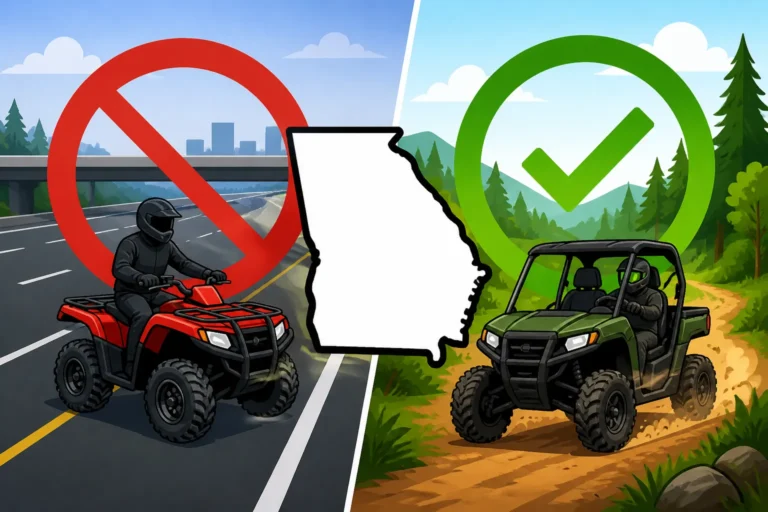
For most of us, "street legal" implies the freedom to cruise down any road a car can. But in Georgia, when we talk about ATVs and UTVs, that definition needs a serious adjustment. An ordinary ATV, often called a four-wheeler or quad, simply cannot be made "street legal" in the traditional sense here. This is a common point of confusion, and it’s critical to understand the distinction. While other states might allow quads with certain modifications, Georgia's current framework does not. You see, the law focuses on a specific category of machine: the Multipurpose Off-Highway Vehicle, or MPOHV.
The MPOHV category, established in Georgia, is the only pathway for an off-road vehicle to gain limited access to public roads. It's not about making a traditional ATV street legal; it's about registering a specific type of side-by-side UTV for conditional road use. Without this MPOHV registration, which came into effect in December 2023, there's no legal way to operate your dirt bike, three-wheeler, or traditional quad on public roads in Georgia. This is why you'll find that [Why a Four-Wheeler Cannot Be Registered in Georgia] is a fundamental aspect of the state's vehicle code. It’s a very different approach compared to, say, a golf cart, which has its own set of rules and designated pathways. So, when you hear "street legal" in Georgia for an off-road machine, think MPOHV and think UTV – not ATV.
The Major Distinction: County Roads vs. State Routes and Interstates
One of the most critical aspects of Georgia's MPOHV road law is understanding which roads are accessible. This isn't just a suggestion; it's a strict legal boundary, enforced by law enforcement statewide. The law is very clear: MPOHVs that meet all the criteria and are properly registered are permitted only on county roads. This is a huge distinction that many riders often miss or hope to bend, but doing so can lead to significant legal and safety consequences.
When we say "county roads," we're talking about the public roadways maintained by the county government. These are typically the smaller, often unpaved or less-trafficked routes that crisscross rural areas. They are distinct from state routes, which are designated with numbers (like GA-123 or US-41), and certainly distinct from interstate highways (I-75, I-20, etc.). You absolutely cannot operate an MPOHV, registered or not, on a state highway or an interstate. The speeds, traffic volume, and design of these roads make them incredibly dangerous for off-road vehicles, and the law reflects that reality. Trying to shortcut across a state route or, worse, ride along one, is not only illegal but puts you and other motorists at extreme risk. [Why Georgia State Highways Stay Off Limits] is a matter of safety and the fundamental design differences between these types of thoroughfares. Understanding this boundary is paramount to responsible and legal riding in Georgia.
Understanding Georgia's July 2027 Sunset Clause
It’s important for every MPOHV owner in Georgia to be aware that the current road access law isn't etched in stone forever. While we now have the ability to register qualifying UTVs for limited county road use, this provision comes with a specific expiration date. The legislation, as it currently stands, includes a "sunset clause" that specifies an end date for these road access privileges. This means that, unless the Georgia General Assembly takes further action to extend, modify, or make permanent the current law, the ability to operate MPOHVs on county roads will expire on July 1, 2027.
This sunset clause introduces a degree of uncertainty for owners who rely on these machines for local transportation, farm work, or hunting access on county roads. It’s not a distant future; it’s just a few years away, and proactive engagement or at least awareness is key. What does this mean for your registration? It means you'll need to keep an eye on legislative developments as that date approaches. Will the law be renewed as-is? Will it be changed? Will road access be revoked entirely? These are questions that will only be answered by future legislative sessions. Understanding [Georgia's ATV Road Access Law Sunsets in July 2027] and considering [What Happens to Registrations at Sunset] are important aspects of planning your long-term ownership and use of an MPOHV in Georgia. For now, enjoy the access you have, but stay informed about its future.
Eligibility for Road Use: The MPOHV Registration Pathway
So, if you can't just slap a license plate on any ATV and hit the road, what can you do? Georgia created a specific category for a reason: to allow certain types of utility-focused off-road vehicles (UTVs, or side-by-sides) to gain limited access. This isn't a free-for-all; it's a carefully crafted set of rules designed to ensure that only machines that possess certain safety and design characteristics are allowed near public roads. It's less about turning an off-road machine into a street car, and more about acknowledging the utility of these vehicles for short-distance travel on appropriate local roads.
Who Qualifies? The Eight-Point Test for Machines
For your UTV to even be considered for MPOHV registration and thus gain access to Georgia's county roads, it has to pass a rigorous inspection against an eight-point checklist. This isn't just a suggestion; it's a mandatory evaluation that ensures the machine has basic features aligning with road safety. Missing even one point means your machine won't qualify, regardless of how much you've invested in other accessories. This test covers fundamental design aspects, moving beyond simple bolt-ons to the core structure and capability of the vehicle. It's a pragmatic approach to defining what is reasonably safe for limited road exposure.
Let's break down some of these critical points:
- Width: The machine cannot be wider than 80 inches. This is a crucial limit, preventing larger, specialized machines from attempting road access. You might find this surprisingly restrictive if you have a highly modified rig, so [Georgia's 80-Inch Width Limit for Registration] is a key measurement to take.
- Weight & Payload: There's a gross vehicle weight ceiling of 4,000 pounds and a minimum payload capacity of 350 pounds. This is designed for utility vehicles, signaling that it's meant to carry people and cargo, not just a single rider.
- Speed: Your UTV must be capable of at least 25 mph but not exceed 65 mph. This ensures it can keep up with slow-moving traffic on county roads without being a hazard, but also isn't a high-speed vehicle designed for major thoroughfares.
- Steering & Seating: The machine must have a steering wheel, not handlebars, and a non-straddle seat. This immediately disqualifies all traditional ATVs and dirt bikes. The side-by-side configuration with bench or bucket seats and a steering wheel is the intended design.
- Lights & Safety: Headlights, brake lights, and seat belts are non-negotiable. These are basic safety features for any road-going vehicle.
Understanding [Georgia MPOHV Eligibility: The Eight-Point Test] is your first step. Before you even think about heading to the tag office, measure your machine, check its specifications, and ensure it ticks every single box. If your UTV, for example, is primarily designed for high-performance racing and happens to exceed the 65 mph limit, it simply won't qualify, no matter how much you want it to.
Essential Equipment Requirements for Road Machines
Beyond the inherent design characteristics of the MPOHV itself, there are specific pieces of equipment that must be present and fully functional for your vehicle to be registered for county road use in Georgia. These aren't optional upgrades; they are fundamental safety features that are universally expected on any vehicle sharing public ways, even if only for limited periods. The state isn't asking for every bell and whistle found on a passenger car, but it does demand the essentials that ensure basic visibility and occupant protection. It's all about making sure that if you encounter other vehicles, or vice versa, there's a reasonable expectation of being seen and being able to react.
Let's look at the must-haves:
- Headlights: Your MPOHV must have working headlights. This isn't just for night riding; it's also for increased visibility during daylight hours, especially in adverse weather conditions or shady spots. Many modern UTVs come with excellent factory headlights, but if yours are dim or damaged, an upgrade might be necessary.
- Brake Lights: Just like any other vehicle, functional brake lights are crucial to signal to anyone behind you that you are slowing down or stopping. This prevents rear-end collisions and is a basic expectation on any public road. Ensure they are bright and activate reliably.
- Rearview Mirrors: You need at least one rearview mirror, typically mounted on the left side, to give you a clear view of traffic approaching from behind. Many riders opt for a center rearview mirror in addition to side mirrors for comprehensive visibility, and brands like SuperATV offer a range of robust, vibration-resistant mirrors designed for off-road conditions that would work well for this requirement.
- Seat Belts: Factory-installed seat belts are a non-negotiable requirement. These are vital for occupant safety in the event of a sudden stop, swerve, or collision. Ensure all seating positions intended for passengers have functional seat belts. This aligns directly with the "non-straddle seat" requirement, emphasizing seated, secured occupants.
These requirements, particularly [Headlights, Brake Lights and Mirrors on the Checklist], are what a deputy or tag office official will be looking for during any inspection or verification process. They are foundational for safe operation on shared county roads, and neglecting any of them will prevent your machine from being legally registered and operated. It's not just about compliance; it's about minimizing risk for everyone on the road.
The "No Title" Dilemma and What it Means for Road Use
One of the most perplexing aspects for new ATV and UTV owners in Georgia is the absence of a traditional vehicle title for most off-road machines. If you've ever bought a car, truck, or even a motorcycle, you're used to receiving a Certificate of Title, which proves ownership and facilitates registration and sale. For the longest time, and still for many off-road vehicles, that simply hasn't been the case in Georgia. This creates a unique challenge when discussing "street legality" because a title is usually the first piece of paperwork an agency needs to put a vehicle on the road.
The state's decision to not title ATVs historically meant they were treated purely as off-road recreational equipment, not road-going vehicles. This is explicitly stated in [Why Georgia Does Not Title an ATV]. Without a title, these machines didn't fit into the existing framework for road vehicle registration, nor were they subject to the ad valorem tax known as TAVT (Title Ad Valorem Tax) that applies to titled vehicles. This is why [Why No Title Means No TAVT] is a direct consequence of this policy.
However, with the introduction of the MPOHV registration, Georgia created a workaround. While your MPOHV still doesn't receive a title in the same way a car does, it receives a Certificate of Registration and a specific branded plate. This registration is what grants the limited road access, not a title. It signifies that the machine has met the specific MPOHV eligibility requirements and has been properly entered into the state's system for road-use oversight. So, while the "no title" dilemma remains for ATVs, the MPOHV registration effectively acts as the necessary document for UTVs seeking limited county road access, bypassing the traditional titling process entirely for these specific machines. It's a distinction that might seem subtle but has significant legal implications.
Operator Requirements and Responsibilities on Georgia Roads
It's not just about the machine; it's also about the person behind the wheel. When you take an MPOHV onto a public road in Georgia, even a rural county road, you're stepping into the realm of traditional motor vehicle laws. This means the state expects you, as the operator, to adhere to certain standards and possess specific qualifications, just as if you were driving a car. These rules are in place not to complicate your life, but to ensure that everyone sharing the road, whether in a UTV or a pickup truck, is operating under a similar understanding of safety and legal responsibility. It’s a transition from pure recreational off-road use to a more regulated, public environment.
Driver's License and Age Restrictions
Perhaps one of the most straightforward, yet often overlooked, requirements for operating an MPOHV on Georgia's county roads is the need for a valid driver's license. This isn't a special "MPOHV license" or an off-road permit; it's your standard Class C driver's license, the same one you use to drive your car. The state views the operation of a registered MPOHV on a public roadway as equivalent to operating any other motor vehicle, and therefore, the same licensing standards apply. This immediately means that certain individuals cannot legally operate these machines on roads.
Specifically, if you do not possess a valid Georgia driver's license, or a valid driver's license from another state that Georgia recognizes, you cannot legally drive an MPOHV on a county road. This includes:
- Minors without a license: Anyone under the age of 16 (or older, if they haven't obtained their permit or license) is prohibited. A learner's permit typically allows you to drive with a licensed adult, but always check current DMV regulations.
- Individuals with suspended or revoked licenses: If your driving privileges have been taken away for any reason, those restrictions extend to MPOHVs on public roads.
- Unlicensed adults: Some adults choose not to get a driver's license, perhaps never needing one. However, if you plan to operate your MPOHV on public roads, you absolutely must obtain a valid license.
This also means that the minimum age for operating an MPOHV on a public road effectively mirrors the minimum age for driving a car in Georgia. There are no special allowances for younger riders, even if they are competent off-road. It's crucial for parents and guardians to understand [Georgia Driver's License Rules for MPOHV Operators] and ensure that only properly licensed individuals are allowed to operate these machines on public county roads. Ignoring this requirement can lead to fines, citations, and even more serious legal consequences if an accident occurs.
Helmet Laws: Public vs. Private Land Distinctions
Georgia's helmet laws for ATVs and UTVs are another area where the distinction between public and private land becomes incredibly important. On private property, such as your own land, a hunting club lease, or a private off-road park, the state's helmet laws are generally not enforced, though safety is always paramount. However, the moment you bring an MPOHV onto a public county road, specific helmet requirements kick in, particularly for younger riders. This change in jurisdiction from private to public space brings with it a whole new set of rules designed for broader public safety.
Here's the breakdown:
- Riders Under 18 on Public Roads: If you are operating or riding as a passenger on an MPOHV on any public road in Georgia, and you are under the age of 18, you are legally required to wear a DOT-approved helmet. This is a non-negotiable rule, similar to motorcycle helmet laws for minors. [Georgia ATV Helmet Law for Riders Under 18] is specifically designed to protect vulnerable young riders when they are exposed to the greater risks of public roads.
- Riders 18 and Over on Public Roads: For adults aged 18 and above, Georgia generally does not mandate helmet use for MPOHV operators or passengers on county roads. While it is always highly recommended for safety, the legal requirement does not extend to adults.
- Private Land Exemptions: When riding on private land, regardless of age, the state's helmet law generally does not apply. This means that if you're solely using your UTV on your farm or a closed trail system, the decision to wear a helmet is largely a personal one, though, again, highly advised. This is where [Georgia Helmet Rule on Your Own Land] comes into play.
- Agricultural, Logging, or Commercial Use Exemptions: There are also specific exemptions for those using ATVs or UTVs strictly for agricultural, logging, or other defined commercial purposes. These exemptions typically apply to the activity itself, not necessarily the location, and often waive helmet requirements even on public roads if the machine is being used for one of these specified tasks. However, these are narrow exemptions and should not be broadly interpreted.
It's absolutely vital to know these distinctions. A sheriff's deputy could issue a citation to a minor not wearing a helmet on a county road, even if the family believes they are simply taking a short trip. Prioritizing safety and adherence to these rules keeps both you and your passengers safe and avoids unnecessary legal trouble.
Insurance and Other Legalities
Just as with driver's licenses and helmet laws, operating a registered MPOHV on Georgia's county roads comes with a mandatory requirement for vehicle insurance. This isn't optional; it's a fundamental part of the legal framework for operating any motor vehicle on public roads. The purpose of this insurance is primarily to protect others on the road in case you are found at fault in an accident. It ensures that there's financial coverage for property damage or bodily injury you might cause.
Here's what you need to know:
- Mandatory Liability Insurance: When you register your MPOHV with the county tag office, you will be required to provide proof of liability insurance. This insurance must meet Georgia's minimum coverage requirements for bodily injury and property damage. Without it, you cannot complete the registration process. This is why [Georgia Liability Insurance Tied to Registration] is a critical step in getting your MPOHV road-ready.
- Proof of Insurance: You must carry proof of this insurance with you whenever you are operating your MPOHV on a county road. This can be an insurance card, a digital copy on your phone, or a printout of your policy. If a law enforcement officer stops you, they will ask for this, along with your driver's license and MPOHV registration.
- Consequences of No Insurance: Operating an MPOHV on a public road without the required insurance can lead to significant penalties, including fines, suspension of driving privileges, and even impoundment of your vehicle. It’s a serious offense because it puts other motorists at financial risk.
- Beyond Liability: While liability insurance is the legal minimum, many MPOHV owners choose to carry additional coverage, such as comprehensive and collision. Given the nature and cost of UTVs, and the environments they are often used in, protecting your own investment against theft, damage, or accidents is a wise decision. However, this additional coverage is a personal choice, not a legal requirement for road operation.
Always ensure your insurance policy is current and that you understand its terms and conditions. If you've just purchased a new MPOHV or are renewing your registration, make sure your insurance provider is aware that you intend to use it on public roads (within Georgia's legal limits) to ensure proper coverage.
Navigating Georgia's County Roads and Crossings
Now that you know what kind of machine qualifies and what’s expected of you as an operator, the next hurdle is understanding where you can actually ride. This isn't just a geographical question; it's a legal one, with specific definitions that can sometimes be tricky to apply in the real world. Georgia's law is very precise about the types of public roads open to MPOHVs, and adhering to these boundaries is crucial for staying compliant and safe. Misinterpreting these rules is a common way riders inadvertently find themselves facing citations.
Understanding "County Road Systems" in Georgia
The cornerstone of Georgia's MPOHV road access law rests squarely on the concept of "county road systems." This is the only type of public thoroughfare where properly registered MPOHVs are legally permitted. But what exactly defines a "county road system" in Georgia, and how can you tell if you're on one? It’s not always obvious, especially in rural areas where distinctions between different types of roads can blur.
Generally, a county road is a public road that is maintained by the county government. These roads are typically designated and inventoried by the county's public works or road department. They often have specific numerical or name designations that are different from state routes. Here's how you can usually identify them and what to keep in mind:
- No State Route Numbers: The easiest way to identify a county road is the absence of a "GA" (Georgia State Route) or "US" (U.S. Highway) shield number. If you see a sign like "GA-129" or "US-80," you are on a state route, which is off-limits for MPOHVs except for direct crossings.
- Local Maintenance: These roads are typically maintained by the county, which means you might see county road crews working on them. They often serve local residences, farms, and connect smaller communities within the county.
- Varying Surfaces: County roads can range from paved asphalt to gravel or dirt. The surface material doesn't change their status as a county road.
- Checking Maps and Local Resources: If you're unsure about a specific road, the best approach is to consult a detailed county map, either physical or digital, that clearly distinguishes between state routes and county roads. You can also contact the local county commissioner's office or public works department to clarify. Understanding [Georgia County Road Systems and Where They Run] is your responsibility as an operator.
- No Interstates: It should go without saying, but county roads are never interstates. Interstates are high-speed, controlled-access highways that are absolutely forbidden for MPOHVs.
The key takeaway is this: if you have any doubt whether a road is part of the county road system or a state route, err on the side of caution and avoid it. A brief moment of uncertainty isn't worth a citation, an accident, or risking your machine's impoundment.
Crossing State Routes and Designated Points
While MPOHVs are strictly prohibited from riding along Georgia's state routes and highways, the law does provide a very specific, limited exception for crossing them. This is a critical nuance that often causes confusion. It’s not a loophole to extend your riding area; it’s a practical allowance for connecting segments of county roads that might be separated by a state highway. The intention is to enable local travel without forcing an MPOHV to take an impractical detour.
Here’s how the crossing rule works:
- Direct Crossings Only: MPOHVs are permitted to cross a state highway only at an intersection where the state highway meets a county road. This must be a direct, perpendicular crossing, not an angled or extended maneuver.
- At Designated Intersections: The crossing must occur at a properly designated intersection. You cannot simply pull onto a state highway from a field or a private driveway, drive a short distance, and then cross. It must be a legitimate road intersection.
- Safest Practicable Manner: When crossing, you must do so in the safest practicable manner, yielding to all vehicular traffic on the state highway. This means waiting for a clear break in traffic, exercising extreme caution, and executing the crossing efficiently.
- No Riding Along: Absolutely no operation of an MPOHV is allowed along the state highway, even for a short distance to reach the next county road. The moment you turn onto the state highway and travel parallel to it, you are in violation of the law. This emphasizes [Georgia Crossings at Designated Points] are for traversal, not travel.
Think of it like this: your MPOHV is essentially permitted to hop from one county road to another, using the state highway intersection as a bridge, not a roadway itself. This exception is incredibly narrow and comes with significant responsibility. Because state highways typically have higher speed limits and greater traffic volumes, these crossings require heightened awareness and defensive driving. Any misjudgment can have severe consequences, so always exercise extreme caution and prioritize safety above all else.
Night Riding and Equipment for Visibility
For those who rely on their MPOHV for farm work, hunting, or simply enjoy the quiet of an evening ride on a county road, understanding the rules for night operation is essential. While Georgia law permits registered MPOHVs to be operated after dark on county roads, this privilege comes with stringent requirements for visibility. Unlike daytime riding, where your machine's presence is often enough, night riding demands specific lighting and reflective equipment to ensure you are seen by other vehicles, especially in poorly lit rural areas. Neglecting these requirements isn't just illegal; it's extremely dangerous.
Here’s what you need to know for night riding:
- Headlights: Your MPOHV must have its headlights fully functional and illuminated when operating from a half-hour after sunset to a half-hour before sunrise, and at any other time when visibility is poor (e.g., fog, heavy rain). These headlights must be white or amber and visible from a distance.
- Brake Lights: Red brake lights must be fully functional and clearly visible from the rear, illuminating when the brakes are applied.
- Taillights: In addition to brake lights, your MPOHV needs functional taillights that are continuously lit during night operation, visible from the rear.
- Reflectors: Many MPOHVs benefit from additional reflective tape or reflectors on the sides and rear, especially if they have a large cargo bed or an extended frame. While not always explicitly itemized beyond basic lighting, increasing your machine's profile with passive reflectors is a smart safety measure, particularly when considering [Georgia Night Riding on a County Road] on unlit rural paths.
- Auxiliary Lighting (Optional but Recommended): While not legally mandated, many riders install auxiliary lighting such as light bars or floodlights. These can significantly enhance your forward visibility on unlit county roads, making it easier to spot hazards. However, remember that certain auxiliary lights, like bright off-road light bars, should be covered or turned off when encountering oncoming traffic, as they can be blinding. Brands like SuperATV offer a wide array of lighting solutions, from basic LED headlights to powerful light bars, that can dramatically improve your night riding experience and safety.
- Mirrors: As previously mentioned, at least one rearview mirror is required for general road use, and it's even more critical at night to monitor traffic behind you.
Always ensure your lighting system is in perfect working order before heading out after dark. Carry spare fuses if possible, and make it a habit to do a quick light check before every night ride. Visibility is your best defense against accidents when sharing the road with other vehicles after dark.
Penalties and Enforcement for Non-Compliance
It's easy to think that local county roads might be a bit more relaxed when it comes to enforcement, but that's a dangerous assumption. Georgia law enforcement officers are well aware of the MPOHV regulations and are prepared to enforce them. Riding an unregistered machine, or one that doesn't meet the eligibility requirements, on a public road isn't just a minor infraction; it can lead to significant fines, legal troubles, and even the loss of your machine. The state takes road safety seriously, and these rules are in place to protect everyone.
The Risks of Riding Illegally on Public Roads
The allure of taking your UTV on a quick run to the store or a short cut through a county road without proper registration can be tempting, but the consequences of being caught can be severe. It's not just a slap on the wrist; Georgia has specific penalties designed to deter illegal operation of off-road vehicles on public roadways. These risks extend beyond a simple ticket, potentially impacting your driving record and financial well-being. Ignorance of the law is never an excuse, and deputies are increasingly vigilant about MPOHV compliance.
Here's a breakdown of what you could face if you're found riding illegally:
- Fines and Citations: The most immediate consequence will be a citation, similar to a traffic ticket. The fines associated with operating an unregistered or non-compliant MPOHV on a public road can vary but are often substantial. You'll also likely face court costs on top of the fine. For example, [Georgia Ticket Cost for Illegal Road Riding] and [Georgia Court Costs for a UTV Citation] can add up quickly, making that "short trip" a very expensive one.
- Machine Impoundment: This is perhaps one of the most disheartening consequences for any owner. Law enforcement has the authority to impound your MPOHV if it's being operated illegally on a public road. This means your machine could be towed away, and you'll be responsible for towing fees, storage fees (which accrue daily), and any fines before you can retrieve it. In some cases, if you can't pay the fees or resolve the legal issues, you could even lose your machine. Understanding [Georgia Impound Rules After a Violation] is a stark reminder of the stakes.
- Criminal Charges: Depending on the nature of the violation, especially if it involves reckless endangerment, repeat offenses, or other infractions, you could face more serious criminal charges beyond just traffic citations.
- Insurance Implications: If you're involved in an accident while operating your MPOHV illegally, your insurance company might deny coverage. This could leave you personally liable for significant damages, medical bills, and legal fees, which can be financially devastating.
- Driving Record Impact: Many traffic violations related to illegal MPOHV operation can result in points on your driver's license, potentially leading to increased insurance premiums, or even license suspension if you accumulate too many points.
The simple truth is that the potential legal and financial risks far outweigh any convenience gained by operating your MPOHV outside of Georgia's strict road laws. Always ensure your machine is properly registered and equipped, and that you are operating it legally.
What Georgia Law Enforcement Looks For
It's natural to wonder what exactly a Georgia sheriff's deputy or state patrol officer will be looking for if they pull you over on a county road in your MPOHV. They aren't just randomly stopping vehicles; they're looking for specific indicators of non-compliance. Knowing what they check can help you ensure you're always prepared and operating legally. It’s not about avoiding detection, but about being confidently compliant. They are, after all, enforcing the same vehicle code that applies to cars, with the specific MPOHV amendments.
Here's a list of what law enforcement typically checks during an MPOHV stop:
- Proof of Registration: This is the most obvious. They'll look for a valid Georgia MPOHV license plate, which is specific to these registered machines, and they will ask to see your current registration document. [What Georgia Deputies Check on a County Road] starts here.
- Proof of Insurance: You must carry proof of liability insurance that meets Georgia's minimum requirements. This can be a physical card or a digital copy.
- Driver's License: The operator must possess a valid Georgia driver's license (or a valid license from another state). They'll verify its validity and check for any suspensions or revocations.
- Machine Compliance: The officer will quickly assess your MPOHV against the physical requirements of the eight-point test. They'll look for:
- Steering Wheel & Non-Straddle Seat: This immediately rules out traditional ATVs.
- Headlights, Taillights, Brake Lights: Are they present and working?
- Rearview Mirrors: Is at least one present and functional?
- Seat Belts: Are they present and being used by occupants?
- Width, Weight, Speed: While they won't carry a tape measure or scale, they can often visually assess if a machine is grossly outside the limits or inquire about its make/model specifications.
- Helmet Use (for minors): If there are any occupants under 18, the deputy will confirm they are wearing a DOT-approved helmet.
- Serial Number Check: They may also run the Vehicle Identification Number (VIN) or serial number to check for stolen vehicle status or any outstanding issues. This ensures the machine hasn't been reported stolen.
- Behavior and Condition of Operator: Of course, they'll also observe your driving behavior and look for any signs of impairment (e.g., erratic driving, smell of alcohol), which could lead to a DUI charge.
Being polite, cooperative, and having all your paperwork in order is the best way to handle any stop. Remember, their primary goal is to ensure public safety and compliance with the law.
Accidents, DUI, and Other Serious Consequences
While the thought of fines and impoundment is certainly a deterrent, the most severe consequences of operating an MPOHV illegally on public roads in Georgia arise in the event of an accident or if the operator is under the influence. These situations elevate the stakes dramatically, transforming simple violations into potential life-altering events, both for those involved in the incident and for the operator themselves. The "fun" of a quick ride can quickly turn into a nightmare if these factors come into play.
- Accident Reporting: Just like any other motor vehicle accident on a public road, MPOHV crashes must be reported to law enforcement. [Georgia Accident Reporting for a UTV Crash] procedures will be followed, involving police reports, potential investigations, and insurance claims. If your MPOHV was being operated illegally (unregistered, non-compliant, uninsured), all of the aforementioned penalties would be compounded by the accident itself.
- Liability: If you are found at fault in an accident while operating an MPOHV, and especially if you were uninsured or operating illegally, you could be held personally liable for significant damages. This includes property damage to other vehicles, medical bills for injured parties, lost wages, and pain and suffering. These costs can easily run into the hundreds of thousands or even millions of dollars, potentially leading to financial ruin.
- Bodily Injury: The unprotected nature of MPOHVs, compared to a passenger car, means that occupants are far more vulnerable in a collision. Serious injuries or fatalities are a tragic, but very real, possibility.
- DUI (Driving Under the Influence): It's a common misconception that DUI laws only apply to cars or trucks on major highways. In Georgia, if you are operating an MPOHV on any public road (including county roads), you are subject to the same DUI laws as any other motor vehicle operator. This means if you are caught operating while impaired by alcohol or drugs, you will face:
- Arrest and Criminal Charges: A DUI is a criminal offense in Georgia, not just a traffic ticket.
- License Suspension/Revocation: Your driver's license will be suspended or revoked, often for an extended period.
- Heavy Fines and Jail Time: Significant fines, court costs, and potential jail time, even for a first offense.
- Ignition Interlock Devices: You may be required to install an ignition interlock device on your other vehicles.
- Increased Insurance Costs: Skyrocketing insurance premiums for years to come.
- Vehicle Impoundment: Your MPOHV will likely be impounded.
Understanding [Georgia DUI Law and Off-Road Machines] is critical. Never operate your MPOHV on public roads if you have consumed alcohol or drugs. The consequences are simply not worth the risk. Prioritizing safety, sobriety, and legal compliance is the only responsible way to enjoy your machine.
Local Ordinances and Other Road Access Nuances
While Georgia state law sets the overarching framework for MPOHV use on county roads, it's crucial to remember that local jurisdictions, like individual cities and counties, often have the authority to enact their own ordinances. This means that even if your MPOHV is perfectly legal by state standards, a specific city or county could still have additional rules or outright bans that affect where you can ride. This layer of local legislation can add another dimension of complexity to navigating road access, making it essential to do your homework beyond just state-level regulations.
How Cities and Counties Can Further Restrict Access
The state of Georgia grants counties the general authority to manage their road systems and enact ordinances that govern public safety and welfare. While the MPOHV legislation allows for operation on county roads, it doesn't necessarily override a local county or city's power to add further restrictions, especially on specific types of roads or within certain areas. This means that what's legal in one county might not be entirely legal just across the county line. This patchwork of rules can be frustrating for riders, but it's a reality of local governance.
Here’s how local jurisdictions can further restrict MPOHV access:
- Specific Road Closures: A county could pass an ordinance closing certain county roads (or specific segments of them) to MPOHVs if they deem it unsafe due to traffic volume, road conditions, or other local concerns. This is particularly relevant to [Can a Georgia County Close Its Roads to UTVs?].
- Time-of-Day Restrictions: Some local ordinances might limit MPOHV operation to certain hours, even on county roads that are generally open. For example, they might restrict night riding in residential areas to mitigate noise complaints.
- Designated Zone Restrictions: A city or county might create zones where MPOHV operation is prohibited, such as within city limits, historic districts, or densely populated residential areas, even if those areas include county-maintained roads.
- Additional Equipment Requirements: While state law outlines the minimum equipment, a local ordinance could technically require additional safety features for MPOHVs operating within its jurisdiction. However, this is less common for MPOHVs compared to golf carts.
- Penalties: Local ordinances will also carry their own specific penalties for violations, which can include fines and other enforcement actions.
Before you plan an extensive MPOHV trip across county lines or into a new area, it’s always a good idea to check with the local county sheriff’s office or the city hall for any specific ordinances. Their websites often publish these regulations, or a quick phone call can save you a lot of trouble. Always verify local rules, as they can significantly impact your riding plans.
Distinguishing MPOHVs from Golf Carts and PTVs
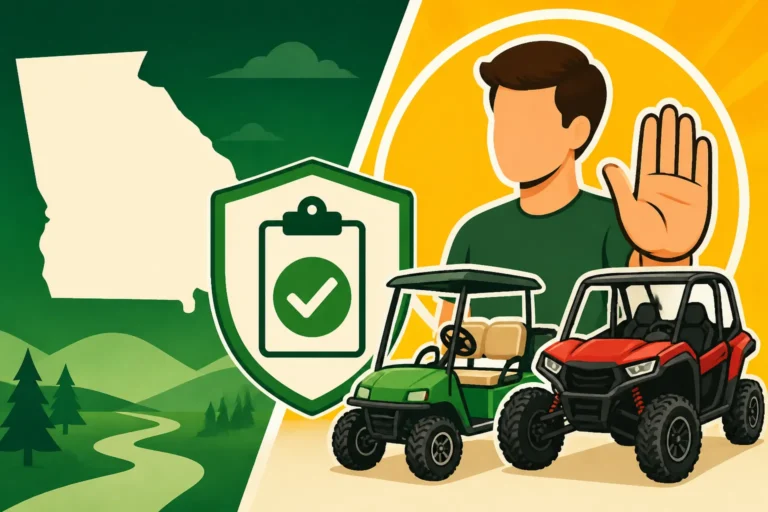
Another area of frequent confusion in Georgia is the distinction between MPOHVs (Multipurpose Off-Highway Vehicles), golf carts, and Personal Transportation Vehicles (PTVs). While all three can sometimes look similar or operate at similar speeds, Georgia law treats them very differently, with distinct rules for registration, equipment, and where they can be operated. Mistaking one for the other can lead to serious legal trouble, especially when attempting to use golf cart paths or city-specific PTV ordinances.
Here's a breakdown of the differences:
- Golf Carts: These are generally defined by their primary purpose: transporting golfers and their equipment on a golf course. They have specific design characteristics (e.g., maximum speed, seating, often electric). In Georgia, golf carts have very limited road access and are usually only permitted on roads with speed limits of 25 mph or less, typically within specific communities that have passed ordinances. They are usually not registered with the state in the same way an MPOHV is, though some cities have local registration schemes. [Georgia Golf Cart Laws and PTV Ordinances] are separate from MPOHV laws.
- Personal Transportation Vehicles (PTVs): PTVs are essentially golf carts that have been modified or manufactured to meet slightly higher safety standards, often including headlights, taillights, seat belts, and turn signals. They have a maximum speed of 20 mph, making them faster than traditional golf carts but still below the MPOHV's 25 mph minimum. Like golf carts, their road access is typically limited to specific local ordinances, such as those found in [Peachtree City Golf Cart Rules in Georgia], which has an extensive path network. PTVs are designed for neighborhood travel, not broader county road use.
- Multipurpose Off-Highway Vehicles (MPOHVs): As discussed, these are side-by-side UTVs that meet the stringent eight-point test, capable of 25-65 mph, have a steering wheel, non-straddle seats, and are registered with the state for limited county road access. They are built for more rugged use and higher performance than golf carts or PTVs.
The key takeaway is that you cannot use an MPOHV on a golf cart path or a street designated only for PTVs unless that specific path or street is also explicitly designated as a county road open to MPOHVs, which is rare. The rules are distinct, and local law enforcement will enforce the correct category for your vehicle. Just because your MPOHV has seat belts and headlights doesn't mean it's a PTV, and vice versa.
Specialized Use Cases: Farm, Hunting, and Commercial Exemptions
For many MPOHV owners in Georgia, these machines are not just for recreation; they are vital tools for work. Farmers, loggers, and those involved in various commercial activities often rely on their UTVs for tasks that require crossing or traversing short stretches of public roads. Recognizing this practical necessity, Georgia law includes certain exemptions and considerations for these specialized use cases. However, it's critical to understand that these are usually narrow exemptions tied to the activity itself, rather than granting blanket road access to the machine. They often relate to specific rules like helmet use, but not necessarily the overall requirement for registration or road type.
Here’s how these specialized uses are typically addressed:
- Agricultural Use: Farmers often need to move their MPOHVs between fields, barns, or to access different parts of their property, which might require brief travel on a county road. While the MPOHV still needs to meet registration requirements for general road use, specific agricultural exemptions can sometimes apply to aspects like helmet laws for minors if the operation is strictly for farming purposes. [Georgia MPOHV Registration and Farm Use] acknowledges the utility of these machines. This means if your 16-year-old is driving the UTV to spread fertilizer on the back forty, and crosses a short county road segment in the process, they might be exempt from helmet rules, but not from the requirement for a driver's license or for the machine to be registered if it's operating on a public road.
- Hunting Club Access: Many hunting clubs lease large tracts of land that may be crisscrossed by county roads or require MPOHVs to access specific hunting stands or food plots via public routes. While the MPOHV will still require proper registration for road use, these scenarios highlight the practical need for road access. [Georgia Hunting Access by ATV] implicitly refers to the utility of these machines, but it's always within the established MPOHV framework. No additional blanket exemptions for hunting are typically offered for road access itself.
- Logging and Commercial Operations: Similar to agricultural use, companies involved in logging, construction, or other commercial activities might use MPOHVs to transport equipment, materials, or personnel between job sites that necessitate brief travel on public roads. Like farm use, these operations might have specific exemptions for certain safety equipment (like helmets) if the use is strictly commercial and within defined parameters.
It is absolutely crucial to understand that these are specific, activity-based exemptions. They do not mean that any ATV or UTV used for farm work can bypass the MPOHV registration process or ignore road limitations. If you intend to use your MPOHV on public roads for these purposes, it still needs to be a qualifying MPOHV, registered, insured, and operated by a licensed driver. The exemptions usually apply to some of the operating rules, not the fundamental road-legal status. Always confirm the specifics of any exemption with local law enforcement or the Georgia Department of Public Safety to ensure full compliance.
Making Your UTV Road-Ready (Within Georgia's Limits)
You’ve done your research, understood the laws, and confirmed your UTV meets Georgia’s MPOHV eligibility requirements. Now comes the exciting part: making it truly ready to roll on those county roads. This isn't just about bolting on accessories; it's about ensuring your machine is safe, compliant, and equipped for the specific demands of public road use. While the "street legal kit" concept can sometimes be misleading in states with stricter rules, for MPOHVs in Georgia, it’s about meeting a precise set of requirements rather than transforming an ATV into a car.
Essential Accessories for Safety and Compliance
Beyond the foundational requirements for MPOHV registration (headlights, brake lights, mirrors, seat belts), there are often other accessories and considerations that significantly enhance both safety and compliance for road use. While some might not be explicitly mandated by the letter of the law for MPOHVs, they are wise additions that make your machine safer and more visible to other motorists. Think of it as going the extra mile for peace of mind and to avoid potential issues.
Here’s a checklist of essential accessories and upgrades to consider for your road-ready UTV:
- Horn: While not always listed as a primary MPOHV requirement, a functional horn is a fundamental safety device for any road-going vehicle. It allows you to alert other drivers or pedestrians to your presence. Many UTVs don't come with one from the factory, so this is a common aftermarket add-on.
- Turn Signals: Although the Georgia MPOHV law doesn't explicitly mandate turn signals, having them greatly improves your ability to communicate your intentions to other drivers. Hand signals are legal but can be awkward in a UTV. A good aftermarket turn signal kit, often combined with a horn, is a smart investment. Companies like SuperATV offer plug-and-play kits that integrate cleanly into many popular UTV models.
- DOT-Approved Tires: While your off-road tires might be great for the trails, dedicated DOT (Department of Transportation) approved tires are designed for better grip, longevity, and safety on asphalt. They can improve handling, reduce road noise, and provide a smoother ride. If your current tires are not DOT-approved, consider an upgrade.
- Windshield: A full windshield offers protection from wind, dust, bugs, and debris, making road travel much more comfortable and safer, especially at higher speeds. Many UTVs come with half-windshields or no windshield, so this is a common upgrade.
- Fender Flares: If your UTV has aggressive tires that kick up a lot of debris, fender flares can help contain mud and rocks, which can be a courtesy to other drivers and sometimes a local ordinance requirement.
- Reflectors and Conspicuity Tape: Adding extra reflective tape to the sides and rear of your MPOHV can significantly increase its visibility, particularly at dusk, dawn, or night. Every bit of passive visibility helps.
- Proper Plate Mount and Lighting: Ensure your MPOHV registration plate is securely mounted, clearly visible, and properly illuminated at night. [Georgia Plate Placement on a Side-by-Side] is important for avoiding unnecessary stops.
These additions go beyond just meeting the minimum legal requirements; they enhance the overall safety, functionality, and road manners of your MPOHV, making it a more confident and responsible vehicle on shared county roads.
Pre-Ride Checks and Maintenance for Road Use
Preparing your MPOHV for road use isn't just a one-time thing when you register it. Just like any other vehicle, it requires ongoing attention to maintenance and thorough pre-ride checks to ensure it remains safe and compliant. The stresses of road driving are different from trail riding, often involving sustained speeds and smoother surfaces, which can highlight different wear points. Neglecting these checks can lead to breakdowns, safety hazards, and potential legal issues if you're found with a non-compliant machine.
Here’s a routine for pre-ride checks and maintenance focused on road use:
- Tire Pressure and Condition: Check your tire pressure before each ride, ensuring it matches the manufacturer's recommendation for road use (often higher than off-road pressure). Inspect tires for wear, cuts, bulges, or embedded objects. Proper tire pressure is critical for handling, braking, and fuel efficiency on asphalt.
- Brake Function: Test your brakes before you leave. Ensure they feel firm, stop the vehicle effectively, and don't pull to one side. Check brake fluid levels periodically and inspect brake pads for wear.
- Lights and Signals: Confirm that all headlights, taillights, brake lights, and any installed turn signals are fully functional. Check for burnt-out bulbs or damaged wiring. This is especially crucial for night riding.
- Fluid Levels: Check engine oil, coolant, and brake fluid levels regularly. Low fluids can lead to overheating or critical component failure, which is especially problematic when you're far from home on a county road.
- Steering and Suspension: Check for excessive play in the steering wheel, which could indicate loose components. Listen for unusual noises from the suspension and inspect for any visible damage or leaks. Smooth road surfaces will highlight any steering or suspension issues.
- Seat Belts: Ensure all seat belts are in good working order, latch securely, and retract properly.
- Mirrors: Verify that your rearview mirrors are clean, securely mounted, and properly adjusted for clear visibility.
- Secure Cargo: If you're carrying any cargo in the bed or on racks, make sure it's securely tied down. Loose items can become dangerous projectiles on the road.
- Fuel Level: Always ensure you have sufficient fuel for your planned trip, plus a buffer. Running out of gas on a county road, especially in a rural area, can be more than just an inconvenience.
By making these pre-ride checks a habit and following a regular maintenance schedule, you can significantly reduce the risk of mechanical failures on the road, ensure your MPOHV remains compliant, and enjoy a safer, more reliable riding experience.
Understanding the Limitations of "Road-Ready"
Even after pouring time, effort, and money into making your UTV "road-ready" according to Georgia’s MPOHV rules, it’s absolutely critical to internalize and respect the inherent limitations of what that truly means. Many riders are naturally enthusiastic about their newfound ability to hit the county roads, but this enthusiasm must be tempered with a realistic understanding that your MPOHV is not a car, and its "street legal" status is conditional and geographically restricted. Overestimating its capabilities or legal permissions can quickly lead to trouble.
Here’s a stark reminder of those crucial limitations:
- County Roads Only: This cannot be stressed enough. Your MPOHV, no matter how well-equipped, is legally restricted to Georgia’s county road systems. It is not permitted on state highways, interstates, or typically within city limits unless a specific local ordinance explicitly allows it (which is rare outside of designated PTV areas). Thinking you can "just zip" across a state route or ride a short distance on one is a gamble with high stakes. [Are Side-by-Sides Street Legal in Georgia?] has a very nuanced answer.
- Not a Car Replacement: An MPOHV is still an off-highway vehicle, adapted for limited road use. It lacks many of the safety features, crash protection, and road-handling characteristics of a passenger car. You are more exposed to the elements and to potential impact. You also have reduced visibility in traffic compared to larger vehicles.
- Voluntary Registration: While required for road access, the MPOHV registration itself is voluntary. This highlights its specific, limited purpose. It doesn't magically turn your UTV into a full-fledged road vehicle in the eyes of the law beyond those county roads. [Georgia MPOHV Registration Is Voluntary] underscores this.
- "Street Legal Kit" Nuances: Be wary of aftermarket "street legal kits" that promise full road legality. While they often provide the necessary turn signals, horns, and mirrors, they cannot change the fundamental legal classification of your machine or the state-imposed restrictions on where it can be operated. A kit helps you meet requirements, but it doesn't change the law itself. For instance, a kit will not turn an ATV into an MPOHV or allow it on state highways.
- Sunset Clause Reminder: Don't forget the July 2027 sunset clause. This temporary nature of the law means that even the current limited access is not permanent and could be revoked without legislative action.
Your "road-ready" MPOHV is a versatile machine that can now legally connect trails, access hunting land, or navigate farm property via county roads. This is a huge benefit for many owners. However, always remember its designated purpose and its legal boundaries. Respecting these limitations ensures you stay safe, avoid legal entanglements, and continue to enjoy your machine responsibly for years to come.
Disclaimer
This article is for general informational purposes only and does not constitute professional advice. Laws, prices and regulations vary by location and change over time. Consult a qualified professional for guidance on your specific situation.