Twelve-Year-Olds With a Parent in the Seat
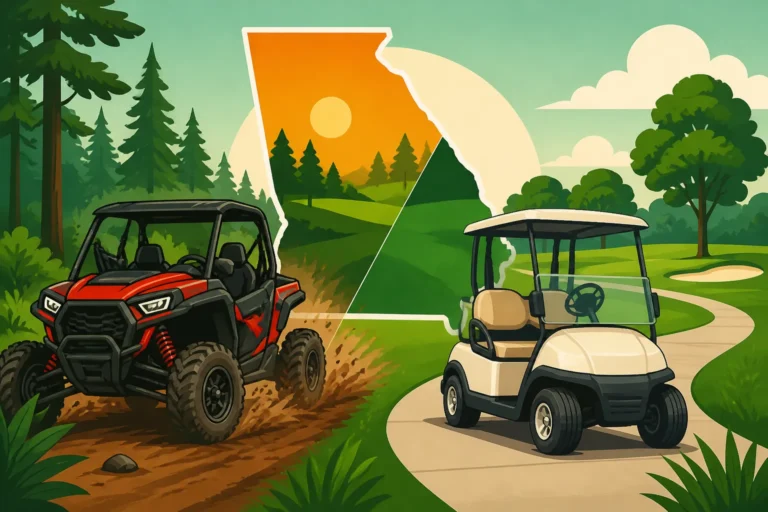
It’s a scene many of us envision: loading up the side-by-side or golf cart with the family, heading out for a leisurely ride on a beautiful Georgia afternoon. But when your aspiring young driver, perhaps your eager twelve-year-old, asks if they can take the wheel, a whole host of questions pop up. This guide is here to untangle the complexities of Georgia’s rules, especially concerning minors operating UTVs and golf carts on public roads, and specifically what’s allowed when a parent is right there in the seat.
Understanding Georgia's Age Rules for UTV and Golf Cart Operators
Navigating the rules for young drivers operating recreational vehicles in Georgia can feel like trying to solve a puzzle with missing pieces. It’s not always straightforward, and what applies to one type of vehicle or location might be completely different for another. This section aims to demystify the general age requirements and the crucial role supervision plays in ensuring both safety and legality.
General Minimum Age for Public Road Operation
Generally speaking, Georgia law has specific age requirements when it comes to operating vehicles on public roads, and this extends to golf carts and utility terrain vehicles (UTVs). For standard passenger vehicles, we all know the drill: learners permits at 15, provisional licenses at 16, and so on. But ATVs, UTVs, and golf carts fall into a different category, and their rules are often a blend of state statute and local ordinance. For most operations on public roads where they are permitted, a driver's license is typically required. This means that for many UTV situations on a county road, a younger driver, even with a parent, might not meet the baseline requirement of holding a valid driver's license. It’s a common misconception that if a vehicle doesn't require a traditional "tag" (like an ATV), then the rules are more relaxed for kids. Unfortunately, when you venture onto public asphalt or dirt roads, even if they're just county routes, the state takes a much stricter view of who can be behind the wheel.
However, the world of golf carts often operates under slightly different, though still specific, regulations. While the state generally requires a licensed driver, many municipalities in Georgia have enacted local ordinances that allow for exceptions, particularly for personal transportation vehicles (PTVs), which often include golf carts. These ordinances are where you might find age minimums lower than 16, sometimes allowing a 15-year-old with a learner's permit, or even younger with proper adult supervision. It’s a patchwork, which is why checking your specific county and city rules is paramount. Without these local exceptions, the default state rule typically leans towards requiring a licensed driver, which makes it challenging for anyone under 16 to legally operate one of these machines on a public way. You can learn more about specific age rules for these types of machines by looking into [Georgia Golf Cart Age Rules].
Why Supervision Matters for Minors
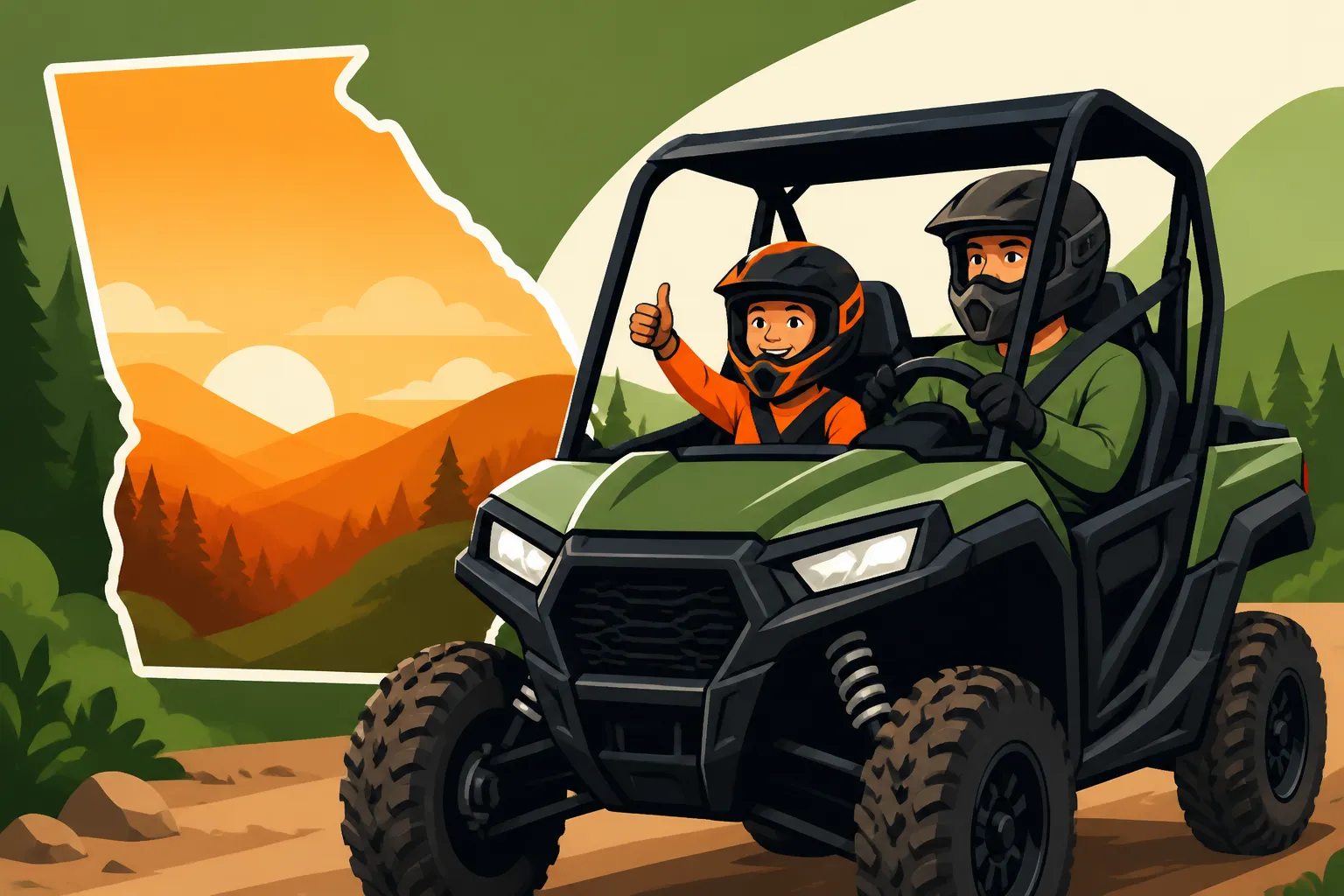
Even in situations where a younger rider might be permitted to operate a UTV or golf cart on public roads, supervision isn't just a good idea; it's often a legal necessity and always a safety imperative. Think about it from a common-sense perspective: a twelve-year-old, no matter how responsible, doesn't have the same road awareness, reaction time, or hazard perception as a seasoned adult driver. When the rules allow for younger drivers, they almost universally stipulate direct, active adult supervision. This isn't just about having an adult nearby; it usually means having a licensed driver in the passenger seat, actively monitoring the young driver and capable of taking control if needed. This is where the idea of a "parent in the seat" truly comes into play.
This supervision serves multiple purposes. First and foremost, it’s about safety. An adult can help guide the young driver through intersections, caution them about oncoming traffic, and intervene if a sudden obstacle appears. Secondly, it fulfills a legal requirement in many local ordinances. Law enforcement officers, if they see a minor operating a golf cart on a path or road, will almost certainly want to verify that a supervising adult is present and meets the criteria. This adult is typically expected to be a licensed driver themselves. Without this direct supervision, what might be a permissible activity quickly becomes a violation, potentially leading to citations or worse. It’s about creating a safe, controlled learning environment while adhering to the specific allowances within the law.
The Nuance of "Parent in the Seat" – When and Where it Applies
The phrase "parent in the seat" really gets to the heart of how Georgia handles young operators of certain off-highway vehicles on public thoroughfares. It's a critical distinction that often dictates whether a child can legally take the controls or not. However, it's not a blanket rule; its applicability is highly dependent on the type of vehicle and the specific location.
Golf Cart Path Networks and Supervised Driving
When people talk about a "parent in the seat" with a young driver, they are most often referring to golf cart operations, particularly within planned communities and cities that have established extensive golf cart path networks. Cities like Peachtree City are famous for their miles of cart paths, where golf carts are a primary mode of local transportation. In these unique environments, local ordinances often carve out specific exceptions to the general state driving age. For instance, an ordinance might state that a child as young as 12, 14, or 15 can operate a golf cart on designated paths, provided they are accompanied by a licensed adult in the passenger seat. This adult is expected to be capable of immediately assuming control if necessary.
This setup creates a valuable learning opportunity under controlled conditions. The paths are generally separate from main vehicle traffic, and speeds are typically lower. The "parent in the seat" rule here is about enabling mobility for families within these specific communities while maintaining a strong emphasis on safety and adult oversight. It’s not just a suggestion; it’s a legal requirement outlined in these local rules. If a twelve-year-old is spotted driving alone on one of these paths, even if they're very experienced, they would likely be in violation of the local ordinance, and the parent or guardian could face repercussions. Understanding [Peachtree City Golf Cart Rules in Georgia] is a great example of how these local nuances work.
County Roads and UTV Operation for Young Riders
The situation becomes significantly different, and often more restrictive, when we talk about UTVs (Utility Terrain Vehicles) on Georgia's county roads. While UTVs can now be legally registered for limited road use in Georgia under the "Multi-purpose Off-Highway Vehicle" (MPOHV) designation, the age requirements for operators generally align with traditional motor vehicle laws. This means that a valid driver's license is typically required to operate an MPOHV on a public road, which generally sets the minimum age at 16, or 15 with a learner's permit under specific conditions. Therefore, a twelve-year-old, even with a parent in the passenger seat, would likely not be legally permitted to drive a UTV on a county road.
The state's intent with MPOHV registration is to allow adults to use these machines for practical purposes on county roads, not to create a new avenue for underage drivers. While a UTV, like those from SuperATV, might have seat belts and other safety features, the legal framework for road use is much more stringent than for golf carts on dedicated paths. The risk profile on a county road, even a dirt one, is higher due to potential interactions with cars, trucks, and farm equipment. It's essential not to confuse the relatively relaxed golf cart path rules with the much stricter requirements for UTVs on public roads. Always assume that a driver's license is necessary unless a very specific and explicit local ordinance or state exception applies, which for a twelve-year-old on a UTV on a county road, is highly unlikely. Delving into [Georgia Driver's License Rules for MPOHV Operators] can provide further clarity on who is legally allowed behind the wheel.
Distinguishing UTVs, ATVs, and Golf Carts in Georgia Law
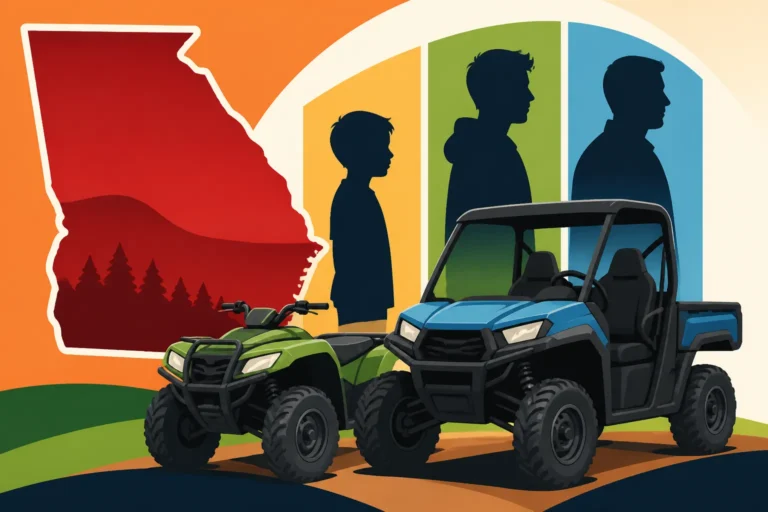
One of the biggest sources of confusion for off-road enthusiasts and parents in Georgia is understanding the legal differences between ATVs, UTVs, and golf carts. While they all might seem like "fun recreational vehicles," the law distinguishes them quite clearly, and these distinctions are absolutely critical when discussing road legality and, especially, age requirements for operators. Trying to apply the rules for one to another is a recipe for problems.
Why ATVs Are Different from UTVs and Carts
Let's get this straight from the start: ATVs (All-Terrain Vehicles) are generally not street legal in Georgia, with very limited exceptions for agricultural or emergency use, or specific circumstances like crossing a road. When we talk about "four-wheelers" or "quads," we're almost always talking about ATVs, and they are designed for off-road use only. They typically have handlebars and a straddle seat, which immediately disqualifies them from Georgia's MPOHV registration program for road use. The state explicitly aims to keep these machines off public roads due to their design, which makes them less stable and visible in traffic.
Because ATVs are not meant for road use, discussions about age limits for their operation on public roads with a "parent in the seat" are largely moot. The primary focus for ATVs is on private property and designated trails. Even there, safety courses and helmet laws apply for minors. For instance, [Georgia ATV Helmet Law for Riders Under 18] still applies on private land, highlighting the state's concern for young riders' safety regardless of road access. So, if your twelve-year-old wants to ride an ATV, it should be on private land with appropriate safety gear and supervision, not on any public road, even a county one.
Defining a UTV for Georgia Road Use
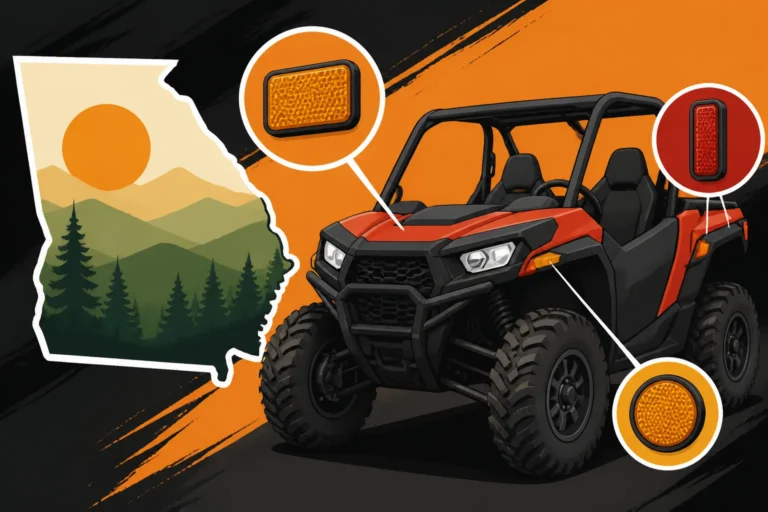
A UTV, or Utility Terrain Vehicle, is where the rules start to get interesting for limited road access in Georgia. Under the state's MPOHV (Multi-purpose Off-Highway Vehicle) designation, certain UTVs can be registered and operated on county roads. But there's a very specific list of criteria a UTV must meet to qualify. These aren't just any side-by-sides; they need specific features. They must have a steering wheel, not handlebars; a non-straddle seat (meaning you sit in it like a car seat, not straddle it like a motorcycle); a width no greater than 80 inches; a gross vehicle weight rating of 4,000 pounds or less; a payload capacity of at least 350 pounds; a top speed between 25 and 65 mph; and factory-installed seat belts, brake lights, headlights, and rearview mirrors.
These detailed specifications are what differentiates a UTV that might get a tag for road use from a pure off-road machine. Brands like SuperATV produce accessories that can help equip a UTV to meet some of these requirements, such as mirrors or turn signal kits, but the fundamental design characteristics must be factory-installed. The MPOHV designation is quite new, starting in December 2023, and it's specifically for adult drivers. This means that while a UTV can be street legal on certain roads, the operator still needs a valid driver's license. So, for a twelve-year-old, even with a parent in the passenger seat, driving an MPOHV on a county road remains off-limits due to the driver's license requirement. For a deeper dive into these criteria, refer to [What MPOHV Actually Stands For] or [Are Side-by-Sides Street Legal in Georgia?].
What Qualifies as a Golf Cart or PTV
Golf carts and Personal Transportation Vehicles (PTVs) occupy their own unique legal niche, primarily because many cities and counties have specific ordinances that govern their use. A golf cart is generally defined as a motor vehicle designed and manufactured for operation on a golf course for sporting or recreational purposes. PTVs are often a broader category that can include golf carts, but might also encompass other low-speed vehicles designated by local ordinance. The key is their speed—typically capped at 20 mph, sometimes up to 25 mph.
Unlike ATVs, golf carts/PTVs are often allowed on designated paths or certain local streets where specific ordinances permit them. This is where the "parent in the seat" rule for younger drivers often finds its most common application. These local rules recognize the lower speeds and often separated infrastructure (like cart paths) as reasons to allow for supervised underage operation. However, a golf cart cannot be registered as an MPOHV in Georgia because its top speed is generally below the 25 mph minimum. So, while a golf cart can be used on certain public ways, it's under different rules than a UTV. Knowing the difference is crucial because the regulations—and thus the eligibility for a twelve-year-old to drive, even with supervision—are distinct.
Ensuring Safety and Compliance for Young Riders
When you're dealing with minors operating any kind of vehicle, whether it's on a dedicated path or a county road, safety and legal compliance become paramount. It's not just about avoiding a ticket; it's about protecting your child and others. Even with a "parent in the seat," there are fundamental practices and legal realities that must be understood and adhered to.
Essential Safety Gear and Practices
First and foremost, safety gear is non-negotiable, even if state law might not always mandate helmets for golf cart operators on paths. For any young rider, especially on a UTV, a well-fitting helmet, eye protection, sturdy shoes, and appropriate clothing (long sleeves and pants) are highly recommended. While a UTV, particularly models that SuperATV offers accessories for, will have factory-installed seat belts, make sure they are properly used and fitted for smaller passengers. The "parent in the seat" should ensure that the child can comfortably reach the pedals and steering wheel without stretching, and that their sightlines are clear. If they can't safely operate the controls, they shouldn't be driving.
Beyond gear, practicing defensive driving is crucial. Teach your child to always be aware of their surroundings, anticipate potential hazards, and understand traffic signs and signals. Even on quiet county roads or dedicated paths, unexpected situations can arise—a pedestrian stepping out, another vehicle making an abrupt turn, or even wildlife crossing. It's also vital to practice in a safe, controlled environment first, away from any public access, until the child demonstrates consistent control and judgment. Remember, the goal isn't just to let them drive, but to teach them to drive safely and responsibly.
Insurance and Liability Considerations
This is where things can get a bit sobering, but it’s absolutely essential to address. If your UTV is registered as an MPOHV for county road use, then [Georgia UTV Insurance Minimums] will apply. This means you need liability insurance just like any other vehicle on the road. If your golf cart is operated on public paths or roads, especially in a municipality that requires registration, insurance may also be mandated or highly advisable. Even if it’s not legally required for a golf cart, carrying adequate liability insurance is simply smart. Accidents happen, and if your child, even with you in the seat, causes an accident that results in injury or property damage, you, as the parent and owner of the vehicle, could be held financially responsible.
Beyond liability, consider comprehensive and collision coverage, especially for valuable UTVs. While UTVs are rugged, rollovers and collisions can occur, and repairs can be costly. Talk to your insurance agent about specific policies for off-road vehicles and golf carts. Don't assume your homeowner's policy will cover an accident on a public thoroughfare; many explicitly exclude motorized vehicles. Understanding your coverage before an incident occurs is critical for peace of mind and financial protection.
Potential Penalties for Non-Compliance
Operating a UTV or golf cart outside of Georgia's laws can lead to various penalties, and these consequences often fall directly on the adult owner or supervising parent. If a minor is caught operating a vehicle illegally—for example, a twelve-year-old driving a UTV on a county road without a license, even with a parent present—the adult could face citations for allowing an unlicensed driver to operate a vehicle, or other traffic violations. Penalties can include fines, court costs, and potentially even points on the supervising adult's driving record. In some serious cases, or repeat offenses, the vehicle could even be impounded.
For golf carts on city paths, violations of local ordinances, such as an unsupervised minor driving or operating outside of permitted hours, can also result in fines specific to that municipality. Beyond legal penalties, there's the much more serious consequence of an accident. If an illegal operation contributes to an accident, the liability stakes increase significantly, potentially involving civil lawsuits for damages. The easiest way to avoid these headaches and heartaches is to thoroughly understand and adhere to all state and local regulations for the specific type of vehicle and location where you plan to ride. Remember, [Georgia Sheriff Enforcement on County Roads] means deputies are out there, and they are tasked with upholding these rules.
Navigating Local Ordinances and Path Networks
Understanding statewide laws for UTVs and golf carts is one thing, but Georgia also has a rich tapestry of local ordinances that can significantly change what's permissible, especially when it comes to young drivers. These local rules often dictate the specifics of how and where golf carts and, to a lesser extent, UTVs can be operated.
Peachtree City's Unique Approach to Cart Paths
Peachtree City stands out as a prime example of a municipality that has fully embraced golf cart culture, and in doing so, has developed specific ordinances for their use. With over 100 miles of multi-use paths, golf carts are not just recreational vehicles; they're an integral part of daily life for many residents. This city's ordinances are often cited as the model for how local jurisdictions can regulate PTVs. Here, you'll find detailed rules on who can drive, including provisions for younger operators. Typically, a 15-year-old with a learner's permit can drive a golf cart on the paths, and often, a 12 to 14-year-old can drive if accompanied by a licensed adult in the passenger seat. This is the quintessential "parent in the seat" scenario in action.
These rules aren't arbitrary; they are designed to balance community convenience with safety. The paths are generally separated from high-speed vehicular traffic, and the speed limits for golf carts are usually quite low. However, even within Peachtree City, there are expectations: all traffic laws apply to cart operators, including stopping at stop signs, signaling turns, and operating lights after dark. Violating these rules can still lead to tickets. For families living in or visiting such communities, understanding these very specific local rules is critical. They offer a unique opportunity for younger family members to gain driving experience in a relatively safe, supervised environment. You can find more specific rules by searching for [Peachtree City Golf Cart Rules in Georgia] or [Georgia Golf Cart Path Access].
How County Road Designations Affect Young Riders
Outside of specific golf cart communities, the general state laws regarding MPOHV registration apply, especially on county roads. While some counties might have very minor specific ordinances regarding general traffic, when it comes to who can legally operate a registered UTV on a county road, the state's driver's license requirement typically prevails. This means that if a county road allows MPOHVs, it's generally with the expectation that the operator holds a valid driver's license, making it inaccessible for a twelve-year-old, even with a parent.
The reason for this stricter approach on county roads versus dedicated cart paths is usually about the inherent risks. County roads, even unpaved ones, are shared with full-sized vehicles, and the speeds and potential for conflict are much higher than on a designated cart path. While a UTV, especially with robust aftermarket parts from a company like SuperATV, is built tough, it's still operating in an environment designed for traditional cars and trucks. The state prioritizes the safety of all road users, and for MPOHVs on these shared roads, that means requiring a fully licensed, adult operator. It's a key distinction that helps clarify why your twelve-year-old might be able to drive a golf cart in one town but absolutely cannot drive a UTV on a rural county road. For more on the framework that allows cities to create such rules, check out [Georgia PTV Ordinances Cities Can Pass].
| Vehicle Type | Road Legal Status (General) | Min. Age (Driver's License) | Min. Age (Supervised, "Parent in Seat") | Typical Use Case | Key Differentiating Features |
|---|---|---|---|---|---|
| ATV | Generally No (Off-Road Only) | 16+ (on private land for safety training) | N/A (not permitted on public roads) | Private land, designated OHV trails | Handlebars, straddle seat, high ground clearance |
| UTV (MPOHV) | Yes (County Roads Only, with Registration) | 16+ (with valid driver's license) | N/A (Driver's license required) | Farm work, hunting, recreational use on county roads | Steering wheel, non-straddle seats, seat belts, 25-65 mph |
| Golf Cart/PTV | Yes (Designated Paths/Local Streets, per ordinance) | 16+ (State law default) | 12-15 (per local ordinance, with licensed adult in seat) | Local community transport, golf courses, planned neighborhoods | Low speed (under 25 mph), often electric, specific local path access |
Disclaimer
This article is for general informational purposes only and does not constitute professional advice. Laws, prices and regulations vary by location and change over time. Consult a qualified professional for guidance on your specific situation.