Georgia’s 80-Inch Width Limit for Registration
Trying to figure out if your beloved side-by-side or utility vehicle can get a tag in Georgia can feel like navigating a maze, especially when you hit a roadblock like vehicle dimensions. Many folks assume if their machine runs great and has headlights, it's good to go, only to be utterly frustrated when a crucial measurement, like its overall width, disqualifies it for road use. This guide is here to shed light on Georgia's specific 80-inch width limit for registering certain off-highway vehicles, helping you understand this critical rule and what it means for your machine.
Understanding Georgia's MPOHV Width Requirement
When Georgia introduced its Motorized Play Vehicle/Off-Highway Vehicle (MPOHV) registration, it wasn't just about getting plates on side-by-sides; it came with a very specific set of criteria designed to ensure these machines could safely share certain public roads. One of the most frequently misunderstood, yet absolutely crucial, requirements centers around your vehicle's width. It's not just a suggestion; it's a hard limit that can make or break your registration dreams.
What the 80-Inch Rule Means for Your Machine
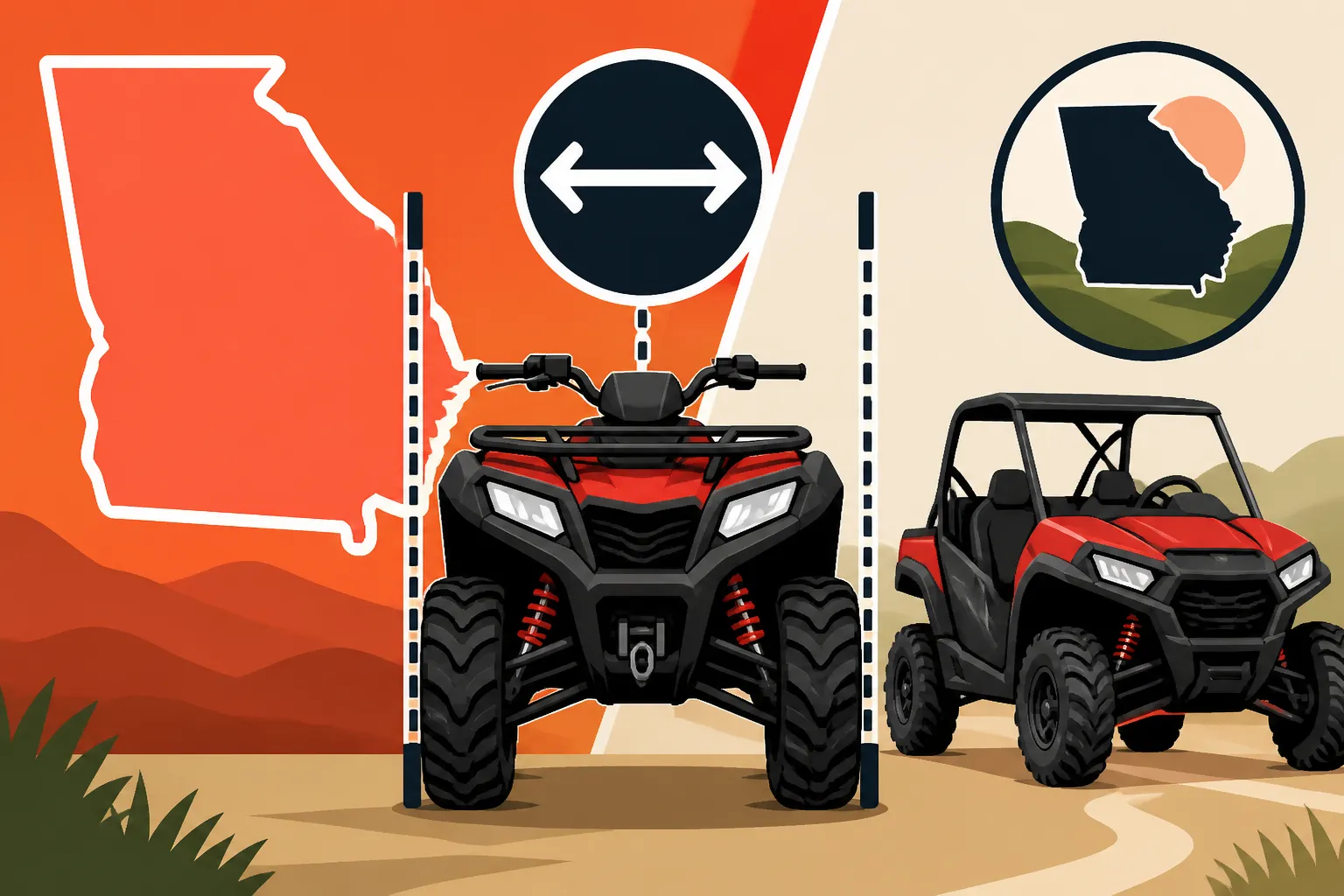
At its core, Georgia law stipulates that for an MPOHV to be eligible for road registration and receive a plate, its overall width cannot exceed 80 inches. This measurement isn't just an arbitrary number; it's a key factor in how your vehicle interacts with standard road infrastructure, from lanes to shoulders, and even crossing bridges. For many popular side-by-sides, this 80-inch cap is a very real challenge, as quite a few models, especially the sportier, high-performance ones, are designed wider for stability and aggressive off-road performance.
Imagine you've just bought a new machine, or maybe you've had one for years and heard about the new registration. You head to the county tag office, brimming with excitement, only to be told your pride and joy is just a few inches too wide. This can be incredibly disheartening, leaving you wondering why a few inches matter so much. It's a common scenario, and it highlights why understanding this rule upfront is so vital. Your machine needs to fit within that 80-inch boundary, from the outermost edge of one tire to the outermost edge of the other, including any parts of the wheel or tire that protrude.
Why Width Matters for Road Registration
The 80-inch width limit is fundamentally about road compatibility and safety. Georgia's MPOHV registration allows these vehicles on certain county roads, not state highways or interstates. County roads, particularly older ones in rural areas, weren't necessarily built with wider off-highway vehicles in mind. They might have narrower lanes, less generous shoulders, or even tight turns where an overly wide vehicle could become a hazard. The state is trying to balance the desire for off-highway vehicle owners to use these roads with the practical realities of infrastructure and the safety of all road users.
Consider a typical two-lane county road: if an MPOHV is too wide, it could encroach on the opposing lane, especially when passing other vehicles or navigating curves. This increases the risk of collisions and creates hazardous situations for drivers in cars and trucks who might not expect such a wide off-road vehicle. The state's goal is to allow limited road access for machines that can reasonably and safely operate within these existing road parameters, reducing potential conflicts and ensuring a smoother flow of traffic. It's a measure to integrate MPOHVs into the existing road network without requiring extensive and costly infrastructure changes.
The Frustration of Being "Too Wide" for the Road
There's a unique sting that comes with being told your machine is "too wide." It's not just a technicality; it feels like an arbitrary barrier to enjoying your vehicle on local roads, especially when you see other machines that look similar sporting a tag. Many owners invest significant money in their side-by-sides, envisioning seamless transitions from their driveway to the local hunting club, or from a trail system to a nearby gas station for a quick refuel. The 80-inch limit can put a swift end to those dreams, forcing a re-evaluation of how and where you can legally ride.
This frustration is particularly acute for owners of popular models known for their robust build and wider stance, such as many sport-focused side-by-sides. These machines are built for performance and stability on challenging terrain, and a wider footprint is often part of that design. To then find out that this very advantage makes them ineligible for a simple county road tag in Georgia can be incredibly vexing. It often means either keeping the machine strictly on private land or a trailer, or facing the potential penalties of riding an unregistered machine on public roads. Understanding [Why a Four-Wheeler Cannot Be Registered in Georgia] can also shed light on similar frustrations with other vehicle types.
How to Accurately Measure Your Machine's Width
Before you even think about making that trip to the county tag office, accurately measuring your machine's width is a non-negotiable step. Don't rely on manufacturer specifications alone, as these often don't account for real-world additions or even slight variations in tire bulge. A precise measurement will save you time, disappointment, and a potentially wasted trip.
Finding the Widest Point on Your Side-by-Side
The key to measuring correctly is to identify the absolute widest point of your vehicle. For most side-by-sides, this will be across the outermost edges of the tires. Grab a long, sturdy measuring tape – a construction tape measure works best because it can hold its rigidity across the span. Position your vehicle on a flat, level surface. Have a friend help you if possible, holding one end of the tape measure firmly against the outside edge of a front tire. Extend the tape across the front of the vehicle to the outermost edge of the opposite front tire. Make sure the tape is perfectly perpendicular to the vehicle's direction of travel and isn't sagging or angled.
It's crucial to measure at the widest point of the tire, which often means the sidewall bulge, not just the tread surface. Repeat this process for the rear tires, as sometimes the front and rear tracks can differ slightly. Whichever measurement is larger is the one you need to record. Don't forget to consider anything else that might protrude, like fender flares, mirrors (if they stick out further than the tires), or even custom wheel offsets. A few extra inches here or there can make all the difference between eligibility and disappointment.
Common Accessories That Impact Overall Width
While the tires are usually the widest point, many common aftermarket accessories can unexpectedly push your machine over the 80-inch limit. Beadlock wheels, which are often wider and have a different offset, can add significant width. Aftermarket tires, especially those with aggressive sidewall lugs or a wider profile than stock, are another common culprit. Sometimes, just upgrading to a different brand or model of tire, even if it's the same nominal size, can slightly increase the overall width.
Beyond wheels and tires, things like wide fender flares designed to keep mud off, specific types of rock sliders or tree kickers that extend outwards, or even custom-mounted accessories like a shovel or axe that protrude past the main body, could potentially impact your measurement. It’s imperative to measure your vehicle in its "as-is" condition – meaning, with all the accessories you typically run on it. If you've modified your machine with wider A-arms or suspension components, these will certainly change your track width and must be factored into your measurement. It's a good idea to perform this check before considering anything like [Georgia Plates for Off-Highway Vehicles].
Tips for Precise Measurement Before Visiting the Tag Office
To avoid any unwelcome surprises at the tag office, treat your measurement like a scientific experiment. First, ensure your tire pressure is at the manufacturer's recommended level; under-inflated tires might measure slightly differently. Second, take multiple measurements. Measure from tire to tire at the front, then the rear. Measure from any other protruding part to ensure you haven't missed anything. If you're really close to the 80-inch mark, consider using a level or a straightedge placed against the widest points to get an even more accurate reading with your tape measure.
It's also a smart move to have a digital camera handy to snap a few photos of your measurement, showing the tape measure clearly displaying the width. While not always required, having this visual proof can be reassuring if there's any discrepancy or question at the tag office. Remember, the county tag office is there to enforce the rules, not interpret them creatively. Having your own diligent measurements documented can make the process smoother. Many official forms, like those you might find on LawDepot for other vehicle transactions, emphasize accuracy, and this situation is no different.
The Purpose Behind Georgia's Width Restrictions
Understanding why the 80-inch width limit exists can help demystify the rule and underscore its importance. It's not just a random number; it's rooted in practical considerations for road safety and the existing infrastructure of Georgia's county road systems.
Ensuring Compatibility with County Roadways
The primary reason for the width restriction is to ensure that registered MPOHVs can operate safely and without undue strain on Georgia's extensive network of county roads. These aren't high-speed interstate lanes; they're often rural, sometimes unpaved, and frequently narrower than major thoroughfares. The 80-inch limit aligns with the typical width of passenger vehicles and light trucks that commonly use these roads. If an MPOHV is significantly wider, it can pose challenges.
Imagine meeting a logging truck on a narrow dirt road in South Georgia. If your side-by-side is already pushing the limits of the lane, passing safely becomes much more difficult, if not impossible, without pulling off the road entirely. The 80-inch maximum attempts to reduce such scenarios, ensuring that MPOHVs can reasonably coexist with other vehicles, including large farm equipment and delivery trucks, without creating bottlenecks or forcing dangerous maneuvers. This compatibility is key to the state's decision to allow [Georgia UTV Road Rules by County].
Safety Concerns and Wider Vehicle Operation
Safety is always paramount when it comes to road regulations, and the width limit is a direct reflection of this concern. A wider vehicle inherently requires more space to operate, particularly when turning, avoiding obstacles, or simply maintaining its lane. On roads that may not have clearly marked lines, shoulders, or adequate sightlines, an overly wide machine increases the risk of encroaching on opposing traffic or running off the road.
Furthermore, wider MPOHVs can reduce the available space for cyclists and pedestrians, even on county roads where such traffic might be less common. The state is balancing the fun and utility of MPOHVs with the safety of everyone who uses the public right-of-way. The 80-inch rule helps ensure that these vehicles are not disproportionately large for the environments they are permitted to operate in, reducing the likelihood of accidents and promoting safer shared road use for all. This is just one component of [Georgia MPOHV Eligibility: The Eight-Point Test].
Distinguishing Between Off-Road and Road-Legal Machines
Another underlying purpose of the width restriction is to maintain a clear distinction between machines primarily designed for off-road use and those that are suitable for limited public road access. True off-road vehicles, like many high-performance ATVs and wider side-by-sides, are built for rugged terrain, agility, and stability on uneven surfaces. Their design priorities often include a wider track for stability during aggressive cornering or traversing slopes.
The MPOHV registration, as explained in articles like [Georgia MPOHV Registration Explained], is specifically for machines that can bridge the gap between pure off-road and limited on-road use. By setting a width limit, Georgia is effectively filtering out machines whose design leans too heavily towards extreme off-road performance at the expense of road compatibility. It's a way of saying, "If it's this wide, it's really meant for trails and private land, not sharing public county roads." This distinction helps manage expectations for riders and ensures that the vehicles legally on the road meet a baseline standard of road-worthiness.
What Happens If Your Machine Exceeds 80 Inches
It's a tough pill to swallow, but if your side-by-side measures over 80 inches in width, Georgia's current MPOHV registration program will not grant it a plate for road use. This isn't a situation where you can pay an extra fee or apply for a special waiver; the limit is absolute for standard MPOHV registration.
Registration Denial and Its Implications
If your machine fails the 80-inch width test, the county tag office will deny your application for MPOHV registration. This means no Georgia license plate for your vehicle. The implications of this denial are straightforward: your side-by-side remains legally restricted to private property, designated off-road trails, or specialized off-road parks. You cannot legally operate it on Georgia's county roads, even for short distances or to cross them.
Attempting to ride an unregistered machine on public roads that are not explicitly designated for such use can lead to significant penalties. These can include fines, vehicle impoundment, and other legal repercussions. It's a situation that underscores the importance of pre-screening your vehicle against all criteria, including width, before committing to the registration process. This denial can be a real disappointment, especially if you had plans to use your [Georgia Registration for a Polaris Ranger] on local roads.
Options for Machines That Don't Qualify
For machines that are too wide (or fail other critical criteria like having handlebars, a straddle seat, or exceeding the speed/weight limits), your options for use on public roads in Georgia become extremely limited, almost nonexistent.
- Private Land & Trails: Your machine is still perfectly suitable for private property, vast land holdings, hunting leases, or dedicated off-road parks. Georgia has many excellent private parks, such as Iron Mountain, that welcome a wide array of machines, regardless of width. There are also state and federal trail systems, though many of these have their own width restrictions (often 50 or 60 inches) for designated trails.
- Farm Use Exemption: While not technically "registered" for general road use, Georgia does have specific exemptions for farm equipment. If your wide side-by-side is exclusively used for legitimate agricultural purposes, such as hauling feed on your own farm or between fields that share a very short stretch of public road, it might fall under these farm exemptions. However, this is a very narrow exception and does not grant general road access. You must meet strict definitions of "farm use," and it's not a loophole for recreational riding.
- Transport by Trailer: The most common solution for owners of disqualified machines is to simply trailer them to their riding destinations. This allows you to enjoy your wide, powerful machine on suitable off-road terrain without worrying about road legality. It means a bit more logistical planning, but it's the safest and most legal way to operate a non-compliant vehicle.
Understanding Exceptions and Limitations
It's important to clarify that there are very few, if any, "exceptions" to the 80-inch width rule for MPOHV registration itself. The law is quite clear. The only real "limitations" you might find are instances where your vehicle is not attempting to register as an MPOHV. For example, a heavy-duty UTV might be wide but if it's operating purely as an agricultural implement on a farm, it falls under different rules not related to MPOHV road registration. Similarly, specialized commercial utility vehicles (think airport ground support or large construction site transport) might be wide, but they also operate under different regulatory frameworks for their specific, non-recreational purposes.
For the average recreational or utility owner looking to get a county road tag, the 80-inch rule is a firm line in the sand. There are no provisions for a special permit because your machine is "just a little bit" over, or because you promise to drive carefully. The rule exists for a reason, and adherence is mandatory for [Georgia MPOHV Registration Explained].
Navigating the Registration Process with Width in Mind
Knowing about the 80-inch width limit is the first step; actively navigating the registration process with this in mind is the next. It means being prepared, having your measurements straight, and understanding what the county tag office expects.
Documenting Your Machine's Specifications
Before you even step foot into a [Georgia County Tag Office Steps for an MPOHV], you should have a clear record of your machine's specifications, especially its width. Write it down. Take those photos we discussed earlier, showing your measurement. While the tag office might not always ask for a specific document detailing width, having it ready demonstrates that you've done your homework and understand the requirements.
You'll also need other essential paperwork, like proof of ownership (a bill of sale, often prepared using a template from a service like LawDepot, is critical here, especially since Georgia does not title ATVs), proof of identity and residency, and evidence that you've paid Georgia sales tax on the purchase. Knowing all your vehicle's specs, from its weight to its width and speed capabilities, will help you confidently answer any questions about [Georgia's 4,000-Pound Gross Weight Ceiling] or the other criteria.
Preparing for a Potential Inspection
While not every county tag office performs a physical inspection of every MPOHV, you should always be prepared for one. If an employee at the counter has any doubt about your vehicle's eligibility, particularly regarding its width or other visual criteria, they have every right to request an inspection. This might involve you bringing the machine to a designated area for a quick measurement, or in some cases, a more thorough check.
If an inspection is requested, make sure your machine is easily accessible for measurement. Ensure it's clean and safe to operate. The inspection is not to critique your customization or riding skills, but purely to verify that your vehicle meets all the statutory requirements for registration. Having your documentation readily available, including proof of the required safety equipment like rearview mirrors and seatbelts, will certainly help streamline the process. Remember, they're looking for things like a steering wheel (not handlebars, as specified in [Georgia Requires a Steering Wheel, Not Handlebars]) and a non-straddle seat, among other things.
The Role of the County Tag Office in Verification
The county tag office plays a crucial role as the gatekeeper for MPOHV registration. Their staff are responsible for reviewing applications, collecting necessary documentation, and ensuring that each machine meets all the established criteria, including the 80-inch width limit. They act as the final authority on whether your vehicle qualifies for a plate.
If there are questions about your machine's width, the tag office staff will likely rely on their own visual assessment or a quick measurement. They are trained to look for discrepancies and uphold the law. It's important to approach the interaction with respect and patience. If your machine is clearly over the limit, or if an inspection confirms it, they will unfortunately have to deny the registration. Their role is to apply the rules consistently to all applicants, ensuring that only eligible machines receive [Georgia MPOHV Registration Explained].
Other Key Eligibility Criteria Beyond Width
While the 80-inch width limit is a significant hurdle for many, it's just one of several critical criteria your machine must meet to be registered as an MPOHV in Georgia. Overlooking any of these can lead to frustration and denial, so it's essential to understand the full picture.
Speed, Weight, and Payload Requirements
Georgia's MPOHV rules include specific performance and capacity requirements. Your machine must be capable of reaching speeds between 25 and 65 miles per hour. This immediately disqualifies golf carts (which are typically slower) and overly powerful machines designed for racing (which often exceed 65 mph). There's also a gross vehicle weight limit of 4,000 pounds and a payload capacity requirement of at least 350 pounds. This payload rule ensures the machine is capable of carrying at least one passenger and some gear, suggesting a utility or multi-person recreational focus rather than a purely sport design.
For many owners, calculating [Georgia's 4,000-Pound Gross Weight Ceiling] can be tricky, as it refers to the machine's curb weight plus its maximum carrying capacity. The 350-pound payload is usually easier to confirm from manufacturer specs. These limits collectively define the operational envelope for MPOHVs allowed on county roads, aiming for a balance between functionality and safe road presence.
Seating and Steering Wheel Mandates
Perhaps one of the most significant differentiators for MPOHV eligibility is the seating and steering mechanism. Georgia law explicitly requires that the machine have a non-straddle seat. This means no traditional ATV-style "saddle" or motorcycle-like seat. Instead, it must feature bench or bucket seating, similar to what you'd find in a car or truck, where the rider sits in the seat, not on it. This rule immediately disqualifies all traditional quads and dirt bikes from MPOHV registration.
Coupled with the seating requirement is the mandate for a steering wheel. Handlebars, again, common on ATVs and dirt bikes, are not permitted for an MPOHV. The combination of non-straddle seating and a steering wheel points directly to side-by-sides (UTVs) as the primary type of vehicle eligible for this registration. It effectively rules out a vast majority of off-highway vehicles that don't fit this specific, car-like operator configuration. For a deeper dive into this, see [Why Georgia's MPOHV Rules Demand a Non-Straddle Seat] and [Why Handlebars Disqualify a Machine].
Essential Safety Equipment Checklist
Finally, an MPOHV seeking registration must be equipped with several essential safety features, mirroring those found on conventional road vehicles. This includes:
- Headlights: Capable of illuminating the road ahead.
- Brake Lights: Clearly visible from the rear when braking.
- Taillights: Visible from the rear during darkness.
- Turn Signals: Both front and rear, for indicating changes in direction.
- Rearview Mirrors: Typically at least one mounted on the left side, though often two (one on each side) are preferred for better visibility.
- Seat Belts: Factory-installed seat belts for all designated seating positions.
- Horn: An audible warning device.
- Muffler: To ensure noise levels are within reasonable limits.
These requirements ensure that MPOHVs can communicate their presence and intentions to other road users, and that occupants are offered a basic level of safety protection. Without these items, your machine will not pass the eligibility test, even if it meets all other criteria. When preparing your vehicle, ensure all these components are in good working order and meet basic functionality standards.
| Feature | Requirement for Georgia MPOHV Registration | Common Impact on ATVs/UTVs |
|---|---|---|
| Width | Not exceeding 80 inches | Many sport UTVs and wider utility UTVs are disqualified. |
| Seat Type | Non-straddle (bench or bucket seat) | Immediately disqualifies all traditional ATVs and dirt bikes. |
| Steering | Steering wheel | Immediately disqualifies all traditional ATVs and dirt bikes. |
| Speed Range | Capable of 25 mph, not exceeding 65 mph | Disqualifies golf carts, some mini-UTVs, and high-speed race UTVs. |
| Gross Weight | Not exceeding 4,000 pounds (machine + max payload) | Disqualifies some heavy-duty utility UTVs. |
| Payload Capacity | At least 350 pounds | Disqualifies some very small, single-person UTVs. |
| Manufacture Date | Built on or after January 1, 2000 | Disqualifies older machines, regardless of condition. |
| Safety Gear | Headlights, brake lights, taillights, turn signals, mirrors, horn, seat belts | Requires specific factory-installed or compliant aftermarket parts. |
Remember, [Georgia MPOHV Registration Is Voluntary], but if you want to legally ride your qualifying side-by-side on designated county roads, meeting all these criteria, including the 80-inch width limit, is essential.
Disclaimer
This article is for general informational purposes only and does not constitute professional advice. Laws, prices and regulations vary by location and change over time. Consult a qualified professional for guidance on your specific situation.