Proving You Own an ATV in Georgia Without a Title
It’s a common scenario across Georgia: you’ve got a fantastic ATV or UTV, maybe you’ve had it for years, or perhaps you bought it from a private seller, and when it comes time to think about registration or even selling it, you realize… there’s no official title. This can feel like hitting a brick wall, leaving you wondering how on earth to prove you actually own the machine. This guide is here to walk you through the often-confusing process of establishing and documenting your ownership of an ATV or UTV in Georgia, even when that coveted paper title is nowhere to be found, helping you prepare for things like the new MPOHV registration.
The Georgia ATV/UTV Ownership Puzzle Without a Title
The absence of a traditional vehicle title for an ATV or UTV in Georgia can be incredibly frustrating. Many owners, especially those who've owned their machines for years or inherited them, often don't realize this is a common issue until they try to register, sell, or insure their vehicle. It's a unique hurdle that sets off-road vehicles apart from cars and trucks, and it can leave you feeling stuck.
The Common Frustration of "No Title"
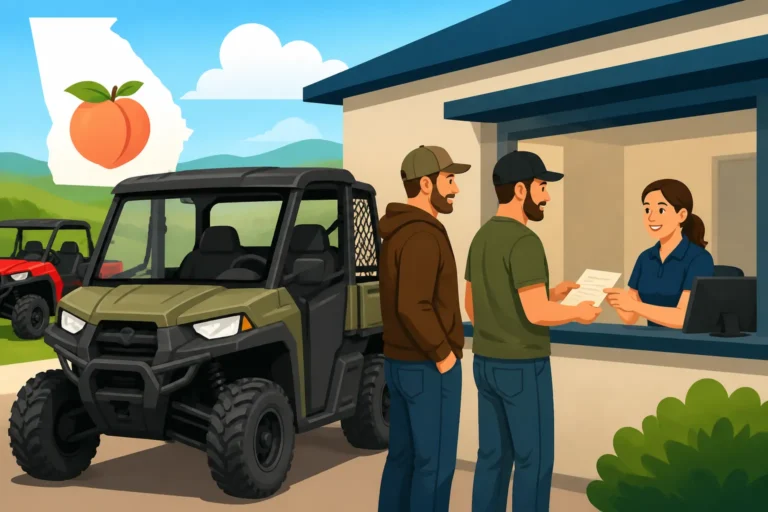
Imagine you're ready to take advantage of Georgia's new MPOHV registration program to ride your side-by-side on approved county roads. You've got your machine in top shape, you've checked all the eligibility boxes, and then the county tag office asks for proof of ownership. You rummage through your files, and all you can find is an old handwritten bill of sale, or perhaps nothing at all from the original purchase decades ago. The panic can set in pretty quickly. It's a deeply unsettling feeling to own something outright, only to be told you can't prove it. This isn't just about a lost piece of paper; it feels like your legitimate ownership is being questioned, and that can be really disheartening.
The MPOHV Registration and Ownership Proof
With the advent of Georgia's new MPOHV registration, proving ownership has become a more prominent requirement. While previously, many off-road vehicles operated entirely on private land without ever needing formal documentation beyond a bill of sale, the game has changed. To get that coveted plate and decal for legal road access, the county tag office needs clear evidence that the machine belongs to you. This isn't just a formality; it's a critical step in preventing theft and ensuring legitimate transfers of ownership. Without adequate proof, your registration application will hit a snag, and your plans for hitting those county roads will be put on hold. Understanding what constitutes acceptable proof is the first step in navigating this new landscape. [Georgia MPOHV Registration Explained]
Why Many ATVs and UTVs in Georgia Don't Have Titles
It’s not just a quirk; there’s a historical and legal reason why many ATVs and UTVs in Georgia, unlike cars and trucks, don't come with traditional titles. This distinction is crucial to understand because it shapes the entire process of proving ownership without one.
Historical Context: Off-Road Machines and Titles
For decades, ATVs and UTVs were primarily considered recreational or utility vehicles meant for off-road use, private property, or specialized tasks like farming and hunting. They weren't designed or intended for public road use, and therefore, they weren't subjected to the same titling requirements as street-legal vehicles. The state's Department of Revenue (DOR) didn't mandate titles for these machines because their operation largely fell outside the scope of road-going vehicle regulations. This historical approach meant that a simple bill of sale or a dealer invoice was usually sufficient proof of purchase for most purposes. Many owners never saw or received a formal title because one simply wasn't issued for their type of machine. This legacy is why so many long-time owners find themselves in this title-less predicament today. [Why Georgia Does Not Title an ATV]
Georgia Law and the Untitled Nature
Georgia law specifically carves out a distinction for certain types of off-road vehicles. While cars, trucks, and motorcycles have always been required to have titles, ATVs and UTVs—until the recent MPOHV registration rules—did not fall under this mandate. They were generally classified differently, often as "off-highway vehicles" or similar terms that didn't necessitate a certificate of title. This legal framework meant that a dealer selling an ATV wasn't required to provide a title, and subsequent private sales also didn't involve title transfers. It wasn't an oversight; it was simply how these vehicles were legally handled in the state. This legal reality means that for many machines, particularly older ones, there is no title to be found because one was never created in the first place.
The Distinction from Road Vehicles
The difference between a titled road vehicle and an untitled off-road vehicle in Georgia boils down to their intended use and the regulatory framework built around that use. Road vehicles are subject to extensive state and federal regulations concerning safety, emissions, and registration, all underpinned by the title system. The title serves as definitive proof of ownership and a record of liens. Off-road vehicles, historically, skirted much of this. When you buy a car, you expect a title. When you bought a quad ten years ago, you might have only received a bill of sale and thought nothing of it. This fundamental difference is why Georgia's new MPOHV registration system had to create a specific process for ownership proof without a title, acknowledging this long-standing reality for thousands of machine owners.
Essential Documents for Proving Ownership
When you don't have a title for your ATV or UTV in Georgia, you need to rely on other documents to establish your ownership. These aren't just "nice-to-haves"; they are critical pieces of evidence that your county tag office will scrutinize. Understanding which documents are most effective and how to present them is key.
The Bill of Sale: Your Primary Proof
A comprehensive bill of sale is often the strongest piece of evidence you can present when a title is unavailable. This document legally records the transfer of ownership from one party to another. For it to be truly effective, it needs to be detailed and accurate. Think of it as the core of your ownership claim. It should clearly identify the buyer and seller (full names, addresses, contact information), describe the ATV or UTV in detail (make, model, year, and crucially, the Vehicle Identification Number or VIN), state the purchase price, and include the date of the sale. Both parties should sign and date it. A bill of sale acts as a legal receipt and proves that you legitimately acquired the machine. Even a simple, handwritten one can be powerful if it contains all the necessary information. When creating a bill of sale, especially if it's for an older machine or a private sale, using a template from a reputable source like LawDepot can help ensure you don't miss any critical details.
The Georgia Ownership Affidavit (Form MV-OHV)
Georgia's Department of Revenue recognized the title dilemma for off-road vehicles and introduced Form MV-OHV, the Georgia Off-Road Vehicle Ownership Affidavit. This form is specifically designed for situations where a traditional title isn't available. It's an official document where you, as the owner, formally attest to your ownership of the machine under penalty of perjury. Filling this form out correctly is paramount. It requires you to provide details about the machine, how you acquired it, and why a title isn't available. This affidavit essentially formalizes your claim of ownership for the state. You’ll need to have it notarized, which adds a layer of legal validity. This form is often used in conjunction with a bill of sale or other supporting documents to create a robust package of ownership proof. [Georgia Form MV-OHV and What It Asks]
Other Supporting Documents
While a bill of sale and the MV-OHV affidavit are central, other documents can bolster your case, especially if your primary documents are less than perfect. These might include:
- Original Dealer Invoice or Sales Agreement: If you purchased the machine new, the original invoice from the dealership would contain all the necessary details and serve as excellent proof of first ownership.
- Previous Registration Documents: If the machine was previously registered in another state (even if untitled there) or if you have old trail permits that listed the VIN, these can show a history of your possession.
- Insurance Policies: Declarations pages from insurance policies listing you as the policyholder and the specific VIN of the machine can also serve as supporting evidence.
- Maintenance Records: Receipts for repairs or maintenance that list the VIN and your name can demonstrate long-term possession and investment in the machine.
- Photos of the Machine with Identifiable Features: While not standalone proof, clear photos showing the VIN plate on your machine can help verify the details provided in other documents.
The more comprehensive your collection of documents, the stronger your case will be for proving ownership to the tag office.
| Document Type | Purpose | Key Information Included | When It's Most Useful |
|---|---|---|---|
| Bill of Sale | Legal transfer of ownership from seller to buyer | Buyer/Seller names, addresses, signatures; date of sale; purchase price; machine make, model, year, VIN; warranty statement (optional) | Private sales, older machines |
| GA MV-OHV Affidavit | Owner's sworn statement of ownership for untitled off-road vehicles | Owner details; machine details (make, model, year, VIN); how acquired; reason for no title; notarization | MPOHV registration, bridging ownership gaps |
| Original Dealer Invoice | Proof of first retail purchase and initial ownership | Dealer name, address; buyer name, address; machine make, model, year, VIN; purchase price; date of sale; sales tax information | Machine purchased new from a dealership |
| Insurance Declarations | Proof of insured interest and possession | Insured's name; machine make, model, year, VIN; policy effective dates; coverage details | Supporting other documents, long-term possession |
| Maintenance Records | Evidence of long-term possession and investment | Owner's name; machine make, model, year, VIN; service performed; date of service; cost | Demonstrating continuous possession, especially for older machines |
Creating a Valid Bill of Sale or Ownership Affidavit
Getting your documents in order isn't just about having them; it's about making sure they are correctly filled out and legally sound. A poorly executed bill of sale or an incomplete affidavit can be just as problematic as having no documents at all.
Key Information for a Robust Bill of Sale
A truly robust bill of sale leaves no room for doubt about the transaction. It's more than just a receipt; it's a legal contract. First and foremost, clearly identify both the seller and the buyer with their full legal names and current physical addresses. Include the date of the sale explicitly. Next, detail the machine itself. This means the make, model, year, and crucially, the Vehicle Identification Number (VIN). The VIN is the unique identifier for your machine, much like a fingerprint, and it must match the physical VIN plate on your ATV or UTV. State the agreed-upon purchase price. It’s also wise to include a clause stating the machine is sold "as is" if that's the agreement, limiting future disputes. Finally, ensure both the buyer and seller sign and date the document. If possible, having a witness sign it as well, or even getting it notarized, adds an extra layer of credibility. For those who are unsure how to start, a customizable template from a service like LawDepot can be invaluable to ensure all necessary clauses and fields are included, giving you peace of mind that your document will stand up to scrutiny.
Filling Out Georgia Form MV-OHV Correctly
The Georgia Off-Road Vehicle Ownership Affidavit (Form MV-OHV) is a specific document designed by the state for this exact purpose. It asks for precise information, and accuracy is crucial. You'll need to provide your full name and address as the affiant (the person making the sworn statement), along with detailed information about the ATV or UTV, including its VIN, make, model, and year. The form also asks how you acquired the machine (e.g., purchased from a private party, inherited, homemade) and an explanation as to why a title is not available. Be clear and concise in your explanation. Was it never titled by the manufacturer? Was the original bill of sale lost? Honesty and completeness are key here. Once completed, the form must be signed in the presence of a notary public, who will then affix their seal. Without notarization, the affidavit lacks legal weight and will not be accepted by the county tag office. Paying close attention to each line item on this form will save you headaches down the road. [Filling Out Georgia's MV-OHV Affidavit Line by Line]
Witnesses and Notarization: Adding Credibility
While not always legally mandatory for a simple bill of sale, adding witnesses and notarization significantly boosts the credibility and legal standing of your ownership documents. For the Georgia MV-OHV Affidavit, notarization is absolutely required. A notary public verifies the identity of the person signing the document and witnesses their signature, confirming that it was done freely and willingly. This prevents claims of fraud or coercion later on. For a bill of sale, having a neutral third-party witness the transaction and sign the document can also provide independent verification of the sale's details. If a dispute were to arise, a witness's testimony or a notary's seal could be invaluable in proving the legitimacy of your ownership claim. It’s a small step that offers a large measure of protection and assurance to the county tag office that your paperwork is legitimate.
Dealing with Missing or Incomplete Paperwork
It's not uncommon to find yourself with a machine you love but a paper trail that's patchy at best. Perhaps the original bill of sale is lost, or the previous owner is long gone. These situations present unique challenges when trying to prove ownership for MPOHV registration in Georgia, but they aren't necessarily insurmountable.
Reaching Out to Previous Owners
If you're missing a crucial bill of sale or other documentation, your best first step might be to try and contact the person you bought the machine from. Even if it was years ago, they might have a copy of the original bill of sale, or at least be willing to provide a new one if they remember the transaction. Provide them with as much detail as you can about the sale, the date, and the machine's VIN. If you can track them down and they're cooperative, a new, properly executed bill of sale from them could be all you need. However, this isn't always possible. People move, phone numbers change, and sometimes, the trail goes cold. Don't get discouraged if this path doesn't pan out immediately, but it's always worth attempting.
The Challenge of Chain of Ownership Gaps
One of the trickiest situations arises when there's a "chain of ownership gap." This happens when you have a bill of sale from the person you bought it from, but they, in turn, can't prove their ownership from the person they bought it from. Or, perhaps you inherited the machine, and the original owner's purchase documents are nowhere to be found. The county tag office wants to see a clear, unbroken line of ownership from the manufacturer or first known owner down to you. When there's a missing link, it raises red flags. In these cases, you might need to lean heavily on the Georgia MV-OHV Ownership Affidavit, providing a detailed explanation of the ownership history as best you know it. You may also need to gather supporting evidence like long-term insurance records or maintenance receipts in your name to demonstrate continuous possession. This is where an expert in legal documents, perhaps even with templates available through resources like LawDepot, might help craft additional affidavits if multiple parties are involved in the ownership chain. [Chain of Ownership Gaps]
Affidavits in Lieu of Lost Documents
When direct contact with previous owners fails, or if critical documents like the original bill of sale are simply lost to time, affidavits can become your go-to solution. The Georgia MV-OHV Ownership Affidavit is specifically designed for this. However, in more complex scenarios, you might need additional affidavits. For instance, if you bought the machine from someone who had it for a long time but lost their bill of sale, they might be willing to sign an affidavit attesting to their ownership and sale to you, even if they can't produce their own purchase receipt. This document, sworn under oath and notarized, can help bridge the gap. The key is to be as truthful and detailed as possible in these affidavits, explaining the circumstances surrounding the missing documents. While they may not be as strong as an original bill of sale, multiple, well-executed affidavits can collectively form a convincing case for your ownership to the county tag office. [Georgia Ownership Affidavit for an MPOHV]
The Role of Your County Tag Office in Ownership Proof
When you're trying to prove ownership of an untitled ATV or UTV, your local county tag office becomes the gatekeeper. Their role is to ensure that the machine is legitimately yours before issuing registration. Understanding their process and what they expect is crucial for a smooth experience.
What a Tag Office Looks For
Your county tag office is primarily looking for verifiable, consistent information that clearly establishes your claim to the ATV or UTV. They want to see documents that link the machine's unique Vehicle Identification Number (VIN) directly to you. This includes a clear bill of sale that matches the VIN, or a meticulously filled out and notarized Georgia MV-OHV Ownership Affidavit. They will compare the VIN on your paperwork to the VIN physically stamped on the machine itself. Any discrepancies will immediately halt the process. They're also checking for any signs of tampering or fraud. The goal is to ensure they are registering a legitimate machine to its rightful owner. They're not trying to make your life difficult; they're upholding the integrity of the state's registration system and protecting against theft. [Where the County Tag Office Fits In]
Navigating the Review Process
When you present your documents at the tag office, be prepared for a thorough review. The clerk will examine your bill of sale for completeness, ensuring all parties are identified and the machine's details, especially the VIN, are accurate. They'll scrutinize the Georgia MV-OHV Affidavit for proper notarization and a clear explanation of how ownership was acquired. Don't be surprised if they ask follow-up questions to clarify any points of confusion. It's helpful to bring any and all supporting documents you have, even if you think the bill of sale is sufficient. The more evidence you can provide that corroborates your ownership claim, the better. Be patient, polite, and ready to answer questions. They've seen many different scenarios, so try to provide a clear, concise narrative of how you came to own your machine. [Georgia County Tag Office Steps for an MPOHV]
Potential Scenarios and Resolutions
Sometimes, even with all your best efforts, you might encounter a snag. Perhaps the VIN on your bill of sale has a typo, or the notary public's stamp is faded on your affidavit.
- Typo in VIN: If there's a minor typo in the VIN on a bill of sale, and you can still contact the seller, see if they are willing to sign an amended bill of sale or an affidavit confirming the correct VIN. If not, and you have strong corroborating evidence (like insurance documents with the correct VIN), you might need to explain the situation to the tag office supervisor.
- Incomplete Notarization: If your MV-OHV Affidavit isn't properly notarized, you'll simply need to get it re-notarized. Ensure you sign it in the presence of the notary public.
- No VIN at All: This is a major issue. If your machine is so old it literally doesn't have a VIN, or the VIN plate is missing, you're in a much tougher spot. You might need to seek a law enforcement inspection to verify the machine isn't stolen and to potentially get an assigned VIN, though this is rare for MPOHVs.
- Insufficient Proof: If the tag office determines your proof is insufficient, ask for specific reasons. They should be able to tell you exactly what additional documentation or clarification is needed. Sometimes, it might require a supervisor's review, or even a re-submission with more detailed affidavits. The key is to understand why your proof was rejected and what specific steps you can take to remedy it.
What Proving Ownership Enables You to Do
Successfully proving ownership of your untitled ATV or UTV in Georgia unlocks several important benefits, primarily allowing you to integrate your machine into formal systems like state registration and proper resale. It moves your off-road vehicle from an informal asset to a formally recognized one.
Registering Your MPOHV in Georgia
The most immediate and significant benefit of proving ownership for an untitled machine is the ability to register it as a Multipurpose Off-Highway Vehicle (MPOHV) in Georgia. This registration is critical if you intend to operate your side-by-side or qualifying ATV on county roads where permitted. Without proven ownership, you simply can't get that plate and decal. The county tag office needs to be confident that the person applying for registration is the legitimate owner. Once you've successfully navigated the ownership proof process, you can then proceed with satisfying all other MPOHV eligibility requirements, such as ensuring your machine meets speed, width, and equipment criteria. This step validates your ownership and grants you the legal standing to enjoy broader use of your machine. [Georgia MPOHV Registration Explained]
Selling Your Machine Legally
Imagine trying to sell your ATV to an eager buyer, but you can't provide any official paperwork to prove you own it. This scenario can significantly devalue your machine and make potential buyers wary. Proving your ownership, even without a title, ensures that you can legally transfer the machine to a new owner. When you sell, you will then provide the new owner with the bill of sale you received (or generated) and your Georgia MV-OHV Affidavit. This package of documents effectively becomes the "title equivalent" for the buyer, allowing them to then register the machine in their name. A clear chain of ownership, even if based on affidavits and bills of sale, provides confidence to the buyer and facilitates a smooth transaction. Without this, selling a machine can become a frustrating and often undervalued endeavor. [Selling a Registered MPOHV in Georgia]
Insurance and Other Practical Matters
Beyond registration and sales, establishing clear ownership is vital for other practical aspects of ATV and UTV ownership. For instance, obtaining comprehensive insurance coverage for your machine becomes much easier when you can definitively prove you own it. Insurance companies want to ensure they are insuring the rightful owner, especially in the event of theft or a major claim. While you can usually get liability insurance without a title (as long as you have insurable interest), robust comprehensive and collision coverage often benefits from clearer ownership documentation. [Georgia Liability Insurance Tied to Registration] Furthermore, if your machine is ever stolen, having official documentation like your MV-OHV registration and the underlying ownership proofs makes it much easier to file a police report and potentially recover your property. It provides law enforcement with clear evidence that the machine belongs to you, aiding in its identification and return. In essence, proving ownership integrates your machine into the formal systems that protect your investment and usage rights.
Important Considerations and Potential Pitfalls
While navigating the process of proving ownership without a title for your ATV or UTV in Georgia is achievable, it's not without its complexities. There are crucial considerations and potential pitfalls you should be aware of to protect yourself and ensure a smooth experience.
The Risk of Undisclosed Liens
One of the significant risks when dealing with untitled machines is the possibility of an undisclosed lien. Because ATVs and UTVs didn't historically require titles, there wasn't a centralized state system to record liens against them in the same way there is for cars and trucks. If a previous owner financed the machine and never fully paid off the loan, the lienholder could still have a legal claim to the property. If you unknowingly purchase a machine with an outstanding lien, you could potentially lose the machine if the original borrower defaults. It’s a terrifying thought. While the new MPOHV registration system does allow for lien recording, it only applies from the point of registration forward. For older machines without a clear title history, it's incredibly challenging to verify if a lien exists. Always ask sellers if there's an outstanding loan, and if possible, include a clause in your bill of sale where the seller warrants that the machine is free of all liens and encumbrances. This offers some legal protection, but doesn't solve the underlying problem if a lien truly exists. [Undisclosed Liens on a Branded Certificate]
Branded Certificates and Their Implications
When an MPOHV is registered in Georgia, its registration certificate can be "branded" for various reasons, such as having a rebuilt status, being a salvage vehicle, or having some other significant history that impacts its value or safety. While not directly related to proving initial ownership, understanding these brands is critical for future transactions. If you acquire a machine that ends up with a branded certificate because of issues discovered during the registration process (e.g., if it's been in a major accident and rebuilt), that brand will stay with the machine. A branded certificate acts as a warning to future buyers, indicating that the machine has a specific history they should be aware of. It can significantly impact the resale value and may even make it harder to get full insurance coverage. Always ask sellers about any known issues or past damage to the machine, as these could lead to a brand on the registration later. [What a Branded Registration Warns You About]
Legal Guidance for Complex Cases
Sometimes, despite your best efforts, the ownership puzzle can become too complex to solve on your own. This might happen if:
- You purchased a machine many years ago, and multiple previous owners are untraceable.
- The VIN is damaged or unreadable, making identification difficult.
- You suspect the machine might have been stolen in its past, even if you acquired it innocently.
- There's an active dispute over ownership.
In these rare but challenging situations, it's highly advisable to seek legal counsel. A local attorney specializing in property or vehicle law can review your specific circumstances, advise on the best course of action, and potentially help you prepare additional affidavits or even pursue a court order to establish ownership. While using online resources for legal document templates, such as LawDepot, can be incredibly helpful for standard bills of sale or affidavits, a professional legal opinion is invaluable for truly unique or contentious cases. Don't try to navigate highly complex legal waters without expert guidance; the stakes are often too high. [Buying a Used Side-by-Side in Georgia]
Disclaimer
This article is for general informational purposes only and does not constitute professional advice. Laws, prices and regulations vary by location and change over time. Consult a qualified professional for guidance on your specific situation.