Paperwork a Dealer Hands You
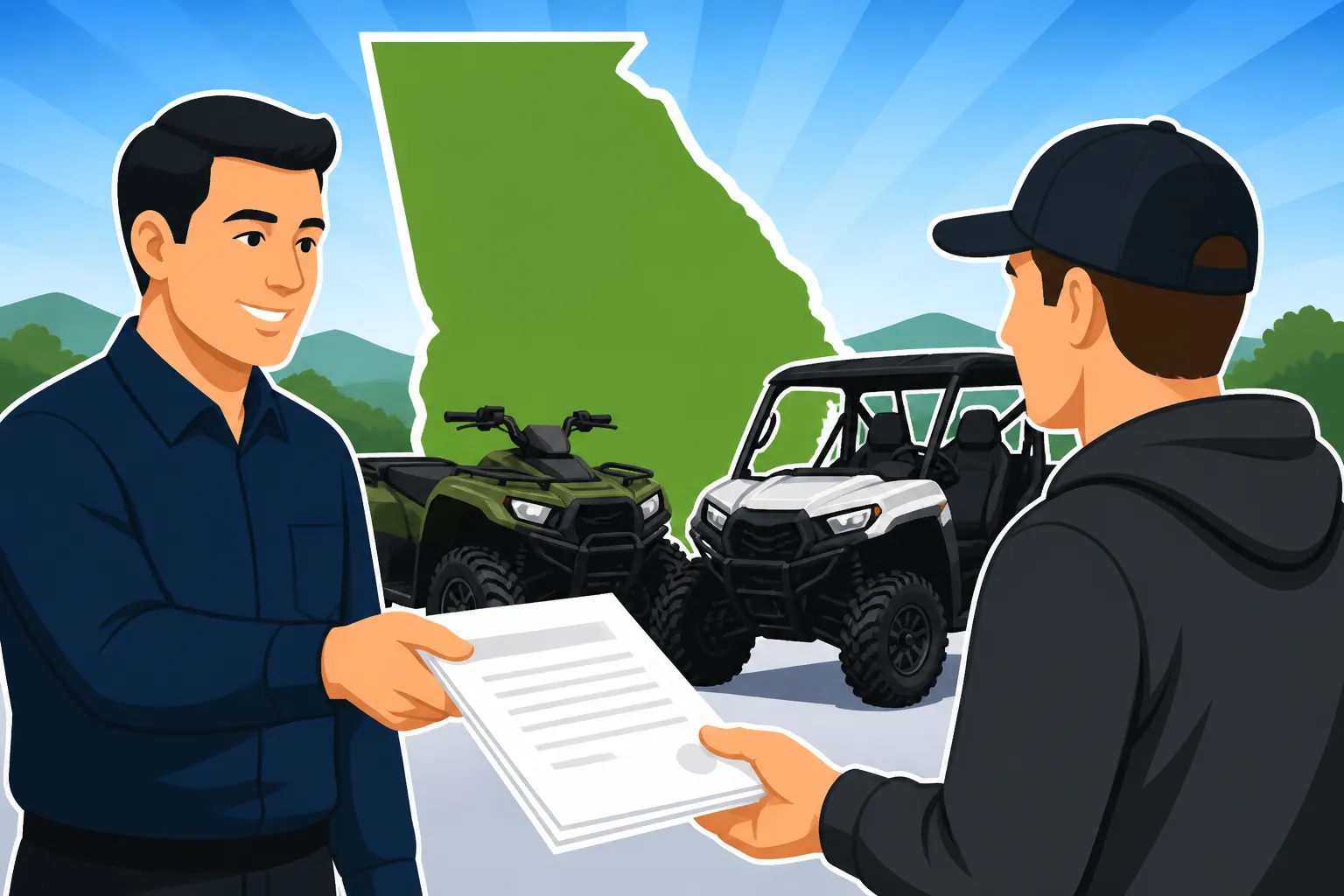
You've finally picked out that perfect UTV for hitting the Georgia trails or getting serious work done on the farm, and the excitement is absolutely buzzing! But before you can load it up and head home, there's that mountain of paperwork a dealer hands you that can feel a little overwhelming. It's not just a stack of papers to sign; each document plays a vital role in your ownership, legality, and future enjoyment of your machine. This guide will walk you through each crucial document so you know exactly what you're signing and why it matters for your Georgia machine.
Navigating the Sales Contract and Financing Agreements
When you're buying a new (or even used) ATV or side-by-side from a dealer in Georgia, the sales contract is arguably the most important document you'll encounter. It's the core agreement that outlines the terms of your purchase. Don't let the excitement of a new machine rush you through reading this carefully. This document details the specific machine you're buying, the agreed-upon price, any trade-in value, and all associated costs.
Decoding Your Bill of Sale and Purchase Agreement
The bill of sale or purchase agreement is the legal document that officially transfers ownership from the dealer to you. It will clearly list the buyer and seller, the vehicle identification number (VIN) of the ATV or UTV, and the final purchase price. This is where you'll see the itemized breakdown of costs, including the base price of the machine, any accessories you've added, dealer fees, and sales tax.
For example, imagine you're purchasing a new Polaris Ranger. The purchase agreement will specify that exact model, its VIN, and the "out-the-door" price. You'll want to cross-reference the VIN on this document with the actual VIN on the machine itself to ensure accuracy. This is also where you'll see if the dealer has included any additional charges, often referred to as "doc fees" or "prep fees." While some of these fees are common, it's always wise to understand what each charge represents. This document also serves as your initial proof of purchase, which you'll need for various steps down the road, especially when it comes to registering your machine in Georgia. You'll also want to pay close attention to the warranty information, as this section will outline any factory warranties or extended service plans that are part of your purchase.
Understanding Financing Contracts and Loan Terms
If you're not paying cash for your new machine, you'll be signing a separate financing contract. This agreement outlines the terms of your loan, including the principal amount (the cost of the machine after any down payment), the interest rate, the loan term (how many months you'll be paying), and your monthly payment amount. Many dealers work with multiple lenders, so you might have options presented to you.
It's absolutely critical to understand every detail of your financing agreement. What's the annual percentage rate (APR)? Are there any prepayment penalties if you decide to pay off the loan early? What happens if you miss a payment? These are all questions you should ask and have answered to your satisfaction before putting your signature on the line. Sometimes, dealers offer promotional financing rates, which can be very attractive, but always ensure you understand the terms after the promotional period ends. For instance, if you secure a loan through the dealership for a Can-Am Defender, the financing paperwork will lay out your responsibilities as a borrower. This document creates a lien on the machine, meaning the lender holds an interest in it until the loan is fully repaid. This lien information will typically be recorded, though in Georgia, since most ATVs and UTVs do not get a traditional title, the process differs slightly from a car.
Essential Proof of Ownership and Manufacturer Information
Beyond the sales and financing contracts, there are crucial documents that establish your ownership and provide key details about the machine itself. These are vital for registration, insurance, and simply understanding what you've bought.
The Manufacturer's Certificate of Origin MCO or MSO
The Manufacturer's Certificate of Origin (MCO) or Manufacturer's Statement of Origin (MSO) is a document issued by the factory that confirms the machine's initial transfer from the manufacturer to the dealer. Think of it as the birth certificate for your ATV or UTV. It contains vital information like the VIN, make, model, year, engine size, and sometimes even the original selling dealer.
In Georgia, because many ATVs and UTVs are not issued a traditional title, the MCO becomes the primary document for establishing the machine's initial lineage and often serves as proof of new ownership for sales tax purposes. When you purchase a new machine, the dealer will typically provide you with the MCO, or at least a copy, as part of your paperwork packet. This document is absolutely vital, especially if you plan to [Registering a Side-by-Side in Georgia] under the new MPOHV (Multipurpose Off-Highway Vehicle) program. Without an MCO for a new machine, proving its origin and ensuring proper initial registration would be incredibly difficult. Ensure that the VIN on the MCO perfectly matches the VIN on your physical machine, as any discrepancy could lead to headaches down the road.
Understanding Georgia's Bill of Sale Requirements
While a formal MCO handles the initial transfer, the dealer will also provide you with a detailed bill of sale. For Georgia's MPOHV registration, even though these machines don't get a traditional title, you still need solid proof of ownership. The bill of sale acts as that crucial link, especially for demonstrating the chain of ownership and for calculating sales tax. [Georgia Sales Tax Paid Before Registration] is a key step, and the bill of sale provides the numbers needed.
The bill of sale provided by the dealer should clearly state the purchase price, any trade-in allowance, and itemize the sales tax collected. This document, alongside your MCO, is what you'll present at your local county tag office if you opt for MPOHV registration. It's not just a receipt; it's a legal declaration of who now owns the machine. If you're ever involved in a private sale of your machine in the future, you'll need to provide a similar document to the new owner, and understanding the dealer's bill of sale now can help you prepare for that. Even though the dealer handles the immediate paperwork, understanding basic legal documents is invaluable. For future private sales or drafting other agreements, resources like LawDepot can provide useful templates for bills of sale and other contracts.
Registration, Tax, and Insurance Paperwork
Beyond proving you own the machine, there are administrative documents tied to getting it legal and insured in Georgia. These forms ensure you comply with state and local regulations for operation and ownership.
Georgia MPOHV Registration Documents
Since December 2023, Georgia has a voluntary registration program for Multipurpose Off-Highway Vehicles (MPOHVs), which primarily applies to side-by-sides and certain other utility-style vehicles. If your new machine meets the specific criteria, the dealer might guide you through some of the initial paperwork or provide you with the necessary forms. You'll need documents like the Manufacturer's Certificate of Origin (MCO), a bill of sale, and proof that sales tax has been paid.
The main form you'll encounter is likely the Georgia Form MV-OHV Affidavit. This form requires specific details about your machine and attests that it meets Georgia's eligibility requirements, such as the [Georgia's 80-Inch Width Limit for Registration] or the [Georgia's 4,000-Pound Gross Weight Ceiling]. Your dealer will typically ensure that the machine they're selling you, if advertised as MPOHV-eligible, does indeed meet these criteria. They may also provide you with a Georgia T-22B Inspection Certification if your machine's VIN needs to be physically verified. While the registration itself is typically handled at your county tag office, the paperwork from the dealer is foundational to the entire process. This is a big change for Georgia riders, as previously, it was simply [Why Georgia Does Not Title an ATV].
Sales Tax and Fee Documentation
When you buy a machine from a dealer, Georgia sales tax is collected at the point of sale. The bill of sale you receive should clearly show the amount of state and any applicable local sales tax collected. This is crucial because proof of sales tax payment is required when you register your MPOHV. Unlike passenger vehicles which pay a Title Ad Valorem Tax (TAVT), off-highway vehicles, since they don't get a traditional title, are subject to the standard state sales tax.
The dealer will provide documentation confirming that the sales tax has been paid. Keep this document safe, as you'll need it when you visit the [Georgia County Tag Office Steps for an MPOHV] to get your MPOHV plate. Without this proof, you wouldn't be able to complete the registration process. Additionally, the dealer may charge specific fees, such as a "documentation fee" or "dealer prep fee." While these are generally allowed, they must be disclosed transparently. You can compare these to the [Georgia Dealer Fees and the Advertised Price Rule] to ensure everything aligns with state regulations. Understanding what each line item represents on your purchase agreement helps prevent any surprises and ensures you're paying exactly what you agreed upon.
Proof of Insurance
For any machine you intend to register and operate on designated public roads in Georgia, you absolutely must carry liability insurance. Dealers typically require proof of insurance before you drive your new machine off the lot, especially if you're taking advantage of the MPOHV registration program. Your insurance company will issue you an insurance card or a declaration page that details your coverage.
This documentation serves as proof that you meet the state's minimum [Georgia Liability Insurance Tied to Registration] requirements. You'll need this proof for the county tag office when registering your machine. Even if you only plan to ride on private land, comprehensive insurance can protect your investment against theft or damage. While the dealer provides the initial purchase paperwork, getting your insurance set up is entirely your responsibility and should be done before you take delivery. Many insurance providers offer specific policies tailored to ATVs and UTVs, so make sure your coverage explicitly covers off-highway vehicles and any road-use endorsements required for MPOHV operation. It's a critical piece of the puzzle for peace of mind and legal compliance.
Here's a quick overview of the key documents you'll typically receive from a Georgia dealer:
| Document Type | Purpose | Significance for Georgia Riders |
|---|---|---|
| Bill of Sale/Purchase Agr. | Legal transfer of ownership; itemizes costs. | Primary proof of ownership; required for MPOHV registration; shows sales tax paid. |
| Manufacturer's Certificate | Proof of origin from the factory. | Critical for establishing new ownership; essential for MPOHV registration as no traditional title is issued. |
| Financing Contract | Outlines loan terms if applicable. | Establishes loan obligations and lender's lien on the machine. |
| Sales Tax Documentation | Proof of collected sales tax. | Absolutely necessary for completing MPOHV registration at the county tag office. |
| T-22B Inspection Cert. | Verification of VIN and machine details. | May be required by the county tag office for MPOHV registration, especially if specific issues arise. |
| Warranty Information | Details manufacturer's warranty coverage. | Protects against defects; crucial for repairs during the warranty period. |
| Owner's Manual | Provides operating instructions, maintenance schedule, and safety info. | Essential for safe operation, proper maintenance, and understanding your machine's capabilities and limitations. |
| Proof of Insurance | Demonstrates liability coverage. | Required for MPOHV registration; protects against financial liability if operating on county roads. |
Additional Dealer Documents and Protections
Beyond the transactional essentials, dealers often provide other valuable documents that offer protections, explain services, or simply provide useful information. Don't overlook these; they can save you time, money, and hassle down the road.
Warranty Information and Extended Service Plans
Most new ATVs and UTVs come with a manufacturer's warranty, and your dealer will provide you with documentation outlining its terms. This typically covers defects in materials and workmanship for a specified period or hour count. It's essential to understand what's covered, what's excluded, and how to make a claim if something goes wrong.
The dealer might also offer extended service plans or warranties. These are optional and come at an additional cost, but they can provide peace of mind beyond the factory warranty period. Before agreeing to an extended plan, carefully review the coverage. What components are included? What's the deductible? Are there any exclusions for specific types of riding or modifications? For example, if you're buying a Yamaha Viking and plan to put a lot of hard work hours on it, an extended service plan might sound appealing. However, make sure it covers the specific components that typically wear out under heavy use. Understanding these documents ensures you're protected and know your options if repairs are needed.
Owner's Manual and Service Records
Every new machine will come with an owner's manual. This isn't just a book to toss in the glove compartment; it's a treasure trove of information about your specific ATV or UTV. It contains critical details about operation, routine maintenance schedules, recommended fluids, and important safety guidelines. Even seasoned riders should skim through the manual for their new machine, as features and maintenance requirements can vary significantly between models and brands.
If you're buying a used machine from a dealer, they might also provide any available service records. These records detail past maintenance, repairs, and inspections performed on the machine. Good service records can be a strong indicator of how well the previous owner (or the dealer) maintained the machine, which is incredibly important for evaluating its condition. When [Buying a Used Side-by-Side in Georgia], knowing the service history can give you a lot of confidence in your purchase and help you anticipate future maintenance needs. Even for a new machine, holding onto your service records, especially for warranty purposes, is a smart move.
Understanding Georgia's Rules for Off-Road Vehicles
While the dealer's paperwork focuses on the sale, it's also worth asking them about Georgia's specific laws and regulations regarding ATVs and UTVs. While they aren't a regulatory body, reputable dealers are usually well-versed in the local laws that affect their customers. They might provide brochures or point you to resources regarding where you can and cannot ride, especially concerning the new MPOHV registration.
Topics like the [Georgia ATV Helmet Law for Riders Under 18] or general [Georgia UTV Road Rules by County] are important for every owner to understand. While dealers don't enforce these rules, they often have insights into what customers commonly ask or what local law enforcement might be emphasizing. Knowing these rules from the outset can help you avoid fines and ensures you're using your new machine responsibly and legally. Consider it an added layer of information that empowers you to fully enjoy your off-road adventures without unexpected legal snags.
Disclaimer
This article is for general informational purposes only and does not constitute professional advice. Laws, prices and regulations vary by location and change over time. Consult a qualified professional for guidance on your specific situation.