Dealer Temporary Operating Documents
Buying a new side-by-side or ATV from a dealership in Georgia can be an incredibly exciting time, full of dreams of tearing up trails or tackling farm chores. But for many, that excitement quickly turns to confusion and even anxiety when it comes to the paperwork. Unlike buying a car, where you often leave with a temporary plate and clear instructions, getting an off-road machine presents a different set of documents and rules, especially with Georgia’s unique new MPOHV registration. This guide will cut through the noise and explain exactly what "dealer temporary operating documents" mean for your new ATV or UTV in Georgia, so you can leave the lot confident and ready to roll (legally, of course!).
Understanding Temporary Operating Documents for MPOVHs in Georgia
When you purchase an off-road machine from a dealership in Georgia, the concept of "temporary operating documents" doesn't quite align with what you might expect if you were buying a passenger car. For cars, a temporary operating permit typically means a paper tag that allows you to drive the vehicle on public roads while you await your permanent license plate and registration. However, off-road machines like ATVs and UTVs exist in a different regulatory space in Georgia, which fundamentally changes what "temporary documents" look like.
What "Temporary Operating Documents" Really Mean for ATVs and UTVs
In the world of Georgia off-road machines, there isn't a direct equivalent to the temporary paper license plate you'd get for a car. The primary reason for this difference lies in how these vehicles are traditionally used and the recent, voluntary nature of their road registration. Historically, ATVs and UTVs were not designed or intended for public road use, and thus, state laws didn't create temporary road-use permits for them.
With the introduction of Georgia's Motorized Play Vehicle and Off-Highway Vehicle (MPOHV) registration, which [Georgia MPOHV Registration Started December 2023], the landscape has shifted slightly, but the core distinction remains. Since MPOHV registration is [Georgia MPOHV Registration Is Voluntary], dealers are not mandated to issue a temporary tag for road use upon sale. Instead, your "temporary operating documents" are almost entirely focused on proving ownership and facilitating the eventual voluntary registration process, should you choose to pursue it. Think of these documents as your proof of purchase and a temporary record of who owns the machine until a more formal registration, if any, is completed. It’s crucial to understand this distinction: you won't be driving your new UTV off the lot with a temporary paper license plate affixed, ready for the county roads. The temporary documents are for ownership, not for immediate road access.
The Importance of Your Bill of Sale and Dealer Invoice
When you buy a new ATV or UTV, the cornerstone of your temporary operating documents will be the official bill of sale and the detailed dealer invoice. These aren't just receipts; they are critical legal instruments that establish your ownership and the terms of the sale. Without these, you'd have no official proof that the machine is yours, which could lead to significant headaches down the road, especially if you ever need to register it or prove ownership in a dispute.
Your bill of sale should meticulously detail the purchase, including the full legal names and addresses of both the buyer and the seller (the dealership), the date of the transaction, and the full sale price. Most importantly, it must include the complete Vehicle Identification Number (VIN) of the ATV or UTV you are purchasing. This VIN is the unique identifier for your machine, much like a social security number for a person. Any accessories, extended warranties, or service plans should also be clearly itemized. The dealer invoice will likely break down these costs even further, showing the base price, any added features, freight charges, setup fees, and of course, the [Georgia Sales Tax Paid Before Registration]. Keep these documents in a safe place, both a physical copy and a digital one if possible. They are your primary form of temporary ownership proof. For those engaged in private sales, or even if you want an extra layer of documentation, services like LawDepot offer customizable bill of sale templates that ensure all necessary information is captured, providing peace of mind whether you're buying or selling. While a reputable dealer will have their own robust forms, understanding what goes into a solid bill of sale is always beneficial.
What Dealers Can and Cannot Provide for MPOHV Temporary Road Use
It's common for buyers to confuse the process of buying a car with buying an MPOHV, especially when it comes to temporary road use. The critical difference in Georgia lies in the purpose and nature of these vehicles and their associated registration laws. A dealer's role in providing temporary operating documents reflects these distinctions.
The Reality of Temporary Plates and Stickers
Let's be clear: a Georgia dealership will not provide you with a temporary paper license plate or sticker for immediate road use on your newly purchased ATV or UTV. This is perhaps the biggest misconception buyers face. For passenger cars, temporary tags are standard because all cars must be registered to be legally driven on public roads. However, for off-road machines, [Georgia MPOHV Registration Is Voluntary]. This means there isn't a mandatory registration process that necessitates a temporary tag from the dealership to get you onto county roads immediately.
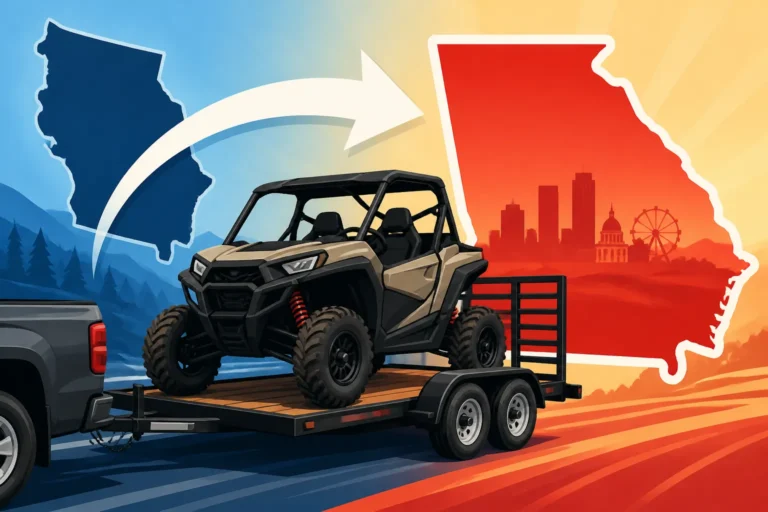
The machine you just bought is primarily intended for off-road use, private property, or designated trails. While the MPOHV registration does allow for limited county road access, it's a separate, optional process you undertake at your local [Georgia County Tag Office Steps for an MPOHV] after the purchase. The dealer's responsibility concludes with providing you the necessary paperwork to prove ownership, pay sales tax, and then giving you the option to pursue the MPOHV registration yourself. Expect to trailer or haul your new UTV or ATV home, not drive it on public roads straight from the lot.
Essential Paperwork for Transporting Your New Machine
Even though you won't get a temporary road-use tag, the paperwork you receive from the dealer is absolutely essential for legally transporting your new machine home. When you hook up your trailer or load your new ATV into the bed of your truck, you need to be able to prove that you are the rightful owner of that machine.
The key documents for transportation include your official bill of sale, the dealer invoice, and potentially any proof of payment. These documents serve as your "temporary operating documents" for the purpose of proving legal ownership during transit. Should you be pulled over or encounter any questions from law enforcement while transporting the machine, presenting these documents will verify that the ATV or UTV is legitimately yours and that you have recently acquired it from a licensed dealer. It's also a good idea to have proof of insurance, even if it's just your current vehicle's liability insurance covering your trailer and its contents. While not strictly required for an MPOHV if it's not being ridden on public roads, it's always wise for peace of mind. Ensure all the VINs on your paperwork match the VIN on the machine perfectly. Discrepancies here can cause significant delays and legal issues.
Your Responsibilities After Leaving the Dealership
The moment you drive away from the dealership, the ball is firmly in your court regarding what comes next for your new ATV or UTV. The temporary documents you received are just the beginning; your subsequent actions will determine if and how your machine can be legally operated on certain public roads.
Securing Permanent Registration (If Desired)
If you plan to utilize the new MPOHV road access privileges in Georgia, then securing permanent registration for your ATV or UTV is your next big step. Remember, this registration is entirely voluntary, meaning you don't have to register your machine if you only intend to ride it on private land or designated trails. However, if you envision traversing county roads, this process becomes crucial. You'll take your dealer-provided paperwork, along with a few other items, to your local county tag office.
The main document you'll need from the dealer is the manufacturer's statement of origin (MSO) or manufacturer's certificate of origin (MCO), which is basically the "birth certificate" for your machine. Along with this, you'll need your bill of sale, proof of Georgia residency, and evidence that you've paid Georgia sales tax. The county tag office will also require a completed Form MV-OHV, which is the official application for MPOHV registration. You might also need a [Georgia T-22B Inspection Certification] if the machine has any questionable VIN issues or has been rebuilt, though this is less common for new machines from a dealer. Upon successful registration, you'll be issued specific [Georgia Plates for Off-Highway Vehicles] and a decal. The [Georgia MPOHV Registration Cost] is typically an annual fee, so budget for that as well. Understanding these steps early on, often before you even buy the machine, can save a lot of frustration.
Understanding Sales Tax and Its Implications
One of the non-negotiable responsibilities immediately following your purchase is the proper handling of Georgia sales tax. Unlike some states where sales tax is collected at the point of registration, Georgia typically requires sales tax on ATVs and UTVs to be collected by the dealer at the time of sale. This is a critical distinction from the way ad valorem tax (TAVT) works for titled vehicles in Georgia, which does not apply to untitled machines like most ATVs and UTVs.
The dealer will calculate the 4% state sales tax, plus any applicable local sales taxes, and include this in your "out-the-door" price. It's imperative that you ensure this is accurately reflected on your dealer invoice and bill of sale. If you were to purchase a machine in a private sale, you would be responsible for calculating and remitting the sales tax yourself, usually to the county tag office when attempting to register. However, when buying from a dealer, they handle this for you. Your paperwork should clearly indicate that sales tax has been collected. This proof is essential if you decide to pursue MPOHV registration, as the tag office will verify that the sales tax has been paid. Having thorough documentation of this payment, perhaps even leveraging a LawDepot-style custom invoice if you're doing a complex transaction with multiple items, can reinforce your legal standing for future processes. Without proof of sales tax payment, your MPOHV registration could be significantly delayed or denied.
Common Dealer Practices and What to Expect
Navigating a dealership can sometimes feel like walking through a minefield of jargon and extra costs. Understanding common dealer practices, especially when it comes to the pricing and final handover of your new ATV or UTV, is crucial for a smooth buying experience and for preparing for your next steps with temporary operating documents.
The "Out-the-Door" Price Breakdown
When you're quoted an "out-the-door" price for an ATV or UTV, it’s not just the sticker price of the machine. This all-encompassing figure includes a variety of charges that dealers commonly apply. Knowing what these are and why they exist can help you understand your temporary operating documents and ensure you're getting a fair deal.
Typically, the "out-the-door" price will include:
- MSRP/Sale Price: The base price of the ATV or UTV itself.
- Freight/Shipping Charge: This covers the cost of transporting the machine from the manufacturer to the dealership. It's a legitimate cost, as these machines don't drive themselves to the lot!
- Setup/Prep Fee: Dealers often charge a fee for uncrating the machine, assembling it, performing initial fluid checks, and ensuring it's ready for sale.
- Sales Tax: As discussed, [Georgia Sales Tax on an ATV Purchase] is collected at the point of sale by the dealer.
- Dealer Fees: Sometimes called "doc fees" or "administrative fees," these cover the cost of preparing paperwork and other administrative overhead. Georgia has specific rules regarding [Georgia Dealer Fees and the Advertised Price Rule], so it's good to be aware that these should generally be included in the advertised price.
- Accessories/Upgrades: Any aftermarket parts, winches, roofs, windshields, or other add-ons you purchase will be itemized here.
- Extended Warranties/Service Contracts: If you opt for additional protection beyond the manufacturer's warranty, these costs will be added.
Make sure every single one of these items is clearly broken down on your invoice. Don't hesitate to ask for explanations for any charge you don't understand. A transparent dealer will be happy to walk you through each line item, ensuring your temporary operating documents (the invoice and bill of sale) accurately reflect the full transaction.
What to Verify Before You Drive Off
The excitement of getting your new machine often makes people rush, but taking a few extra minutes before you leave the dealership can save you immense frustration later. This final check is about ensuring your temporary operating documents perfectly match the machine you're taking home and that you have everything you need for the next steps, whether that's simply riding on private land or pursuing MPOHV registration.
Here’s a checklist of what to verify:
- VIN Verification: Double-check that the VIN listed on your bill of sale, dealer invoice, and MSO/MCO exactly matches the VIN stamped on the frame of your ATV or UTV. A single digit or letter mismatch can make future registration impossible and complicate ownership proof.
- Machine Details: Confirm the year, make, model, and color of the machine on all paperwork are correct.
- Accessories Listed: Ensure all accessories you purchased and had installed are itemized on the invoice. This protects you if there's a dispute later.
- Copies of All Paperwork: Make sure you receive original copies (or certified copies) of the bill of sale, dealer invoice, and especially the Manufacturer's Statement of Origin (MSO) or Manufacturer's Certificate of Origin (MCO). The MSO/MCO is critical for any future registration.
- Payment Confirmation: Get clear confirmation that all payments have been processed and that you owe nothing further to the dealership.
- Owner's Manual/Keys: Don't forget these! The owner's manual contains vital information about maintenance and operation.
Take your time during this final review. If anything looks incorrect or is missing, address it with the dealer before you sign off and leave. Once you drive off the lot, making corrections can be much more challenging. Using resources like LawDepot can even help you create a personal checklist or supplementary legal documents if you feel the need for additional verification beyond the dealer's standard paperwork. It's about empowering yourself with knowledge and documentation.
Georgia MPOHV Temporary Operating Documents: A Comparison
To further clarify the distinction, let's look at what a buyer typically receives for a car versus what you'll get for an MPOHV from a Georgia dealer.
| Feature | Car Buyer (Georgia) | MPOHV Buyer (Georgia) |
|---|---|---|
| Temporary Road Use Permit | Yes, a temporary paper tag is issued. | No, a temporary road-use tag is not issued. |
| Primary Proof of Ownership | Bill of Sale, Title Application, Temporary Tag. | Bill of Sale, Dealer Invoice, Manufacturer's Statement of Origin (MSO/MCO). |
| Sales Tax Payment | Collected by dealer, or paid to DOR with TAVT. | Collected by dealer at time of sale. |
| Immediate Road Use | Yes, with temporary tag, while awaiting permanent plate. | No, machine must be trailered/hauled; MPOHV registration is a separate, voluntary step for county road access. |
| Registration Process | Mandatory, dealer often handles initial paperwork for permanent tag. | Voluntary, buyer initiates at county tag office if desired. |
| Lienholder Information | Included on temporary tag application and title. | Reflected on Bill of Sale if financed, but no state "title" for lien recording. |
This table clearly illustrates why the temporary operating documents for an MPOHV focus more on ownership proof and less on immediate road-legal status. It highlights the importance of keeping your dealer-issued MSO/MCO and bill of sale safe, as they are your essential first steps for any future [Georgia MPOHV Registration] process. If you're looking for additional resources on verifying vehicle ownership, especially when considering [Buying a Used Side-by-Side in Georgia] from a private seller, having comprehensive documentation like that provided by LawDepot can be incredibly helpful.
Disclaimer
This article is for general informational purposes only and does not constitute professional advice. Laws, prices and regulations vary by location and change over time. Consult a qualified professional for guidance on your specific situation.