Why Handlebars Disqualify a Machine
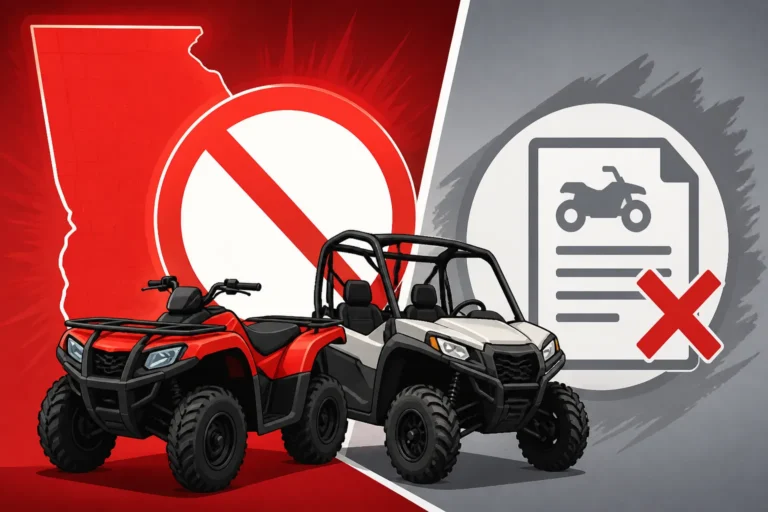
It's incredibly frustrating when you get your heart set on using your favorite ATV or dirt bike for quick trips down the county road, only to find out that Georgia's registration rules put a hard stop on those plans. Many riders discover, often at the county tag office, that their machine with handlebars is automatically disqualified from receiving a Multipurpose Off-Highway Vehicle (MPOHV) registration plate. This guide will walk you through the specific reasons why handlebars are a deal-breaker for road registration in Georgia and what options remain for your machine.
The Foundational Disqualification: Steering Mechanism
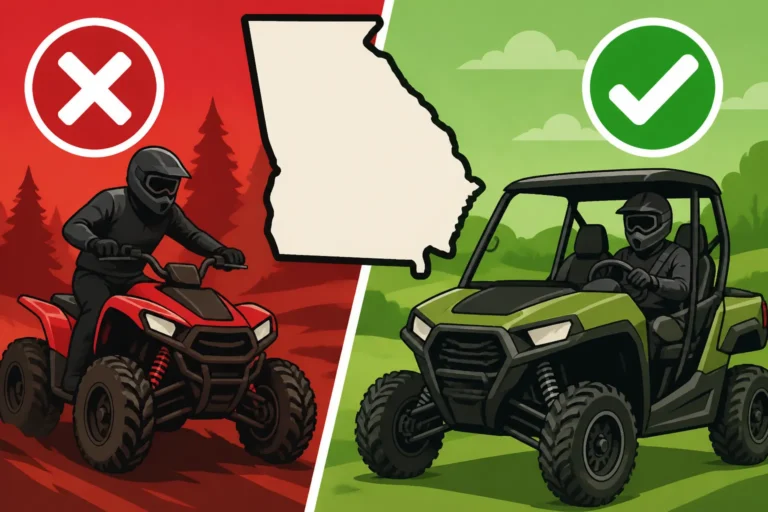
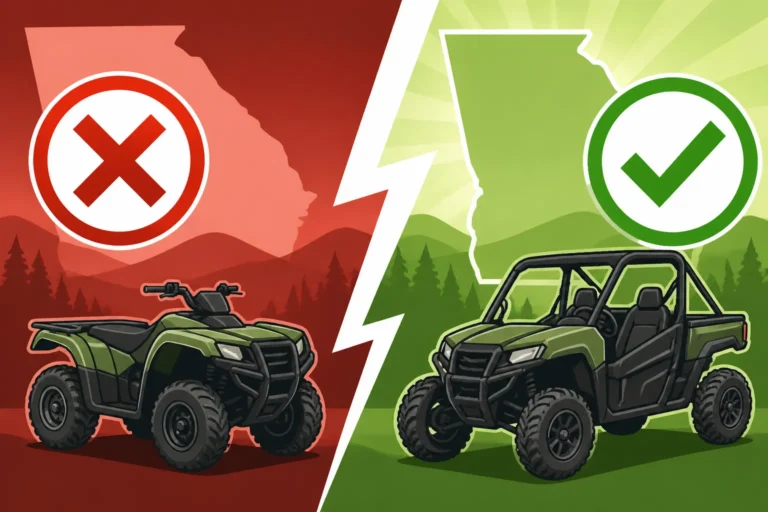
When Georgia created the MPOHV registration class, it wasn't just about giving side-by-sides a plate; it was about defining a specific type of off-highway vehicle that met certain criteria deemed necessary for limited road use. The steering mechanism is right at the top of that list, and it immediately separates traditional ATVs and dirt bikes from the MPOHV category.
What is an MPOHV, Anyway?
First, let's clarify what an MPOHV actually is in the eyes of Georgia law. MPOHV stands for "Multipurpose Off-Highway Vehicle," and it's a specific classification created to allow certain utility-style machines, primarily side-by-sides or UTVs, to legally operate on county roads within the state. These aren't your typical recreational quads or dirt bikes. The legislation was crafted with very particular vehicle characteristics in mind, and the steering mechanism is one of the most visible and important distinctions.
The core intent was to provide a legal pathway for machines that resemble small cars or trucks in their operational feel, rather than motorcycles or traditional ATVs. This distinction is crucial because it frames all the other requirements. If your machine doesn't fit this fundamental definition, especially regarding how it's steered, it simply won't qualify, no matter how many other boxes it might tick. It's a common point of confusion and frustration for riders who see their ATV as a perfectly capable machine, but the law draws a very specific line in the sand.
Steering Wheel vs. Handlebars: A Fundamental Design Split
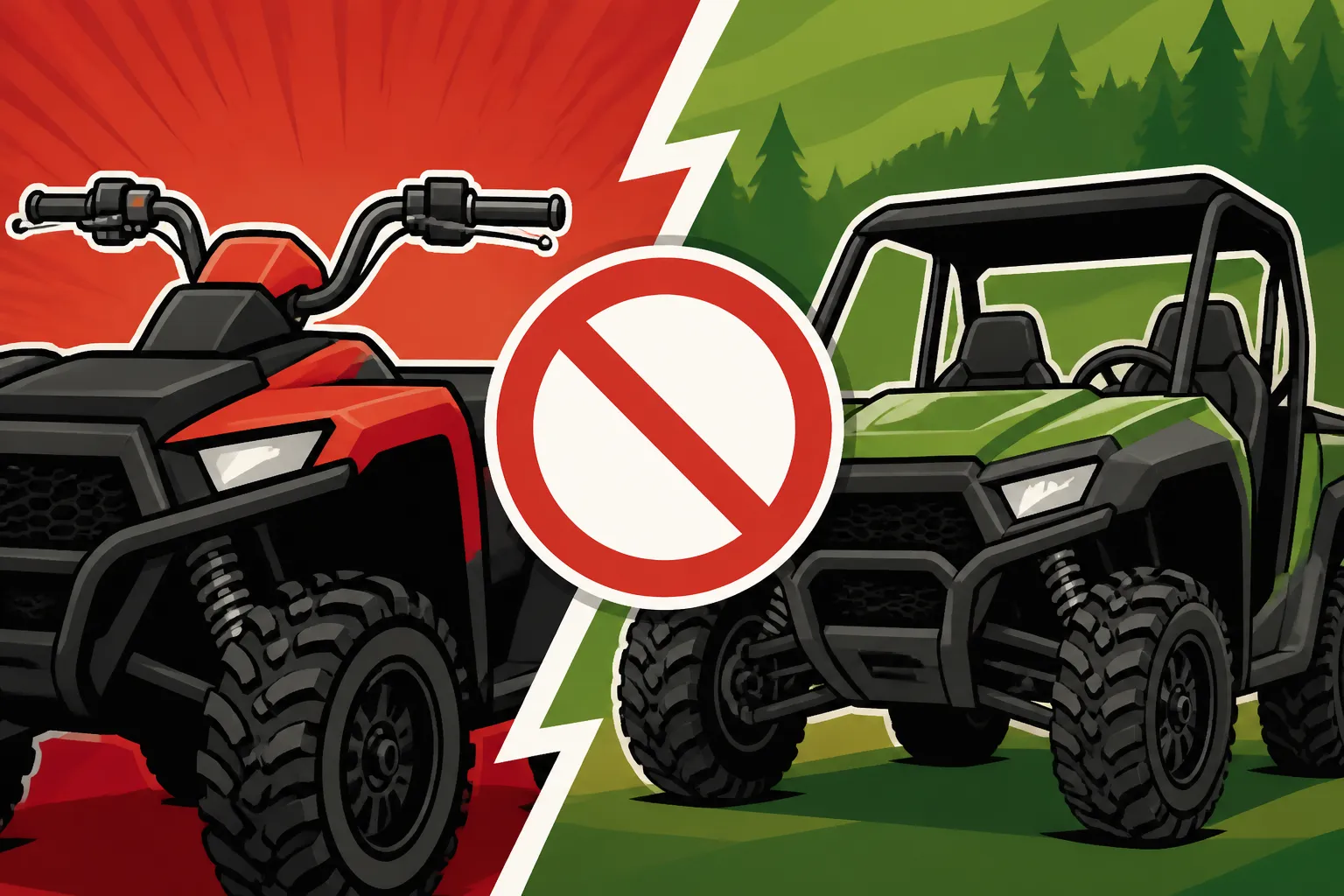
The most immediate and obvious difference between a machine that can be registered as an MPOHV and one that cannot is the method of steering. Georgia's MPOHV rules specifically require a steering wheel, not handlebars. This isn't just an arbitrary detail; it reflects a fundamental design philosophy and operational characteristic.
Think about the difference in how you interact with a steering wheel versus handlebars. A steering wheel is typically operated with both hands, allowing for fine motor control and often requiring less upper body input for small corrections. It's associated with a seated, contained posture, much like a car. Handlebars, on the other hand, demand a more active, dynamic body position, often involving leaning and shifting weight to help steer. This is perfectly suited for aggressive off-road riding, navigating tight trails, or performing precise maneuvers at lower speeds. However, for sustained operation on paved or gravel county roads, especially in potential traffic scenarios, the legislative view is that a steering wheel offers a more controlled and predictable experience. This requirement is so central that it's often the first thing a county tag office will check, and it's why [Georgia Requires a Steering Wheel, Not Handlebars] is a non-negotiable part of the MPOHV definition.
Safety, Control, and the Legislative Rationale
The decision to exclude handlebar-steered machines from MPOHV registration isn't arbitrary. It's rooted in considerations of safety, vehicle control, and the inherent design differences between various off-highway vehicles, particularly when they interact with public roadways and other traffic.
Stability and Control on Paved Surfaces
Machines with handlebars, such as ATVs and dirt bikes, are primarily designed for off-road environments. Their suspension, tire characteristics, and steering geometry are optimized for uneven terrain, mud, dirt, and obstacles. While they can certainly travel on paved surfaces, their handling can be significantly different and potentially less stable than a steering wheel-equipped side-by-side or UTV, especially at sustained speeds.
A side-by-side (UTV) generally has a wider track width and a lower center of gravity compared to a typical ATV, which contributes to greater stability on a flat, hard surface. The seating position in an MPOHV also typically places the driver lower within the vehicle's chassis, further enhancing stability. When you're driving on a county road, even a dirt one, you need predictable steering and stability, particularly if you encounter unexpected road conditions, a sudden curve, or other vehicles. The design of handlebar-steered machines, while excellent for their intended purpose, is often seen as less conducive to these demands. Emergency braking or swerving maneuvers, for instance, can be handled differently on a machine designed for carving dirt trails versus one intended for more stable, controlled road travel.
Driver Posture and Occupant Protection
Another critical factor that intertwines with the handlebar requirement is the driver's posture and the associated occupant protection features. On a handlebar-steered ATV or dirt bike, the operator typically straddles the machine, exposed to the elements and potential impacts. There are no built-in roll cages or automotive-style safety restraints beyond a helmet. This is precisely why Georgia's MPOHV rules stipulate [Why Georgia's MPOHV Rules Demand a Non-Straddle Seat] as well.
In contrast, MPOHVs like side-by-sides almost universally feature bucket or bench seating, often within a protective roll-over protective structure (ROPS). This design allows for the installation and effective use of safety belts, which are a mandatory requirement for MPOHV registration. It's a fundamental safety difference: [Georgia Requires Seat Belts on a Registered Machine] for road use, a feature that is impractical, if not impossible, to implement effectively on a machine where the operator straddles the engine and frame. The legislature clearly aimed to create a class of vehicles for road use that offered a higher degree of occupant containment and protection, much closer to that of a conventional passenger vehicle, even if simplified. The handlebar steering and straddle seat go hand-in-hand in disqualifying machines from this safety-oriented registration class.
Practical Implications and Alternatives for Handlebar Machines
So, if your machine has handlebars, what does this mean for you, and what are your options for enjoying your off-road vehicle in Georgia? The answer is clear: for road registration, machines with handlebars are simply out of luck. However, that doesn't mean your riding days are over; it just means they'll be limited to specific environments.
Your Options When Registration Isn't Possible
The first, and most important, thing to understand is that if your ATV or dirt bike has handlebars, it cannot be legally registered for use on Georgia's public roads as an MPOHV. This is a hard rule, and there are no workarounds for this specific requirement. So, where can you ride your cherished machine?
Your primary avenues for enjoying a handlebar-equipped off-road vehicle are private land and designated off-road trail systems. Georgia boasts some fantastic places where ATVs and dirt bikes are not only welcome but celebrated. Locations like the Chattahoochee-Oconee National Forest offer multiple OHV trail systems, and there are numerous private parks across the state designed specifically for this type of riding. Exploring [Georgia ATV Trails: Where You Can Legally Ride] should be your first step to finding exciting and legal places to ride. Even on private property, it's wise to remember Georgia's [Georgia ATV Helmet Law for Riders Under 18], which mandates helmet use for younger riders, regardless of where they are operating the machine.
When you're dealing with private land use, especially if you're buying or selling a machine that won't be registered, accurate documentation of ownership is still vital. A clear bill of sale or ownership affidavit protects both parties. Tools like LawDepot can be incredibly helpful for generating legally sound documents that ensure you have proof of purchase or sale, even if a formal title or registration isn't part of the transaction. This ensures that disputes over ownership are minimized down the line, regardless of the machine's street legality.
Understanding the Road Rules: Where You Can't Go
Because ATVs and dirt bikes cannot obtain MPOHV registration due to their handlebars (among other reasons), their use on Georgia's public roads is severely restricted, if not entirely prohibited, except for very specific and limited circumstances, such as crossing a road at a designated point or for certain agricultural uses under strict conditions. Attempting to ride your handlebar-steered machine on county roads, state highways, or even in most city limits can lead to serious legal repercussions.
Law enforcement officers in Georgia are increasingly aware of the distinctions between different off-highway vehicles and their legal operating environments. If you're caught riding an unregistered ATV or dirt bike on a public road, you could face significant consequences, including fines, impoundment of your vehicle, and other legal penalties. It's important to be aware of [Georgia Penalties for an Unregistered Road Machine] before you take a chance. This is a very different set of rules than what applies to [Georgia Golf Cart Laws and PTV Ordinances], which allow for specific types of low-speed vehicles in designated communities, but these laws do not extend to ATVs or dirt bikes. The bottom line is: if it has handlebars, keep it off the paved and unpaved public roads in Georgia, unless explicitly allowed by specific local ordinances for very short, controlled crossings, or for agricultural exemptions.
The MPOHV Eligibility Checklist and the Handlebar Hurdle
The handlebar requirement is a major component of Georgia's MPOHV eligibility, but it's important to recognize that it's part of a broader set of criteria. Your county tag office will apply a comprehensive checklist to determine if a machine qualifies.
Beyond Handlebars: Other Disqualifiers
While the handlebars are often the most immediate visual disqualifier for ATVs and dirt bikes, it's rare that they are the only reason a machine fails the MPOHV test. The legislative intent behind MPOHV registration was to enable a specific type of vehicle, primarily side-by-sides, for limited road use. As such, the rules are designed to ensure these machines have certain safety and functional characteristics that ATVs and dirt bikes simply don't possess.
For example, beyond the steering wheel, an MPOHV must also have a non-straddle seat. [Why Georgia's MPOHV Rules Demand a Non-Straddle Seat] goes hand-in-hand with the steering wheel, promoting a more contained and protected rider posture. Furthermore, MPOHVs have specific dimensional requirements. They cannot exceed [Georgia's 80-Inch Width Limit for Registration], which most ATVs easily meet, but MPOHVs also have a maximum gross vehicle weight of [Georgia's 4,000-Pound Gross Weight Ceiling] and a payload capacity requirement of at least [Georgia's 350-Pound Payload Requirement]. Many traditional ATVs, especially single-rider models, might struggle to meet the payload minimum, as they are not designed to carry multiple passengers or substantial cargo in the way a UTV is.
These, along with other requirements like headlights, brake lights, mirrors, and specific speed ranges, form the complete [Georgia MPOHV Eligibility: The Eight-Point Test]. An ATV or dirt bike with handlebars typically fails multiple points on this comprehensive test, making road registration an impossibility. This integrated approach ensures that only machines meeting a full suite of safety and design standards are granted road access.
What to Do If You're Unsure
It's natural to feel confused or uncertain about your specific machine, especially with all these different rules and classifications. The best course of action if you own a machine you think might qualify, or if you simply want definitive answers, is to visit your local county tag office. They are the ultimate authority for MPOHV registration in Georgia.
Before you go, gather as much information as possible about your machine. Bring photos, the manufacturer's specifications (especially for width, weight, and payload), and any ownership documents you have, such as a bill of sale. Even if your machine ultimately has handlebars and doesn't qualify, understanding the specific reasons from the tag office can provide clarity. If you're in the process of buying or selling any off-road machine, whether it qualifies for road registration or not, ensure you have proper documentation. A well-drafted bill of sale is crucial for proving ownership and can be easily created using online services like LawDepot, which can help you fill out forms correctly, including details that might be needed for the [Georgia Form MV-OHV and What It Asks] if you were able to register. Knowing exactly why your machine does or doesn't meet the criteria will help you make informed decisions about where and how you can ride safely and legally in Georgia.
Disclaimer
This article is for general informational purposes only and does not constitute professional advice. Laws, prices and regulations vary by location and change over time. Consult a qualified professional for guidance on your specific situation.