Why No Title Means No TAVT
It’s a common moment of head-scratching for folks in Georgia when they go to buy a new off-road machine, or even a used one. You hear all about the Title Ad Valorem Tax, or TAVT, when you buy a car or truck, and it can feel like a pretty hefty chunk of change. Then you get to the ATV or UTV purchase, and suddenly, the TAVT conversation disappears. It's confusing, right? This guide is here to clear up that mystery, explaining exactly why Georgia’s off-highway vehicles don’t get hit with TAVT, what tax you do pay, and what all this means for you.
Demystifying TAVT: Georgia's Vehicle Tax System
For years, Georgians bought a vehicle, paid sales tax, and then faced an annual ad valorem tax bill based on the vehicle's value. It was a predictable system, but also a recurring cost that many found burdensome. The state eventually revamped this entire process for most on-road vehicles, introducing TAVT as a way to streamline things and collect tax revenue upfront.
What is the Title Ad Valorem Tax (TAVT)?
The Title Ad Valorem Tax, or TAVT, was introduced in Georgia to simplify the vehicle tax structure. Essentially, it's a one-time tax paid when you title a vehicle in Georgia, and it replaces both the traditional sales tax you would have paid at the dealership and the annual ad valorem property tax that used to arrive in your mailbox every year. The idea was to make the cost of vehicle ownership more transparent, paying a significant chunk upfront to avoid those ongoing annual fees. For most cars and trucks, this means you pay a percentage of the vehicle's fair market value when you first get the title, and then you're done with property tax on that specific vehicle forever. You can learn more about the specifics of the tax in [What TAVT Is and Why It Exists].
Think of it like this: imagine you're buying a new pickup truck. Instead of paying sales tax on the purchase price and then getting a separate property tax bill for that truck every December, you pay the TAVT at the county tag office when you register and get your tag. This single payment covers both those previous taxes. The rate is set by the state and applied to the fair market value, which can sometimes be the purchase price or an assessed value if the purchase price seems unusually low or high. It’s a system designed for longevity and to ensure the state gets its due on vehicles that are going to be on the road for years.
The "Titled" Connection: Why TAVT Depends on a Title
Here's the crucial link: TAVT is only applied to vehicles that are required to be titled in Georgia. The very name, Title Ad Valorem Tax, tells you everything you need to know. It's tied directly to the process of obtaining a Georgia Certificate of Title. Without a title, there's no mechanism in place for the state to levy and collect TAVT. The Georgia Department of Revenue, through its Motor Vehicle Division, uses the titling process as the trigger for TAVT collection, ensuring that every vehicle entering the formal state registry pays its share.
This distinction is incredibly important when you start looking at off-road vehicles. If a machine doesn't meet the state's criteria for a vehicle that needs a title, then it simply falls outside the TAVT system. This isn't a loophole; it's a fundamental aspect of how the tax was designed. The state determined which types of vehicles would be subject to this new tax, and those were generally vehicles designed and typically used for public road travel. Anything else, by definition, would be treated differently for tax purposes. This is why [Why TAVT Cannot Touch an Untitled Machine] is such a critical concept for off-road enthusiasts.
The Georgia ATV & UTV Titling Conundrum
For a long time, the status of ATVs and UTVs in Georgia was pretty straightforward: they were considered off-road machines, pure and simple. This designation meant they operated under a different set of rules compared to cars, trucks, and motorcycles, especially when it came to paperwork. This historical classification is at the heart of why they aren't subject to TAVT.
Why Most Off-Road Vehicles Don't Get a Title in Georgia
Traditionally, ATVs (All-Terrain Vehicles) and UTVs (Utility Terrain Vehicles), also commonly known as side-by-sides, have not been issued titles by the state of Georgia. The state's Department of Revenue (DOR) has classified these machines primarily as "off-highway vehicles" or "recreational vehicles" not intended for public road use. Because they weren't designed or legally permitted for general public highway travel, they didn't fit into the existing titling framework for motor vehicles. This meant that while you needed a title for your car, motorcycle, or boat, your quad or side-by-side was in a different category.
This lack of a formal state title stems from their intended purpose and design. Most ATVs are designed for single-operator, straddle-seat riding with handlebars, ideal for rough terrain but not suitable for road safety standards like those for cars. UTVs, while often resembling small cars with steering wheels and bench seats, were still largely seen as tools for farm work, hunting, or recreational trail riding, rather than a primary mode of transportation on paved roads. This historical perspective is precisely [Why Georgia Does Not Title an ATV]. It was a clear delineation between on-road and off-road applications, and that distinction carried significant implications for documentation and taxation.
Proof of Ownership Without a Title
So, if you don't have a title for your ATV or UTV, how do you prove you own it? This is where other forms of documentation become paramount. For new machines, the Manufacturer's Statement of Origin (MSO) or Manufacturer's Certificate of Origin (MCO) serves as the initial proof of ownership. This document essentially acts as the "birth certificate" for the vehicle, indicating who the manufacturer sold it to first, usually a dealer. When you buy a new machine, the dealer provides you with this MSO/MCO, which you then keep.
For used machines, a well-executed bill of sale becomes your primary document. This isn't just a scribble on a napkin; a proper bill of sale should include the buyer's and seller's names and addresses, the vehicle identification number (VIN), the make, model, year, purchase price, and the date of sale. It should also ideally state that the machine is sold "as-is" and that the seller warrants they have the right to sell it. Many people find it helpful to use templates from reputable sources like LawDepot to ensure all the necessary information is included, protecting both buyer and seller. This careful documentation is crucial for [Proving You Own an ATV in Georgia Without a Title] and helps prevent future disputes about who truly owns the machine. It's your paper trail, so make sure it's clear and complete.
The New MPOHV Registration and Its Impact on TAVT
Georgia recently introduced a new registration system for a specific class of off-highway vehicles, the Multi-purpose Off-Highway Vehicle (MPOHV). This development has definitely added a layer of complexity and confusion for many owners. It's natural to wonder if this new registration changes the TAVT situation.
Understanding the New MPOHV Registration
As of late 2023, Georgia implemented a voluntary registration program for MPOHVs, which are essentially side-by-sides or UTVs that meet certain criteria to be driven on designated county roads and cross state highways at specific points. This was a game-changer for many owners who wanted limited road access for their machines, particularly for agricultural, recreational, or hunting purposes. This registration allows owners to obtain a special license plate, which signals to law enforcement that the machine is authorized for these limited road uses.
To qualify for MPOHV registration, a side-by-side must meet a specific eight-point test, covering everything from width and weight limits to speed capabilities, the presence of seat belts, a steering wheel (not handlebars), and even its manufacture date. It's a comprehensive checklist designed to ensure some level of safety and suitability for road interaction. You can read more about the intricacies of this new system in [Georgia MPOHV Registration Explained] and delve into why it [Georgia MPOHV Registration Started December 2023]. This is a distinct process, separate from traditional vehicle titling, and it aims to bridge the gap for utility vehicles that are increasingly versatile.
Why MPOHV Registration Still Doesn't Trigger TAVT
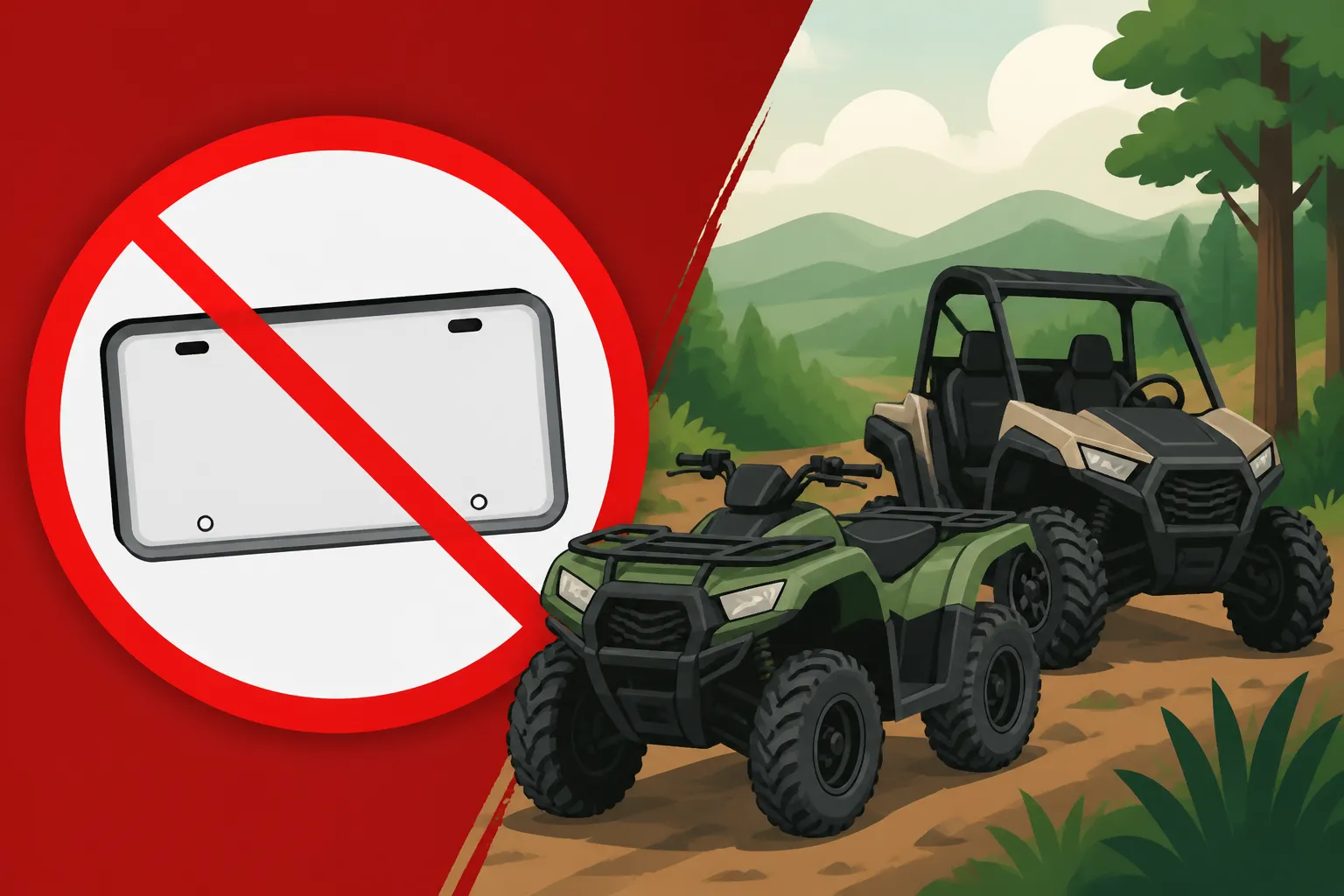
Despite the introduction of MPOHV registration, and the issuance of a license plate, these machines still do not fall under the TAVT umbrella. Why? Because the MPOHV registration process is just that – a registration – and not a titling process. The state of Georgia still does not issue a Certificate of Title for these off-highway vehicles, even if they qualify for the MPOHV registration and receive a special license plate.
The core distinction remains the legal classification. The state views MPOHVs, even registered ones, differently from standard motor vehicles that are designed and intended primarily for highway use and which require a title. The TAVT law is explicitly tied to the act of titling a vehicle. Since an MPOHV doesn't receive a title, the mechanism for collecting TAVT simply isn't activated. Therefore, owners who register their side-by-sides under the MPOHV program will still pay standard sales tax (as described in the next section) on their purchase, but they will bypass the TAVT. This is the fundamental reason Why No Title Means No TAVT continues to hold true for these newly registered machines.
Navigating Sales Tax for Untitled Off-Road Machines
Since TAVT doesn't apply to ATVs and UTVs in Georgia, what tax does apply? It's the standard state and local sales tax you'd encounter for many other types of goods. Understanding how this works, especially for private sales, is key to avoiding surprises.
The Standard State and Local Sales Tax for ATVs/UTVs
When you purchase an ATV or UTV in Georgia, whether new or used, you are typically subject to the standard state sales tax rate, plus any applicable local option sales taxes (LOST) levied by the county or municipality where the transaction occurs or where you reside. Unlike TAVT, which is a combined tax, this is purely a sales tax on the transaction itself. This means that if your county has a 4% state sales tax and an additional 3% LOST, your total sales tax rate would be 7% of the purchase price.
For purchases made through a licensed dealer, they will typically calculate and collect the sales tax at the point of sale, just like they would for any other taxable merchandise. They then remit these funds to the state on your behalf. If you're buying from a private seller, the responsibility often shifts to you, the buyer, to correctly calculate and remit the sales tax to your county tag office. This usually happens when you go to register the machine (if it qualifies for MPOHV registration) or simply when you want to establish clear proof of ownership. This process is detailed in [Georgia Sales Tax on an ATV Purchase] and it’s critical to remember that this tax needs to be paid [Georgia Sales Tax Due Before You Register] for any machine you wish to register.
Proving Sales Tax Was Paid (or Exempt)
Proper documentation is absolutely essential when it comes to proving you've paid sales tax, or if you're claiming an exemption. For dealer purchases, your invoice or bill of sale from the dealership should clearly show the sales tax collected. This document acts as your proof that the tax obligation has been met. Keep it safe!
For private sales, the bill of sale is once again your best friend. It should list the purchase price, and ideally, indicate whether sales tax was included in that price or if the buyer is responsible for remitting it separately. If you are the buyer in a private sale, and you plan to register your MPOHV, your county tag office will likely require proof that sales tax has been paid, or they will collect it from you at that time. What about older machines? Georgia law states that for machines owned prior to June 30, 2024, there is a presumption that sales tax was already paid or not applicable. This means if you can prove you owned the machine before that date, you might be off the hook for current sales tax. This is covered in [Georgia Machines Owned Before June 30, 2024]. Always ensure your bill of sale is thorough and clear; utilizing templates from sources like LawDepot can help ensure you don't miss any critical details for your purchase.
What This Means for Buyers and Sellers in Georgia
Understanding the tax landscape for ATVs and UTVs has real-world implications, whether you're looking to buy your first side-by-side or sell an existing quad. The process differs significantly between private party sales and dealer purchases, largely due to how sales tax is handled.
Private Party Sales and Tax Responsibilities
When you're buying or selling an ATV or UTV through a private party in Georgia, the sales tax responsibilities become a bit more direct for both parties. As a seller, you'll want to provide a clear, detailed bill of sale to the buyer. This document should accurately reflect the purchase price. While you, as the private seller, typically don't collect sales tax on behalf of the state, your bill of sale is the foundation upon which the buyer will calculate and potentially remit their sales tax. Using a standardized bill of sale form, perhaps one you generated through a service like LawDepot, can lend credibility to the transaction and provide a clean record for both parties. It helps avoid confusion down the road, especially if the buyer later attempts to register their machine as an MPOHV.
As a buyer, you need to be aware that you are generally responsible for remitting the applicable state and local sales tax to your county tag office if you purchase a machine from a private party. This is often done when you present your bill of sale and Manufacturer's Statement of Origin (if it's a newer machine) to process an MPOHV registration, or simply to keep accurate records. If you purchased the machine many years ago, and especially if it was before the June 30, 2024, cutoff, you might be able to claim a presumption of tax paid, but you still need your ownership documents. This is a key part of [Buying a Used Side-by-Side in Georgia] and understanding your obligations when it comes to [Georgia Sales Tax on a Private ATV Sale]. Don't assume that just because it's a private sale, no sales tax is due; that's a common misconception.
Dealer Purchases and the Tax Process
Purchasing an ATV or UTV from a licensed dealer in Georgia generally simplifies the sales tax process for the buyer. Dealers are accustomed to collecting and remitting sales tax on behalf of their customers. When you buy a new or used machine from a dealership, they will add the appropriate state and local sales tax to your purchase price, which you then pay as part of the total transaction. The dealer then handles the remittance of these taxes to the Georgia Department of Revenue. This removes the burden of calculation and payment from your shoulders, providing a more straightforward experience.
This process stands in stark contrast to how dealers handle TAVT for titled vehicles. For a titled vehicle, the dealer might collect an estimated TAVT amount, but the final TAVT is often officially collected by the county tag office when you go to title and register the vehicle. With an ATV or UTV, the dealer is simply collecting sales tax on merchandise. They will provide you with a comprehensive invoice or bill of sale that clearly itemizes the purchase price, any accessories, dealer fees, and the sales tax collected. This paperwork, along with the MSO for a new machine, is crucial for your records and any potential future MPOHV registration. Understanding [Georgia UTV Sales Tax on a Dealer Purchase] helps you compare costs effectively and ensures you know what [Paperwork a Dealer Hands You] to confirm your sales tax obligations have been met.
| Feature | TAVT (Titled Vehicles) | Sales Tax (Untitled ATVs/UTVs) |
|---|---|---|
| Applicability | Most motor vehicles requiring a Georgia title | Off-road vehicles (ATVs, UTVs) without a Georgia title |
| Tax Type | Title Ad Valorem Tax (one-time, replaces sales tax & annual ad valorem) | Standard State & Local Sales Tax (one-time) |
| Payment Trigger | Vehicle is titled in Georgia | Vehicle is purchased or registered as an MPOHV |
| Calculation Basis | Percentage of fair market value or purchase price | Percentage of purchase price |
| Annual Tax | No annual ad valorem tax after TAVT is paid | No annual ad valorem tax (as it's not a titled vehicle) |
| Collection Point | County Tag Office when vehicle is titled | Dealer at purchase, or buyer remits to county for private sale |
| Primary Documentation | Title application, proof of purchase | Bill of sale (often from a resource like LawDepot), MSO |
| Road Use Status | Designed and legal for general public road use | Generally off-road, with limited county road access if MPOHV registered |
Disclaimer
This article is for general informational purposes only and does not constitute professional advice. Laws, prices and regulations vary by location and change over time. Consult a qualified professional for guidance on your specific situation.