Why Georgia Will Not Register an Ordinary Quad
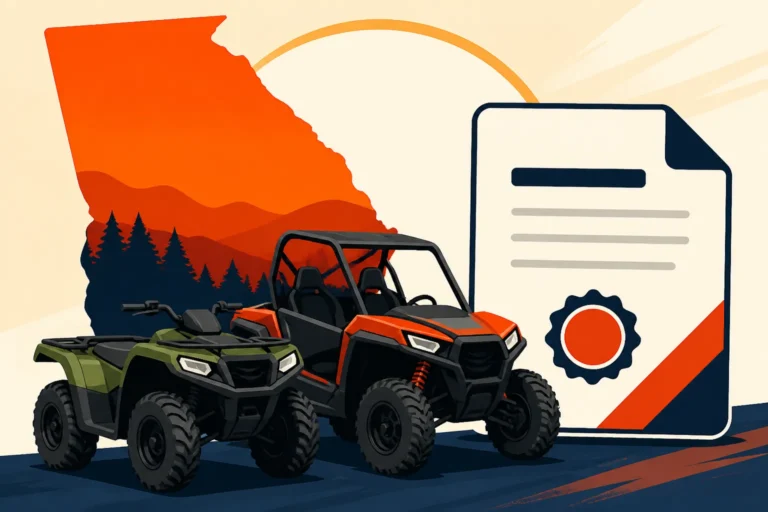
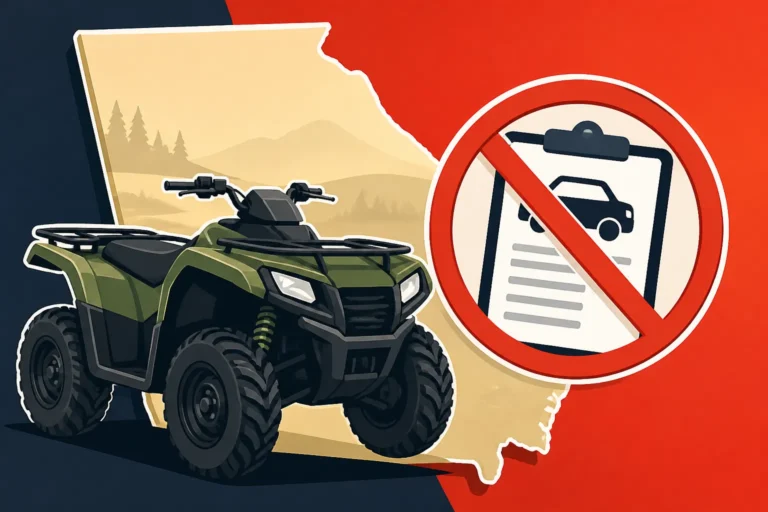
It's a common dream for many Georgia ATV owners: being able to hop on your trusty quad and cruise down a county road to a friend's house or local store. For years, this was largely impossible, and even with Georgia's recent MPOHV (Multipurpose Off-Highway Vehicle) registration, the reality is that your "ordinary quad" generally can't get a tag for road use. This guide will dive deep into why your traditional ATV doesn't fit the mold for Georgia's new MPOHV registration, explaining the specific criteria that disqualify it and what types of machines can get a plate.
Understanding Georgia's MPOHV Classification: The Nitty-Gritty Details
When Georgia introduced the MPOHV registration program, it wasn't a blanket invitation for all off-highway vehicles to hit the roads. Far from it. The state crafted a very specific definition, outlining what an MPOHV is and, by extension, what it isn't. This new classification was designed to allow certain types of utility and recreational vehicles, primarily side-by-sides, to gain limited access to Georgia's county roads, but it left out traditional ATVs for several critical reasons. The spirit of the law focuses on machines that are built with certain safety and operational characteristics more akin to a small car than a dirt bike.
The initial excitement many quad owners felt when hearing about "off-highway vehicle registration" often turned to disappointment when they saw the detailed eligibility requirements. It quickly became clear that the state wasn't suddenly making every ATV "street legal." Instead, it carved out a niche for machines that met a demanding list of criteria, ensuring that anything getting a road plate had a baseline of features considered safer for mixed traffic environments. This distinction is crucial for understanding why your beloved quad likely won't make the cut. [Georgia MPOHV Registration Explained]
The Purpose Behind the Strict Rules
The legislative intent behind the MPOHV classification was never to open up all public roads to all off-road vehicles. Instead, it aimed to provide a legal framework for a specific category of off-highway vehicles, predominantly UTVs, that are increasingly common for work, recreation, and even short-distance travel in rural areas. The detailed rules are a direct reflection of safety concerns, aiming to minimize risks when these machines share the road with cars, trucks, and other vehicles. They represent a careful balance between allowing convenience for MPOHV owners and protecting public safety.
Think about it from a safety perspective: a traditional quad, designed for aggressive off-road maneuvering and rider engagement, presents a very different profile than a UTV, which often comes equipped with roll cages, steering wheels, and multiple seats. The state isn't trying to be difficult; it's trying to ensure that any vehicle operating on a public road, even a low-speed county road, meets a certain standard of predictability and protection. These rules are in place to try and prevent accidents and ensure that drivers encountering these machines on the road can anticipate their movements and characteristics.
Why Handlebars and Straddle Seats Are Dealbreakers
One of the most immediate disqualifiers for an "ordinary quad" is right in its fundamental design: the handlebars and the straddle seat. Georgia's MPOHV law is crystal clear on these points, and they are primary reasons why the vast majority of ATVs simply cannot be registered. These design elements, while perfect for off-road riding, don't align with the state's vision for a road-legal MPOHV.
Imagine pulling up to the county tag office with your sport quad, ready to get a plate. The very first thing the clerk might notice is your handlebars. They aren't going to spend time looking at your engine size or your tire tread if you fail this most basic visual check. It’s a hard stop.
The Steering Wheel Requirement
Georgia's MPOHV rules explicitly state that the machine must be controlled by a steering wheel, not handlebars. This is a crucial distinction that immediately rules out virtually every traditional quad. A steering wheel offers a different type of control, often perceived as more stable and predictable for on-road use, mirroring the control mechanism of standard automobiles.
When you think about the differences in driving dynamics, it makes sense. A steering wheel provides a more familiar and less aggressive input for many drivers, which is important when sharing paved or gravel county roads. Handlebars, while providing excellent control for leaning into turns and navigating uneven terrain off-road, are simply not what the state envisions for a machine interacting with regular vehicle traffic. [Why Handlebars Disqualify a Machine] This design choice profoundly impacts stability, turning radius, and overall control feel, pushing traditional quads out of the MPOHV category.
The Non-Straddle Seat Mandate
Another major hurdle for ATVs is the requirement for a non-straddle seat. Your typical quad demands that the rider straddle the machine, much like a motorcycle. However, for an MPOHV, Georgia requires a bench or bucket-style seat where the operator and any passengers sit in the machine, rather than on it. This immediately disqualifies most ATVs, which are inherently designed for a straddle riding position.
This rule goes hand-in-hand with the steering wheel requirement, emphasizing a driving position that offers more containment and protection within the vehicle's structure. Side-by-sides, with their automotive-style seating and often roll cages, naturally fit this description. The straddle seat, while essential for the dynamic, active riding style of a quad, doesn't offer the same passive safety features or occupant containment that Georgia seeks for road-going machines. [Why Georgia's MPOHV Rules Demand a Non-Straddle Seat] It's about how you interface with the machine and the level of inherent protection offered by the seating arrangement.
The Unyielding Weight, Width, and Speed Requirements
Beyond the fundamental design differences, Georgia's MPOHV law also sets specific operational limits on weight, width, and speed. These parameters further narrow down the field of eligible machines, effectively excluding many common quads that might otherwise seem robust enough for limited road use. Your average ATV, while capable, often falls outside these defined boundaries in one or more areas.
It's not just about one measurement; it's a combination that creates a profile for the type of vehicle Georgia is willing to put a plate on. These requirements reflect an attempt to manage the physical footprint and performance characteristics of these vehicles on public roads, ensuring they don't pose undue hazards due to their size or speed.
Georgia's 80-Inch Width Limit
One of the less obvious but equally impactful restrictions is the maximum width of 80 inches. While many utility-oriented side-by-sides comfortably fit within this limit, some larger, performance-focused UTVs, and occasionally heavily modified quads, might exceed it. However, for most "ordinary quads," this isn't usually the direct disqualifier. The issue for ATVs is more often the handlebars and straddle seat, but it's worth noting how specific these dimensions are.
This width limit is important for road sharing, ensuring that MPOHVs don't take up an excessive amount of lane space, especially on narrower county roads or when passing other vehicles. It helps maintain a predictable flow of traffic and reduces the potential for accidents caused by oversized vehicles infringing on oncoming lanes or shoulder space. [Georgia's 80-Inch Width Limit for Registration] Always measure your machine if you're unsure, but for a standard quad, other factors will likely be the primary reason for denial.
The 350-Pound Payload and 4,000-Pound Gross Weight Ceilings
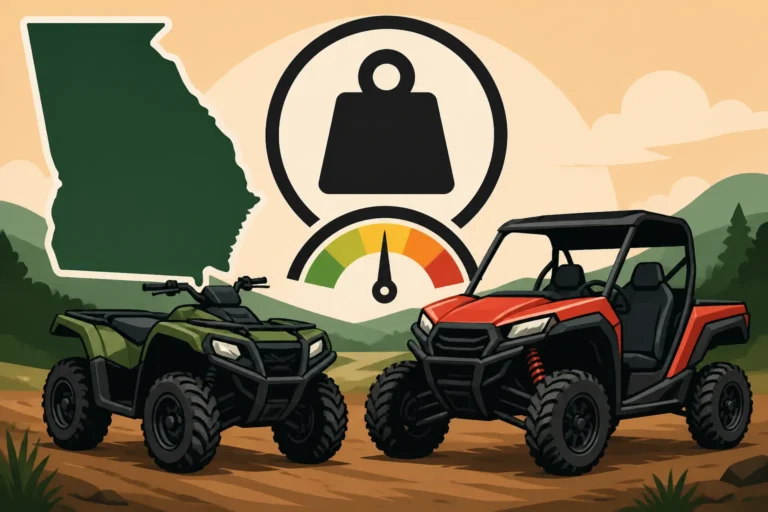
Georgia also stipulates a minimum payload capacity of 350 pounds and a maximum gross vehicle weight of 4,000 pounds. The 350-pound payload requirement usually means the machine must be capable of carrying at least two adults plus some cargo. Many smaller, sport-oriented quads may struggle to meet this minimum, as they are designed for a single rider or perhaps a very light passenger. Utility quads, while more capable of carrying weight, still might not hit the mark if they are primarily single-rider machines.
On the other end, the 4,000-pound gross vehicle weight (GVW) limit (which includes the vehicle's empty weight plus its maximum payload) can exclude some of the heaviest, most robust side-by-sides, but it almost universally includes all ATVs. Most quads, even fully loaded, are well under this 4,000-pound ceiling. So, while the 4,000-pound limit isn't typically the problem for an ATV, the minimum payload requirement can be. These weight restrictions are designed to classify vehicles that are substantial enough for utility tasks but not so heavy as to be considered a full-blown vehicle or small truck. [Georgia's 350-Pound Payload Requirement] and [Georgia's 4,000-Pound Gross Weight Ceiling] are important to remember.
Speed Requirements: 25 mph Minimum, 65 mph Maximum
Perhaps one of the most surprising, and often overlooked, requirements for MPOHV registration is the speed range: the vehicle must be capable of exceeding 25 mph but not exceed 65 mph. This is another area where "ordinary quads" can find themselves disqualified.
While almost all modern ATVs can easily exceed the 25 mph minimum, many high-performance sport quads and even some utility models can comfortably reach speeds well over 65 mph. This top-end speed limit is a significant barrier for those machines, as the state isn't looking for vehicles that can keep up with highway traffic, only those that can maintain a reasonable speed on county roads without being too fast. This range ensures that the vehicle can keep up with slow-moving traffic, preventing hazards from overly slow vehicles, while also preventing machines designed for higher speeds from operating in contexts where their top speed might be a liability. [Georgia's 25 to 65 mph Speed Requirement] It’s a Goldilocks zone for speed, and many quads fall outside it.
Essential Safety Features Your Quad May Lack
Beyond the fundamental design and operational characteristics, Georgia's MPOHV rules also mandate several key safety features that are standard on most side-by-sides but often absent or insufficient on traditional ATVs. These features are considered non-negotiable for a vehicle to receive a state registration and legally operate on designated county roads. They reflect a commitment to a higher level of occupant protection and visibility than an off-road-only machine typically provides.
Many quad owners are surprised by the length of this checklist, realizing their machine, while perfectly safe for its intended off-road purpose, just doesn't meet the on-road demands. These aren't optional upgrades; they are fundamental requirements for the MPOHV designation.
Factory-Installed Seat Belts
A critical requirement is that the vehicle must be equipped with factory-installed seat belts. This is a nearly universal feature on side-by-sides, designed to keep occupants secured within the vehicle in the event of a roll-over or sudden stop. For traditional quads, seat belts are simply not part of their design. The straddle riding position and the active body English required to operate an ATV make seat belts impractical and, frankly, dangerous in many off-road situations.
This distinction highlights the different safety philosophies for ATVs versus MPOHVs. An ATV's safety relies on the rider's ability to shift their weight and control the machine dynamically, often involving dismounting quickly if necessary. An MPOHV's safety, particularly on roads, emphasizes occupant containment and protection within a structured cabin. [Georgia Requires Seat Belts on a Registered Machine] If your quad doesn't have seat belts from the factory, it won't qualify.
Headlights, Brake Lights, and Mirrors
While most modern ATVs come with headlights and brake lights, the specific requirements for MPOHVs might still be a hurdle. More importantly, the explicit need for a rearview mirror and often side mirrors is where many quads fall short. A traditional ATV typically has no mirrors, as situational awareness is achieved by turning the head, which is perfectly acceptable for off-road use but insufficient for road driving.
For an MPOHV, comprehensive visibility is key, and mirrors provide the driver with crucial awareness of traffic behind and to the sides, just like a car. The specific functionality of headlights and brake lights, ensuring they meet road-legal standards for brightness, coverage, and activation, is also carefully considered. These aren't just for seeing where you're going; they're about being seen by others, which is paramount on any public road. [Headlights, Brake Lights and Mirrors on the Checklist] Your quad might have lights, but does it have the full complement of mirrors required for road use?
Roll-Over Protective Structures (ROPS)
Although not always explicitly stated as "ROPS" in every line of the MPOHV legislation, the overall design and requirements strongly imply the need for an integrated protective structure. This means the vehicle should have a factory-designed and installed roll cage or similar framework that provides protection to occupants in the event of a rollover. This is a standard feature on nearly all side-by-sides, offering a crucial layer of safety that traditional ATVs completely lack.
The absence of a ROPS on an ATV, combined with the straddle seat and lack of seat belts, is another major reason why they are not considered suitable for limited road use. The state is looking for a vehicle that can offer a degree of passive protection to its occupants, a design principle that is antithetical to the open, dynamic nature of an ATV. Without this fundamental safety structure, an ordinary quad simply doesn't meet the state's expectations for a road-going machine.
The "Ordinary Quad" Versus the Road-Legal UTV
It really boils down to this: Georgia's MPOHV rules are tailor-made for UTVs, not traditional ATVs. When the law was drafted, the characteristics of a side-by-side were clearly in mind. These machines, often called Utility Terrain Vehicles, are fundamentally different in design and intended use from All-Terrain Vehicles (ATVs) or quads. Understanding this distinction is key to grasping why your common four-wheeler won't get a tag.
The term "ordinary quad" really encompasses anything from a sport ATV, built for speed and agility, to a utility ATV, designed for hauling and tough terrain. While utility quads often share some of the practical work capabilities of a UTV, their core operating principles and safety features diverge significantly from what Georgia requires for road registration.
Design and Safety Philosophy Differences
The core difference lies in the design and safety philosophy. ATVs are open-air vehicles where the rider actively participates in balancing and controlling the machine through body movements and handlebar input. They are designed for dynamic, single-operator experiences, often on challenging off-road terrain. The safety equipment, like helmets and protective gear, is primarily worn by the rider.
UTVs, on the other hand, often feature a more enclosed design with a roll cage, seat belts, and a steering wheel, mimicking the occupant protection of a car more closely. They are designed for carrying multiple passengers and cargo, with a more stable, less physically demanding operation. The safety elements are built into the vehicle, providing passive protection to all occupants. This fundamental difference is why UTVs like a Polaris Ranger, Kawasaki Mule, or John Deere Gator are strong candidates for registration, while a typical quad is not. [Registering a Side-by-Side in Georgia]
Here's a quick comparison of the common characteristics that separate the two in Georgia's eyes:
| Feature | Ordinary Quad (ATV) | Qualifying MPOHV (UTV Example) |
|---|---|---|
| Steering Control | Handlebars | Steering Wheel |
| Seating Position | Straddle Seat | Non-Straddle (Bench/Bucket) |
| Occupant Containment | None (rider active) | Seat Belts, Roll Cage (ROPS) |
| Minimum Payload | Often less than 350 lbs | Meets 350 lbs |
| Maximum Gross Weight | Well under 4,000 lbs | Up to 4,000 lbs |
| Max Speed Restriction | Often exceeds 65 mph | Does not exceed 65 mph |
| Mirrors | Rarely/Never standard | Required rearview/side mirrors |
| Brake Lights/Headlights | Present, but need to meet specs | Present and road-compliant |
| Designed Use | Off-road recreation/work | Utility, recreation, limited road |
Why Other Off-Highway Vehicles Are Excluded
It's not just quads that are left out. [Georgia Dirt Bikes and Three-Wheelers Are Excluded] from the MPOHV definition for many of the same reasons related to their design, control mechanisms, and lack of integrated safety features suitable for road interaction. Dirt bikes, with their handlebars, straddle seats, and often lightweight, minimalist design, simply don't fit the MPOHV criteria.
Even vehicles like golf carts and dune buggies have their own separate classifications and rules. Golf carts, for instance, are often regulated by local ordinances as Personal Transportation Vehicles (PTVs) and operate under different speed and safety stipulations. Dune buggies, depending on their construction, might sometimes be titled as homemade vehicles, but they don't generally slot into the MPOHV category either due to their specific designs. [Georgia Dune Buggies and Golf Carts Are Excluded] The MPOHV definition is very precise, designed to capture a narrow range of modern utility and recreational machines.
What This Means for Your Riding Options in Georgia
So, if your "ordinary quad" can't be registered as an MPOHV in Georgia, what does that mean for you? It means you need to be very clear about where you can legally ride your machine and what expectations you should have regarding public access. The rules are designed to delineate clear boundaries, and ignoring them can lead to tickets, fines, and even impoundment.
This doesn't mean your quad is suddenly useless in Georgia. Far from it! It just reaffirms its primary purpose as an off-road recreational or utility vehicle, meant for specific types of terrain and properties. The key is understanding and respecting these boundaries.
Restricted to Private Property and Designated Trails
For your traditional ATV, legal riding is generally restricted to private property with permission, or on designated off-road trails and parks. Georgia boasts a number of excellent public and private riding areas where your quad can shine, from the national forest systems like Houston Valley and Beasley Knob, to private parks like Iron Mountain Resort or Highland Park Off-Road Resort. [Georgia ATV Trails: Where You Can Legally Ride]
These locations are designed for the very type of dynamic, active riding that ATVs are built for, and they often have their own specific rules regarding permits, helmets, and age restrictions. Many riders find immense satisfaction in exploring these dedicated spaces, where their quads can be used to their full potential without the worries of road legality.
No Road Use for Unregistered Quads
Without MPOHV registration, your quad is not street legal in Georgia. This means no riding on county roads, state highways, city streets, or even shoulders. Trying to take an unregistered quad on public roads can lead to significant penalties, including fines and potentially having your machine impounded. Law enforcement officers are becoming increasingly aware of the MPOHV rules and are equipped to distinguish between a registered UTV and an unregistered ATV.
It's a common misconception that if a road is unpaved or rural, it's fair game for any off-road vehicle. This is simply not true in Georgia. Unless it's a designated MPOHV road in a county that has opted into the program and your machine is registered as an MPOHV, it's off-limits. Even crossing a state route at a designated point, which is allowed for registered MPOHVs, is not permitted for an unregistered ATV. [Are Side-by-Sides Street Legal in Georgia?]
What About Bills of Sale and Proof of Ownership?
Even if your quad cannot be registered for road use, having clear proof of ownership is still incredibly important. If you bought your machine from a private seller, a well-drafted bill of sale protects both parties. This document, while not a title for an ATV in Georgia, is your primary proof of ownership. Resources like LawDepot can be incredibly helpful for creating robust, legally sound bills of sale or other affidavits you might need to establish ownership for insurance purposes or future sales.
It's also essential for insurance. Even if you're only riding on private land, comprehensive and collision insurance can protect your investment from theft, fire, or accidental damage. Proving ownership is usually the first step in filing a claim. [Proving You Own an ATV in Georgia Without a Title] This ensures that even though your quad won't get a tag, you still have the necessary paperwork to protect your investment and legally demonstrate you are the rightful owner.
Navigating Exceptions and Special Use Cases
While the general rule is that ordinary quads cannot be registered as MPOHVs, it's worth understanding the limited exceptions and special use cases that might arise, primarily related to agricultural or commercial operations. These exemptions are very specific and do not constitute general road legality for all ATV owners. They are narrowly defined to support certain economic activities, not recreational riding.
It's vital to remember that these exceptions are usually tied to specific activities or locations, and not to the inherent "roadworthiness" of the ATV itself. They are not a loophole for general public road access.
Agricultural and Commercial Exemptions
Georgia law does provide some limited exemptions for ATVs used in bona fide agricultural or commercial operations. For instance, an ATV might be used on a farm to move equipment, herd livestock, or transport workers between fields without needing MPOHV registration, as long as its use on a public road is incidental to the farm operation. This means crossing a road from one field to another, not cruising down to the feed store.
These exemptions are typically tied to the specific activity being performed and the location (e.g., within the boundaries of a farm or logging operation), rather than allowing the ATV general road access. This is particularly relevant for those in the timber industry or large-scale agriculture. If you're using your quad for legitimate farm work, for example, it may not need MPOHV registration for certain limited movements on public roads that are directly related to those operations. However, this is distinct from recreational use. [Georgia MPOHV Registration and Farm Use]
The Role of County Tag Offices
When you approach your local county tag office, their role is to apply the state's MPOHV rules directly. They are not in a position to make exceptions or interpret the law broadly. Their job is to verify that your machine meets every single criterion laid out in the MPOHV legislation. If even one requirement, like the steering wheel or non-straddle seat, isn't met, they simply cannot issue you the registration.
It can be frustrating to be turned away, especially if you feel your quad is "just as safe" as a small UTV. However, the tag office personnel are bound by strict guidelines. They have a checklist, and if your machine doesn't tick every box, it won't receive an MPOHV plate. It's not personal; it's statutory. [Georgia County Tag Office Steps for an MPOHV] ensures they have a consistent process to follow.
What About Future Changes?
Laws can change, but as of now, the current MPOHV framework is quite firm. While there's always ongoing discussion about off-road vehicle access and regulation, any significant changes that would allow "ordinary quads" on public roads would likely require new legislation and would involve a lengthy process. It's wise for ATV owners to stay informed through official Georgia Department of Revenue (DOR) channels or reliable off-road community sources, but don't expect a quick shift in the current rules.
For now, the message is clear: Georgia has chosen a specific path for limited road access for off-highway vehicles, and that path primarily accommodates UTVs that meet stringent design and safety requirements, leaving the traditional quad firmly in its off-road domain. Enjoy your quad where it's meant to be ridden – on the trails and private lands of our beautiful state!
Disclaimer
This article is for general informational purposes only and does not constitute professional advice. Laws, prices and regulations vary by location and change over time. Consult a qualified professional for guidance on your specific situation.