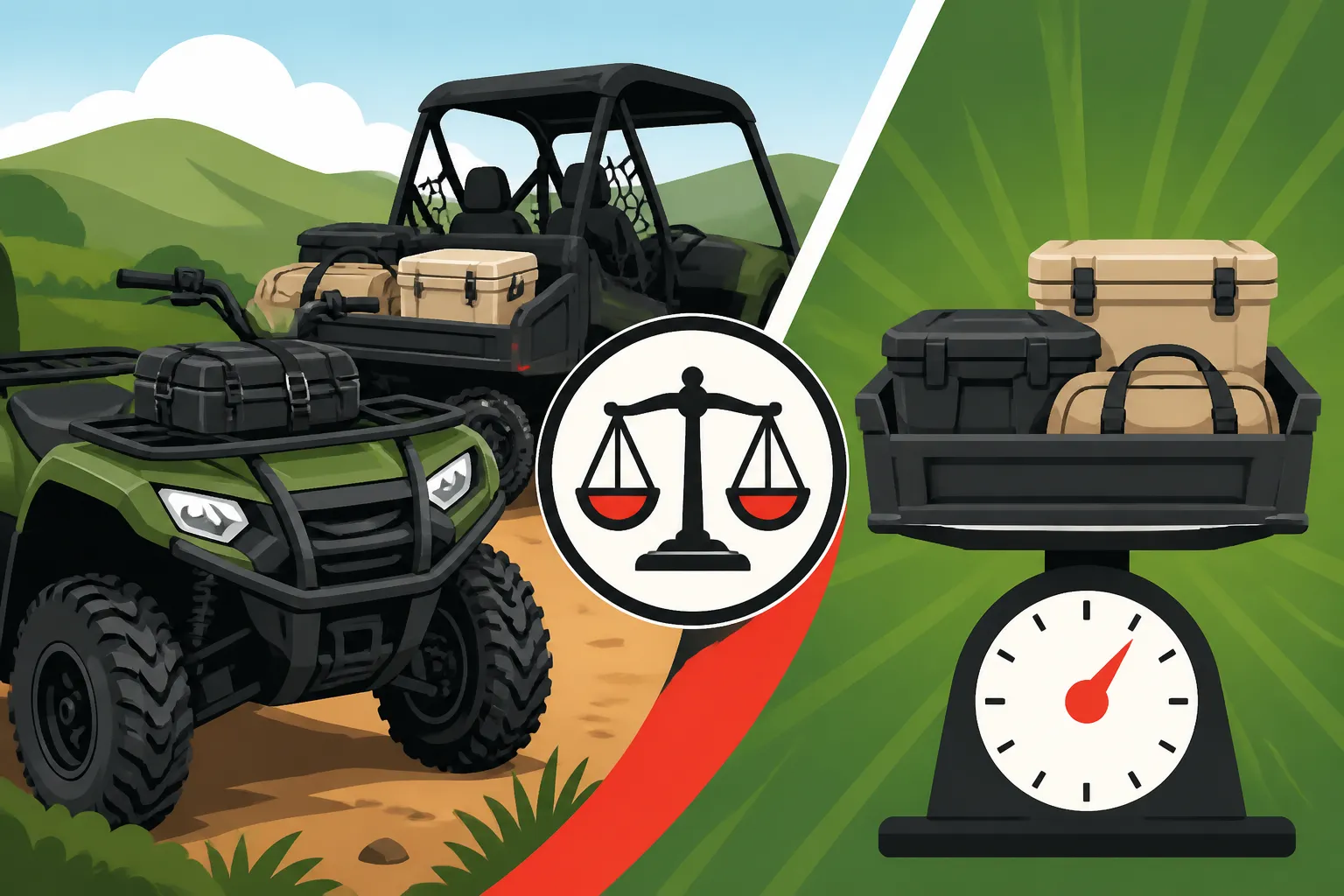
Measuring Payload Capacity Against 350 Pounds
Many Georgia off-road enthusiasts find themselves scratching their heads when they try to navigate the rules for legally riding their side-by-sides on county roads. One of the most common points of confusion revolves around the mysterious "350-pound payload capacity" requirement for Motorized Off-Road Vehicles (MPOHVs). It’s not just a random number; it's a specific hurdle that determines whether your beloved machine can even qualify for registration. This guide will meticulously break down what that payload capacity means, how to accurately measure it for your UTV or side-by-side, and why meeting this specific benchmark is absolutely essential for lawful road access in Georgia.
Unpacking Georgia's 350-Pound Payload Capacity Rule for MPOHVs
When Georgia decided to open a pathway for certain off-highway vehicles to legally use county roads, they didn't just throw the gates open wide. Instead, they crafted a very specific set of criteria that these machines, now designated as Motorized Off-Road Vehicles or MPOHVs, must meet. This isn't about making things overly complicated; it's rooted in safety and distinguishing these road-legal machines from other off-road vehicles that simply aren't designed for public road interaction. One of the fundamental requirements, and often a source of significant confusion for owners, is the mandate that the vehicle must have a manufacturer's rated payload capacity of at least 350 pounds.
This isn't just about how much stuff you can put in the bed of your side-by-side. The term "payload capacity" actually encompasses a much broader range of weight. It includes the combined weight of all occupants (drivers and passengers), any cargo you might be carrying in the bed or storage compartments, and even any accessories you've added to the machine after purchase. Think about it: a side-by-side isn't just a powerful engine on wheels; it's designed to carry people and gear. Georgia's rule acknowledges this by setting a minimum threshold, implying that a machine capable of carrying a substantial payload is generally more robust and perhaps more stable for limited road use than a smaller, lighter machine designed primarily for single-rider sport use, which often has a lower payload rating. If you're trying to figure out if your machine qualifies, understanding this specific point is crucial, especially as it's part of the broader [Georgia MPOHV Eligibility: The Eight-Point Test].
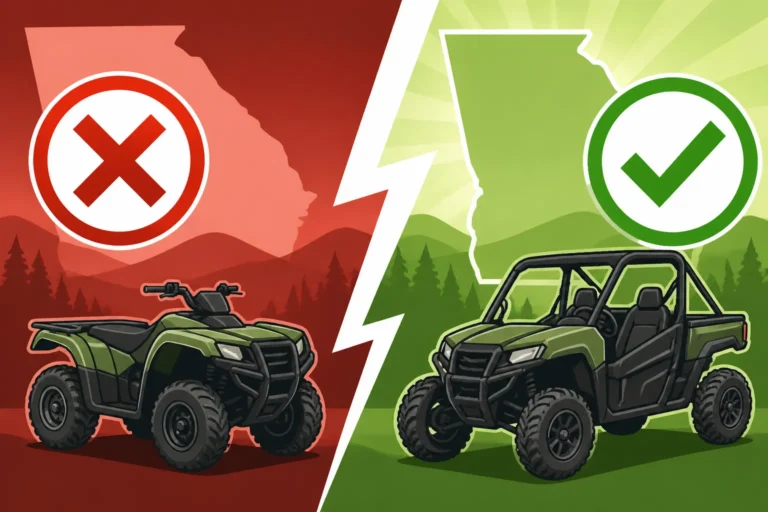
The rationale behind this particular weight requirement is multi-faceted. Firstly, it helps to ensure that machines registered as MPOHVs are indeed built for utility or multi-person recreational use, rather than solely for high-performance off-road sport. Vehicles with a higher payload capacity often have more substantial frames, suspensions, and braking systems, which are inherently better suited for the demands of public road use, even if only on designated county roads. Secondly, it differentiates these machines from smaller, lighter ATVs and certain golf carts that might otherwise blur the lines. For instance, a traditional sport quad, while powerful, typically has a much lower payload capacity, often designed for a single rider and minimal gear, which is one of the reasons [Why Georgia Will Not Register an Ordinary Quad]. This 350-pound minimum acts as a gatekeeper, ensuring that only machines with a certain level of carrying capability are considered for registration.
What Counts Towards Payload Capacity?
When we talk about payload capacity, it's easy to assume it just means the weight limit for the cargo bed. However, for the purposes of Georgia's MPOHV registration, it's much more comprehensive. The payload capacity figure provided by the manufacturer is the maximum weight the vehicle is designed to safely carry, including everyone and everything on board. This includes the driver, all passengers, any tools, equipment, or supplies in the cargo bed, and any aftermarket accessories like winches, roof racks, or custom bumpers that weren't part of the original dry weight. Imagine you're heading out for a day of hunting or trail work; the weight of your cooler, your gear bag, your rifle, and your buddy sitting next to you all contribute to that payload total.
It's a common misconception that if a machine has a two-person seating capacity, it automatically meets the payload requirement. Not necessarily. While a two-seater will obviously have a higher payload capacity than a single-seater, you still need to verify the manufacturer's stated rating. Some smaller or older side-by-sides might have a combined payload for two average-sized adults plus minimal gear that falls below the 350-pound mark. Conversely, many modern utility-focused side-by-sides, like a Polaris Ranger, Kawasaki Mule, or John Deere Gator, are designed with significant carrying capabilities, often far exceeding this 350-pound minimum. These machines are built for work, carrying multiple people and heavy loads, making them strong contenders for MPOHV registration.
How to Accurately Determine Your Machine's Payload Capacity
The most reliable way to confirm your MPOHV's payload capacity is by consulting the manufacturer's specifications. This information is typically found in your owner's manual, on a sticker or data plate affixed to the vehicle (often in the glove box, under the seat, or in the cargo bed area), or on the manufacturer's official website. These specifications are engineered and tested to ensure safe operation, so they are the definitive source. Don't guess; look it up. The Georgia Department of Revenue will expect this figure to be verifiable, as it's a key part of the [Georgia Form MV-OHV and What It Asks] when you go to register.
Sometimes, owner's manuals can be tricky to locate, especially for used machines. If you don't have the original manual, don't despair. Most manufacturers maintain digital copies of their manuals online, easily searchable by model year and VIN. If you're buying a used side-by-side, this is absolutely one of the first things you should ask the seller for or verify yourself. When using a service like LawDepot to draft a bill of sale for a private transaction, you might even consider including the verified payload capacity in the description of the machine to prevent future confusion or disputes, especially if the buyer intends to register it. It's an important detail that protects both parties.
What to Do If Manufacturer Specs Are Unclear or Missing
In some rare instances, especially with very old machines, custom builds, or units where the original stickers and manuals have been lost or damaged, finding a clear, stated payload capacity can be a challenge. This scenario can create a significant hurdle for MPOHV registration. The state needs verifiable proof. If you can't find a direct manufacturer's rating, you might run into issues at the county tag office. They are looking for official documentation, not just your best guess.
If you find yourself in this predicament, one approach is to contact the manufacturer directly, providing them with your VIN (Vehicle Identification Number) and asking for official specifications. Sometimes, a dealer who sells that brand might also be able to assist in looking up the information. As a last resort, if no official documentation can be retrieved, you might need to explore options like an inspection by a certified mechanic who could, in theory, provide an expert opinion on the vehicle's safe carrying capacity. However, be aware that the county tag office might still prefer official manufacturer documentation. This situation highlights why [Proving You Own an ATV in Georgia Without a Title] and having all available paperwork is so critical, even if it's not a title.
The Critical Importance of Meeting the 350-Pound Payload Minimum
Meeting the 350-pound payload capacity isn't just a recommendation; it's a non-negotiable requirement for MPOHV registration in Georgia. If your machine's manufacturer-rated payload capacity falls below this threshold, it simply will not be eligible for a Georgia MPOHV plate. This means no legal access to county roads, regardless of how safe or capable you believe your machine to be. It's a binary "yes" or "no" question in the eyes of the Georgia Department of Revenue.
Attempting to register a machine that doesn't meet this specific criterion will lead to immediate rejection at the county tag office. Imagine spending time gathering all your other documents—proof of ownership, insurance, paying [Georgia Sales Tax Paid Before Registration]—only to be turned away because of a single specification. It's a frustrating but entirely avoidable situation if you do your homework upfront. This specific payload requirement works in tandem with other criteria, like the [Georgia's 4,000-Pound Gross Weight Ceiling] and the mandate for a steering wheel instead of handlebars, to define what an MPOHV truly is. Each of these points serves to narrow down the types of machines that can be legally operated on public roads.
Consequences of Non-Compliance and Safety Considerations
Beyond the inability to register, there are significant safety and legal implications for operating an MPOHV on public roads if it doesn't meet the state's payload requirements. Even if you somehow managed to get it registered (which is highly unlikely if the tag office is doing its job), operating a machine beyond its design limits is inherently dangerous. Overloading a vehicle, or operating one that isn't robust enough for the task, can compromise its handling, braking, and stability. This dramatically increases the risk of accidents, especially when sharing the road with other vehicles.
Furthermore, if you are caught operating an unregistered MPOHV on a county road, or one that was improperly registered, you could face penalties. Law enforcement officers, particularly county sheriffs, are becoming more familiar with the MPOHV rules. They are within their rights to stop you and check for proper registration and compliance. Violations can range from fines to your vehicle being impounded. These are serious consequences that no rider wants to face. Understanding the rules, like [What MPOHV Actually Stands For] and all its associated requirements, is not just about bureaucracy; it's about responsible and legal operation. If you're unsure about the process, checking the [Georgia County Tag Office Steps for an MPOHV] can provide clarity.
Practical Tips for Ensuring Your Machine Meets the Payload Rule
Before you even think about heading to the county tag office, make absolutely certain your machine qualifies for MPOHV registration under the 350-pound payload rule. The first and most straightforward step, as mentioned, is to find that manufacturer's specification. If you're shopping for a new or used side-by-side with the intention of registering it, make this a primary question for the dealer or private seller. A reputable dealer will be able to provide you with the specs immediately, and a savvy private seller will have them ready to share.
If you are buying privately and the seller doesn't have the manual, make it a condition of sale that you verify the payload capacity before finalizing the deal. You might even use a template from a service like LawDepot to create a thorough bill of sale that lists out these crucial specifications, protecting both buyer and seller. This pre-purchase verification can save you a world of headaches down the line. Remember, the goal is to confirm the manufacturer's rated capacity, not just to estimate what you think it can carry. If you're [Buying a Used Side-by-Side in Georgia], being diligent about this step is vital.
Planning for Loads and Avoiding Overloading
Even after you've confirmed your machine meets the 350-pound payload minimum for registration, it's vital to always operate it within its actual rated capacity. The 350-pound rule is just a minimum for registration; your specific machine might have a much higher capacity, say 800 pounds or even 1,200 pounds. Always refer to your owner's manual for your machine's specific limit and never exceed it. Overloading, even a legally registered MPOHV, can lead to dangerous situations and premature wear and tear on your vehicle.
Consider the typical use case for your machine. If you regularly ride with two large adults and a significant amount of gear for hunting or trail maintenance, ensure that the combined weight stays well within your machine's stated payload capacity. This is where the utility design of many side-by-sides truly shines, allowing for heavier loads without compromising safety. If you're involved in commercial activities or using your machine for farm work, you'll likely appreciate a higher payload capacity, though the 350-pound minimum is just for road-legal registration, not necessarily for heavy-duty work exemptions which often fall under different categories. For instance, [Georgia MPOHV Registration and Farm Use] might have other considerations, but the payload minimum for road access remains. For specific documentation needs, especially if you need to affirm ownership without a traditional title, an [Georgia Ownership Affidavit for an MPOHV] may be helpful, which can be prepared with resources like LawDepot.
Taking the time to understand and adhere to this 350-pound payload capacity rule will ensure your MPOHV journey in Georgia is both legal and safe, allowing you to enjoy those county roads without worry. Ignoring these requirements can lead to serious consequences, including [Georgia Penalties for an Unregistered Road Machine].
| Component of Payload | Description | Example Items |
|---|---|---|
| Occupants | Combined weight of all persons riding in the vehicle. | Driver, passenger(s), children |
| Cargo | Weight of anything carried in the cargo bed, storage compartments, or racks. | Tools, coolers, hunting gear, feed bags, camping equipment, spare tire |
| Accessories | Weight of any added equipment not included in the vehicle's dry weight. | Winch, roof rack, light bar, larger tires, aftermarket bumper, snow plow mount |
| Fluids | Weight of fuel, oil, and other fluids (beyond standard tank fill). | Extra fuel cans, water jugs |
Disclaimer
This article is for general informational purposes only and does not constitute professional advice. Laws, prices and regulations vary by location and change over time. Consult a qualified professional for guidance on your specific situation.