Georgia MPOHV Registration Is Voluntary
Many Georgia off-road enthusiasts find themselves scratching their heads when it comes to registering their side-by-sides and other utility vehicles. There's a common misconception that all vehicles need a title and mandatory registration, but for many of us riding ATVs and UTVs, the rules are quite different. This guide will unravel the specific nuances of Georgia's MPOHV (Multipurpose Off-Highway Vehicle) registration, explaining why it's a voluntary choice and what that truly means for you and your machine.
Understanding Georgia's MPOHV Registration Framework
The landscape of off-highway vehicle regulations in Georgia has certainly evolved, and it can be a little confusing trying to figure out where your particular machine fits in. Unlike cars and trucks, which have a clear-cut, mandatory titling and registration process, MPOHVs occupy a unique space that grants riders more flexibility, but also requires a deeper understanding of the rules.
Why Georgia Chose Voluntary Registration
Georgia's approach to MPOHV registration stems from a desire to address the increasing popularity of side-by-sides and similar machines that, while primarily designed for off-road use, sometimes need to access county roads. The state recognized that forcing full titling and registration on these vehicles, much like an automobile, would be overly burdensome and perhaps not entirely appropriate given their primary function. Instead, they opted for a system that allows owners to choose to register their machines if they intend to operate them in specific, limited ways on public roads. This voluntary system aims to provide a legal framework for restricted road access without imposing a universal mandate on all owners. It's about giving you the option to comply if you need to, rather than making it a blanket requirement for every MPOHV in the state. You can learn more about how this system came to be in [Georgia MPOHV Registration Started December 2023].
This decision also reflects the varied ways people use their MPOHVs. For many, a side-by-side is a workhorse on a farm, used exclusively on private property, or a recreational vehicle confined to designated trails or private hunting land. In these scenarios, the overhead of mandatory state registration would add unnecessary cost and paperwork for little benefit. By making it voluntary, the state avoids penalizing owners who have no intention of ever taking their machine onto a public road, while still offering a pathway for those who do. It's a pragmatic compromise that seeks to accommodate the diverse needs of Georgia's off-road community.
The Difference Between Titling and Registration
It's crucial to understand that in Georgia, MPOHVs typically do not receive a title in the same way a car or truck does. This is a fundamental distinction that often trips people up. When you buy a new car, you get a certificate of title that proves ownership and is a prerequisite for registration. For most ATVs and UTVs, a title isn't issued by the state. This means when you're thinking about your off-road machine, you're usually dealing with registration documents, not a traditional title. This key difference is why you won't hear about things like "title transfers" for these machines in the same way you would for a car.
The registration we're discussing for MPOHVs is purely for operational purposes, specifically granting the limited ability to use certain public roads. It's a permit to operate, not a document of legal ownership in the same vein as a vehicle title. While the registration process does involve proving ownership, the state doesn't issue a certificate of title itself for these types of machines. This can make proving ownership a bit more nuanced, especially if you buy a used machine. Many new owners initially get confused, wondering [Why Georgia Does Not Title an ATV]. It's a common concern, but understanding that registration is the goal, not a title, helps clarify the path forward.
What "Voluntary" Really Means for Georgia Riders
The term "voluntary" can sometimes be misinterpreted, leading to assumptions about what you can and cannot do. For MPOHV registration in Georgia, it means you have a choice, but that choice comes with specific consequences and opportunities. It's not about being able to drive anywhere you want without paperwork; it's about opting into a system that allows for limited public road access.
Road Access: The Primary Motivation
The most significant reason any MPOHV owner would choose to register their machine in Georgia is to gain legal, albeit limited, access to the state's county road system. Prior to the establishment of the MPOHV registration framework, taking a side-by-side or certain ATVs on any public road was largely illegal, even if just to cross from one piece of private land to another. This created significant headaches for landowners, farmers, and recreational riders who needed to move their machines short distances on public thoroughfares. By registering your machine, you're essentially applying for a special permit to operate it on designated county roads, which can be incredibly convenient for agricultural work, accessing hunting land, or connecting to different trail systems. This ability to use specific public roads is the driving force behind the voluntary registration program.
Without registration, your MPOHV is essentially restricted to private property or specifically designated off-road trails. Trying to take it on a county road, even for a quick hop, could lead to a citation, a fine, or even impoundment. For many rural residents, a registered MPOHV acts as a practical alternative for short trips where a full-sized vehicle might be overkill, or simply less convenient. It's all about navigating local ordinances and state statutes, and registration provides that legal bridge for specific road use. Knowing [What Registration Buys You on a County Road] is key to making an informed decision.
It's Not a Mandate, It's an Option
To reiterate, Georgia is not compelling every MPOHV owner to register their machine. If your side-by-side or ATV never leaves private land, a designated off-road park, or hunting club property, then formal state registration is likely unnecessary for you. The "voluntary" aspect means the choice is entirely yours, based on your intended use. There's no legal penalty for not registering your machine if you don't plan to use it on county roads. This is a critical point that differentiates MPOHVs from standard vehicles, where registration is a non-negotiable requirement for legal operation on any public road.
However, choosing not to register means you explicitly forgo the limited county road access that registration provides. It's a trade-off: avoid the registration process and associated fees, but accept the restriction to private or dedicated off-road areas. This flexibility acknowledges that not all MPOHV owners have the same needs or operate their vehicles in the same manner. It empowers you to decide if the benefits of limited road access outweigh the time and effort involved in the [Georgia MPOHV Registration Explained] process.
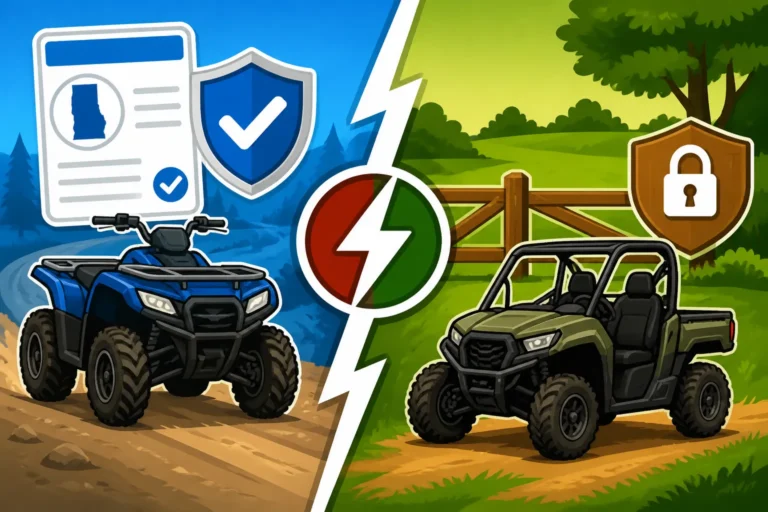
| Feature | Registered MPOHV | Unregistered MPOHV |
|---|---|---|
| Road Access | Limited use on designated county roads allowed | Restricted to private property/designated trails |
| Proof of Ownership | State-issued registration helps prove ownership | Requires alternative documents (bill of sale) |
| Theft Deterrent | State registration provides a verifiable record | More challenging to track if stolen |
| Resale | Easier transfer with state-issued documents | Relies solely on private paperwork |
| Insurance Requirements | Liability insurance mandatory for road use | Optional for private land, but recommended |
| Annual Fees | Yes | No |
| Eligibility Requirements | Must meet specific state criteria | No state-level criteria for private use |
The Practical Benefits of Registering Your MPOHV
While the primary allure of MPOHV registration is road access, the benefits extend beyond just being able to drive on a county road. Registering your machine can offer several practical advantages that contribute to peace of mind, ease of ownership, and even financial security.
Proving Ownership and Deterring Theft
One of the often-overlooked benefits of voluntarily registering your MPOHV is the official documentation it provides regarding ownership. Since Georgia doesn't title most ATVs and UTVs, having a state-issued registration certificate can be a robust form of proof. This becomes incredibly valuable in scenarios like theft or disputes over ownership. Imagine your side-by-side goes missing from your property; having a registered record with the state can significantly aid law enforcement in identifying and returning your machine. It ties your machine's Vehicle Identification Number (VIN) directly to you in an official state database.
This official connection to a state record acts as a strong deterrent to theft. Thieves are often looking for machines that are easy to disappear, and a registered machine is much harder to resell or hide without raising red flags. Even if your machine is only ridden on private land, having that state-recognized proof of ownership offers an extra layer of security. If you ever have to prove you own an ATV in Georgia without a title, this registration record is one of your strongest arguments. For private sales or older machines, a detailed bill of sale or an affidavit, perhaps drafted with resources like those found on LawDepot, can also be crucial for demonstrating ownership before you can register.
Simplifying Resale and Insurance
When the time comes to sell your MPOHV, having it registered can significantly smooth out the process. A prospective buyer will often feel more confident purchasing a machine that has official state documentation tying it to you. It provides a clear chain of custody, making the transaction feel more secure and legitimate. Without registration, you're relying solely on a bill of sale and other private documents, which can sometimes be viewed with more skepticism, especially if the machine has changed hands multiple times. A state-issued registration certificate offers an undeniable record that verifies your legal right to sell the machine.
Beyond resale, registration often goes hand-in-hand with obtaining appropriate insurance coverage. For any MPOHV that will be used on public roads, even county roads, Georgia law requires liability insurance. [Georgia Liability Insurance Tied to Registration] means that to complete your registration, you'll need to demonstrate proof of adequate coverage. While you can certainly insure an unregistered machine for private land use, the registration process ensures you have the necessary coverage for road operation, protecting you from potential financial disaster in the event of an accident. Insurance companies also often prefer dealing with registered vehicles, as it provides a clear framework for their policies.
What Registration Buys You on a County Road
Once your MPOHV is successfully registered, you gain the specific privilege of operating it on Georgia's county roads. This isn't a free pass to drive on state highways or interstates – those remain strictly off-limits – but it offers invaluable access for practical purposes. Think about a farmer who needs to move equipment between fields separated by a short stretch of county road, or a hunter who wants to access different parts of their hunting lease without having to load and unload their side-by-side onto a trailer multiple times. For residents in rural areas, this can drastically reduce the inconvenience and time associated with moving their machine.
This access, however, comes with rules. Registered MPOHVs must adhere to specific operational requirements while on county roads, such as speed limits, driver's license requirements, and potentially daylight hours of operation. You'll need to know [Georgia MPOHV Road Rules: County Roads Only] to ensure you're riding legally and safely. The registration isn't just a piece of paper; it's an agreement to abide by these specific regulations designed to ensure the safety of both MPOHV operators and other road users. It’s a carefully defined privilege, not an unrestricted right.
Situations Where Registration Isn't Necessary
Despite the benefits, it's important to remember that not every MPOHV owner needs or will benefit from state registration. The voluntary nature of the program means there are clear scenarios where skipping the registration process is perfectly acceptable and makes the most sense.
Exclusively Private Land Use
If your MPOHV is truly confined to private property – whether it's your own sprawling acreage, a friend's farm, or a leased hunting club property – then the Georgia MPOHV registration is entirely optional. There's no state requirement to register a machine that never touches a public road. Many riders fall into this category, using their ATVs and UTVs for recreation on trails, working around their property, or accessing remote hunting stands. For these uses, the registration process would simply add an unnecessary layer of paperwork and expense without providing any tangible benefit. You're free to ride on your own land as long as you comply with basic safety practices and local noise ordinances, without needing a state plate.
However, even for private land use, it's always wise to have solid proof of ownership. A well-documented bill of sale, perhaps created using a service like LawDepot, is essential when you purchase a machine privately. This helps avoid future disputes and protects you if the machine is ever stolen. Remember, just because it's not registered doesn't mean it's not yours, but you need to be able to demonstrate that clearly.
Machines That Don't Meet Eligibility
Not every off-highway vehicle qualifies for Georgia's MPOHV registration, even if you wanted to register it. The state has established a clear set of criteria that a machine must meet to be considered an eligible MPOHV. For example, machines with handlebars are generally excluded, meaning most traditional ATVs cannot be registered. Dirt bikes and three-wheelers are also specifically excluded. There are also requirements related to width, weight, payload capacity, and even the type of seating (a non-straddle seat is usually required). If your machine doesn't tick all the boxes on the eligibility checklist, then pursuing registration would be a fruitless endeavor. You can find detailed information on these requirements in [Georgia MPOHV Eligibility: The Eight-Point Test].
If your machine fails to meet these specific requirements, then the question of "voluntary" registration becomes moot – it's simply not an option for you, regardless of your intent to use county roads. In such cases, your machine will be restricted to private property or designated off-road riding areas only, and attempting to operate it on a public road would be illegal. It’s important to thoroughly check your machine against the state’s criteria before investing any time or effort into the registration process.
Navigating the Process for Voluntary Registration
Even though it's voluntary, the process for MPOHV registration still requires attention to detail and a clear understanding of the necessary steps. It's not as simple as just showing up at the tag office; you'll need to come prepared with the right paperwork and be ready to meet specific criteria.
Essential Documents for Your Application
To register your MPOHV, you'll need to gather a specific set of documents to present to your local county tag office. This paperwork is essential for proving ownership, verifying the machine's characteristics, and ensuring you meet all state requirements. Typically, you'll need proof of ownership, such as a manufacturer's certificate of origin (MCO) for a new machine, or a bill of sale for a used one. If you've purchased a used machine and the previous owner has little paperwork, you might need to prepare an affidavit of ownership, a process where tools like LawDepot can be very helpful in generating the correct legal forms, specifically a [Georgia Ownership Affidavit for an MPOHV]. You'll also need to provide personal identification, proof of Georgia residency, and evidence of liability insurance for the MPOHV.
Additionally, the state requires an MPOHV affidavit (Georgia Form MV-OHV) to be completed, affirming that your machine meets all the eligibility criteria. This form covers aspects like the machine's width, weight, speed capabilities, and safety equipment like seat belts and mirrors. You might also need a T-22B inspection certification if certain conditions apply, such as the machine being custom-built or having an altered VIN. It's a comprehensive list designed to ensure only compliant machines receive registration. Before you head out, it's wise to review the [Georgia MPOHV Registration Paperwork Checklist] to make sure you haven't missed anything.
The Steps at Your Local Tag Office
Once you have all your documents in order, the next step is to visit your local county tag office. This is where the actual registration application takes place. Be prepared for a detailed review of your paperwork by a tag office specialist. They will verify your identification, review your proof of ownership, and ensure the MPOHV affidavit is correctly filled out. The tag office staff will also confirm that your machine meets the various eligibility criteria as described on the MV-OHV form. They may ask questions about your machine's features to ensure it aligns with the MPOHV definition.
You'll pay any applicable registration fees and sales tax at this point. Keep in mind that [Georgia Sales Tax Paid Before Registration] is a requirement, so be ready for that payment. If everything checks out, you'll be issued a certificate of registration and a specialized MPOHV license plate. Remember, this plate is distinct from a regular car tag, signifying its specific status and limited road access. It's best to go during off-peak hours if possible, as processing these applications can take a little time due to their specific requirements. Knowing the typical [Georgia County Tag Office Steps for an MPOHV] can help you manage your expectations and ensure a smooth visit.
Important Considerations Before You Register
Deciding whether or not to voluntarily register your MPOHV involves more than just understanding the immediate steps. There are longer-term implications and specific conditions you need to be aware of before committing to the process.
Understanding the "Branded" Certificate
One crucial aspect of Georgia's MPOHV registration that differentiates it from standard vehicle registration is the issuance of a "branded" certificate of registration. This isn't a negative mark, but rather an indicator that the machine is an MPOHV and is subject to specific limitations regarding road use. It clearly states that the vehicle is not designed for highway use and its operation is restricted to county roads. This branding serves as a warning and a clear identifier for law enforcement and potential future buyers. It reinforces the fact that even with registration, your side-by-side isn't considered "street legal" in the same way a car or truck is.
This branding is important for consumers, especially when buying or selling a registered MPOHV. It ensures transparency about the vehicle's capabilities and legal restrictions. If you're buying a used machine that has a branded registration, it means the machine has already gone through the state's MPOHV eligibility check. Conversely, if you're selling a machine with a branded registration, the buyer will be fully aware of its status. It's vital to read and understand [Georgia Branded Certificates of Registration] so there are no surprises down the line.
The Sunset Clause for Road Access
A critical piece of legislation that all MPOHV owners considering registration must be aware of is the "sunset clause" affecting road access. The current law allowing MPOHVs on county roads in Georgia is not permanent; it has an expiration date. As it currently stands, [Georgia's ATV Road Access Law Sunsets in July 2027]. This means that while you can register your MPOHV now and enjoy limited county road access, this privilege is set to expire on that specific date unless the legislature takes action to extend or amend the law.
This sunset clause introduces an element of uncertainty for long-term planning. It means that the ability to ride your registered MPOHV on county roads is not guaranteed indefinitely. While there's always the possibility of legislative changes, it's essential to factor this upcoming date into your decision-making process. For some, the benefits until that date might still outweigh the costs, while for others, the temporary nature of the privilege might make registration less appealing. It's a significant detail that highlights the evolving nature of off-road vehicle laws.
Financial Implications: Costs and Taxes
While the MPOHV registration is voluntary, it does come with associated financial commitments. You'll need to budget for the annual registration fees, which are typically much lower than those for a full-sized vehicle, but they are recurring. Beyond the registration fee, you must also pay Georgia sales tax on your MPOHV purchase before it can be registered. This is a one-time cost, but it can be substantial depending on the purchase price of your machine. Because MPOHVs are not titled like cars, they generally are not subject to the Title Ad Valorem Tax (TAVT) that applies to most motor vehicles in Georgia, but standard sales tax still applies.
Additionally, as mentioned earlier, liability insurance is a mandatory cost for any registered MPOHV. You'll need to maintain continuous coverage to keep your registration active, adding another recurring expense. While these costs might seem minor individually, they add up over time. It's important to consider the total financial picture – the initial sales tax, the annual registration fee, and the ongoing insurance premiums – when deciding if voluntary registration is the right path for you and your machine. Understanding the [Georgia MPOHV Registration Cost] and the sales tax implications will help you make an informed financial decision.
Disclaimer
This article is for general informational purposes only and does not constitute professional advice. Laws, prices and regulations vary by location and change over time. Consult a qualified professional for guidance on your specific situation.