Georgia’s 350-Pound Payload Requirement
Trying to get your beloved side-by-side or utility vehicle registered here in Georgia can feel like navigating a maze, and one of the trickiest corners often involves understanding all the specific requirements. If you've ever found yourself scratching your head over terms like "payload capacity," you're definitely not alone. This guide is here to demystify Georgia's 350-pound payload requirement, explaining what it means for your machine and how to ensure you meet this crucial hurdle for MPOHV registration.
Decoding Georgia's 350-Pound Payload Mandate
When Georgia introduced its new MPOHV (Multipurpose Off-Highway Vehicle) registration process, it came with a very specific set of criteria that these machines need to meet to be considered "street legal" on designated county roads. It’s not just about having a steering wheel or seat belts; the state is also very concerned with the vehicle's structural integrity and how much weight it can safely carry. The 350-pound payload requirement is a key part of ensuring that only appropriately equipped machines can get a plate.
The Core Payload Definition for MPOHVs
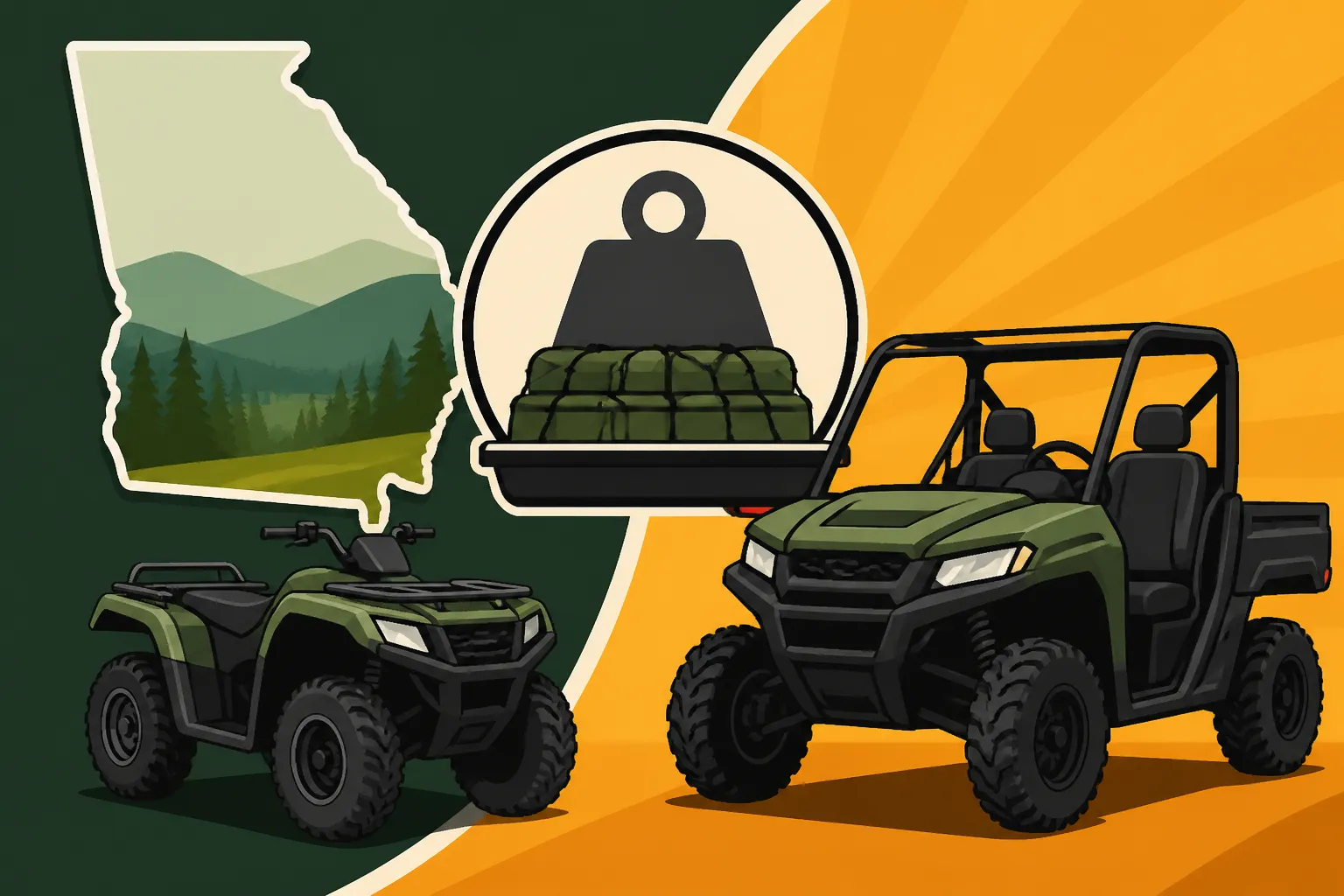
At its heart, "payload capacity" refers to the maximum amount of weight a vehicle can safely carry, including the driver, all passengers, and any cargo or accessories. Think of it as everything you put into or onto the vehicle after it rolls off the assembly line as a bare machine. For Georgia's MPOHV registration, your side-by-side or UTV needs to have a manufacturer's rated payload capacity of at least 350 pounds. This isn't just a suggestion; it's a hard and fast rule that the Georgia Department of Revenue (DOR) and your local county tag office will look for. It's one of the non-negotiable points in the application process, and if your machine doesn't meet it, you won't get that coveted MPOHV plate.
Why This Number Matters for Your Registration
You might wonder, why 350 pounds? Why not more, or less? This specific figure is part of Georgia's broader effort to define what constitutes a "multipurpose off-highway vehicle" that can safely share county roads. Machines with very low payload capacities might be perfectly fine for single-rider recreational use on private land, but they could pose a safety risk if overloaded and driven on public roads alongside other traffic. The state wants to ensure that any MPOHV granted road access has a certain level of utility and structural robustness. It's about stability, braking capability, and overall vehicle handling when carrying people and gear, preventing dangerous situations that could arise from an overloaded, under-spec'd machine on a public thoroughfare. This requirement is often considered alongside other critical criteria like [Georgia's 4,000-Pound Gross Weight Ceiling] and the overall [Georgia MPOHV Eligibility: The Eight-Point Test].
Understanding Your Machine's True Payload Capacity
One of the biggest hurdles for many MPOHV owners is figuring out what their specific machine's payload capacity actually is. It's not always a number that's prominently displayed on a sticker, and it can be confused with other weight ratings. But getting this right is absolutely essential before you even think about heading to the county tag office. You'll need to be able to demonstrate that your machine meets this criterion, which usually means referencing manufacturer specifications or, in some cases, providing additional documentation.
What Counts Towards Payload: The Full Picture
When Georgia talks about payload, they mean the sum total of everything beyond the machine's inherent "curb weight." Curb weight is the vehicle's weight with all standard equipment, necessary operating fluids (like a full tank of gas and oil), but without the driver, passengers, or cargo. So, to calculate what counts towards payload, you need to include:
- The operator's weight: Yes, your weight counts.
- Any passenger(s) weight: If your machine is designed for more than one person, each passenger's weight adds to the payload.
- All cargo: This includes anything you put in the bed, storage compartments, or strapped to racks—coolers, tools, hunting gear, camping equipment, feed sacks, you name it.
- Aftermarket accessories: This is a big one often overlooked. If you've added a heavy winch, a full roof, a beefy front or rear bumper, a plow, a light bar, or any other significant accessory, that weight contributes to the total payload being carried.
It’s easy to hit that 350-pound minimum when you start adding up just one larger adult, maybe a child, a cooler, and a few essential tools. The point is your machine's rated capacity must be at least 350 pounds, not necessarily that you plan to carry exactly that much every time you ride.
Here's a quick table to help clarify what typically counts towards payload:
| Item/Category | Counts Towards Payload? | Notes |
|---|---|---|
| Operator's Weight | Yes | The person driving the machine. |
| Passenger(s) Weight | Yes | Any additional riders in designated seating positions. |
| Cargo/Gear | Yes | Coolers, tools, hunting equipment, camping supplies, feed, etc. |
| Aftermarket Accessories | Yes | Winches, roofs, windshields, heavy bumpers, lift kits, oversized tires, light bars, etc. |
| Fuel (full tank) | No | Considered part of the vehicle's curb weight by manufacturers. |
| Vehicle's Dry Weight | No | The base weight of the machine without fluids, operator, passengers, or cargo. |
Finding the Manufacturer's Payload Specifications
For most modern side-by-sides and UTVs, the manufacturer's rated payload capacity can be found in a few key places. Your owner's manual is often the best source; it will typically list various weight limits, including Gross Vehicle Weight Rating (GVWR), Gross Axle Weight Ratings (GAWR), and payload/cargo capacity. If you no longer have the manual, a quick search online for your specific make, model, and year can often yield the factory specifications. Many manufacturers publish these details on their websites or in downloadable spec sheets.
Sometimes, you might find a sticker on the machine itself—often under the hood, on the door jamb, or in a storage compartment—that lists weight ratings. It's important to look for "payload capacity," "cargo capacity," or "maximum load capacity" specifically, rather than confusing it with towing capacity or gross vehicle weight. The tag office needs to be able to verify this number, so having a printout from the manufacturer's website or a clear photograph of a factory sticker can be very helpful when you go to register. When filling out [Georgia Form MV-OHV and What It Asks], having this information handy will streamline the process.
Practical Steps to Verify Your MPOHV's Payload
What happens if you can't easily find a manufacturer's sticker or manual specifying the payload capacity? Or perhaps you've bought a used machine where the paperwork is a bit scarce. It can certainly add a layer of complexity, but it’s not necessarily a deal-breaker. Georgia's MPOHV registration process aims to be fair, but it does require diligence on your part to prove your machine meets the criteria.
When Manufacturer Data is Missing or Unclear
If you're in a situation where the official manufacturer payload data is missing or unclear, you might have to do a little more legwork. One approach is to contact the manufacturer directly with your VIN (Vehicle Identification Number). They can often provide a spec sheet for your exact machine, even if it's an older model. Dealers can also sometimes pull this information from their internal systems.
If all else fails, and especially for older machines or those purchased through a private sale with limited documentation, you might need to rely on general knowledge for similar models and present a compelling case to the county tag office. In some instances, they might accept a detailed ownership affidavit where you attest to the machine's specifications. Using a reputable resource like LawDepot to create a legally sound affidavit could be beneficial here, ensuring all relevant details are professionally documented and attested to, supporting your claims about the machine's capabilities. Remember, the goal is to convince the tag office that your machine genuinely meets the 350-pound minimum for [Georgia MPOHV Eligibility: The Eight-Point Test].
Estimating Payload for Custom or Modified Machines
This is where things can get particularly tricky. If your MPOHV has undergone significant modifications—especially those that add substantial weight to the vehicle itself, like a heavy-duty roll cage, extreme lift kits, or specialized attachments—its effective payload capacity might differ from the factory rating. The problem is, the state is generally looking for the manufacturer's stated payload. If your modifications have dramatically increased the curb weight, it could technically reduce the available payload before hitting the Gross Vehicle Weight Rating (GVWR), but the tag office will still look at the original manufacturer's number.
It's crucial to understand that even if you've added heavy accessories, the state expects the original design to support a minimum of 350 pounds. If you have a custom-built machine, proving this can be even more challenging. You might need to provide engineering estimates or professional appraisals that attest to the vehicle's structural capacity. In some extreme cases, you might even need to consider a T-22B Inspection Certification, especially if the machine's identity or specifications are in question, though this is more common for title-related issues. For most registered side-by-sides in Georgia, the focus will simply be on the number from the factory.
The Safety and Legal Implications of Payload Limits
It's easy to see these requirements as just another bureaucratic hurdle, but Georgia's MPOHV rules are rooted in genuine concerns for safety on public roads. The payload limit, like many other aspects of the registration process, is designed to ensure that these vehicles, when driven on county roads, operate within safe parameters, protecting both the operator and other drivers. Failing to meet or understand these limits can have real-world consequences beyond just a denied registration.
Road Safety and Vehicle Stability
Imagine a side-by-side that's engineered to carry a modest load, perhaps 200 pounds. Now imagine loading it up with two adults, a full cooler, and a few bags of gear, easily exceeding 500 pounds. While it might still move, its handling characteristics would be severely compromised. The suspension could bottom out, steering could become sluggish, and most critically, braking distances would increase dramatically. This is a recipe for disaster on a county road, especially at speeds up to 65 mph allowed for MPOHVs.
The 350-pound payload requirement helps ensure that any machine granted MPOHV status has a baseline level of structural integrity and design capacity to safely handle a reasonable amount of weight. This contributes to better vehicle stability, more responsive steering, and effective braking, all critical factors for safe operation on shared roadways. This also ties into other safety considerations, like the requirement for [Factory Seat Belts and the Eligibility Check] and proper lighting.
Avoiding Registration Denials and Future Issues
The most immediate consequence of not meeting the 350-pound payload requirement is a straightforward denial of your MPOHV registration. You'll go through the effort of gathering your documents, head to the county tag office, only to be told your machine doesn't qualify. This can be incredibly frustrating, especially if you've already paid for insurance or made other plans assuming you'd get a plate. Your tag office staff are simply following the rules set forth by the state when they process applications for [Georgia MPOHV Registration Explained].
Beyond registration, operating an MPOHV on a county road without proper registration—because it didn't meet a fundamental requirement like payload—could lead to citations, fines, or even impoundment. Law enforcement, particularly if they are aware of the MPOHV rules in your county, might check for appropriate registration and vehicle compliance if they suspect an issue. It’s always best to make sure your machine meets all the criteria, including payload, before you even consider taking it on a public road. A thorough [Georgia Side-by-Side Registration Checklist] will always include verifying all eligibility criteria.
Common Questions and Misconceptions About Payload
The specific nature of the 350-pound payload requirement often leads to a few common questions and misunderstandings among owners. It's not always intuitive, especially when you're used to thinking about other types of vehicles or simply judging by appearances. Let's clear up some of the most frequent points of confusion to help you navigate this aspect of MPOHV registration with confidence.
Payload vs. Gross Vehicle Weight: A Critical Distinction
One of the most common confusions arises between "payload capacity" and "Gross Vehicle Weight Rating" (GVWR). They sound similar, but they refer to different aspects of a vehicle's weight.
- Payload Capacity: As we've discussed, this is the maximum weight of the operator, passengers, and cargo that the vehicle can safely carry. It's the "extra" weight you add.
- Gross Vehicle Weight Rating (GVWR): This is the total maximum allowable weight of the fully loaded vehicle. It includes the vehicle's curb weight (the machine itself with fluids) plus its maximum payload.
So, if your machine has a curb weight of 1,200 pounds and a payload capacity of 800 pounds, its GVWR would be 2,000 pounds. Georgia's MPOHV rules have separate minimums for both: your machine needs a payload capacity of at least 350 pounds and a GVWR (or overall operating weight) that doesn't exceed [Georgia's 4,000-Pound Gross Weight Ceiling]. Both are important, and they are distinct measurements. It's crucial not to confuse one for the other when reviewing your vehicle's specifications or talking to the tag office.
What Happens if My Machine is Under the Limit?
Unfortunately, if your specific MPOHV model has a manufacturer's rated payload capacity below 350 pounds, it simply won't qualify for MPOHV registration in Georgia. There isn't a workaround or an exception for this particular rule. No amount of aftermarket modifications or personal guarantees will change the fact that the manufacturer's rated capacity is below the state's minimum threshold.
This can be a disappointing discovery for owners of certain smaller or older utility vehicles that might otherwise meet some of the other MPOHV criteria. If your machine falls short, your options would be to:
- Use it strictly on private land: This is always an option for any off-highway vehicle. You can enjoy your machine without registration on your own property or on private lands where you have permission.
- Sell it and purchase a qualifying MPOHV: If road access is a priority, you might need to consider upgrading to a machine that demonstrably meets all of Georgia's MPOHV eligibility requirements.
- Explore other types of registration (if applicable): Some very specific vehicles, like certain low-speed vehicles (LSVs) or golf carts in designated communities, have different registration paths. However, these are generally not applicable to most traditional UTVs or side-by-sides.
The 350-pound payload minimum is a foundational requirement for [Georgia MPOHV Registration Started December 2023], and understanding it fully before you begin the application process will save you a lot of time and potential frustration. Always double-check your machine's specifications, and when in doubt, consult your local county tag office for clarification specific to your situation.
Disclaimer
This article is for general informational purposes only and does not constitute professional advice. Laws, prices and regulations vary by location and change over time. Consult a qualified professional for guidance on your specific situation.