Georgia Rules for a Quad With a Tag
It’s a common misconception that getting a license plate, often referred to as a "tag," for your off-highway vehicle in Georgia automatically makes it a free-for-all on every road. Many riders find themselves confused, thinking a tag means their quad or side-by-side is now "street legal" like any car, only to discover a tangled web of specific rules and restrictions. This guide is here to untangle that confusion, explaining precisely where and how a registered multipurpose off-highway vehicle (MPOHV) can legally be operated on Georgia's public roads.
Understanding Georgia's MPOHV Registration and What It Isn't
For years, Georgia ATV and UTV owners wrestled with the challenge of limited road access, especially for those who lived just a short distance from trails or needed to cross a road to get to their hunting land. The state's MPOHV registration program was a game-changer for many, offering a legal pathway to access certain public roads. However, it's crucial to understand that this registration doesn't transform your machine into a traditional "street legal" vehicle.
The MPOHV Designation: Not a "Street Legal" Free Pass
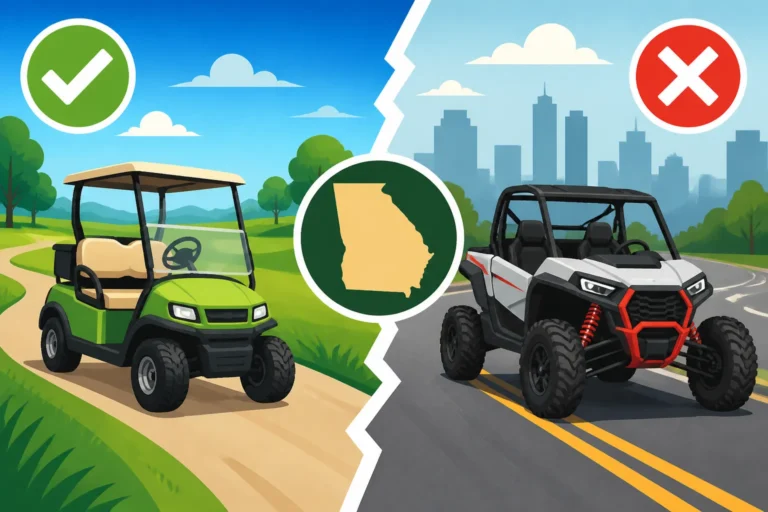
Let's get one thing straight from the start: obtaining an MPOHV tag for your machine in Georgia does not suddenly grant it the same road privileges as your pickup truck or SUV. The term "street legal" often implies the ability to drive on any public road, including state highways and city streets, without restriction, much like an ordinary car. That's simply not the case here. Georgia's MPOHV registration is a very specific type of designation that permits limited use on certain public roadways, primarily those under county jurisdiction.
Think of it less as opening all the doors and more like unlocking a few specific gates. This distinction is vital because misunderstanding it can lead to tickets, fines, and even vehicle impoundment. The registration process itself is unique because, unlike cars, Georgia does not issue titles for ATVs and UTVs in the traditional sense, which is why the MPOHV program uses a branded certificate of registration. For a deeper dive into this, you might find [Why Georgia Does Not Title an ATV] helpful, as it clarifies the underlying reasons for this difference. The whole system is designed to allow off-highway vehicles to serve their utility purpose more effectively for landowners and outdoor enthusiasts, without converting them into standard road vehicles. Understanding [Georgia MPOHV Registration Explained] provides a foundational view of this program.
Eligibility: Why Your Quad Might Not Qualify
While many riders refer to all their machines as "quads" or "four-wheelers," the MPOHV registration program has very specific eligibility criteria that often exclude traditional sport or utility ATVs. The intent of the law was to primarily permit side-by-sides (UTVs) onto roads, given their more car-like features. So, if you're picturing your classic dirt-slinging quad with a tag, you might be in for a surprise.
Key disqualifiers for registration include machines with handlebars, which immediately rule out nearly all traditional ATVs. The law explicitly requires a steering wheel, not handlebars. Additionally, the machine must have a non-straddle seat, meaning you sit in it like a car, not on it like a motorcycle or traditional quad. This particular requirement is a major hurdle for most conventional ATVs. Machines like a powerful Yamaha YFZ450R or a Polaris Scrambler, often referred to as "sport quads" or "performance quads," almost universally have handlebars and straddle seats, making them ineligible for MPOHV registration in Georgia. If you own a high-performance sport machine, you'll want to read [Why a Georgia Sportsman Cannot Be Registered] to understand why it won't qualify. The design of many ATVs, with their straddle seats, is a direct contravention of the MPOHV rules, as explored in [Why a Straddle Seat Disqualifies a Machine], and the presence of handlebars is another non-starter for registration, as detailed in [Why Handlebars Disqualify a Machine]. These strict design requirements ensure that the registered machines more closely resemble small utility vehicles than recreational dirt bikes or traditional quads.
Where You Can Legally Ride a Registered MPOHV in Georgia
The most critical part of understanding Georgia's rules for a quad with a tag is knowing precisely where you are allowed to ride it. This isn't a suggestion; it's the law. Violating these location-based restrictions is one of the quickest ways to incur fines and legal trouble. The state's intent was never to open up all roads to these vehicles, but rather to provide practical access for specific situations.
The County Road System: Your Primary Domain
For any machine bearing a Georgia MPOHV tag, the county road system is essentially its legal domain for public road use. This means you can operate your registered side-by-side or similar MPOHV on roads that are maintained by a county government. These are often the less-trafficked, unpaved, or secondary paved roads that connect rural areas, often leading to farms, hunting grounds, or small communities. They are distinct from major state highways or bustling municipal streets.
This specific allowance is a huge benefit for those who live in rural areas and need to travel short distances between properties, access local businesses, or reach trailheads without having to trailer their machine. The convenience factor is undeniable, but it comes with the caveat of strict adherence to these boundaries. Understanding [Georgia MPOHV Road Rules: County Roads Only] is paramount for any rider planning to utilize their registered machine on public ways. It's also incredibly helpful to know [County Road Systems and Where They Run] to identify which roads fall under this designation in your area, as local geography can vary widely. Always be sure of the road's classification before you venture out, because pleading ignorance won't hold up in court if you're stopped on a state highway.
Crossing State Highways and Municipal Streets (Carefully!)
While travelling along state highways or most municipal streets is generally prohibited for registered MPOHVs, the law does make provisions for crossing them. This is a crucial distinction that allows riders to maintain connectivity even when their route on a county road is interrupted by a more major thoroughfare. The key here is "crossing," which implies a quick, direct traversal rather than any longitudinal travel.
When you encounter a state route or a city street that you need to cross to continue on another county road, you must do so at approximately a 90-degree angle, and only when it is safe to do so. This means yielding to all other traffic, observing all traffic signals and signs, and making the crossing as swiftly and directly as possible. You cannot cruise down the state highway for a mile before turning off, nor can you use a municipal street as a shortcut through town unless that specific municipality has an ordinance explicitly permitting MPOHV use on certain streets – which is rare outside of golf cart communities. The rules for [Crossing a Georgia State Highway on a UTV] are clear, emphasizing safety and minimal disruption. Similarly, being aware of [Municipal Streets You May Only Cross] ensures you don't inadvertently find yourself in violation within city limits. It’s always best to err on the side of caution and assume that if it's not a clearly marked county road, you should only cross it, not travel on it.
Places You Absolutely Cannot Ride, Even with a Tag
Despite having a Georgia MPOHV tag, there are significant limitations on where you can operate your machine. These restrictions are in place for safety, traffic flow, and to maintain the integrity of roads designed for higher-speed, enclosed vehicles. Ignorance of these prohibitions is not an excuse, and violations can lead to serious consequences.
First and foremost, interstates are strictly off-limits, no exceptions. These are high-speed, controlled-access roadways designed for rapid transit, and a side-by-side simply doesn't belong there. Similarly, while you can cross state highways, you absolutely cannot travel along them for any distance. These major arteries are reserved for vehicles capable of maintaining highway speeds and handling heavy traffic volumes. For a detailed explanation of why these roads are off-limits, consult [Why Georgia State Highways Stay Off Limits] and [Interstates and Why They Are Never an Option]. Furthermore, many city streets are off-limits unless a specific local ordinance permits MPOHV use, which is typically found in communities specifically designed for golf carts or similar low-speed vehicles. Most municipalities will not allow an MPOHV on their main thoroughfares. It's also worth noting that the current law allowing MPOHV road access has a [Georgia's July 2027 Sunset on Road Access] date, which means these rules could change in the future, adding another layer of complexity to future planning. Always be aware of the road signs and the specific jurisdiction you are in.
Operating Requirements for Registered MPOHVs on Georgia Roads
Once you understand where you can ride your registered MPOHV, the next crucial step is to know how to operate it legally and safely on those designated roads. Georgia has specific requirements regarding who can drive these machines and what equipment they must have, all designed to ensure public safety.
Driver Qualifications and Passenger Rules
Operating a registered MPOHV on Georgia's public roads isn't just about having the right machine; it's also about having the right driver. The state mandates that anyone operating a registered MPOHV on a public road must be at least 16 years old and possess a valid Georgia driver's license. This is a non-negotiable requirement, designed to ensure that operators have a basic understanding of traffic laws and responsible driving practices. Letting an unlicensed minor drive a registered side-by-side on a county road, even if it's a quiet dirt track, is a direct violation of the law.
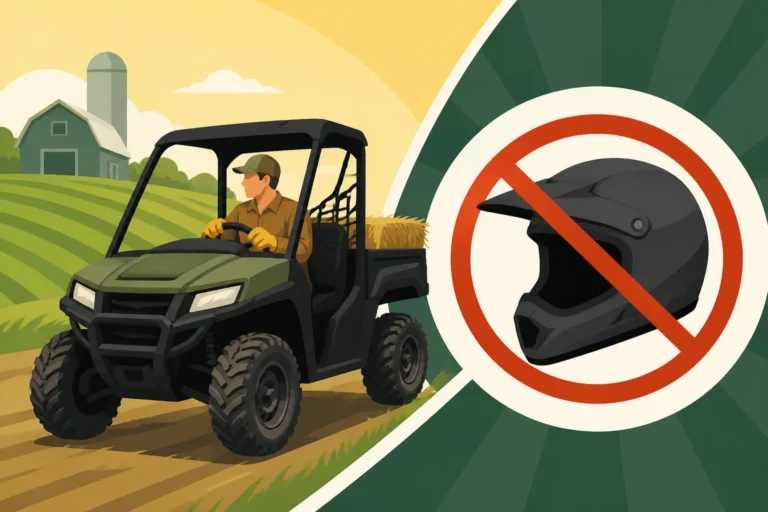
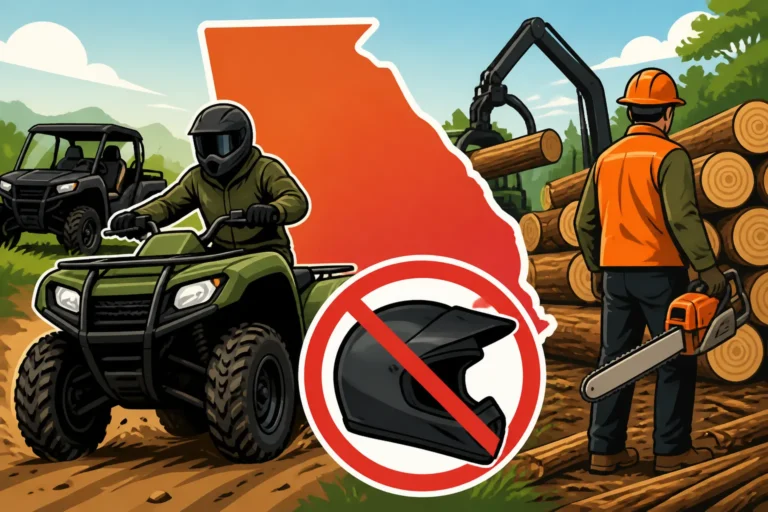
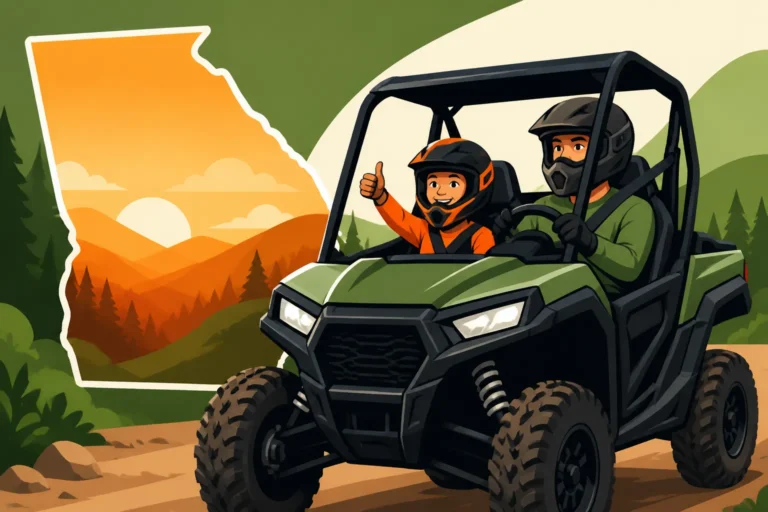
When it comes to passengers, specific rules apply, especially for younger riders. While Georgia's general helmet law for ATVs primarily applies to riders under 18 on private land (unless engaged in farm work), extending that safety practice to public road use is highly advisable. For comprehensive information on who can drive and what licenses are needed, refer to [Georgia Driver's License Rules for MPOHV Operators]. It’s vital to prioritize safety, especially with minors, and be aware of broader guidelines like [Georgia Under-18 Helmet Rule on Private Land], even if specific helmet requirements on public roads for MPOHVs are not as broadly stated as for traditional ATVs. Always ensure all passengers are safely secured with seatbelts, if available, and that the machine's payload capacity isn't exceeded.
Mandatory Equipment Checklist
To even qualify for MPOHV registration, your machine must meet a specific set of equipment requirements, and these must remain functional whenever you operate on public roads. These aren't optional add-ons; they're safety essentials that ensure visibility and control, similar to what's expected of a conventional vehicle.
Here’s a quick checklist of the critical equipment:
| Equipment Feature | Requirement | Purpose |
|---|---|---|
| Headlights | At least two, white, visible from 500 feet | Visibility for the driver and to oncoming traffic |
| Brake Lights | At least two, red, visible from 500 feet when braking | Signaling braking action to following traffic |
| Rearview Mirrors | At least one, providing clear view to the rear | Situational awareness and safe lane changes/crossings |
| Turn Signals | Front (amber/white) and rear (amber/red) | Signaling turns and lane changes |
| Horn | Audible from 200 feet | Warning others of your presence |
| Seatbelts | Factory-installed for all occupants | Occupant safety in case of impact or rollover |
| Tires | Suitable for highway use (not solely off-road knobbies) | Road grip and safety |
| Windshield | If required by manufacturer, or protection from debris | Driver protection from elements and debris |
The presence of functional [Headlights, Brake Lights and Mirrors on the Checklist] is non-negotiable, and they will be verified during the registration process. Likewise, [Factory Seat Belts and the Eligibility Check] ensure that your machine offers a basic level of occupant protection. Many owners enhance their machines with aftermarket accessories, such as those from SuperATV, to improve visibility and safety beyond the minimum requirements, like brighter LED light bars for night riding or more robust mirrors. While not always mandatory for registration, these upgrades contribute significantly to safety.
Insurance and Documentation You Must Carry
Just like any other vehicle operated on Georgia's public roads, a registered MPOHV requires proof of financial responsibility in the form of liability insurance. This isn't just a suggestion; it's a legal mandate. If you're involved in an accident on a public road, this insurance protects you financially from damages or injuries you might cause to others. Without it, you could face severe penalties, including fines, suspension of driving privileges, and even civil lawsuits.
When you're out riding on county roads, it's essential to always carry proof of this liability insurance. This could be your insurance card, a copy of your policy, or digital proof on your phone. A law enforcement officer stopping you will likely ask for it, along with your driver's license and your MPOHV registration documentation. For specific details on coverage, refer to [Georgia Liability Insurance Tied to Registration]. It's also wise to be familiar with [Georgia Insurance Minimums for Road Use] to ensure your policy meets the state's requirements. Beyond insurance, always keep your physical MPOHV registration certificate with you, as it serves as official proof that your machine is legally permitted on the designated public roads.
The Realities of Road Use and What to Expect
Even with a registered MPOHV and a clear understanding of the rules, operating your machine on public roads comes with certain realities. This isn't just about legality; it's about safety, public perception, and navigating interactions with law enforcement and other road users.
Enforcement and Penalties for Violations
When you're out on a county road with your registered MPOHV, you're now subject to the same traffic laws as any other vehicle operator, with the added layer of MPOHV-specific restrictions. This means local law enforcement—county sheriffs and deputies—are the primary enforcers of these rules. They are well-versed in the distinctions between an MPOHV and a fully street-legal vehicle, and they will be checking for proper registration, compliant equipment, and adherence to designated roadways.
If you venture onto a state highway, an interstate, or a municipal street where MPOHV operation is prohibited, you can expect to be pulled over. Penalties can range from a simple warning to significant fines, points on your driver's license, and in some cases, impoundment of your machine. For example, trying to ride your side-by-side on an interstate, even for a short distance, will result in immediate and serious consequences. The officer may also check for proof of insurance, a valid driver's license, and proper equipment. [Georgia Sheriff Enforcement on County Roads] highlights the active role local law enforcement plays. If you don't have your machine properly registered at all, the penalties can be even more severe, as detailed in [Georgia Penalties for an Unregistered Road Machine]. It's far better to know the rules and stick to them than to learn the hard way through a traffic stop.
Night Riding and Visibility Concerns
Operating any vehicle after dark carries inherent risks, and for an open-cab MPOHV, these risks are amplified. While registered MPOHVs are permitted on county roads at night, provided they have the mandatory working headlights and taillights, relying solely on the minimum legal equipment might not be sufficient for optimal safety. Rural county roads are often unlit, have sharp turns, and might have wildlife crossing.
To enhance safety during night riding, consider adding auxiliary lighting beyond the basic requirements. High-quality LED light bars or cube lights, like those available from SuperATV, can dramatically improve your visibility of the road ahead, helping you spot obstacles or animals much sooner. Similarly, reflective tape on the rear and sides of your machine, or even on your helmet (if wearing one), can make you more visible to other drivers. Keep your speed appropriate for the conditions, as your visibility is limited and the chances of encountering unseen hazards increase significantly after dark. Reading up on [Georgia Night Riding on a County Road] will give you more context on the specific expectations for after-dark operation. Being seen is just as important as seeing where you're going.
Community Perceptions and Responsible Riding
Beyond the letter of the law, the future of MPOHV road access in Georgia heavily depends on how riders conduct themselves. While having a tag grants you legal access to county roads, it doesn't give you license to be a nuisance. Excessive noise, kicking up dust on residential dirt roads, riding recklessly, or simply disregarding other road users can quickly erode public support for MPOHV access.
Many local residents, especially in rural areas, might not be accustomed to seeing side-by-sides on their roads. Operating your machine courteously, slowing down when passing homes, reducing dust, and being mindful of noise levels can go a long way in fostering a positive perception. Remember, public opinion can influence local ordinances and even state laws. The current MPOHV road access law is not permanent; it has a [Georgia's July 2027 Sunset on Road Access] clause, meaning lawmakers will revisit it. Responsible riding today helps ensure that this privilege is maintained for everyone tomorrow. By being respectful neighbors and safe operators, we contribute to the longevity of road access for our machines.
Disclaimer
This article is for general informational purposes only and does not constitute professional advice. Laws, prices and regulations vary by location and change over time. Consult a qualified professional for guidance on your specific situation.