Georgia Rules for an Out-of-State Registered UTV
It's incredibly frustrating to haul your beloved UTV or side-by-side all the way to Georgia for a riding trip, only to be unsure if you can legally drive it on any public roads. Many states have different rules, and figuring out if your out-of-state registration means anything here can feel like navigating a maze. This guide is here to untangle the complexities of Georgia's laws for visitors with an out-of-state registered UTV, helping you understand where you can and cannot ride on public roads without getting a surprise ticket.
Understanding Georgia's Stance on Out-of-State Registered UTVs
When you bring a vehicle from another state into Georgia, there's often an expectation of reciprocity – meaning, if it's legal in your home state, it should be legal here, right? Well, with UTVs and other off-highway vehicles, it's rarely that simple. Georgia has its own unique set of rules, particularly concerning what it calls Multipurpose Off-Highway Vehicles (MPOHVs), and these rules significantly impact how an out-of-state registered machine is viewed on its public roads.
Reciprocity: The Golden Rule (with caveats)
The idea of reciprocity is a cornerstone of interstate travel. Generally, if your vehicle is legally registered and insured in your home state, other states will recognize that status for basic transit. This is true for cars, trucks, and motorcycles. However, UTVs often fall into a grey area because their classification and legality on public roads vary so wildly from state to state. Some states might fully title and plate a UTV for street use, treating it much like a low-speed vehicle or even a regular car. Others might have very limited provisions, or none at all.
Georgia typically honors the registration of an out-of-state vehicle, but this recognition is often limited to travel on roads that are otherwise permissible for that type of vehicle in Georgia. This is where the big caveat comes in for UTVs. While your Alabama or Florida plate might indicate your UTV is "street legal" in your home state, Georgia's laws are very specific about where any UTV, even one registered in Georgia, can operate on public roads. It's not just about having a plate; it's about whether the type of road is open to UTVs at all, and then, whether your machine meets Georgia's equipment standards for that limited access. A UTV registered in a state with very lax road laws might still find itself heavily restricted on Georgia's asphalt.
The MPOHV Program and Its Implications for Visitors
In late 2023, Georgia finally introduced a statewide MPOHV registration program for certain side-by-sides. This program, outlined further in [Georgia MPOHV Registration Explained], allows qualifying UTVs to get a Georgia plate and operate on designated county roads. The important thing for out-of-state visitors to understand is that this program defines what Georgia considers acceptable for its county roads. While your out-of-state registration isn't directly replaced by a Georgia MPOHV plate, the spirit and requirements of Georgia's program implicitly set the bar.
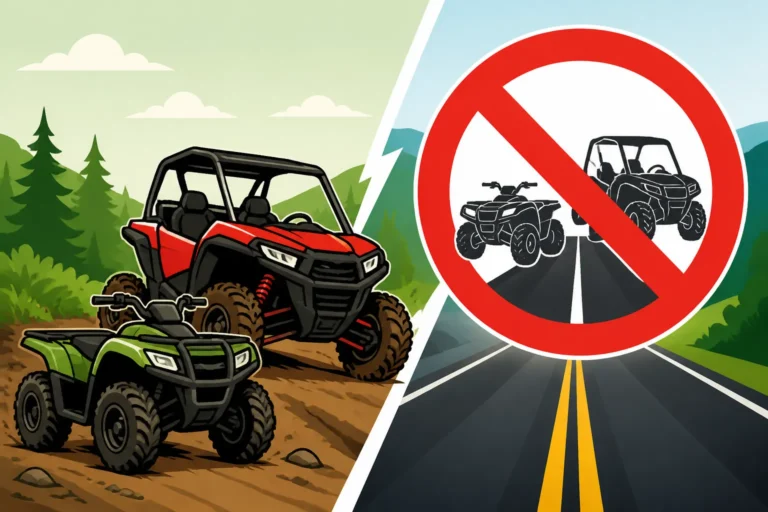
For example, if your home state allows you to drive a two-seater UTV with handlebars on public roads, you'll immediately run into a problem in Georgia. The [Why Georgia Will Not Register an Ordinary Quad] and [Why Handlebars Disqualify a Machine] rules are part of Georgia's MPOHV eligibility. Even if your machine is registered elsewhere, if it doesn't meet Georgia's fundamental criteria – like having a steering wheel, not handlebars, or meeting specific width and weight limits – you'll likely face issues if stopped on a Georgia county road. The Georgia MPOHV program requires factory seat belts, specific lighting, and a non-straddle seat, among other things. Your out-of-state machine will need to meet these functional requirements, regardless of its plate, if you plan to use Georgia's limited road access.
Navigating Georgia's Roads with an Out-of-State UTV
So, you've brought your UTV into Georgia. Where can you actually ride it on public land or roads? This is perhaps the most critical question for any visitor, and the answer is far more restrictive than many might hope. Georgia maintains strict boundaries for off-highway vehicles, regardless of where they're registered.
County Roads: The Only Real Option (If You Qualify)
The good news, or perhaps the less bad news, is that Georgia's MPOHV program does allow registered machines to use county roads. For an out-of-state UTV, this means your best bet for limited public road access is also the county road system. However, this is not a blanket permission slip. You must still adhere to all Georgia traffic laws, including speed limits, and your UTV must meet the basic equipment requirements that a Georgia-registered MPOHV would. This includes things like working headlights, brake lights, mirrors, and seat belts. Many riders add aftermarket mirrors or turn signal kits, often sourced from companies like SuperATV, to ensure their UTVs are compliant for road use.
Furthermore, counties in Georgia have the authority to pass their own ordinances regarding UTVs on their roads. While the state law enables county road access for MPOHVs, a county can choose to prohibit them. This means that before venturing out, it's wise to check with the local sheriff's office or county government in the specific county you plan to ride in. What's allowed in one Georgia county might be explicitly forbidden just across the county line. The state law provides a framework, but local implementation can vary. [Georgia UTV Road Rules by County] highlights this nuanced landscape. Always remember that riding on private land with permission is generally fine, but public road access is tightly controlled.
State Routes, Interstates, and Crossing Limitations
Here's where the restrictions become very clear and almost universal:
- State Routes: You generally cannot ride your UTV on Georgia State Routes, even if it's registered out-of-state and perfectly street legal in your home state. These roads are typically designed for higher-speed traffic, and UTVs are not permitted.
- Interstates: Absolutely no UTVs, side-by-sides, or ATVs are allowed on Georgia's interstates. This is a hard and fast rule with no exceptions, regardless of your registration.
- Crossing Limitations: While you cannot ride on state routes, Georgia law does allow for crossing them at designated points, typically at intersections. This is crucial for connecting pieces of a county road system or accessing trailheads. However, this crossing must be done perpendicular to the flow of traffic, as safely and quickly as possible, and only at an intersection where a county road meets a state route. You cannot just ride down a state route for a short distance to get to another county road. [Georgia UTV Rules Crossing a State Route] provides more detail on this specific maneuver.
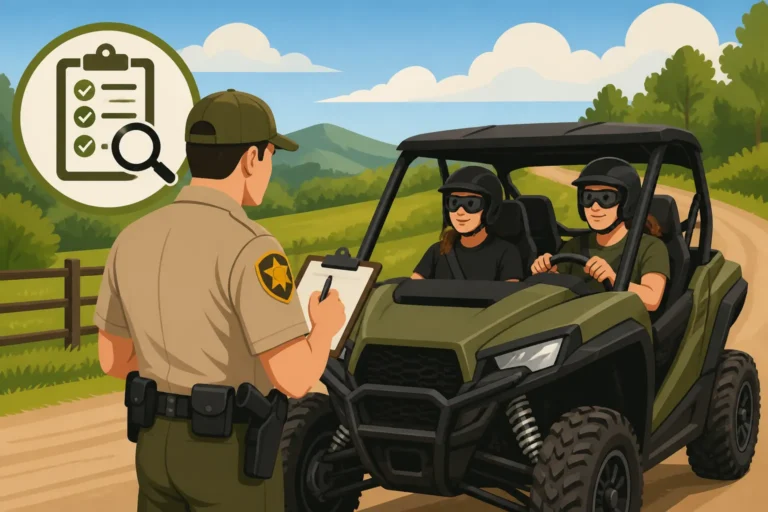
Ignoring these restrictions can lead to significant penalties, including fines and potentially even impoundment of your machine. Law enforcement will check not just for registration but also for compliance with Georgia's specific road access laws for UTVs.
Key Equipment and Operator Requirements for Out-of-State UTVs
Even if your out-of-state UTV is plated, Georgia has specific requirements for machines that operate on its limited public roads. You'll need to ensure your machine meets these safety and equipment standards, and that you, as the operator, are properly prepared.
Safety Gear and Machine Modifications
Georgia's MPOHV program sets the baseline for what an off-highway vehicle needs to have to be considered road-worthy on county roads. For an out-of-state machine, you'll implicitly be held to these same standards:
- Headlights and Taillights: Your UTV must have operational headlights and brake lights. These are essential for visibility, especially if you find yourself on a county road after dusk or in inclement weather.
- Mirrors: A working rearview mirror is required. Many UTVs come with these, but if yours doesn't, or if you want broader visibility, adding aftermarket side mirrors can be a great idea. Companies like SuperATV offer a range of mirrors designed for UTVs that provide excellent visibility and durability.
- Seat Belts: All occupants must be secured by a factory-installed seat belt. This is a non-negotiable safety feature and a key part of Georgia's eligibility criteria for MPOHV registration, as covered in [Georgia Requires Seat Belts on a Registered Machine].
- Tires: While not explicitly detailed for out-of-state machines, your tires must be suitable for road use and in good condition. Off-road-only tires with aggressive treads might be legal, but consider their wear on asphalt.
- Horn: A working horn is a must for signaling.
- Windshield/Eye Protection: While a full windshield isn't strictly required for the MPOHV program, eye protection is crucial for any open-air vehicle. Goggles or safety glasses are always a good idea, and a full windshield from a brand like SuperATV can enhance comfort and protection from debris.
- Width, Weight, Speed: Your UTV must fall within Georgia's specified dimensions and speed capabilities for an MPOHV. This includes the [Georgia's 80-Inch Width Limit for Registration], [Georgia's 4,000-Pound Gross Weight Ceiling], and the [Georgia's 25 to 65 mph Speed Requirement]. If your machine is too wide, too heavy, or too slow/fast for these parameters, even if registered out-of-state, it won't be permissible on Georgia county roads.
It's important to do a thorough check of your UTV before your trip to ensure it meets these critical requirements. A quick stop by a local Georgia dealer or even reviewing the state's MPOHV guidelines online can help you assess your machine's readiness.
Driver's Licenses and Insurance Expectations
Operating any motorized vehicle on public roads, even limited county roads, comes with responsibilities. For out-of-state visitors, this includes proper licensing and insurance.
- Driver's License: Anyone operating a UTV on a Georgia county road must possess a valid driver's license. This means a license issued by your home state is generally acceptable, as long as it's not expired or suspended. There is no special "UTV license" in Georgia, but you must be a licensed driver. [Do You Need a License to Drive a UTV in Georgia?] clarifies this for residents, and the same principle applies to visitors.
- Minimum Age: Operators must be at least 16 years old to drive an MPOHV on a county road. Even if your home state allows younger drivers with a permit or certain conditions, Georgia's minimum age applies to public road operation.
- Insurance: Proof of liability insurance is mandatory for any UTV operating on Georgia's public roads, even if only on county roads. Your out-of-state insurance policy should cover your UTV for liability in Georgia. It's a good idea to carry physical proof of insurance with you, as a deputy may ask for it during a stop. Review your policy before your trip to confirm coverage for out-of-state road use. [Georgia UTV Insurance Minimums] outlines what Georgia expects in terms of coverage.
Remember, compliance isn't just about avoiding a ticket; it's about safety for yourself, your passengers, and others on the road. Being prepared with the right equipment and documentation ensures a smoother and more enjoyable riding experience in Georgia.
Common Pitfalls and How to Avoid Them
Visiting a new state with your UTV can be exciting, but misunderstandings about local laws can quickly turn fun into frustration. Being aware of common pitfalls can help you steer clear of trouble.
Local Ordinances and Unmarked Territories
As mentioned, while Georgia's state law allows for MPOHV use on county roads, individual counties retain the right to restrict or prohibit this access through their own local ordinances. This creates a patchwork of rules across the state that can be incredibly confusing for visitors. What might be perfectly fine on a dirt road in one county could be illegal just a few miles down the road in another.
How to avoid this pitfall:
- Do your homework: Before you even leave home, identify the specific county or counties you plan to ride in. A quick call to the local sheriff's office or checking the county's official website for ordinances related to "off-road vehicles," "UTVs," or "MPOHVs" can save you a lot of grief.
- Look for signage: While not always present, some counties or communities might post signs indicating "No OHV Access" or similar. Always heed these warnings.
- Don't assume: Just because you see others riding doesn't mean it's legal. They might be residents with specific permissions, or simply unaware of the law themselves. It's always best to be sure of your own compliance.
Another common pitfall involves "unmarked territories" – these are areas that aren't clearly marked as public roads or private land. Think about utility easements, old logging roads, or abandoned tracks. If it's not explicitly designated as a public county road or you don't have explicit permission from the landowner, assume it's private property. Riding on private land without permission is trespassing and can lead to severe penalties. This is covered more deeply in [Georgia Trespass Law for ATV Riders].
Staying Informed and Respecting the Rules
The laws surrounding UTVs on public roads are constantly evolving, both at the state and local levels. What was true last year might have changed. Furthermore, the limited road access granted by Georgia's MPOHV program is itself subject to a "sunset" clause. [Georgia's ATV Road Access Law Sunsets in July 2027] indicates that the current provisions allowing UTVs on county roads are set to expire unless renewed by the legislature. This means that future access is not guaranteed, and staying informed is paramount.
How to avoid this pitfall:
- Check for updates: If you're planning a trip further out, do a quick search for "Georgia UTV road laws update" or check the Georgia Department of Revenue's motor vehicle division website closer to your travel date.
- Err on the side of caution: When in doubt, it's always safer to assume a road is off-limits than to risk a citation. Georgia has many fantastic private off-road parks and designated OHV trails within its national forests where you can ride freely within their specific rules. For guaranteed legal riding, consider places like Iron Mountain Resort, which is detailed in [Iron Mountain Resort: Georgia's Biggest Private Park], or one of the many national forest trail systems like Houston Valley.
- Be a good ambassador: When you ride, especially in an area that allows limited road access, your actions reflect on the entire UTV community. Respect speed limits, yield to other traffic, don't create excessive noise, and always pick up after yourself. Responsible riding helps ensure continued, or even expanded, access for everyone in the future.
By understanding these nuances and proactively seeking information, you can ensure your visit to Georgia with your out-of-state registered UTV is enjoyable, safe, and free from legal headaches.
| Road Type | Out-of-State UTV Permitted | Georgia Registered MPOHV Permitted | Notes for Out-of-State Riders |
|---|---|---|---|
| Interstate Highways | No | No | Absolutely prohibited. |
| State Routes | No | No | Generally prohibited for continuous travel. |
| State Route Crossings | Yes (limited) | Yes (limited) | Only at intersections, perpendicular to traffic, to connect county roads. |
| County Roads | Yes (conditional) | Yes (conditional) | Must meet Georgia MPOHV equipment & operator rules. Local ordinances may still prohibit. |
| Designated OHV Trails | Yes (with permit/fee) | Yes (with permit/fee) | Requires a Georgia OHV Permits: What You Need Before You Ride for forest trails or park fees. |
| Private Land | Yes (with permission) | Yes (with permission) | Always get explicit permission from the landowner. |
Disclaimer
This article is for general informational purposes only and does not constitute professional advice. Laws, prices and regulations vary by location and change over time. Consult a qualified professional for guidance on your specific situation.