Georgia OHV Permit Cost in 2026
If you’re trying to budget for an off-road ride in Georgia, the first question is which kind of land you plan to ride. A Forest OHV permit is not a statewide ATV registration or a ticket that grants access everywhere. Here’s how the day and annual permit costs work, who needs one, and what to check before setting out.
Georgia Forest OHV permit costs
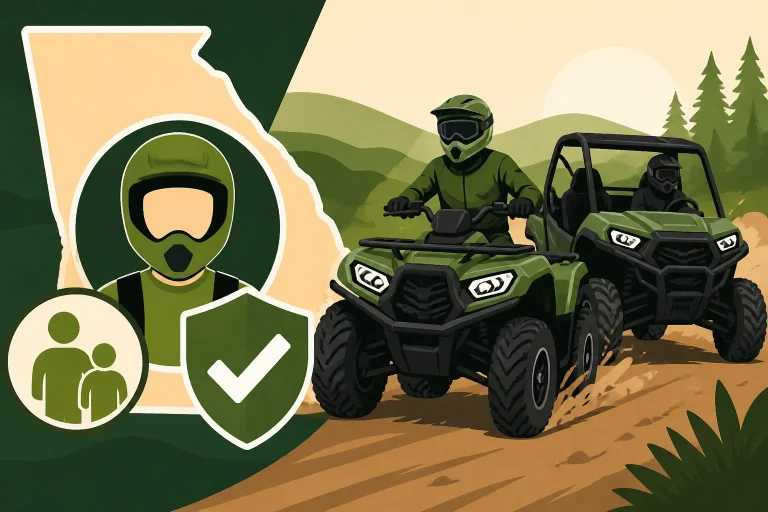
The listed Georgia Forest OHV permit rates are $5 for a day permit and $50 for an annual permit. The permit is per operator, not per ATV or UTV, so each person who will operate a machine needs their own permit. Check the current amount and purchase options through an official permit seller before your trip; fees and availability can change.
| Permit option | Listed cost | Who needs it | Practical use |
|---|---|---|---|
| Day permit | $5 per operator | Each person who operates | A single riding day |
| Annual permit | $50 per operator | Each person who operates | Repeated visits during the permit period |
These are Forest OHV permit costs, not the full cost of a riding day. You may also have fuel, travel, food, gear, campground or private-park charges, and machine maintenance to account for. A park or other riding property may set its own admission fees and requirements.
The day and annual options are summarized in Georgia’s Day and Annual Forest OHV Permits. The key detail is that the permit follows the rider: changing machines during a ride does not turn the permit into a vehicle-specific pass. Conversely, one permit does not cover several people taking turns driving. See Georgia’s Per-Operator Permit, Not Per Vehicle for that distinction.
An annual permit can be a better fit if you expect multiple visits to the covered Forest OHV systems. The listed day rate adds up over repeat days, but the right choice depends on how often you ride, when the permit is valid, and whether your planned locations accept it. Don’t buy an annual permit on the assumption that it covers every OHV destination in Georgia.
For riders who visit several covered systems, the annual permit can simplify budgeting: one operator permit is valid across the six Georgia National Forest OHV systems. It does not mean a permit holder can bring additional operators under the same purchase. Confirm the system’s current status and access requirements before driving there; a permit is not a guarantee that a trail is open. More detail is available in One Annual Permit Covers All Six Georgia OHV Systems.
What the permit covers, and what it does not
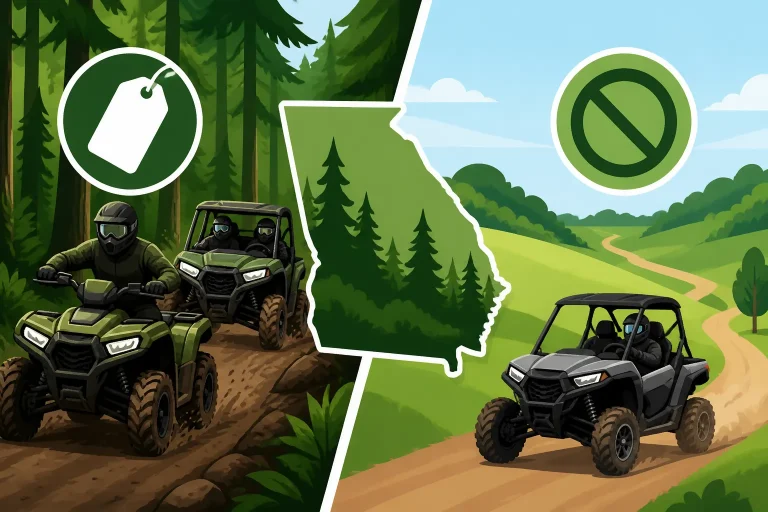
Georgia does not have one general OHV permit that authorizes every ATV or UTV ride statewide. The Forest OHV permit applies to designated National Forest OHV riding areas that require it. It is separate from private riding parks, Wildlife Management Areas, vehicle registration, and rules for riding on roads.
That distinction matters because a permit can be valid while the place you intend to ride is closed, restricted to certain machines, or governed by a different access system. Check the land manager’s rules for the exact trail or property rather than relying on a permit alone.
National Forest OHV systems
For designated Forest OHV areas, confirm whether a permit is required, whether the trail system is open, and whether your machine fits its limits. Trail width, vehicle type, seasonal closures, weather-related closures, and operating hours can all affect whether you can ride. A purchase does not override those restrictions.
Georgia has six Forest OHV systems covered by the annual permit, but that doesn’t mean every forest road or trail is open to motorized riding. Follow posted signs and stay on routes open to your machine. For background on riding permission and the limits of a permit, see What an Operator Permit Does Not Cover.
Private parks and WMAs
Private parks set their own admission charges, waivers, age rules, and machine requirements. A Forest OHV permit should not be treated as payment for entry to a private park. Check the property’s current rules directly; Georgia Private Park Waivers and Rules explains why park access requirements are a separate question.
Wildlife Management Areas also have their own riding restrictions. Access may depend on the specific area, road, date, and activity, and a Forest OHV permit does not substitute for those rules. Review Georgia WMA Riding Rules Explained and verify the rules for the exact WMA before using a machine there.
Registration and road use
A Forest OHV permit is not an ATV or UTV registration, a license plate, proof of ownership, or authorization to ride on a public road. Georgia’s separate registration process for qualifying machines is called MPOHV registration. It has its own eligibility and paperwork requirements, and registration does not automatically make a machine legal on every road. Likewise, having an OHV permit does not create road access.
If your plans include public roads, check the applicable road rules separately. If you’re only riding on private land with permission, the Forest permit may not be relevant, but the landowner’s conditions and any other applicable rules still matter.
Who needs a permit and how to choose one
The practical test is whether you will be operating a machine on a covered Forest OHV system. If you are driving, plan on having your own operator permit. A passenger who does not operate the machine generally is not buying an operator permit merely for riding as a passenger, but check the current terms and the trail system’s rules, especially when children or additional riders are involved.
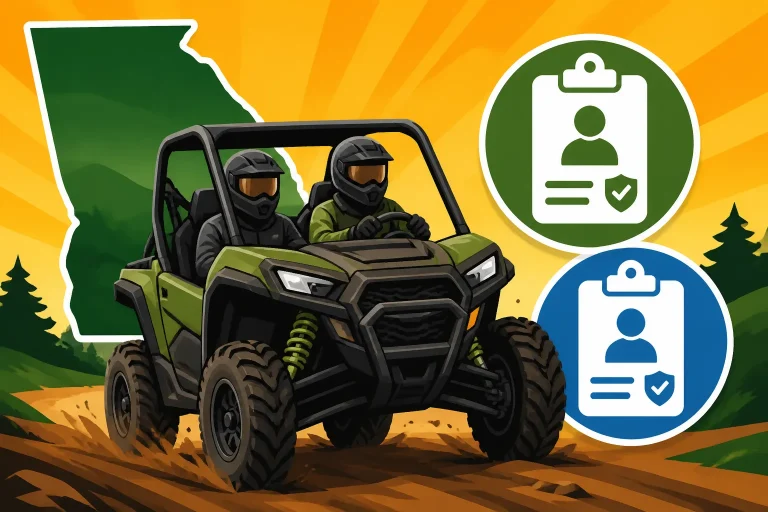
For a group, count operators rather than machines. Two people driving one side-by-side at different times need separate operator permits. One person operating two different machines during a visit does not need a separate permit for each machine solely because the permit is per operator. The rules for passengers and minors may involve additional requirements; do not assume a permit settles questions about age, supervision, helmets, or passenger seating.
Choose the day permit if you expect a one-day visit and the annual option if repeated visits make it worthwhile. Before paying, check:
- Your riding location. Make sure it is one of the covered Forest OHV systems, not a private park or a WMA with different rules.
- Who will operate. Each operator should have an individual permit.
- The dates and coverage terms. Verify when a day permit is valid and the annual permit’s effective period.
- Trail status and machine restrictions. Look for closures, width limits, permitted vehicle types, and operating hours.
- How to show the permit. Confirm whether the current terms require a printed copy, a phone display, or another form of proof.
The annual option may suit someone who rides repeatedly, but it is not automatically the cheaper choice for every schedule. A rider planning a single trip may prefer the day option, while someone with several trips should compare the current terms and expected visits. For a family or group, calculate the cost by the number of operators rather than by the number of vehicles.
Buying the permit and avoiding wasted costs
Permit purchase channels and procedures can change, so use the official route and verify the instructions before checkout. How to Buy a Georgia Forest OHV Permit covers the purchase process, and Georgia Permits on Recreation.gov is useful when checking the online option. If you plan to buy in person, confirm that the location sells the permit you need and check its hours before making the drive.
Keep the permit information accessible while riding. A paper copy stored in a waterproof sleeve can help if a phone battery dies or service is unavailable; a small document pouch from a general retailer, including Amazon, is one possible option. If the rules permit a digital copy, save it offline rather than relying on a live internet connection at the trailhead. Follow the current permit instructions about what counts as acceptable proof. See Carrying a Permit on the Trail for practical reminders.
A few common assumptions can lead to paying for the wrong thing or arriving without what you need:
- Assuming the permit covers every Georgia trail: It does not. Check the property and trail system.
- Buying one permit for a group: The permit is per operator, so each person who drives needs their own.
- Treating a permit as machine registration: The Forest permit and Georgia MPOHV registration serve different purposes.
- Assuming an open permit means open trails: Closures and route restrictions still apply.
- Leaving the purchase until the trailhead: Online access, local sales availability, or connectivity may not work as expected. Confirm your purchase plan ahead of time.
There is no need to buy a Forest OHV permit simply because you own an ATV or UTV. The relevant question is where and how you plan to ride. If you ride only on private property, ask the landowner about access and any conditions. If you’re headed to a covered Forest OHV system, check its current permit and trail rules. If your plans include a WMA, private park, or public road, research that access separately.
Finally, a permit is not a substitute for safe riding preparation. Check your machine before hauling, bring the gear and supplies you need, and make sure every operator understands the route and restrictions. Georgia does not require a statewide ATV safety course, but that does not make training or supervision unnecessary. Georgia Has No State ATV Safety Course explains the difference between a course requirement and the practical value of learning safe operation.
Disclaimer
This article is for general informational purposes only and does not constitute professional advice. Laws, prices and regulations vary by location and change over time. Consult a qualified professional for guidance on your specific situation.