Do Georgia Kids Need Their Own Permit?
A family ride can raise a surprisingly specific question: does every child need a permit, or only the person driving? In Georgia, the answer depends on whether a child is operating the machine and where you plan to ride. Here’s how forest OHV permits differ from age rules, passenger rules, and requirements at other riding areas.
The short answer: operators need their own forest OHV permit
For Georgia’s National Forest OHV trail systems, the permit is tied to the person operating the machine, not to the ATV or UTV. If your child will drive on a trail system that requires a forest OHV permit, the child needs a permit too. An adult’s permit does not cover a child who takes a turn driving.
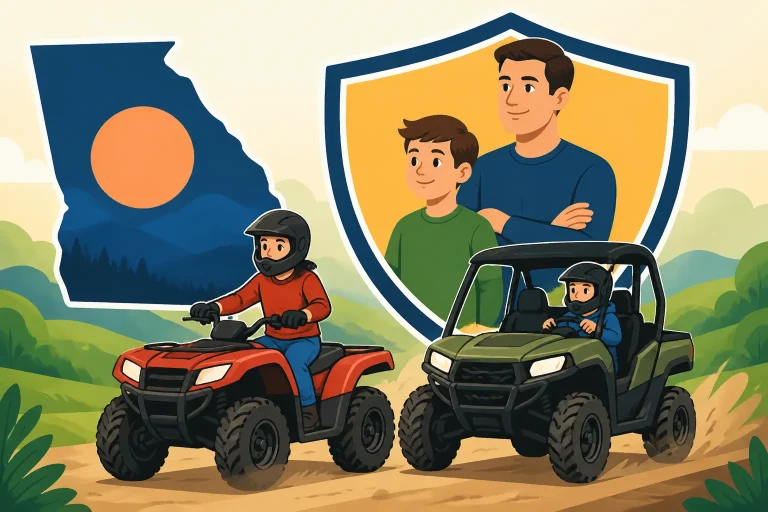
A child riding as a passenger generally does not need a separate operator permit just for being aboard. The person controlling the machine is the operator. But a passenger may still need to meet the trail system’s age, seating, helmet, and supervision rules. A permit answers only the permit question; it does not establish that a child is allowed to operate or ride a particular machine.
| Child’s role | Separate forest OHV operator permit? | What else to check |
|---|---|---|
| Child drives an ATV or UTV | Yes, if the trail system requires an operator permit | Minimum age, supervision, vehicle eligibility, and trail rules |
| Child rides as a passenger | Generally no operator permit solely for being a passenger | Passenger age and seating rules, helmet requirements, and adult supervision |
| Child switches from passenger to driver | Yes, before operating | Whether the child is eligible to drive that machine on that system |
| Child rides at a private park | The forest permit may not apply | Park admission, age restrictions, waivers, and park-specific permit rules |
| Child rides on a Wildlife Management Area | A forest trail permit does not settle the question | WMA age, access, time, and activity rules |
Georgia’s day and annual forest permits are structured per operator, rather than per vehicle. That means one adult’s permit does not become a family permit when several people take turns driving. For details about the permit types and where they apply, see Georgia’s Day and Annual Forest OHV Permits and Georgia’s Per-Operator Permit, Not Per Vehicle.
Permit prices and purchase details can change, so check the current official permit information before you go. The useful point for planning is the way the requirement is counted: by operator. If two people will drive, plan for each to meet the permit requirement independently.
This is different from buying a permit for every machine. One rider who operates more than one machine during a trip generally does not need a separate operator permit for each vehicle just because the rider switches machines. But a second person who takes the controls is a second operator and needs to meet the same requirement.
A permit does not set a child’s minimum age
A child can need a permit and still be too young to operate on a particular property. The permit requirement and the minimum age rule are separate checks. A permit does not override a land manager’s restrictions, a park’s rules, or the requirements that apply to a particular machine.
Before letting a child drive, verify the rules for the specific riding location. Georgia’s public riding opportunities are not all governed by one universal age rule. National Forest OHV trails, Wildlife Management Areas, and private parks can have different restrictions. Even within a general type of location, specific trails or facilities may have their own rules.
National Forest OHV trails
On a National Forest OHV trail system that requires a permit, a child who operates needs their own operator permit. Separately, check the system’s current rules for youth riders, adult supervision, machine type, and passengers. Do not assume a child is eligible just because an adult has a permit or because the child can safely operate the machine elsewhere.
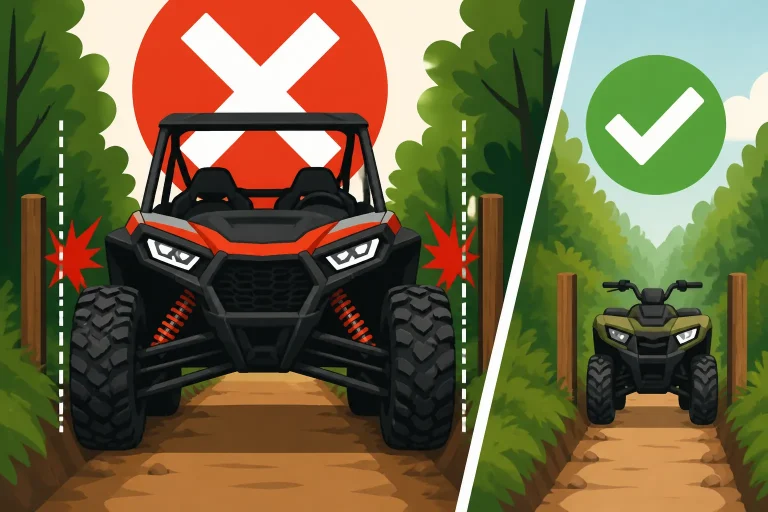
Parents should also confirm that the particular trail allows the machine being used. A child’s permit does not make a wide UTV eligible for a narrow ATV trail, and it does not replace any required safety equipment or vehicle restrictions. Trail access and permit rules are related but distinct questions.
Wildlife Management Areas
A Wildlife Management Area is not interchangeable with a National Forest OHV trail system. Georgia WMA riding is subject to specific access limits, and the operator age requirement is an important part of the check. The listed minimum age for WMA ATV operators is 16. A child younger than that should not assume a forest OHV permit makes WMA riding permissible.
WMA riding is also restricted by where and when riding is allowed. Rules may limit vehicles to roads and tie access to hunting activity or particular hours. Check the WMA’s current rules for the specific property and trip, rather than relying on a general forest permit. See Georgia WMA Minimum Age of 16 and Georgia WMA Riding Only on Roads for related details.
Private riding parks
Private parks set their own admission, age, supervision, waiver, and machine-use requirements. A National Forest OHV permit generally does not serve as a private park pass or replace the park’s rules. Some parks may require separate arrangements for a youth rider or may limit which machines a child can operate.
Check the park’s current policy before loading the trailer. Ask whether the age limit applies to drivers, passengers, or both; whether an adult must ride with or supervise a minor; and whether the park has different rules for rentals. Georgia Private Park Age Minimums covers the separate rules to look into.
Public roads and private land
A forest OHV permit is not a road permit, vehicle registration, or general authorization to ride anywhere in Georgia. It does not make an ATV or UTV legal on a public road, and it does not grant access to private property. If the plan involves a road, a WMA, or land outside the permitted trail system, check the rules for that place and activity separately.
Passengers do not usually need an operator permit, but they still have rules
The operator-permit distinction is straightforward: the person driving needs the operator permit; a passenger is not operating simply by sitting in the passenger seat. However, a child’s passenger status does not make every ride appropriate or allowed.
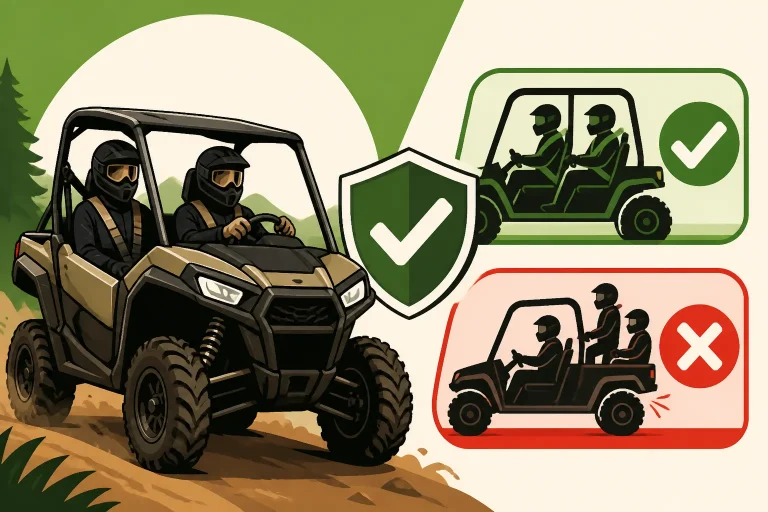
First, the machine must be designed to carry a passenger. A child should not ride on a machine that lacks a proper passenger seat or footrests, or where the child cannot sit securely and reach the required supports. A passenger must be seated in the position intended by the manufacturer, not carried on a cargo area, fender, or other improvised spot.
Second, check the destination’s rules. A park or trail system may set a minimum passenger age, require a particular seating arrangement, or impose supervision conditions. A child who is allowed to ride as a passenger at one location may not be allowed to do so at another.
Third, follow applicable helmet and protective-equipment rules. Georgia has age-related helmet rules for ATV riders, and private facilities may impose additional requirements. Do not assume that being a passenger exempts a child from a helmet rule. Confirm the current requirements for the child’s age and the riding location, and use properly fitted protective gear even where a rule is less specific.
A passenger’s presence can also affect whether a machine is suitable for the trip. Stay within the vehicle’s passenger capacity and account for the added weight when loading gear. On rough trails, steep terrain, or narrow routes, a child passenger may need more protection and supervision than a permit checklist can provide.
If a child will alternate between riding as a passenger and driving, treat each role separately. The child does not need an operator permit while only riding as a passenger under the forest permit system, but needs one before operating. And the child must satisfy all age and supervision requirements before taking the controls. More detail on the distinction is available in Georgia Permit Rules for a Passenger Under 16 and What an Operator Permit Does Not Cover.
How to check the rules before a family ride
A little preparation helps avoid buying the wrong permit or arriving at a trailhead only to discover that a child cannot drive there. Use this checklist for each location, not just once for the whole trip.
- Name the exact riding area. Identify whether it is a National Forest OHV trail system, a WMA, a private park, or another property. Do not treat one kind of access as covering another.
- Decide who will operate. List each person who might drive, including children who may take turns. On a permit-required forest trail, each operator needs to meet the operator-permit requirement.
- Check each child’s eligibility. Confirm minimum age, supervision, and any vehicle-specific rules with the land manager or park. Do this even if the child already has a permit.
- Check passenger rules separately. Confirm whether the child can ride as a passenger, whether the machine is built for passengers, and whether the child meets the location’s conditions.
- Confirm the current permit process. Check the official information for the system you plan to visit. Make sure the permit is valid for that location and that each intended operator is covered.
- Review trail and equipment limits. Check machine type, width or other vehicle restrictions, helmet and gear rules, and any trail closures.
- Carry or display what the rules require. Follow the current instructions for showing or carrying the permit. Do not assume that a phone image or an adult’s permit will satisfy every requirement.
- Recheck close to departure. Access, closures, and local rules can change. Verify them again before driving to the trailhead.
For youth supervision specifically, check the rules for the place you are visiting rather than applying a rule from a different system. Georgia Supervision Rules for Minors is a useful related topic, but the property’s current instructions remain the practical authority for your trip.
If you are unsure how the permit applies to a child who may take turns driving, ask the relevant permit provider or land manager before purchasing. Explain the child’s age, whether the child will drive or ride as a passenger, the machine type, and the exact area you intend to visit. Those details help distinguish a permit question from an age or access question.
The safest planning rule is simple: count every person who will operate, then check that person’s eligibility and the location’s rules. A child who only rides as a passenger generally does not need a separate forest operator permit, but a child who drives does. Neither answer replaces checking age limits, supervision, passenger requirements, or property-specific access rules.
Disclaimer
This article is for general informational purposes only and does not constitute professional advice. Laws, prices and regulations vary by location and change over time. Consult a qualified professional for guidance on your specific situation.