Georgia’s Per-Operator Permit, Not Per Vehicle
A Georgia forest OHV permit is tied to the person operating a machine, not to the ATV or UTV itself. That distinction matters when you ride with a passenger, bring several machines, or travel from out of state. Here’s how the per-operator rule works, what the permit covers, and what to check before you head for a trailhead.
What “Per Operator” Means
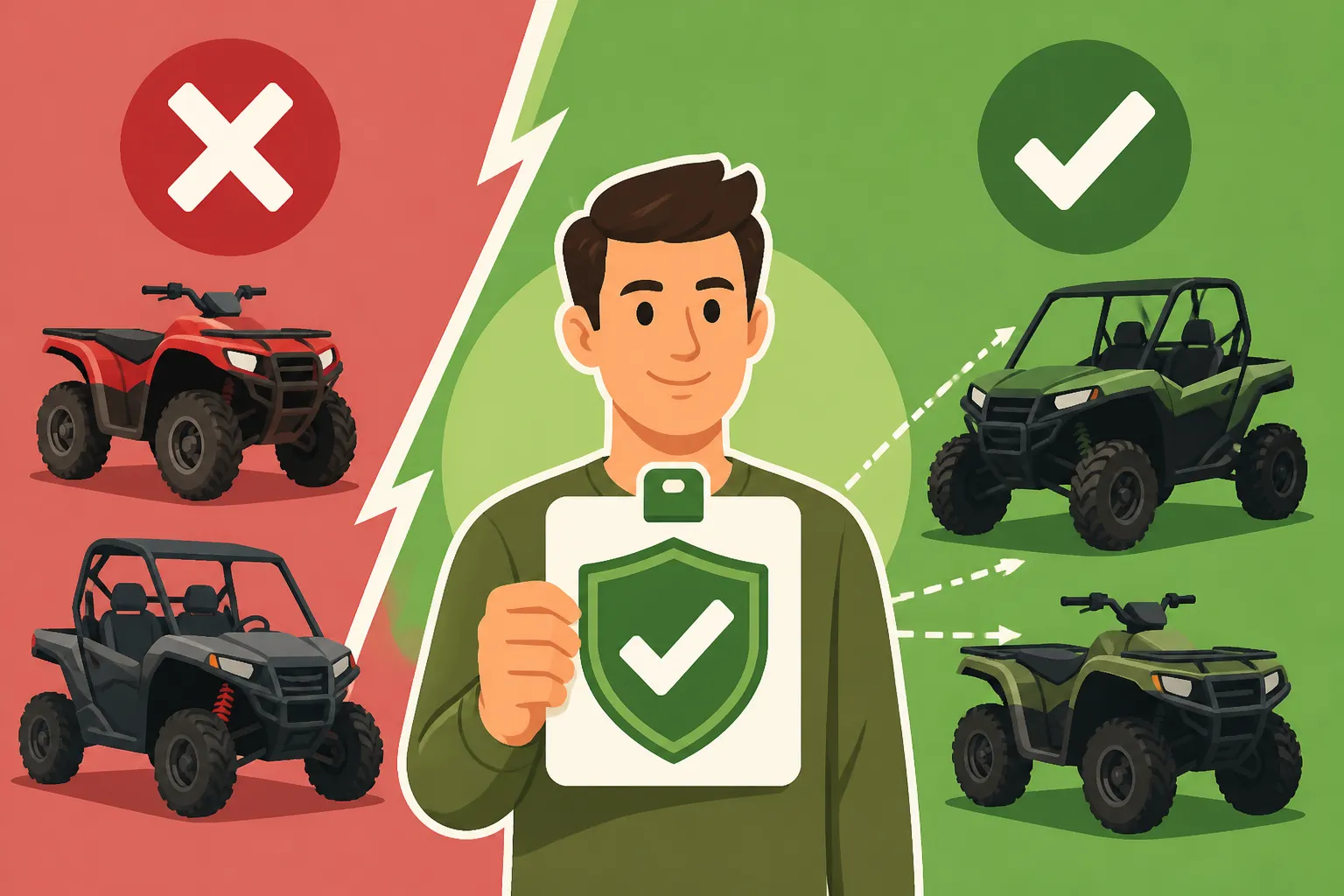
Georgia’s forest OHV permit system charges and issues permits by operator rather than by vehicle. In practical terms, the permit belongs to the person who is driving on a covered trail system. It does not become a vehicle registration, a plate, or a permit that stays with the machine when someone else takes the controls.
That changes how you should plan a ride. If one person operates one machine, that person needs the required permit. If two people take turns driving, each person who operates needs their own permit. If a group brings several machines but each machine has only one operator for the day, the group needs a permit for each operator, not one permit for each machine.
This is different from vehicle-based documents such as a registration sticker or plate, which are associated with a particular machine. A forest OHV permit is about the operator’s access to the designated riding system. It is not a substitute for ownership paperwork, registration, insurance, or compliance with other rules that may apply to your machine.
| Riding situation | How to think about the permit |
|---|---|
| One operator rides one machine | The operator needs the required permit |
| One operator switches between two machines | The permit follows that operator, subject to the system’s current terms |
| Two people take turns driving one machine | Each person who operates needs their own permit |
| One person drives while a passenger rides | The passenger generally does not need an operator permit unless they also drive |
| A group brings several machines | Count the people who will operate, not just the machines |
| An out-of-state visitor rides a Georgia forest OHV system | Do not assume an out-of-state permit replaces Georgia’s permit |
For the basic distinction between day and annual options, see Georgia’s Day and Annual Forest OHV Permits. For a wider overview of what to arrange before a ride, Georgia OHV Permits: What You Need Before You Ride is a useful companion.
The permit follows the person, not the keys
A common point of confusion is whether a permit stays valid when the machine changes hands during a ride. The operator-based approach means you should focus on who is actually driving. A rider who has a permit should not assume that another person can take over under that same permit just because both riders are using the same ATV or UTV.
If you plan to swap drivers, arrange permits for every person who might operate before leaving home. That avoids having to decide at the trailhead whether a passenger who wants to drive needs a separate permit. The practical answer is simple: if someone will operate, plan for that person to have the required permit.
A permit also does not automatically transfer when you sell or lend a machine. The machine may go to a new owner, but the permit is associated with its holder. If someone else is taking the machine to a covered riding area, they should check what permit they need for themselves.
A permit is not a machine registration
The word “permit” can make it sound like the document authorizes a particular vehicle. For Georgia forest OHV riding, do not confuse the operator permit with state registration or a road-use credential. The forest permit does not by itself make a machine eligible for county-road use, and it does not replace any paperwork required for a machine registered for a separate purpose.
Georgia also has a distinct registration process for certain qualifying machines, which is separate from access permits for forest trails. If your question is whether a machine can receive a registration or plate, start with Georgia MPOHV Registration Explained. If your question is whether an operator has the required access document for a forest OHV system, focus on the forest permit rules instead.
Who Needs a Permit, Including Passengers and Visitors
The central question is whether a person will operate a machine on a covered system. A passenger who remains a passenger is not the same as an operator. But if that passenger takes the controls, even briefly, they are operating and should have their own required permit.
This distinction is especially useful for families and groups. A parent may drive while a child rides as a passenger, then let the child drive a portion of the ride if the child is legally permitted to operate and meets the site’s rules. The child should not be assumed to be covered by the adult’s permit. Age, supervision, helmet, and machine rules are separate considerations from the permit itself.
For the passenger question specifically, see Does a Passenger Need Their Own Georgia Forest Permit?. For younger riders, review Georgia Permit Rules for a Passenger Under 16 as well as the applicable age and supervision rules for the riding area. A permit does not override a minimum-age rule or make an otherwise prohibited rider eligible to drive.
Visitors from another state
Coming from Alabama, Tennessee, Florida, or another state does not automatically exempt you from Georgia’s forest permit requirement. The permit applies to the covered Georgia riding system, not just to Georgia residents. If you are visiting, check the Georgia system’s current requirements before traveling, even if your home state has its own trail pass or registration.
An out-of-state registration may help establish that a machine is properly documented in its home jurisdiction, but it is not the same thing as a Georgia forest OHV permit. Likewise, a pass issued by another state or riding park should not be assumed to count as a Georgia permit. Rules for reciprocal access can differ among systems, so confirm directly with the specific trail operator or official permit channel.
If you are bringing an out-of-state machine, keep the questions separate:
- What documents does the machine need under the rules that apply to it?
- Does each person who will operate need a Georgia forest OHV permit?
- Is the machine allowed on the trail system you plan to visit?
- Are there width, equipment, age, or trail designation restrictions?
- Is the system open on the day you expect to ride?
For a focused explanation of the visitor issue, see Do Visiting Riders Need a Georgia Forest Permit?. The safest approach is not to rely on a pass from home or an old trip’s paperwork. Check the current Georgia requirement for the system you intend to ride.
Passengers are not automatically operators
If your passenger never drives, they generally do not need an operator permit merely for sitting in the passenger seat. That does not mean they are exempt from all other requirements. The machine must be designed to carry them, and the passenger must follow applicable safety rules and the riding area’s policies.
Do not let a passenger operate under the driver’s permit. If a passenger wants to take a turn, treat that as a separate operator and make sure they meet all applicable requirements before they drive. For a family ride, it is worth settling this before loading the trailer, not after you reach the kiosk or trail entrance.
Where the Permit Applies—and Where It Does Not
Georgia’s forest OHV permit is associated with designated OHV riding systems, not every piece of public land where a person might see a dirt road. A valid permit does not give you blanket permission to ride anywhere in a national forest, on every forest road, or across land owned by someone else.
Georgia has several designated forest OHV systems, including Houston Valley, Beasley Knob, Whissenhunt, Town Creek, Oakey Mountain, and Davenport. The permit option and access rules may vary by location and can change with closures, weather, maintenance, or other management decisions. Check the status of the particular system before driving there. Georgia Annual Permits Valid at All Six Systems explains the annual-permit coverage, while How to Check Georgia Forest Trail Status helps with the separate question of whether a system is open.
A permit is not permission to ride every road
A forest permit does not convert an ordinary forest road into an OHV trail. Follow signs, gates, maps, and posted restrictions. A route may be closed to motor vehicles, restricted to a particular type of vehicle, or open only under specific conditions. Riding beyond the designated system can cause environmental damage and can also lead to enforcement problems.
The same caution applies to wildlife management areas, private parks, and private property. They may have their own access rules, passes, permits, waivers, or seasonal restrictions. A forest OHV permit is not a universal Georgia trail pass. If you plan to ride somewhere other than one of the covered forest systems, ask that location what it requires.
The permit also does not provide road access. It does not make an ATV or UTV street legal, authorize travel along a public road, or replace any requirements for crossing or using a road. Keep trail access and road use separate when planning a route.
Trail rules still apply after you have a permit
Having the permit is only one part of being ready to ride. A system may have machine-width limits, designated routes, one-way loops, noise expectations, operating hours, or temporary closures. A permit does not guarantee that every machine can use every trail at the site.
Before you leave, check the system’s current information for:
- Whether the riding area is open
- Which routes are open to your machine type and width
- Any seasonal or weather-related closures
- Required safety equipment or vehicle equipment
- Permit display or proof-of-purchase instructions
- Trailhead parking, access, or check-in procedures
This is particularly important if you have a side-by-side. A permit can be valid for its operator while the machine itself is still too wide for a specific trail. Verify both the permit rule and the vehicle-access rule.
Day and Annual Permits, Multiple Machines, and Groups
Georgia forest OHV permit options may include a shorter-use permit and an annual permit. The right choice depends on how often you ride, which systems you visit, and the current terms attached to each option. Confirm the current fee, validity period, and coverage with the official provider before purchasing; fees and program details can change.
The per-operator rule remains the key point whichever option you choose. An annual permit is not a group permit simply because one person paid for it. A family or riding club should count operators, not vehicles, when working out what each person needs.
If one operator owns or uses several machines, the operator-based system is not the same as buying a separate permit for each machine. Still, read the permit terms carefully. A permit that follows the operator does not mean every vehicle is automatically allowed on every trail, and it does not remove any vehicle-specific restrictions.
Choosing between a short-term and annual option
A short-term option may suit an occasional visit, while an annual option may be more practical for someone planning multiple trips. Avoid choosing based only on a guess about how many times you will ride. Check the actual validity terms, the systems covered, and the permit’s start and end rules before paying.
If your plans include several covered systems, verify whether the option you are considering applies at each one. The annual option is described as valid across the covered systems, but you should confirm the current list and any site-specific exceptions. A system can also be closed even when your permit remains valid.
For a location-specific purchasing overview, see Where Georgia Riders Buy a Forest Permit. If you intend to purchase online, Georgia Permits on Recreation.gov explains that route. Follow the official instructions about whether to print the permit, display it, or keep proof available on your phone.
Groups should make a rider list
A group organizer can prevent confusion by listing every planned operator before buying permits. Include anyone who might take a turn, not only the person who owns the machine. Then confirm that each person is old enough and otherwise allowed to operate the machine and use the system.
A simple pre-trip list can look like this:
- Write down each person who may drive.
- Identify which machines each person may use.
- Check the age and supervision rules for each operator.
- Confirm the permit option and current terms.
- Make sure each operator can show their own proof of permit.
- Check trail access and machine restrictions for the destination.
This approach is more reliable than counting machines at the trailer. Four machines with four drivers call for a different permit count than four machines with one driver who stays behind the wheel. The permit follows the person, so plan by person.
Some groups keep printed permit proof in a waterproof document sleeve. Amazon is one place riders may look for a basic sleeve, but any suitable weather-resistant holder will do. If you rely on a phone instead, keep the permit accessible offline or carry a printed backup in case reception or battery life is poor.
Buying, Carrying, and Showing Proof of the Permit
Use the official purchase channel or an authorized ranger district source, and read the instructions before completing the purchase. Confirm that the permit is for the correct activity and riding system. Do not rely on a search result, an old email, or a screenshot from another rider as proof that your own permit is valid.
Permit terms can include restrictions such as being non-transferable or non-refundable. That means you should check the intended operator’s name and the validity details before finalizing a purchase. If your group changes plans, do not assume you can hand one person’s permit to someone else or get the purchase refunded. Confirm the provider’s current policy.
A printed copy is useful even if you also keep a digital copy. Put it somewhere it will not be destroyed by rain, mud, or a spill. Amazon and outdoor retailers carry waterproof phone pouches that can help keep a digital copy accessible, though a pouch is not a substitute for following the permit’s official display or proof instructions. A simple paper sleeve in a riding pack can also work for printed proof.
Before the trip, check that each operator can show their own permit. Do not store the only copy on one person’s phone if the group may separate on the trail. Each rider should know where their proof is and how to access it.
If something goes wrong—such as a lost confirmation email, a phone that will not turn on, or a name mismatch—contact the permit provider or ranger district rather than assuming the trailhead staff can resolve it. If you need a replacement or clarification, use the official contact route and keep the response with your trip documents.
What the permit does not cover
A permit addresses access to a covered OHV system for the named operator under the applicable terms. It does not necessarily cover:
- A passenger who later takes the controls
- A different person using the operator’s permit
- A machine that is prohibited or too wide for the trail
- Riding on a closed trail or outside the designated system
- Access to a private park or a wildlife management area with separate rules
- Public-road use or street legality
- Safety equipment, age, supervision, or other riding requirements
That list is why it helps to check several things separately. The permit answers one question; it does not settle every legal or practical issue involved in the trip. For broader safety preparation, Georgia Has No State ATV Safety Course explains the distinction between a permit and rider education.
Amazon may also be useful for basic items such as a waterproof pouch or a small document organizer, but buying gear does not satisfy a permit requirement. Get the permit through the official channel, keep proof available, and verify the trail system’s current access rules before setting out.
A Simple Pre-Ride Check
The per-operator rule is straightforward once you make the operator—not the machine—the unit you count. Before every trip, ask who will drive, whether each driver has the right permit, and whether the destination accepts that permit for the planned ride.
Use this final check:
- Count every person who may operate, including someone who expects to switch with the primary driver.
- Make sure each operator has their own required permit.
- Treat passengers as passengers only unless they have the permit and meet the rules to drive.
- Confirm that visitors from another state have not mistaken a home-state pass for Georgia authorization.
- Check that the permit covers the intended system and date.
- Verify current trail status, machine access, and site-specific rules.
- Keep proof available in the format the official instructions require.
A permit is a small piece of a larger trip plan, but getting the operator count wrong can create a preventable problem at the trailhead. When you count people who will drive, rather than machines on the trailer, the rule is much easier to apply.
Disclaimer
This article is for general informational purposes only and does not constitute professional advice. Laws, prices and regulations vary by location and change over time. Consult a qualified professional for guidance on your specific situation.