Georgia Annual Permits Valid at All Six Systems
Georgia Annual Permits Valid at All Six Systems
Planning rides at more than one Georgia national forest OHV area? An annual forest permit can simplify the paperwork: one permit covers the operator at all six designated systems. The catch is that it does not cover every machine, every passenger, or every place to ride. Here’s what it applies to, what it doesn’t, and how to check the details before you tow.
What the annual permit covers
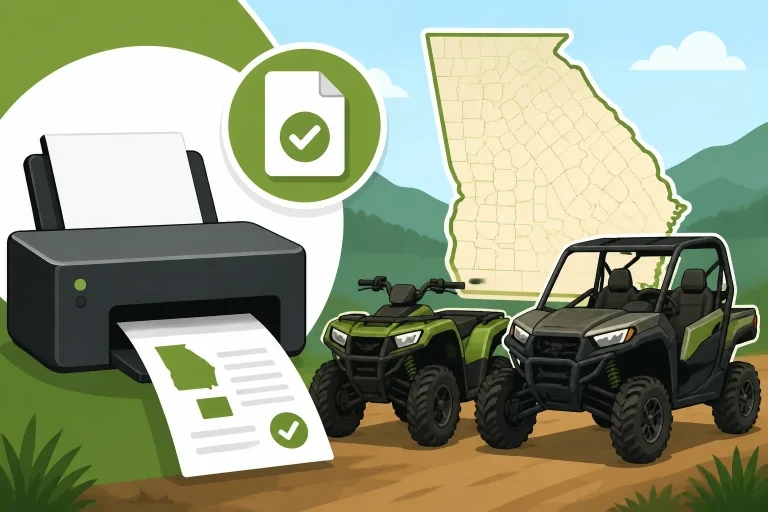
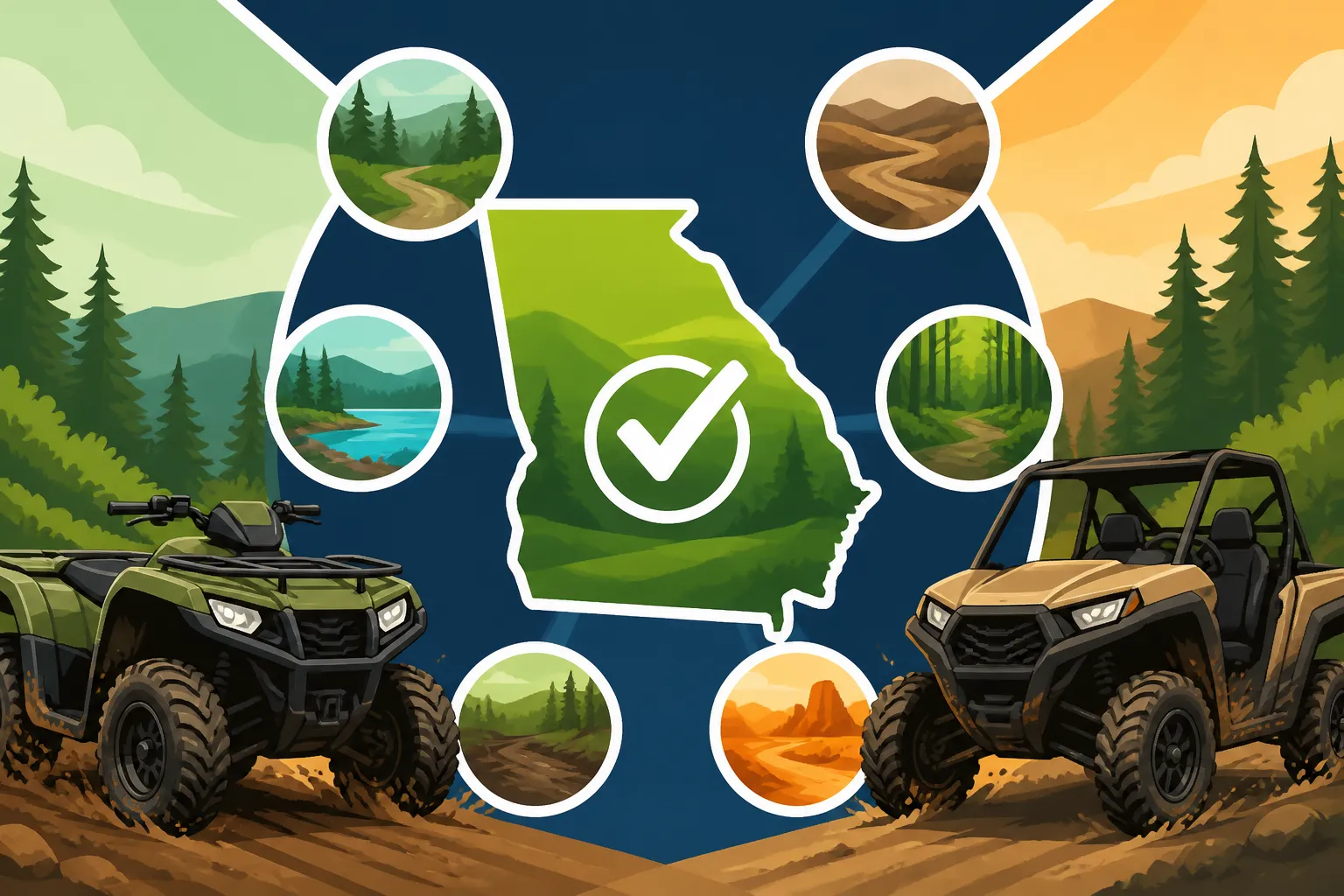
Georgia’s annual forest OHV permit is designed for riding at the six designated OHV systems in the Chattahoochee-Oconee National Forest. The systems are Houston Valley, Beasley Knob, Whissenhunt, Town Creek, Oakey Mountain, and Davenport Mountain. An annual permit is valid across those systems, so you do not need a separate forest OHV permit for each one.
The key point is that this is an operator permit, not a vehicle permit. It follows the person who is riding, rather than being attached to a particular ATV or UTV. If you take a different machine to another permitted system, the same annual permit can still apply to you, provided the machine is allowed on that trail and meets the applicable rules.
That makes the annual option especially practical for people who ride several times in a season, visit different systems, or switch between machines. Instead of arranging a separate permit for each outing, you carry proof of your annual permit and check the status and requirements for the trail you plan to ride.
| Question | How the annual permit works |
|---|---|
| Which areas does it cover? | The six designated Georgia national forest OHV systems |
| Is it tied to a machine? | No. It is issued per operator |
| Can it be used at more than one system? | Yes, across the six covered systems |
| Does it cover a private park? | No. Private parks set their own requirements |
| Does it replace a vehicle registration or road tag? | No |
| Does it guarantee a trail is open? | No. Closures and other access rules still apply |
| Should you confirm current details before riding? | Yes. Check official permit and trail information before you leave |
An annual permit is not a general Georgia ATV license, vehicle registration, or permission to ride anywhere in the state. It is tied to access at the covered national forest OHV systems. If you are comparing an annual option with a day permit, see Georgia Day Permit vs Annual Permit Value for help thinking through how often you expect to ride.
Before buying, check the current permit instructions and confirm that the permit you choose is valid for the systems you plan to visit. Permit names, purchasing steps, and other details can change. The official purchase page and relevant ranger district information are the right places to verify current terms.
The six covered systems and why the distinction matters
The annual permit covers the six designated systems, but that does not mean every road, forest route, or parcel of public land is an OHV riding area. Use the system’s official trail information to confirm where riding is allowed. A national forest may contain roads or lands with different access rules, closures, or vehicle restrictions.
The six systems commonly included are:
- Houston Valley, near Dalton
- Beasley Knob, near Blairsville
- Whissenhunt, near Dahlonega
- Town Creek
- Oakey Mountain
- Davenport Mountain
A permit does not turn a closed route into an open one, and it does not override signs, gates, seasonal restrictions, or temporary closures. Heavy rain, trail damage, maintenance, weather, and other management decisions can affect access. Check for current conditions shortly before your trip, even if you have ridden the same system before.
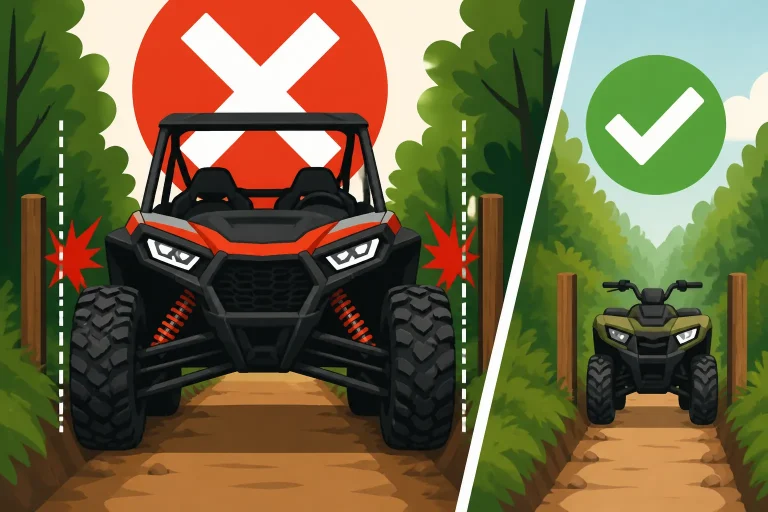
The trail systems can also differ in layout and machine suitability. Width limits, trail difficulty, one-way routes, and seasonal conditions may affect whether a particular ATV or UTV can use a route. A permit is not a guarantee that your machine fits every trail. If you are taking a side-by-side, check its width against the rules for that system and trail. For more on machine fit, see Georgia Trail Widths and What Fits and Georgia ATV Trails That Allow Side-by-Sides.
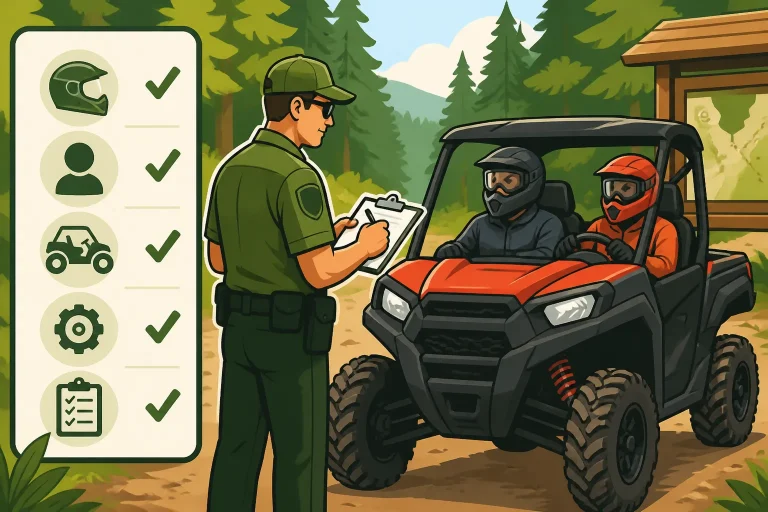
A good planning habit is to treat the permit as one item in a larger access checklist:
- Confirm that the system is open on your planned riding day.
- Check the trails you intend to use and whether your machine is permitted on them.
- Review the permit terms, including how it must be carried or shown.
- Check for system-specific notices, closures, or seasonal restrictions.
- Plan an alternative in case the trailhead is closed or conditions change.
This matters most if you are traveling a long distance. A valid annual permit can save you from buying a new permit for each covered system, but it cannot save a trip to a closed trailhead or a route your machine cannot use. For a wider overview of the six areas and their access considerations, see Georgia’s Six National Forest OHV Systems.
A permit is not permission for every nearby road
Do not assume that an OHV permit allows you to ride on any forest road near a trail system. The permit covers access under the rules for the designated OHV areas; the road or trail’s own designation still matters. A road behind a closed gate, a route marked for other use, or an area outside the permitted system may have different restrictions.
Likewise, a forest OHV permit does not make a machine street legal. It does not replace the rules that apply to riding on public roads, and it does not grant access to county roads. For help separating trail access from road use, read Georgia’s ATV Road Law Explained and Georgia Road Rules for County Roads Only.
Who needs a permit, and what “per operator” means
The annual permit is tied to the person operating the machine. If two people take turns driving, each operator needs to satisfy the permit requirement. One permit should not be treated as a shared pass simply because both people ride the same vehicle or travel together.
For example, if you and a friend bring one side-by-side and take turns driving, each person who operates it should have the required permit. If you bring two machines but only one person operates them during the outing, the permit remains associated with that operator rather than with either machine. The practical takeaway is simple: count the operators, not the machines.
A passenger who is not operating the vehicle is different from someone who takes a turn at the controls. Still, check the current permit instructions and any system-specific requirements, particularly when riding with children or passengers. A passenger may be subject to other safety or age rules even when they are not the operator. The distinction between operator and vehicle is explained further in Georgia’s Per-Operator Permit, Not Per Vehicle and Does a Passenger Need Their Own Georgia Forest Permit?.
If you are riding with a group, make the permit check part of the group’s pre-ride plan. Do not assume the organizer’s permit covers everyone. Before leaving, confirm which adults will operate, that each operator has their own required permit, and that everyone knows how to show it if asked.
This is particularly useful when the group includes people sharing machines. A rider who expects to drive “just for a few minutes” is still an operator. If that person does not have the required permit, the group may need to change its plan before riding. It is easier to sort this out at home than at the trailhead.
If you are not sure whether a particular person needs a permit for their role, check the official permit instructions rather than relying on an assumption made by another rider. Rules for passengers, minors, and operators can be easy to mix up, and the permit itself does not answer every safety question. Review Georgia Supervision Rules for Minors when planning a youth ride.
Keep proof accessible
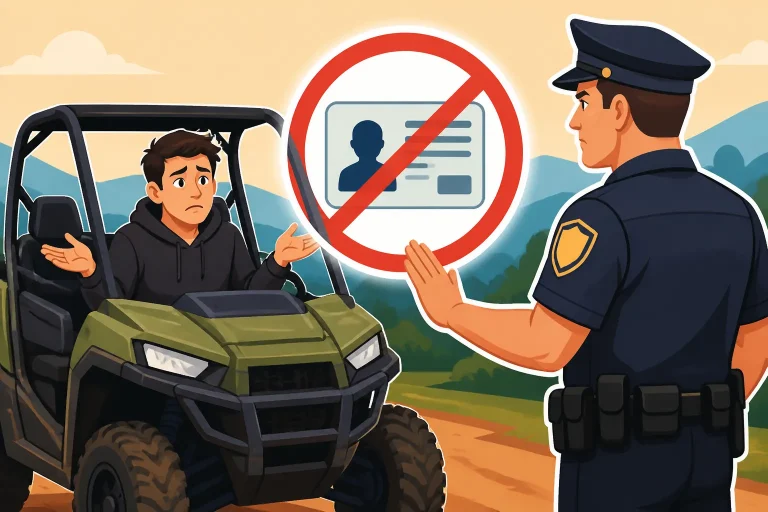
Follow the current directions for carrying or showing your permit. If the rules allow an electronic copy, make sure you can access it at the trailhead and on the ride. Cell service can be unreliable in forest areas, so do not count on being able to sign in or retrieve a document after you arrive.
A paper backup can be useful even if you normally keep documents on your phone. Store it where it will not get soaked, covered in mud, or lost among other gear. Some riders keep trip documents in a waterproof pouch; if you need one, Amazon is one place to look for basic document sleeves, but any suitable pouch is fine. The important thing is that the permit is readable and available when requested.
For a group, each operator should be able to show their own permit without relying on one person to hold every document. If a rider carries a phone, check battery life before leaving. A small power bank or a paper copy can prevent a dead battery from turning a straightforward permit check into a problem.
Do not confuse permit proof with ownership paperwork, a machine’s registration documents, or a trail map. They answer different questions. Carry the documents required for the ride, and keep them organized so that one does not get mistaken for another. For more on permit purchasing and what to do with the permit afterward, see How to Buy a Georgia Forest OHV Permit and Carrying a Permit on the Trail.
What the annual permit does not cover
An annual permit for the six forest OHV systems is useful, but it has a defined scope. Knowing what falls outside that scope helps prevent a common mistake: assuming a forest permit is a universal pass for any off-highway ride in Georgia.
It is not for every public or private riding area
Private off-road parks set their own access rules. A forest permit does not substitute for a park’s admission, waiver, reservation, or other requirements. A private park may also have its own age restrictions, helmet rules, machine limits, and operating hours.
Similarly, a permit for the designated national forest OHV systems does not by itself authorize riding in wildlife management areas, on county roads, or on other public land. Access depends on the specific area and the rules that apply there. Read the relevant land manager’s guidance before heading out, rather than assuming that “public land” means the same thing everywhere.
If you are deciding between a forest system and a private park, compare the actual access requirements for each destination. Georgia Private Off-Road Parks Compared can help you understand the different kinds of riding areas, while Georgia WMA Rules for ATV Riders covers a different access setting.
It is not vehicle registration or road authorization
A forest OHV permit does not register your ATV or UTV with the state, establish ownership, or make it legal to use on a public road. It also does not satisfy insurance, lighting, or other requirements that may apply to an eligible road-use machine.
Georgia’s separate registration process for certain machines is not the same as forest trail permitting. For example, registration eligibility can depend on how a machine is built, and registration does not automatically expand access to every roadway. If your question is about registration rather than trail entry, start with Georgia MPOHV Registration Explained or Georgia ATV Registration Requirements.
The same distinction applies if you own a machine that is registered for a particular kind of road use. That registration does not replace a forest OHV permit where one is required. Conversely, buying a forest permit does not make an otherwise ineligible machine suitable for road use.
It does not guarantee trail access
Even with the right permit and an eligible machine, conditions can limit access. Trails may close for maintenance, weather, resource protection, or other management reasons. Some routes may have width or vehicle restrictions. A map you saved last season can be helpful for orientation, but it is not proof that every route is open today.
Check conditions before departure and again when you reach the trailhead. Read posted notices and obey closures, even if a route looks passable. Riding around a closed gate or detouring around a barricade can damage the trail and create safety risks for riders and workers.
If a system is closed, do not treat the annual permit as grounds to ride elsewhere in the forest. Choose a destination whose current rules you have confirmed. For help checking before you travel, see How to Check Georgia Forest Trail Status and Georgia Trail Conditions Before You Drive.
How to plan a ride using the annual permit
The annual permit works best when it is part of a repeatable planning routine. Whether you are making your first trip or returning to a familiar system, use this sequence to avoid last-minute surprises.
-
Choose the system. Pick one of the six covered systems based on your location, riding experience, machine, and the kind of terrain you want. Do not choose solely by distance; a closer system may have different trail restrictions or current closures.
-
Check the official permit information. Confirm that the annual option is currently available, what it covers, how it is issued, and how proof should be carried. If you are buying just before a ride, allow time to complete the purchase and save or print the permit.
-
Check the trail status. Look for current notices from the appropriate official source. Conditions can change, so verify the system’s status close to the day you travel. If you cannot confirm that your intended area is open, contact the relevant ranger district rather than guessing.
-
Match the machine to the route. Check width restrictions, vehicle types, and trail difficulty. A permit is not evidence that a machine fits. If you have a wide side-by-side, confirm the route’s limits before loading it.
-
Confirm who will operate. Each person who will drive should meet the permit requirement. Make the same check for any guest who may take a turn at the controls. If a child will ride, review age and supervision requirements separately.
-
Prepare proof and essentials. Carry the permit as directed, plus any other documents or gear required for the trip. Save an electronic copy where it is available offline, or carry a printed backup if that is permitted and useful.
-
Recheck before unloading. At the trailhead, read signs and notices. A planned route may have changed since you checked at home. Use the posted information and follow any instructions from staff or law enforcement.
A simple ride folder can make this routine easier. Keep the permit proof, system information, emergency contacts, and a map together, but store the map separately if you use it on the trail. Amazon may have waterproof sleeves or small organizers if you want a dedicated document pouch; it is also easy to repurpose a durable bag you already own. For a paper map or printed directions, protect them from water and mud, and do not rely on an online map alone where service may drop out.
Decide whether an annual permit makes sense for you
The annual permit is most useful if you expect to ride more than once or visit more than one covered system. A day permit may suit an occasional outing, while an annual permit can simplify repeated trips. Compare the current terms and cost through the official source rather than relying on an old receipt, a past season’s price, or another rider’s memory. Fees and purchase details can change.
Also consider your actual riding plans. If you mostly visit a private park, an annual forest permit may not be the permit you need for those trips. If your preferred forest system is frequently closed during the season you ride, check that before deciding. The best value is not merely the option that covers more dates; it is the one that matches where and how often you can actually ride.
You can keep a short pre-trip note on your phone or in your riding gear:
- Permit purchase completed and proof saved
- Every expected operator accounted for
- System and trail status checked
- Machine fit and route restrictions checked
- Alternate destination considered
- Phone charged and paper backup packed if appropriate
For help comparing permit types or understanding exactly what a permit does and does not authorize, see Georgia OHV Permits: What You Need Before You Ride and What an Operator Permit Does Not Cover.
Common mistakes to avoid
Most permit problems come from treating the annual permit as broader than it is. A few practical checks can keep a straightforward forest ride from becoming a frustrating one.
Thinking one permit covers the whole group. It is per operator. If two people plan to drive, each should have the required permit. The number of machines in the trailer is not the key count.
Assuming the permit attaches to the ATV. It does not. If you switch machines, the permit still belongs to the operator, but the replacement machine must independently meet the system’s rules.
Assuming all six systems are always open. The annual permit’s coverage does not guarantee current trail access. Check status and notices before leaving.
Using the permit at a private park. Private parks have their own terms. Confirm what that specific park requires.
Treating a trail permit as road registration. A forest access permit does not make a machine street legal or authorize county-road riding.
Waiting until the trailhead to find proof. Set up access to the permit before you drive into an area with limited service. Follow current instructions for electronic or paper proof.
Relying on old information. A saved post, a friend’s past experience, or a previous permit can be out of date. Verify current fees, purchasing instructions, system status, and restrictions through official channels.
If you ride Georgia’s forest systems regularly, the annual permit can make access more convenient: one operator permit works across all six designated OHV systems. Just keep its boundaries in mind. It does not replace trail checks, machine restrictions, private-park requirements, or separate vehicle and road rules. Confirm the current terms, carry proof as directed, and plan each ride around the system’s live conditions.
Disclaimer
This article is for general informational purposes only and does not constitute professional advice. Laws, prices and regulations vary by location and change over time. Consult a qualified professional for guidance on your specific situation.