Georgia Rules for a Visiting Alabama Rider
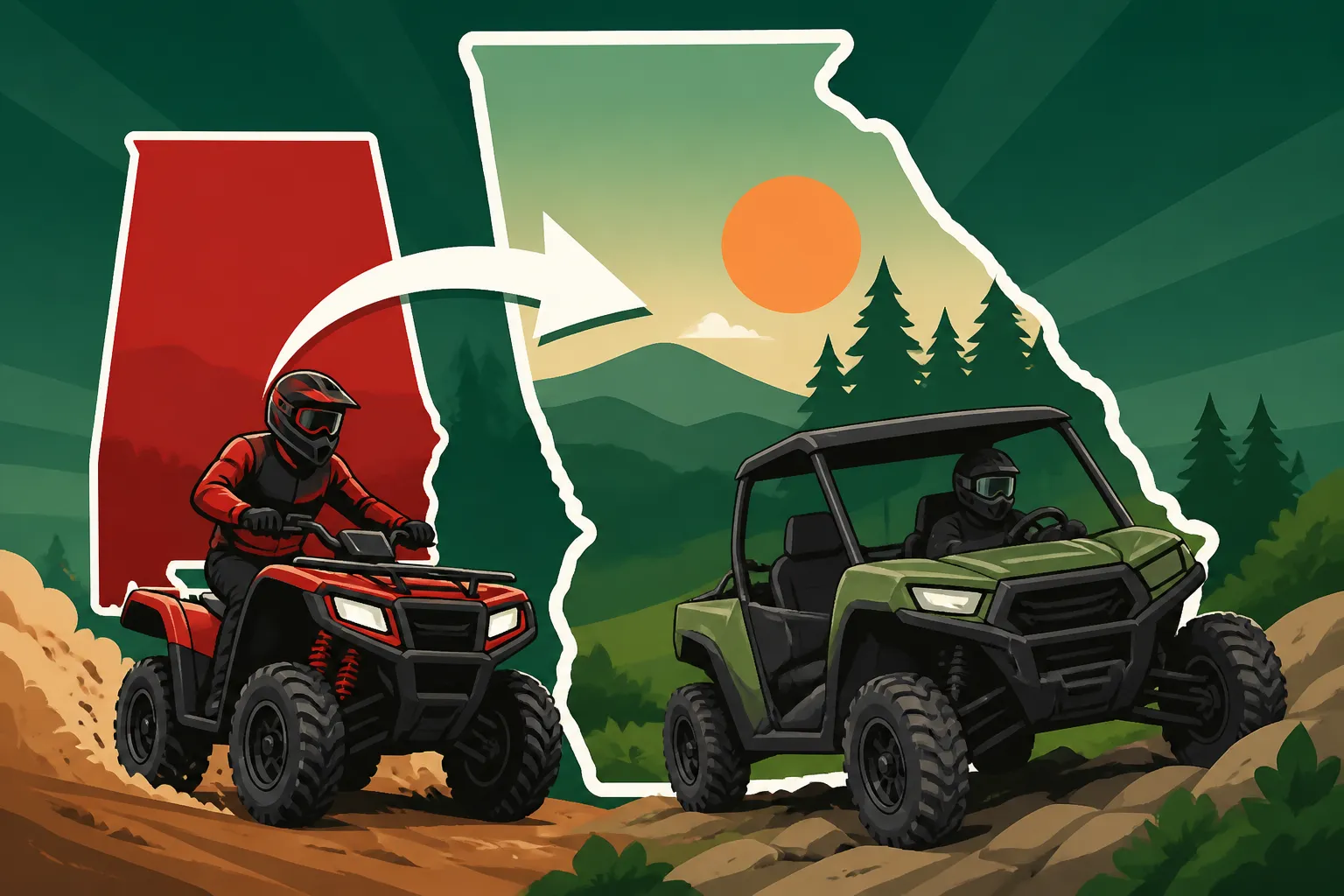
Traveling from Alabama to Georgia with your ATV or UTV can be a fantastic way to explore new terrain, but many riders often find themselves scratching their heads over Georgia's specific and sometimes complex rules for off-highway vehicles, especially when it comes to road access. You don't want your well-planned adventure to end with an unexpected citation or impoundment. This guide is here to clarify Georgia's regulations for visiting Alabama riders, helping you understand where you can legally ride, what equipment you'll need, and what safety precautions are mandatory to ensure your trip is smooth and enjoyable.
Understanding Georgia's Rules for Out-of-State Off-Highway Vehicles
It's easy to assume that if your ATV or UTV is street-legal or registered for limited road use in Alabama, those privileges automatically extend across the state line into Georgia. Unfortunately, that's not always the case. Each state has its own unique set of laws governing off-highway vehicles, and Georgia's approach, particularly with its Motorized Play Vehicle (MPOHV) framework, can be quite distinct.
For Alabama riders planning a trip, the key isn't necessarily about registering your machine in Georgia – that's a voluntary process primarily for Georgia residents. Instead, it's about ensuring your vehicle, and your riding practices, comply with Georgia's rules for operation on its roads and trails. This means your machine needs to physically meet Georgia's standards if you intend to use it on public roads, and you need to understand the limitations on where you can actually ride. While Georgia does have a specific voluntary registration for MPOHVs, it doesn't mean your Alabama-registered machine automatically qualifies for expanded road use just because it has a plate in your home state. The physical characteristics of your vehicle are paramount. If you're considering [Bringing an Out-of-State Machine Into Georgia], be aware that Georgia doesn't have reciprocity for general ATV road use.
What Kind of Machines Georgia Regulates for Road Use
Georgia's MPOHV registration, which dictates what can and cannot legally operate on designated public roads, is very specific about the types of vehicles it includes. This is critical for out-of-state visitors to understand. Essentially, Georgia's MPOHV rules are tailored for utility vehicles (UTVs) and side-by-sides that meet a defined set of criteria.
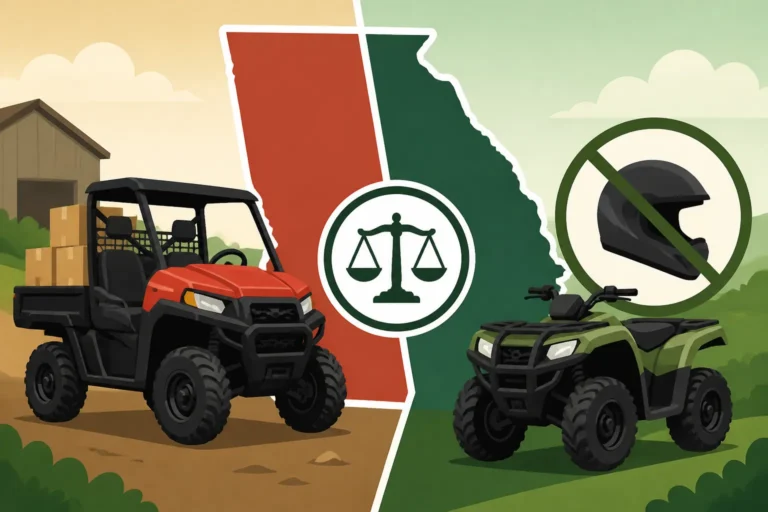
Your traditional quad, or "four-wheeler," typically with a straddle seat and handlebars, generally does not qualify for road use under Georgia law. The state specifically excludes these machines from MPOHV registration because they don't fit the safety profile envisioned for limited road access. So, if you're coming from Alabama with a typical sport or utility ATV, don't expect to ride it on Georgia's county roads. Similarly, [Georgia Dirt Bikes and Three-Wheelers Are Excluded] from this type of road use, regardless of any Alabama registration. This means if you ride a Polaris Scrambler or a Honda TRX, Georgia's county roads are off-limits for that machine. It simply doesn't meet the physical configuration requirements. The same goes for dirt bikes like a Kawasaki KX or a Honda CRF; these are strictly for off-road or track use here. This strict definition often surprises riders who are used to more lenient rules in other states, so it's vital to know that [Why Georgia Will Not Register an Ordinary Quad] comes down to fundamental design differences that Georgia deems unsafe for public road interaction.
When Your Alabama UTV Can Hit Georgia's County Roads
For Alabama riders with a side-by-side or UTV, there's a glimmer of hope for road access, but it's heavily contingent on your machine meeting Georgia's specific MPOHV physical requirements, not just its Alabama registration. Even without a Georgia MPOHV plate, if your UTV physically matches the criteria Georgia has set forth, and you adhere to all other operating rules (like insurance and driver's licensing), you can potentially operate on Georgia's designated county roads.
This means your UTV must have a steering wheel (not handlebars), a non-straddle seat (like a car seat), factory-installed seat belts, and must meet certain dimension and speed criteria (like being between 25-65 mph, under 80 inches wide, and under 4,000 pounds gross weight). It also needs functioning headlights, brake lights, and rearview mirrors. Many Alabama riders often upgrade their UTVs with accessories from companies like SuperATV to enhance their trail experience, but these same accessories, like robust mirrors or high-visibility lights, can also help ensure compliance with Georgia's road-use equipment demands. Having a reliable set of mirrors from SuperATV, for instance, can be crucial for meeting Georgia's requirements for visibility on county roads. If your UTV meets these standards, along with having proper liability insurance, then you're much closer to being able to legally drive it on permissible Georgia county roads.
Road Access for Off-Highway Vehicles in Georgia (and the Sunset Clause)
Navigating Georgia's public roads with an off-highway vehicle is where many out-of-state riders, especially those from Alabama, encounter the most confusion. It's not a free-for-all, and the rules are quite specific. Georgia has carved out a very limited niche for MPOHVs, primarily UTVs that meet strict criteria, to operate on a select few public thoroughfares. Understanding these limitations is absolutely critical to avoid legal trouble during your visit.
County Roads Only: The Golden Rule
The most important rule for any MPOHV in Georgia, whether it's registered here or just visiting, is that road access is strictly limited to county roads. This is not an invitation to treat your UTV like a car; it's a specific privilege with tight boundaries. You absolutely cannot take your UTV on state highways, interstates, or most city streets. [Georgia MPOHV Road Rules: County Roads Only] are clear on this point. Imagine you're driving your UTV to a nearby trail system; you might be able to use a county road for a section, but if that road turns into a state highway (often marked with a shield sign, like "GA-19" or "US-41"), you must immediately exit or trailer your machine. Many communities in Georgia, particularly those with a lot of rural county roads, might seem like prime UTV territory, but the moment you hit a state route or a city's main thoroughfare, you're out of bounds. The key is to know your route and understand the road classifications.
While primary travel on state routes is forbidden, Georgia does allow for [Georgia Crossings at Designated Points]. This means if a county road you're on dead-ends into or needs to cross a state route to continue on another county road, you can make a direct, perpendicular crossing at an intersection. This isn't an excuse to ride on the state route for any distance, however. It's solely for the purpose of getting from one permissible county road to another.
Equipping Your UTV to Meet Georgia's Road Standards
Even if your UTV is a side-by-side (the type of machine that generally can qualify as an MPOHV), it must meet a specific set of equipment requirements to be legally operated on Georgia's county roads. These aren't suggestions; they are mandates that law enforcement will look for. Your UTV must have:
- A Steering Wheel: No handlebars are allowed.
- A Non-Straddle Seat: Think bench or bucket seats, like in a car, not a motorcycle-style seat you straddle.
- Factory-Installed Seat Belts: These must be present and used by all occupants.
- Headlights, Taillights, and Brake Lights: These must be fully functional for visibility.
- Rearview Mirrors: At least one, mounted to provide a clear view to the rear. Many riders find that a wide-angle rearview mirror from SuperATV greatly enhances visibility and helps meet this requirement, especially if their factory mirrors are small or easily obstructed.
- Speed Capability: Your machine must be capable of at least 25 miles per hour but not exceed 65 miles per hour.
- Size Limits: It must be less than 80 inches wide and weigh less than 4,000 pounds gross vehicle weight (GVW), with a payload capacity of at least 350 pounds.
It’s about making sure your UTV is safe and visible enough to share the road with other vehicles, even on rural county roads. When gearing up for a Georgia adventure, many riders find SuperATV accessories invaluable, not just for performance on trails but also for meeting critical road-legal requirements like robust lighting systems or wider mirrors that provide better visibility.
The July 2027 Sunset Clause: A Critical Date for Riders
Here's a piece of information that visiting Alabama riders, and indeed all MPOHV operators in Georgia, need to keep firmly in mind: the current law allowing MPOHV road access on county roads has a "sunset clause." This means the legislation is set to expire on July 1, 2027. [Georgia's July 2027 Sunset on Road Access] is a hard deadline.
What does this mean for you? As of this writing, there's no guarantee that the law will be renewed or extended in its current form. While there's always a possibility of legislative action before that date, it's not something you can count on. This sunset clause adds an element of uncertainty to long-term planning for road use in Georgia. For visiting riders, it underscores the temporary nature of this privilege and reinforces the idea that even current road access is a limited exception, not a permanent right. Always check for the latest updates from the Georgia Department of Revenue or local authorities before your trip, especially as that date draws closer.
Essential Riding Gear and Safety Requirements for Visitors
Beyond knowing where you can and cannot ride, understanding Georgia's safety requirements for operators and passengers is paramount. A fun day on the trails or a scenic cruise on a county road can quickly turn sour if you're not in compliance with the state's safety laws. These rules are in place for everyone's protection, and Alabama riders are expected to adhere to them just like Georgia residents.
Helmet Laws for Underage Riders
Georgia has a very clear and often surprising helmet law for off-highway vehicles: any operator or passenger under the age of 18 must wear an approved helmet when riding an ATV or UTV. This rule applies across the board, whether you're on private land, a designated trail, or a permissible county road. It doesn't matter if your child is an experienced rider; if they're under 18, they need a helmet. [Georgia ATV Helmet Law for Riders Under 18] makes no exceptions for out-of-state visitors.
This means if you're bringing your family to ride, every minor needs to be properly geared up. The only limited exceptions typically apply to specific agricultural, logging, or commercial activities, which usually don't apply to recreational visiting riders. So, forget the idea that "my property, my rules" applies to helmets for minors; [Georgia Helmet Rule on Your Own Land] confirms the requirement regardless of land ownership. Ensure your helmets are DOT-approved and fit correctly.
Driver's License and Insurance Requirements
If you intend to operate your MPOHV on any Georgia county road, you absolutely must possess a valid driver's license. This isn't just for residents; it applies to all operators. [Georgia Driver's License Rules for MPOHV Operators] means your Alabama driver's license is perfectly fine, but you cannot operate an MPOHV on a public road with just a learner's permit or if your license is suspended. Furthermore, there's no minimum age exemption for licensed drivers operating an MPOHV on a county road; if you're driving it on a public way, you need a license.
Just as critical as having a license is having liability insurance. Georgia mandates liability coverage for any MPOHV operating on a public road. [Georgia UTV Insurance Minimums] are specific, and you'll need to carry proof of insurance with you. This is non-negotiable for road use. Your personal vehicle insurance might not cover your UTV, so check with your provider before you travel. You need to be prepared to show this proof if stopped by law enforcement.
Passenger Rules and Carrying Capacity
Georgia law also dictates how many passengers you can carry and where they can ride. Simply put, an MPOHV cannot carry more passengers than the number for which it was designed by the manufacturer, and all passengers must be seated in manufacturer-designed and installed seats, utilizing seatbelts if available. [Georgia Rules for Passengers on a Side-by-Side] generally mean that if your UTV is a two-seater, you can only have two people. If it's a four-seater, you can have four. No riding in the bed of the UTV, no extra people squeezed onto a bench seat if there aren't enough seatbelts, and certainly no standing passengers while the vehicle is in motion. This is a common-sense safety rule that Georgia takes seriously.
Overview of Key Differences for Visiting Riders
To help Alabama riders quickly grasp the core differences when visiting Georgia, here's a table summarizing crucial points:
| Aspect | Alabama General Rule (for comparison) | Georgia MPOHV Rule (for county roads) | What a Visiting Alabama Rider Needs |
|---|---|---|---|
| Registration | State-specific rules, often none for general off-road use; some limited road-use options may exist. | Voluntary for eligible residents; not reciprocal for general ATV road access. | Machine must physically meet Georgia's MPOHV criteria if operating on county roads. |
| Road Access | Varies by county/city, some street legal, often more flexible for UTVs. | County roads only; no state routes or interstates; limited city street access. | Conform to GA equipment rules for MPOHV; liability insurance; understand the July 2027 sunset clause. |
| Helmet (U18) | Required on public land/roads; private land rules may vary. | Required on ALL machines (U18), public/private, with few exemptions. | Required for all under-18 operators/passengers; carry an approved helmet. |
| Driver's License | Required for road use. | Required for road use. | Valid driver's license from Alabama (or any state) for road use. |
| Insurance | Required for road use. | Required for road use. | Valid liability insurance covering MPOHV for road use; carry proof. |
| Vehicle Type | ATVs, UTVs often grouped; some counties may allow ATVs on roads. | Primarily UTVs/side-by-sides with specific features; ATVs (quads) are excluded from road use. | Your machine must be a UTV/side-by-side that meets GA's MPOHV physical specs (steering wheel, non-straddle seat). |
Where to Legally Ride Your ATV or UTV in Georgia (Beyond Roads)
While county road access for UTVs is a hot topic, the primary reason many Alabama riders visit Georgia is for its fantastic off-road trail systems and private parks. This is where your ATV or UTV can truly shine, whether you're looking for challenging climbs, scenic forest trails, or family-friendly riding areas. Understanding where these opportunities lie is key to a rewarding visit.
Georgia's National Forests: Permits and Regulations
Georgia is home to sections of the Chattahoochee-Oconee National Forest, which offers several designated OHV trail systems. These are immensely popular and provide a legitimate, legal avenue for off-road adventure. However, access to these trails requires a permit. [Georgia OHV Permits: What You Need Before You Ride] explains the system: you'll need either a day permit or an annual permit, which covers all [Georgia's Six National Forest OHV Systems]. These permits are per operator, not per vehicle, so if you and your spouse are both riding separate machines, you'll each need a permit.
It's crucial to remember that these are managed trail systems, not open range. Trails often have specific width restrictions (many are 50-inch limited, though some may accommodate wider side-by-sides), and rules regarding closures due to weather or maintenance are common. Always check the trail status before you go, as rain can quickly lead to closures to prevent erosion. Many riders outfit their machines with heavy-duty components from SuperATV, like A-arms or axles, to handle the varied terrain found in these national forest trails.
Private Off-Road Parks: The Easiest Option for Visitors
For many out-of-state riders, private off-road parks offer the simplest and most accessible riding experience in Georgia. These parks are purpose-built for ATVs and UTVs, often featuring hundreds of miles of diverse trails, amenities like camping, wash stations, and even rental services. They operate on their own rules, which are typically straightforward and clearly posted.
Places like [Iron Mountain Resort: Georgia's Biggest Private Park] in Dahlonega, Highland Park in Cedartown, or Durhamtown Plantation in Union Point (check their latest operating status) are prime examples. These parks often have different difficulty levels, from beginner-friendly loops to extreme rock crawling sections, catering to all skill levels. Because they're private, they can be more flexible with vehicle types (though some may still have width restrictions for specific trails) and often provide a more controlled and safe environment. [Georgia Private Off-Road Parks Compared] often highlights the variety of offerings, from cabins to full hook-up RV sites, making them ideal destinations for weekend trips. If you're planning on tackling some of the tougher obstacles at these parks, upgrading your machine with SuperATV rock sliders or heavy-duty bumpers can provide crucial protection and peace of mind.
Wildlife Management Areas (WMAs): Highly Restricted Access
While Georgia has numerous Wildlife Management Areas (WMAs), their rules for ATV and UTV use are extremely restrictive. Generally, off-highway vehicles are only permitted on designated WMA roads during specific hunting seasons or for certain activities, and often only during very limited hours (e.g., two hours before sunrise to two hours after sunset on hunt days). [Georgia WMA Rules for ATV Riders] are not designed for general recreational riding. You typically need a valid hunting license or a WMA license to even be in the area, and strict adherence to hunting season dates and specific vehicle-use rules is enforced. For a visiting Alabama rider looking for a casual trail ride, WMAs are usually not the place to go.
Private Land: With Permission Only
Of course, if you know a landowner in Georgia, riding on private property with explicit permission is always an option. However, without written consent, riding on someone else's land is considered trespassing, with potentially serious legal consequences. [Can a Georgia Landowner Order Riders Off Their Land?] Yes, absolutely, and they have every right to do so, including having you cited or removed by law enforcement. Never assume permission. If you're planning to visit friends or family with land, ensure you have a clear understanding of where you can ride and if any specific safety rules are expected.
No matter where you choose to ride in Georgia, remember that responsible operation, adherence to local laws, and respect for the environment are key. Carrying the right gear, having a well-maintained machine (perhaps with some robust parts from SuperATV to handle Georgia's varied terrain), and knowing the rules will make your trip from Alabama a memorable and safe one.
Disclaimer
This article is for general informational purposes only and does not constitute professional advice. Laws, prices and regulations vary by location and change over time. Consult a qualified professional for guidance on your specific situation.