Georgia Sheriff Enforcement on County Roads
Alright, let's talk about something that can cause a real headache for Georgia ATV and UTV owners: riding on county roads and what happens when you encounter a sheriff's deputy. It's easy to get confused with all the different rules out there, and nobody wants a ticket or, worse, their machine impounded. This guide is here to clear up the confusion about Georgia's MPOHV laws, what law enforcement is looking for, and how to stay on the right side of the law so you can enjoy your ride without stress.
The Georgia MPOHV Law and Why It Matters for Road Use
For years, side-by-sides, UTVs, and even some ATVs existed in a kind of legal gray area when it came to road use in Georgia. Many folks just assumed they couldn't take their machine on any public road, which meant trailering everywhere or sticking strictly to private land. That changed when Georgia introduced specific legislation to allow certain "Multi-Purpose Off-Highway Vehicles" (MPOHVs) on designated county roads. This was a huge win for many recreational riders, farmers, and hunters who needed a practical way to get from point A to point B without loading up a trailer for every short hop.
However, with this new privilege came a specific set of rules and requirements, and it's these rules that Georgia sheriffs and other local law enforcement agencies are tasked with enforcing. Understanding the nuances of the MPOHV law isn't just about avoiding a fine; it's about being a responsible rider and ensuring you're operating your machine safely and legally. Ignoring these regulations can lead to serious consequences, not just for you, but for the future of road access for all MPOHV owners in the state.
Understanding the MPOHV Distinction for Road Access
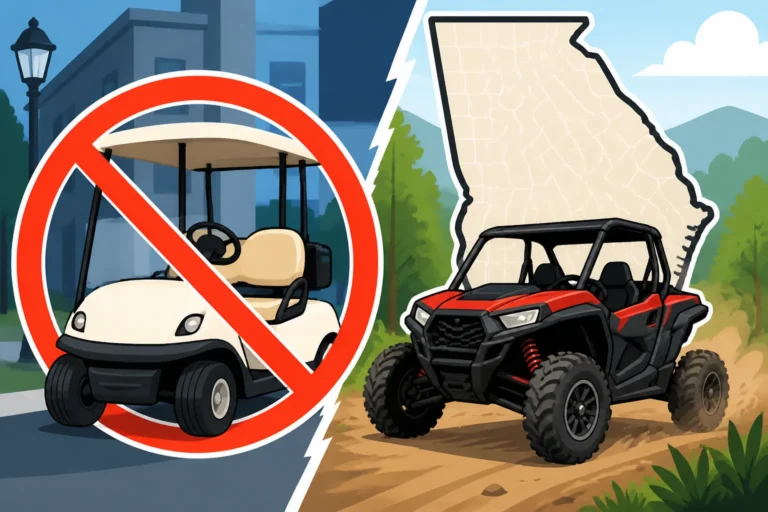
The key to legal road use for your side-by-side or certain ATVs in Georgia lies in understanding what an MPOHV actually is in the eyes of the law. It’s not just any off-road vehicle. The state created a specific classification, and only machines that meet particular criteria are eligible for this special registration and the associated road privileges. This distinction is critical because if your machine doesn't qualify as an MPOHV, you simply cannot legally operate it on a county road, regardless of how many accessories you bolt onto it.
The MPOHV category was designed to bridge the gap between traditional off-road machines and street-legal vehicles, acknowledging their utility while still maintaining safety standards for shared roadways. This means your typical sport quad, designed for aggressive trail riding with handlebars and a straddle seat, is generally excluded. The focus is on machines that offer a bit more stability and safety features akin to a low-speed vehicle or even a car, but without the full burden of automotive titling and licensing requirements.
What Makes a Machine Eligible for a Georgia Plate
So, what exactly does it take for your machine to be considered a Georgia MPOHV and get that coveted registration plate? The state has a very specific set of requirements, often referred to as the "eight-point test," that your machine must pass. This isn't something you can just guess at; you'll need to verify each point against your machine's specifications. Things like the number of wheels, the type of steering, the seat configuration, and even the maximum speed are all taken into account. For instance, [Why Georgia Will Not Register an Ordinary Quad] is a common question, and it often comes down to these specific distinctions.
For example, your machine must have at least four wheels, a steering wheel (not handlebars), and non-straddle seating. It also needs to have a minimum width and meet certain weight and payload capacities. Plus, there are equipment requirements like headlights, brake lights, and seat belts. Many UTVs, like a Polaris Ranger, Kawasaki Mule, or John Deere Gator, are designed in a way that often allows them to meet these criteria, especially if they are newer models. However, it's crucial to check your specific model against the exact requirements set forth in Georgia law before assuming eligibility or going through the registration process at the [Georgia County Tag Office Steps for an MPOHV].
What Deputies Are Looking For on Georgia County Roads
When a sheriff's deputy spots an off-road machine on a county road, their immediate checklist is quite specific. They're not just pulling you over because you're on a side-by-side; they're checking for compliance with the new MPOHV laws that govern such activity. This isn't about arbitrary enforcement; it's about ensuring public safety and confirming that the vehicle is properly designated and equipped for limited road use. Understanding their perspective can help you avoid potential issues.
Deputies are trained to identify the key indicators of a legal MPOHV. They'll quickly scan for a valid license plate, look at the driver, and make a quick assessment of the vehicle's visible safety features. A machine that appears to be a regular ATV, or one that clearly lacks essential equipment, will almost certainly draw attention. Being prepared and knowing what they are looking for can make a significant difference in how your interaction with law enforcement proceeds.
The Critical Role of Proper Registration and Plating
The first and most obvious thing a Georgia deputy will look for is a valid MPOHV registration plate. Just like a car, your legally registered side-by-side needs that plate prominently displayed. Without it, you’re essentially operating an unregistered vehicle on a public road, which is a clear violation. [Georgia Plates for Off-Highway Vehicles] are issued specifically for MPOHVs, and they signify that your machine has met all the state’s requirements for limited road use.
Beyond the plate itself, law enforcement can also check the validity of your registration. This means ensuring that your registration is current and hasn't expired. [Georgia MPOHV Renewal Each Year] is a requirement, and failing to renew can lead to the same penalties as having no plate at all. Furthermore, deputies will verify that the machine’s Vehicle Identification Number (VIN) matches the registration. Any discrepancies here could signal a more serious issue, potentially even a stolen vehicle, and will certainly prompt a more thorough investigation. Keeping all your paperwork in order and readily accessible is paramount.
Driver Qualifications and Age Restrictions
It’s not just about the machine; it’s also about the operator. A key aspect of sheriff enforcement on county roads involves verifying that the person behind the wheel is legally qualified to operate an MPOHV. In Georgia, you must possess a valid driver's license to operate an MPOHV on a county road. This isn't like riding an ATV on private land where a license might not be strictly necessary; public road use changes the game. [Georgia Driver's License Rules for MPOHV Operators] are clear: if you don't have a license, you shouldn't be driving an MPOHV on a county road.
Age restrictions also come into play. While the law permits a licensed driver to operate an MPOHV, specific rules apply to younger passengers. Ensuring that everyone in the vehicle meets the legal age requirements and is properly restrained (e.g., wearing seat belts if the machine is equipped with them, which it must be for registration) is part of a deputy's safety check. These rules are in place to protect all road users, and deputies are keen to enforce them, especially when it comes to the safety of minors.
Essential Safety Equipment for Road Legality
An MPOHV registered for road use in Georgia must be equipped with specific safety features. These aren't optional upgrades; they are mandatory for compliance. Deputies will be looking for working headlights, taillights, brake lights, and turn signals. They’ll also check for rearview mirrors, which are crucial for driver awareness on shared roads. Beyond lighting, your machine must be fitted with factory-installed seat belts for all designated seating positions. [Georgia Requires Seat Belts on a Registered Machine] for a reason: safety on the road.
Moreover, the tires on your MPOHV need to be in good condition and suitable for road use, even if it's just county roads. While off-road tires are common, they must still provide adequate traction and not pose a hazard. Some riders choose to upgrade certain components to enhance safety and visibility, such as adding a SuperATV windshield for better protection from debris or additional lighting for night riding. While not all aftermarket parts are strictly mandated, having proper equipment that meets or exceeds the basic requirements is essential for both your safety and avoiding issues with law enforcement.
Common Violations and the Consequences You Face
Even with the best intentions, it's easy to inadvertently violate the MPOHV laws if you're not fully informed. Many of the tickets issued by Georgia sheriffs stem from common misunderstandings or assumptions about where and how these machines can be ridden. The consequences for these violations can range from a simple fine to the impoundment of your vehicle, significantly dampening your riding experience. It’s far better to be proactive and understand the pitfalls than to learn the hard way from a deputy.
One of the biggest areas of confusion involves where an MPOHV is actually allowed to operate. Just because it's registered doesn't mean it's street-legal on every street. Knowing the boundaries and restrictions is crucial for staying out of trouble. Furthermore, deputies are vigilant about ensuring all required equipment is in place and functioning, as these are fundamental to the MPOHV's road-worthiness.
Riding on Restricted Roads: State Routes vs. County Roads
Perhaps the most significant rule for Georgia MPOHV owners to understand is the limitation on where you can ride. Registered MPOHVs are generally permitted only on Georgia county roads. This is a critical distinction that many riders overlook. You absolutely cannot operate your MPOHV on Georgia state highways, interstate highways, or federal roads, except for specific, designated crossings at intersections. [Georgia MPOHV Road Rules: County Roads Only] means just that. Attempting to ride your side-by-side down a state route is a quick way to get pulled over.
Sheriff's deputies are very aware of these boundaries within their jurisdictions. They patrol county roads, but they also respond to calls about vehicles on state routes. If you're spotted on a highway, even for a short distance, you're in violation. It's not uncommon for riders to accidentally stray onto a state route, especially in areas where county and state roads intersect or aren't clearly marked. Always plan your routes carefully, and if in doubt, err on the side of caution. Ignorance of the specific road classification is not a valid defense, and the penalties can be significant.
Operating Without Required Equipment or Documentation
As discussed, an MPOHV needs specific equipment to be legally registered for road use. Driving a registered machine that is missing or has non-functional headlights, brake lights, turn signals, mirrors, or seat belts is a clear violation. Deputies will not only check for the presence of these items but also their working condition. For example, if your brake lights are out, that's a problem. [Headlights, Brake Lights and Mirrors on the Checklist] are non-negotiable items.
Beyond equipment, lacking the proper documentation is another common issue. If you're pulled over and cannot provide proof of registration, a valid driver's license, and evidence of liability insurance (which is tied to [Georgia Liability Insurance Tied to Registration]), you will face immediate consequences. It’s imperative to carry these documents with you whenever you’re operating your MPOHV on a county road. Deputies need to verify everything on the spot, and if you can't produce the paperwork, it creates an immediate issue, regardless of whether your machine is technically compliant.
Impoundment, Fines, and Other Penalties
The penalties for MPOHV violations in Georgia can vary depending on the severity and nature of the offense. For minor infractions, like a non-working light, you might receive a warning or a fix-it ticket. However, for more serious violations, such as operating an unregistered machine, riding on a restricted highway, or driving without a valid license, the consequences are much more severe. You could be facing significant fines, court costs, and points on your driver's license. [Georgia Ticket Cost for Illegal Road Riding] can quickly add up.
In some cases, especially for repeat offenses or egregious violations, a sheriff's deputy has the authority to impound your MPOHV. This means your machine will be towed and stored at an impound lot, incurring towing and storage fees that you will be responsible for. Getting your machine back can be a costly and time-consuming process. The goal of enforcement isn't just to punish, but to deter unsafe and illegal operation, reinforcing that MPOHVs have specific, limited privileges on public roads in Georgia.
Interacting with Law Enforcement: What to Expect
Let's face it, getting pulled over is never a pleasant experience, even when you know you're doing everything by the book. However, how you handle that interaction with a Georgia sheriff's deputy can significantly impact the outcome. Approaching the situation calmly, respectfully, and cooperatively is always the best course of action. They are simply doing their job to enforce the laws designed for everyone's safety, and understanding their process can help ease any anxiety.
It's helpful to know what a deputy's thought process is during an MPOHV stop. They have specific protocols and a mental checklist they'll be running through to ensure your compliance. Being prepared for their questions and requests will make the stop much smoother and quicker, allowing you to get back to enjoying your ride.
The Deputy's Checklist During a Stop
When a Georgia deputy pulls you over in your MPOHV, they'll typically follow a routine. First, they'll assess the immediate situation for safety, checking for anything that looks overtly dangerous or illegal. Then, they will likely ask for your driver's license, vehicle registration, and proof of insurance. This is standard procedure for any vehicle stop, and your MPOHV is no exception. They’ll then perform a quick check of your machine against the MPOHV requirements.
This checklist might include:
- Plate Verification: Is the MPOHV plate present and current?
- VIN Check: Does the VIN on the machine match the registration? They might even do a quick [Georgia Stolen Vehicle Check Before Registration] type lookup on the VIN.
- Equipment Check: Are the headlights, taillights, brake lights, turn signals, mirrors, and seat belts all present and functional?
- Seating and Steering: Does the machine have non-straddle seating and a steering wheel?
- Operator Status: Do you have a valid driver's license?
- Insurance: Can you provide current proof of liability insurance?
Being able to present these documents and demonstrate functional equipment without delay will show the deputy that you are a responsible and informed MPOHV owner. It builds a good rapport and can often lead to a more amicable resolution, even if a minor issue is found.
Your Rights and Responsibilities as a Rider
As a rider, you have rights during a traffic stop, but you also have responsibilities. Your primary responsibility is to pull over safely and comply with the deputy's lawful requests. Keep your hands visible, typically on the steering wheel, and avoid sudden movements. When asked for your license, registration, and insurance, retrieve them calmly. It's usually best to answer questions truthfully and politely, but you are not obligated to answer questions that might incriminate you beyond identifying yourself and providing required documents.
You have the right to remain silent, but refusing to provide your identification or registration can lead to further issues. If you believe your rights are being violated or if you disagree with the reason for the stop or a potential citation, you can express your concerns respectfully, but it’s often best to address these matters in court rather than escalating the situation on the roadside. Many riders, for instance, install sturdy SuperATV bumpers on their machines, not just for protection, but also for mounting additional lights which can help with visibility and compliance. While it's great to have these upgrades, remember the fundamental rule of courtesy and cooperation with law enforcement.
| MPOHV Requirement | Deputy Check | Potential Violation |
|---|---|---|
| Valid MPOHV Plate | Presence, Expiration | Unregistered Vehicle |
| Driver's License | Valid, Current | Driving without a License |
| Liability Insurance | Proof of Coverage | Uninsured Operation |
| Headlights, Brake Lights | Functionality | Equipment Failure |
| Turn Signals | Functionality | Equipment Failure |
| Rearview Mirrors | Presence | Equipment Violation |
| Seat Belts | Presence, Usage | Safety Violation |
| Steering Wheel | Proper Type | Non-Compliant Machine |
| Non-Straddle Seating | Proper Type | Non-Compliant Machine |
| County Road Only | Location of Operation | Restricted Road Use |
The Sunset Clause: A Looming Change for Georgia Riders
While Georgia's MPOHV law has opened up exciting new possibilities for riders to use their side-by-sides on county roads, there's a significant detail that every owner needs to be aware of: the sunset clause. This isn't just a minor administrative detail; it's a built-in expiration date for the very law that grants you these road privileges. Understanding this impending change is crucial for planning your future riding and machine ownership.
This sunset date means that the current rules aren't permanent. Without further legislative action, the ability to register and legally operate an MPOHV on county roads will simply cease to exist. This creates a degree of uncertainty for owners and highlights the importance of staying informed and potentially advocating for the continuation or modification of the law.
What the July 2027 Expiration Means for Road Access
The current Georgia MPOHV law, which permits the registration and limited road use of these vehicles, has a built-in expiration date of July 1, 2027. This is specified in the legislation itself. What this means in plain English is that unless the Georgia General Assembly takes action to extend, modify, or make the law permanent before that date, the provisions allowing MPOHVs on county roads will expire. After July 1, 2027, the ability to legally register a new MPOHV or renew an existing registration for road use could disappear. [Georgia's ATV Road Access Law Sunsets in July 2027] is a critical piece of information for all MPOHV owners.
The implications are significant. Existing registrations could become invalid for road use, and any new machines would revert to being strictly off-road vehicles. This could force many riders back to trailering their machines everywhere, or simply restricting their use to private property. It's a stark reminder that the current road access is a privilege granted by specific legislation, and not an inherent right. Owners should keep a close eye on legislative developments as this date approaches.
Planning for the Future of Your Road-Legal Machine
Given the looming sunset date, MPOHV owners in Georgia should start thinking about how this could impact their machines and riding habits. If you rely on county road access for hunting, farming, or even just getting to local trails, this expiration could fundamentally change how you use your side-by-side or ATV. It might be worth considering your machine's primary purpose and whether you would still get sufficient utility from it if road access were revoked.
For those who have invested in accessories like SuperATV lift kits or enhanced lighting to improve their machine's performance and appearance, the value proposition might shift if road use is no longer an option. Staying involved with local riding groups, industry associations, or even contacting your state representatives can be a way to voice your support for the MPOHV law's continuation. While the future is uncertain, being informed and prepared is the best defense against potential disruptions to your riding experience.
Disclaimer
This article is for general informational purposes only and does not constitute professional advice. Laws, prices and regulations vary by location and change over time. Consult a qualified professional for guidance on your specific situation.