Georgia Rules for a Visiting Tennessee Rider
Visiting riders from Tennessee often face a perplexing situation when they cross into Georgia with their ATVs or UTVs, as the rules for operating these machines, especially on public roads, can be drastically different and often misunderstood. What might be perfectly legal and common practice in the Volunteer State could land you a hefty fine or even impoundment in the Peach State. This guide is here to untangle Georgia's specific regulations, helping you understand where you can legally ride your off-highway vehicle and what steps you'd need to take if you plan on using those county roads, ensuring your visit is filled with adventure, not legal headaches.
Understanding Georgia's Off-Road Vehicle Landscape for Visitors
When you're coming from out of state, particularly from a neighboring one like Tennessee, it's easy to assume that vehicle laws might be similar. However, Georgia has distinct classifications and rules for ATVs, UTVs, and other off-road machines that don't always align with other states. This can lead to significant confusion and accidental infractions if you're not prepared.
The Core Distinction: MPOHV vs. Traditional ATVs
One of the most crucial things to grasp in Georgia is the difference between a standard All-Terrain Vehicle (ATV) and a Multi-Purpose Off-Highway Vehicle (MPOHV). For many years, Georgia, like many states, essentially treated all true ATVs (those designed for a straddle-seat operation with handlebars) as off-road only machines. This meant no public road access, full stop. However, recent legislation introduced the MPOHV category, which specifically allows certain types of UTVs or side-by-sides to be registered for limited county road use. This is a game-changer for UTV owners, but it comes with a stringent set of requirements.
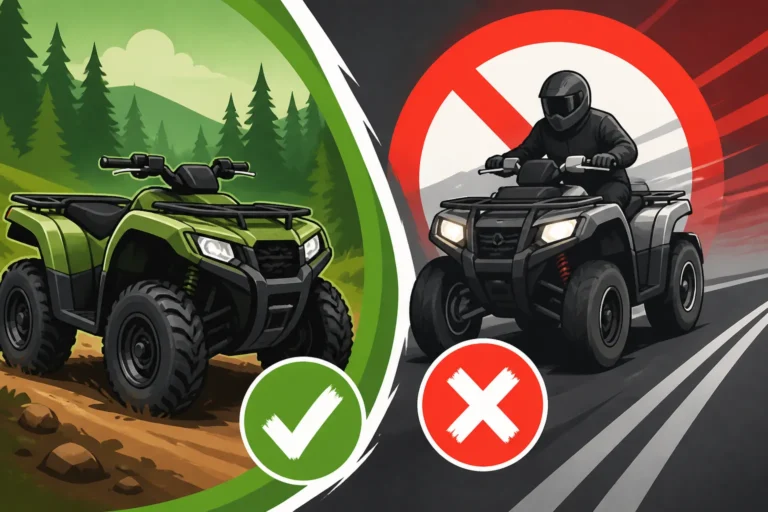
A traditional ATV, by Georgia's definition, is still largely restricted to private property or designated off-road trails. If your machine has handlebars and you straddle the seat like a motorcycle, it's likely considered a traditional ATV, and the MPOHV registration is simply not an option for it. This is a point of frequent misunderstanding, especially for those accustomed to different regulations elsewhere. For a deeper dive into what this designation means, you can check out [What MPOHV Actually Stands For]. The design and features of your machine are paramount in determining its eligibility for any form of public road access in Georgia.
Why Your Tennessee Registration Doesn't Translate
It's natural to think that if your side-by-side or ATV is registered and legal for road use in Tennessee, it should be recognized in Georgia. Unfortunately, this isn't usually the case for off-highway vehicles. Vehicle registrations between states are often reciprocal for cars, trucks, and motorcycles, but off-highway vehicles, particularly those allowed on roads under special carve-outs, are a different beast. Georgia's MPOHV registration is a specific state program, designed with Georgia-specific criteria. Your Tennessee ATV or UTV registration is tied to Tennessee's laws and definitions, which may not align with Georgia's strict MPOHV eligibility list.
Think of it this way: your Tennessee registration confirms you're compliant with Tennessee's rules for an off-road vehicle. But Georgia has its own set of hoops to jump through if you want to operate on public roads. There isn't a widely recognized "full faith and credit" agreement for off-highway vehicle registrations between states that allows you to bypass local MPOHV requirements. If you're planning to ride on Georgia's county roads, your Tennessee-issued plate or sticker will not satisfy Georgia law enforcement for a machine that would otherwise need a Georgia MPOHV registration. This means, in essence, you'd need to meet Georgia's MPOHV criteria and register your vehicle here, even if it's already registered in Tennessee, if you want county road privileges.
Private Land and Designated Trails: The Safest Bet
For visiting riders, the simplest and most straightforward way to avoid legal pitfalls is to stick to private property with permission or designated off-road trail systems. On private land, the owner's permission is generally the primary requirement, and state-specific MPOHV registration rules typically don't apply. This offers the most freedom and the least amount of bureaucratic hassle for a short-term visit.
Georgia also boasts a fantastic network of legitimate, designated off-road trails, many within the Chattahoochee-Oconee National Forest. These trails are specifically designed and managed for off-highway vehicle use, and while they do require a Georgia OHV permit (which is separate from vehicle registration), they bypass the complexities of road legality entirely. [Georgia ATV Trails: Where You Can Legally Ride] provides a great overview of these areas. By focusing on these established riding areas, you can enjoy your machine without worrying about whether it meets Georgia's street-legal criteria or if your Tennessee plate is recognized. Many of these parks also have amenities and services, sometimes including accessory shops like what SuperATV might offer, should you need a quick part or upgrade for your trail adventure.
Riding on Georgia's Public Roads: What a Visiting Rider Needs to Know
If your goal is to explore Georgia's picturesque backroads or connect trails via public thoroughfares, you absolutely need to understand the limitations and requirements imposed by Georgia law. Simply having a machine that looks like it should be road-legal is not enough.
Georgia's MPOHV Registration and Eligibility Requirements
For a visiting Tennessee rider, the most critical piece of information for public road access is the MPOHV registration. This is a voluntary registration program, but it's the only way for certain types of UTVs to legally operate on designated county roads. Your machine must meet a very specific set of criteria to even qualify. These include:
- Non-Straddle Seat: The machine must have a non-straddle seat, meaning you sit in it like a car, not on it like a motorcycle or traditional ATV. This immediately disqualifies all traditional ATVs.
- Steering Wheel: It must have a steering wheel, not handlebars. Again, this points directly to UTVs/side-by-sides. You can read more about this specific requirement in [Georgia Requires a Steering Wheel, Not Handlebars].
- Width Limits: The machine must not exceed 80 inches in width. Many aftermarket modifications, even popular ones from companies like SuperATV that widen track for stability, could push a vehicle beyond this limit. See [Georgia's 80-Inch Width Limit for Registration] for details.
- Weight Limits: A gross vehicle weight rating (GVWR) of 4,000 pounds or less.
- Payload Capacity: A minimum payload capacity of 350 pounds.
- Speed Range: Capable of speeds between 25 mph and 65 mph. A machine that tops out below 25 mph or exceeds 65 mph is disqualified. Learn more at [Georgia's 25 to 65 mph Speed Requirement].
- Safety Features: Equipped with headlamps, tail lamps, brake lights, turn signals, at least one rearview mirror, and seat belts for all occupants.
- Manufacturer Date: Manufactured on or after January 1, 2000.
Even if your Tennessee-registered UTV meets all these physical requirements, you would still need to go through the [Georgia MPOHV Registration Explained] process at a Georgia county tag office. This means proving ownership, showing proof of Georgia liability insurance, and paying the Georgia registration fees. Without this Georgia-specific registration, your machine, regardless of its Tennessee plate, cannot legally operate on Georgia's county roads.
The "County Road Only" Rule and What It Means
Let's say you've managed to get a Georgia MPOHV registration for your side-by-side. That's a huge step, but it doesn't mean carte blanche road access. Georgia's MPOHV law is very clear: these registered vehicles are generally restricted to county roads only. This is a critical distinction that many visitors (and even some residents) overlook.
What does "county roads only" truly entail?
- No State Routes: You cannot drive your MPOHV on Georgia state highways (those marked with "GA" or a numbered shield). These are off-limits, no exceptions, even if they appear to be rural, low-traffic roads.
- No Interstates: Absolutely no driving on interstate highways. This should be self-explanatory, but it's worth reiterating.
- No Municipal Streets (Unless Permitted): Generally, city streets are also off-limits unless the specific municipality has passed an ordinance allowing MPOHVs. This is rare and not something a visiting rider should count on. Always assume city streets are prohibited unless you have verified local ordinances for that specific town.
- Limited Crossing: You are permitted to cross state highways and municipal streets at designated intersections, but you cannot travel along them. This is for getting from one county road to another.
Ignoring this "county road only" rule is one of the quickest ways to get stopped by law enforcement. A Georgia State Patrol trooper will not be interested in your Tennessee registration if you're on a state route. For a full breakdown, review [Georgia MPOHV Road Rules: County Roads Only]. Always plan your routes carefully, using GPS or maps that clearly differentiate county roads from state highways.
Crossing State Routes and Interstates: Strictly Limited
The ability to cross a state route or municipal street is a small but important concession in Georgia's MPOHV law. It recognizes that sometimes a county road network isn't perfectly contiguous, and you might need to briefly traverse a state road to continue on a county route. However, this is a crossing privilege, not a traveling privilege.
When crossing:
- You must do so at a designated intersection, treating it like any other vehicle (obeying traffic signals, stop signs, etc.).
- You must cross directly and without delay. You cannot turn onto a state route and drive down it for a distance before turning off again.
- This crossing exception does not extend to interstates. Interstates are completely off-limits, even for crossing.
For a visiting rider, this means you need to be exceptionally mindful of road signage. What might look like a continuous, rural road on a map could easily transition from a county road to a state route without much fanfare. Familiarizing yourself with Georgia's road numbering system (county roads often have less formal numbering or "CR" designations, while state routes are clearly marked) is crucial. A mistake here could lead to a ticket, and frankly, it's a safety issue given the higher speeds and different traffic patterns on state highways.
Essential Gear, Safety, and Legal Considerations
Beyond vehicle eligibility and road access, Georgia has specific rules regarding operator conduct, safety equipment, and financial responsibility. These apply to both residents and visitors, whether you're on a registered MPOHV or riding on private land.
Helmet Laws for Minors, Regardless of Residency
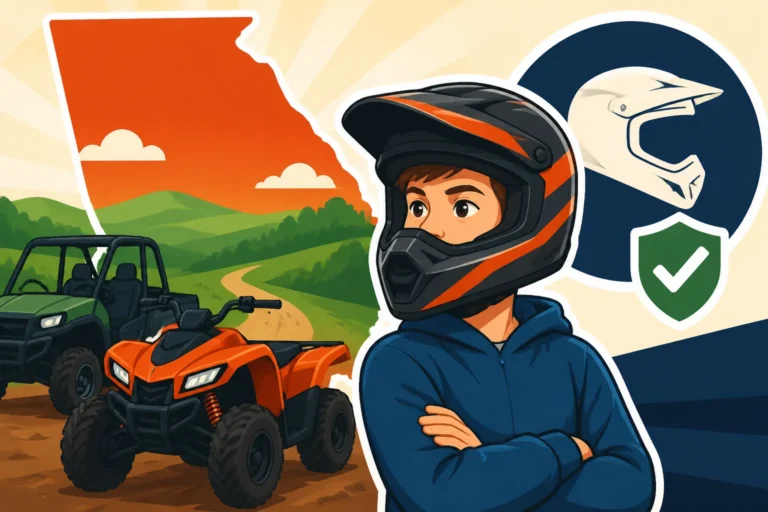
One of the most consistently enforced safety regulations for off-highway vehicles in Georgia concerns helmets for minors. If anyone under the age of 18 is operating or riding as a passenger on an ATV, UTV, or any MPOHV, they are legally required to wear a helmet. This rule applies across the board, whether you're on private land, a designated trail, or a county road (if your MPOHV is registered). It makes no difference if the minor is a resident of Georgia or a visitor from Tennessee; the law applies equally.
Failing to comply with this can result in a significant fine. This isn't just a suggestion; it's a legal mandate designed to protect young riders. For full details on the specific age limits and requirements, refer to [Georgia ATV Helmet Law for Riders Under 18]. When planning your trip, ensure that every minor in your group has a properly fitted, DOT-compliant helmet. It's better to be safe, both for the child's well-being and to avoid a citation.
Insurance Requirements for Road Use
If you intend to operate your MPOHV on Georgia's county roads, even as a visitor, you will need to carry proof of liability insurance that meets Georgia's minimum requirements. This is a non-negotiable part of the MPOHV registration process. Without it, you simply cannot register your machine for road use in Georgia.
Even if you have insurance from Tennessee, you'll need to confirm with your provider that it extends coverage for operation in Georgia and specifically covers your MPOHV for road use under Georgia's MPOHV classification. Many standard off-road policies are for private land only. If your Tennessee policy doesn't cut it, you would need to secure a temporary or full policy that satisfies Georgia's requirements. This usually means carrying minimum bodily injury and property damage coverage. A law enforcement officer on a county road will expect to see proof of this Georgia-compliant insurance alongside your Georgia MPOHV registration. For further information on the required coverage, check out [Georgia Insurance Minimums for Road Use]. It's a critical piece of the puzzle to avoid serious financial and legal repercussions in the event of an accident.
Potential Penalties for Non-Compliance
The state of Georgia takes its vehicle laws seriously, and off-highway vehicle regulations are no exception. For visiting riders, being found in violation can lead to a range of penalties, from fines to more severe consequences.
Potential penalties include:
- Fines: Operating an unregistered MPOHV on county roads, or any ATV/UTV on prohibited roads (like state highways), can result in significant monetary fines. These can quickly add up, easily surpassing the cost of obtaining proper registration or sticking to private trails.
- Impoundment: In some cases, especially for repeat offenses or egregious violations (like operating on an interstate), law enforcement may impound your vehicle. Getting your machine back can be a costly, time-consuming, and frustrating process, involving towing fees, storage fees, and administrative charges, on top of any fines.
- Driver's License Issues: While Georgia's MPOHV operators need a valid driver's license (see [Georgia Driver's License Rules for MPOHV Operators]), violations might impact your driving record, even if you're an out-of-state driver.
- Legal Fees: Should an incident escalate beyond a simple citation, you could find yourself facing legal fees to defend against charges.
- Insurance Ramifications: An accident while operating illegally can lead to your insurance provider denying coverage, leaving you personally liable for damages and injuries.
The bottom line is that it's far easier and cheaper to understand and comply with Georgia's rules upfront than to deal with the aftermath of a violation. Don't let a misunderstanding of the law ruin your trip to Georgia.
Finding Legal Riding Spots Beyond Public Roads
While the public road access for MPOHVs is limited, Georgia offers fantastic opportunities for off-road riding in designated areas. These are often the preferred choice for many riders, especially those from out of state, as they bypass the complexities of road legality entirely.
Georgia's National Forest OHV Trails
The Chattahoochee-Oconee National Forest in Georgia provides six distinct Off-Highway Vehicle (OHV) trail systems. These are legally maintained and managed trails specifically for ATVs, UTVs, and dirt bikes. They offer a diverse range of terrain and difficulty levels, from scenic forest roads to more challenging single-track trails.
Key things to know about National Forest OHV trails:
- Permit Required: All riders on these trails need a Georgia National Forest OHV permit. This is a separate permit from any vehicle registration and can typically be purchased online or at ranger district offices. [Georgia National Forest OHV Systems] offers more information on these permits.
- Machine-Specific Restrictions: Some trails have width restrictions, most notably Houston Valley, which has a 50-inch width limit, effectively excluding many side-by-sides. Always check the specific trail system's rules before you go. Your wide-stance SuperATV might be great for stability, but it won't fit everywhere!
- Seasonal Closures: Some trails may be seasonally closed, especially during wet periods to prevent erosion or during certain hunting seasons. Always check trail status before you travel.
- Rules and Regulations: Riders must adhere to forest service rules regarding spark arrestors, noise limits, and general trail etiquette.
Riding in these designated areas provides a controlled and legal environment to enjoy your machine. It's a great option for a Tennessee rider who wants to experience Georgia's diverse landscapes without the headaches of MPOHV road registration.
Private Off-Road Parks and Their Rules
Beyond the national forests, Georgia is home to several private off-road parks that cater to ATV and UTV enthusiasts. These parks are typically privately owned and operated, offering vast networks of trails, mud pits, rock crawling areas, and even facilities like camping, cabins, and wash stations.
Examples of popular private parks include Iron Mountain Resort and Highland Park Off-Road Resort. [Georgia Private Off-Road Parks Compared] can give you a better idea of what each offers.
Things to consider when visiting a private park:
- Entry Fees: All private parks charge an entry fee, which can be for a day, a weekend, or an annual pass.
- Waivers: You will almost certainly be required to sign a liability waiver before riding. If you have minors, their parents or legal guardians will need to sign on their behalf.
- Park-Specific Rules: Each park has its own unique set of rules regarding helmets (some may require them for all riders, not just minors), speed limits, passenger restrictions, alcohol policies, and machine modifications. Always check their website or call ahead for current regulations.
- Amenities: Many parks offer a range of amenities from basic restrooms to full-service pro shops and rentals. If you need a specific part or accessory for your machine, some parks might even stock popular items or components from brands like SuperATV.
- Camping: Many private parks offer camping, from primitive tent sites to RV hookups, making them a great multi-day destination.
Private parks offer a fantastic opportunity for a worry-free riding experience, as long as you adhere to their specific rules. They are often equipped to handle a wide range of machines, including those that might not fit national forest width restrictions. For a visiting Tennessee rider, these parks provide an easy and exciting way to get out and ride legally in Georgia.
| Georgia ATV/UTV Road Use Comparison | Tennessee Registered Off-Highway Vehicle | Georgia MPOHV Registered Vehicle |
|---|---|---|
| Legal on County Roads | No | Yes, if eligible and registered |
| Legal on State Highways | No | No |
| Legal on Interstates | No | No |
| Can Cross State Highways | No | Yes, at designated intersections |
| Required Registration | Tennessee OHV Registration (Not recognized by GA for road use) | Georgia MPOHV Registration (Voluntary, but mandatory for road use) |
| Required Insurance | Tennessee policy may not meet GA MPOHV road use requirements | Georgia liability insurance for road use |
| Driver's License Required | No (for off-road use only) | Yes |
| Helmet Rule (Under 18) | Yes (Applies in GA, regardless of TN law) | Yes (Applies in GA) |
| Applicable Vehicle Type | ATVs & UTVs | Only specific UTVs/Side-by-Sides meeting GA MPOHV criteria |
Disclaimer
This article is for general informational purposes only and does not constitute professional advice. Laws, prices and regulations vary by location and change over time. Consult a qualified professional for guidance on your specific situation.