Georgia WMA Small Game Season Access
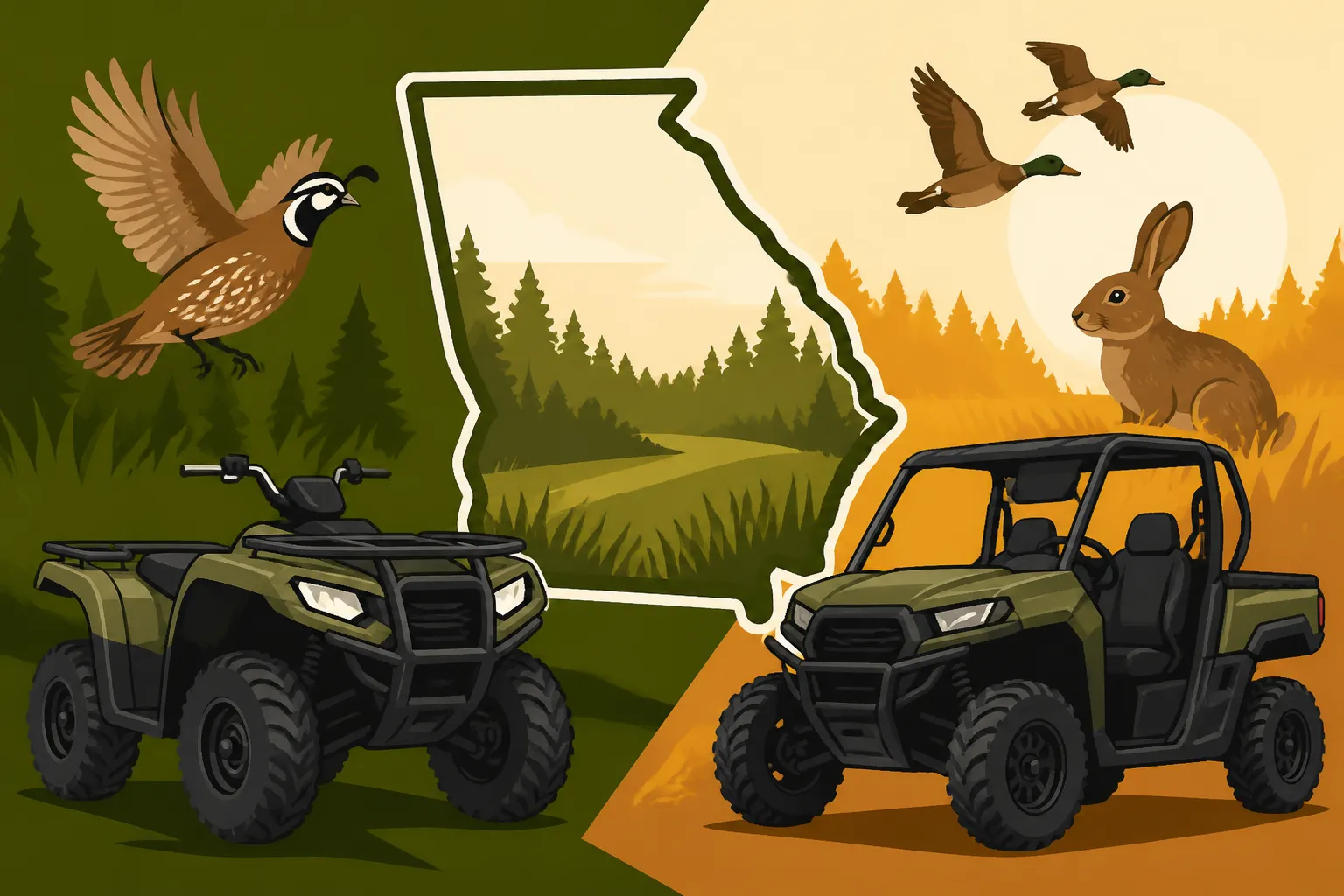
Georgia WMA small game season access can make a quad useful for reaching a hunting area, but it is not a general invitation to ride trails or roads across wildlife management land. Access depends on the specific WMA, its current hunting schedule, designated routes and operating rules. Check those details before unloading so a hunting trip does not turn into an unauthorized ride.
What Small Game Season Access Allows
A wildlife management area is managed for particular activities, and rules can differ from one WMA to another. During small game season, a rider may be able to use an ATV or another qualifying vehicle for access related to a legal hunt. That does not mean every WMA is open to recreational ATV riding whenever small game season is underway.
The practical distinction is between getting to a lawful destination on an allowed route and riding for recreation. Permission to travel on a designated WMA road does not usually give you permission to explore closed roads, cut across fields, make your own trail or ride through a hunting area without regard for other users. Start with the area-specific rules in Georgia WMA Rules for ATV Riders and confirm that the particular WMA permits your kind of machine and intended use.
Pay close attention to the wording around hunting dates. Some access is limited to days when a qualifying hunt is scheduled, and rules may also address the day before a hunt. A statewide small game season date is not, by itself, proof that vehicle access is allowed at every WMA on that date. Check the WMA’s own schedule and any listed restrictions. Georgia WMA Riding Only on Hunt Days explains why the hunt calendar matters.
The same caution applies to what counts as a small game hunt. The area may list specific species, seasons, weapon types or scheduled hunts. If the access rule is tied to an active hunt, simply carrying a firearm or having a hunting license may not be enough to establish that you qualify. Read the regulation for the area and activity rather than relying on a general assumption about hunting season.
| Question | What to verify before riding |
|---|---|
| Is the WMA open to ATV access? | Look for vehicle-specific permission for that named area. |
| Does the date qualify? | Match your visit to the WMA’s small game season and scheduled hunt dates. |
| Is your route allowed? | Use only roads or trails expressly open to the vehicle you are operating. |
| Does the rule require hunting activity? | Confirm whether access is limited to people participating in a hunt. |
| Are there extra conditions? | Check operating hours, age limits, permits, tags and temporary closures. |
Treat the most specific instruction as the one to follow. A general statement about WMA access does not override a closure notice or a rule for a particular tract. When the posted information is unclear, contact the responsible wildlife office or land manager before riding.
Dates, Hours and Who May Operate
Small game season dates vary by species and can also interact with WMA-specific hunt schedules. A season that is open statewide may not mean that a particular area has a scheduled hunt or allows vehicle access on the day you plan to visit. Check the current hunting information for the exact WMA, not just a general calendar.
Where ATV use is permitted, access may be restricted to hunt days and, under certain rules, the day before a hunt. Do not assume the day-before provision applies to every WMA or every type of hunt. Check the current area listing, and if it gives a narrower access window, follow that window. Georgia WMA Riding Only on Hunt Days covers the connection between hunt schedules and vehicle use.
Hours are another potential source of confusion. WMA vehicle rules can set a time window around sunrise and sunset, which is different from simply being allowed on the property during daylight. For areas that use the common window, the rule may allow travel starting two hours before sunrise and ending two hours after sunset. Confirm the hours for your specific WMA in Georgia WMA Two-Hour Window Around Sunrise and look for any hunt-specific or temporary restriction that changes them.
Operator age can matter even when a parent or other adult is present. Georgia WMA guidance identifies a minimum age of 16 for ATV operators in the relevant setting; do not assume that supervision makes a younger rider eligible. Review Georgia WMA Minimum Age of 16 and the current regulations before bringing a young rider. Separate age rules may apply to passengers, helmets and operation on other kinds of property.
Plan to arrive and leave within the allowed window. Being on a road before the opening time or after the closing time may still violate the access rule, even if the purpose is to reach a hunting spot or return to a parked truck. Leave room for a slow ride, a gate check, a mechanical problem or a change in weather rather than planning to arrive at the limit.
If the WMA is closed to vehicles on your chosen date, do not use a nearby public road, another property entrance or a different machine as a workaround. A closed gate or a posted restriction is a clear sign to stop and verify access. Seasonal restrictions can protect wildlife, hunting activity, roads and sensitive ground conditions.
Roads, Machines and Permits
A WMA access rule is not the same as unrestricted trail access. Many WMA provisions limit ATV travel to designated roads, and some areas have no ATV routes open at all. Do not ride around a barrier, use a footpath as a vehicle trail or assume that a route shown on an old map remains open. Georgia WMA Riding Only on Roads explains why the route itself is part of the permission.
Before leaving home, identify the allowed entrance and route on current information. At the area, follow signs and gate notices even if they differ from what you expected. A road may be closed temporarily because of weather, maintenance, fire danger, hunting activity or habitat protection. If a route is not clearly open to your vehicle, avoid it until you can confirm its status.
The vehicle category matters too. A rule that mentions an ATV or quad should not automatically be treated as permission for a side-by-side, motorcycle or other off-highway vehicle. Width, vehicle type and route restrictions can differ. If the wording does not clearly include your machine, confirm before taking it onto the WMA. Georgia WMA Access for a Quad offers a focused explanation of quad access, while Georgia National Forest WMAs Need Designated Trails is useful when the area is on national forest land.
Do not confuse a national forest OHV permit with permission to ride on a WMA. Forest permits, WMA access rules and any area-specific requirements serve different purposes. A permit may be required for a designated national forest OHV system, but it does not open every road or trail on nearby land. For a broader explanation of permit types, see Georgia OHV Permits: What You Need Before You Ride.
Some WMAs on forest land may have additional tags or access requirements. Check whether your destination is one of those areas and whether any tag is required for your trip. Georgia WMA Tags and When They Are Needed explains why the land manager and the type of WMA can affect this step. Do not assume that a hunting license, a forest OHV permit or a vehicle registration substitutes for a separate WMA requirement.
Use the vehicle only as the rules permit. For example, permission to drive on a designated road does not necessarily authorize off-road travel to get around a wet section. If the road is impassable, turn back rather than widening it, damaging the surface or creating a new route. That is especially important on soft ground, where a short detour can leave deep ruts or damage habitat.
How to Check Access Before Your Trip
A reliable check starts with the exact place and date. “The WMA near town” is not enough: boundaries can include separate tracts, and access rules may differ between them. Find the named WMA, its entrance and the tract you intend to visit. Then check the current WMA regulations and hunting schedule for that location.
Use this sequence before loading your ATV:
- Confirm the area. Write down the official WMA name and identify the correct tract or entrance.
- Check the hunt schedule. Verify that the relevant small game season or scheduled hunt applies on your visit date.
- Confirm vehicle access. Look for explicit permission for your machine, not just general public access.
- Check the route. Identify which roads or trails are open and whether access is limited to designated routes.
- Verify time and age rules. Note the permitted hours and who may operate the machine.
- Check permits and tags. Confirm whether a forest permit, WMA tag or other area requirement applies.
- Recheck before departure. Look for new closures, weather-related notices or changed hunt information.
Save the official page or current regulation information on your phone, and consider carrying a printed copy if cell coverage may be unreliable. A screenshot can help you remember the route and schedule, but it does not override new signs, a closed gate or an updated notice at the site.
If you cannot find a clear answer, ask the office responsible for the WMA. Give the staff the specific area name, date, vehicle type and activity you have in mind. “Can I ride here?” may produce a broad answer; “Can I take this quad on the marked road at this WMA on this hunt date?” is more likely to resolve the actual question. For general ATV rules, Georgia WMA Rules for ATV Riders is a useful starting point, but the current area-specific rule should decide your plan.
A last-minute check is worthwhile because access can change. A road that was open on a previous visit may now be closed, and a season that is open elsewhere may not correspond with the schedule for your chosen tract. If the answer remains uncertain, leave the ATV off the WMA until the responsible office confirms that access is allowed.
Disclaimer
This article is for general informational purposes only and does not constitute professional advice. Laws, prices and regulations vary by location and change over time. Consult a qualified professional for guidance on your specific situation.