Georgia WMA Tags and When They Are Needed
Georgia WMA Tags and When They Are Needed
A WMA vehicle tag can be easy to confuse with a hunting permit, a machine registration or a forest OHV permit. They are not interchangeable, and the tag requirement does not mean an ATV or UTV can ride anywhere on a Wildlife Management Area. Here’s how to work out whether you need a tag and what else to check before entering.
What a Georgia WMA tag is for
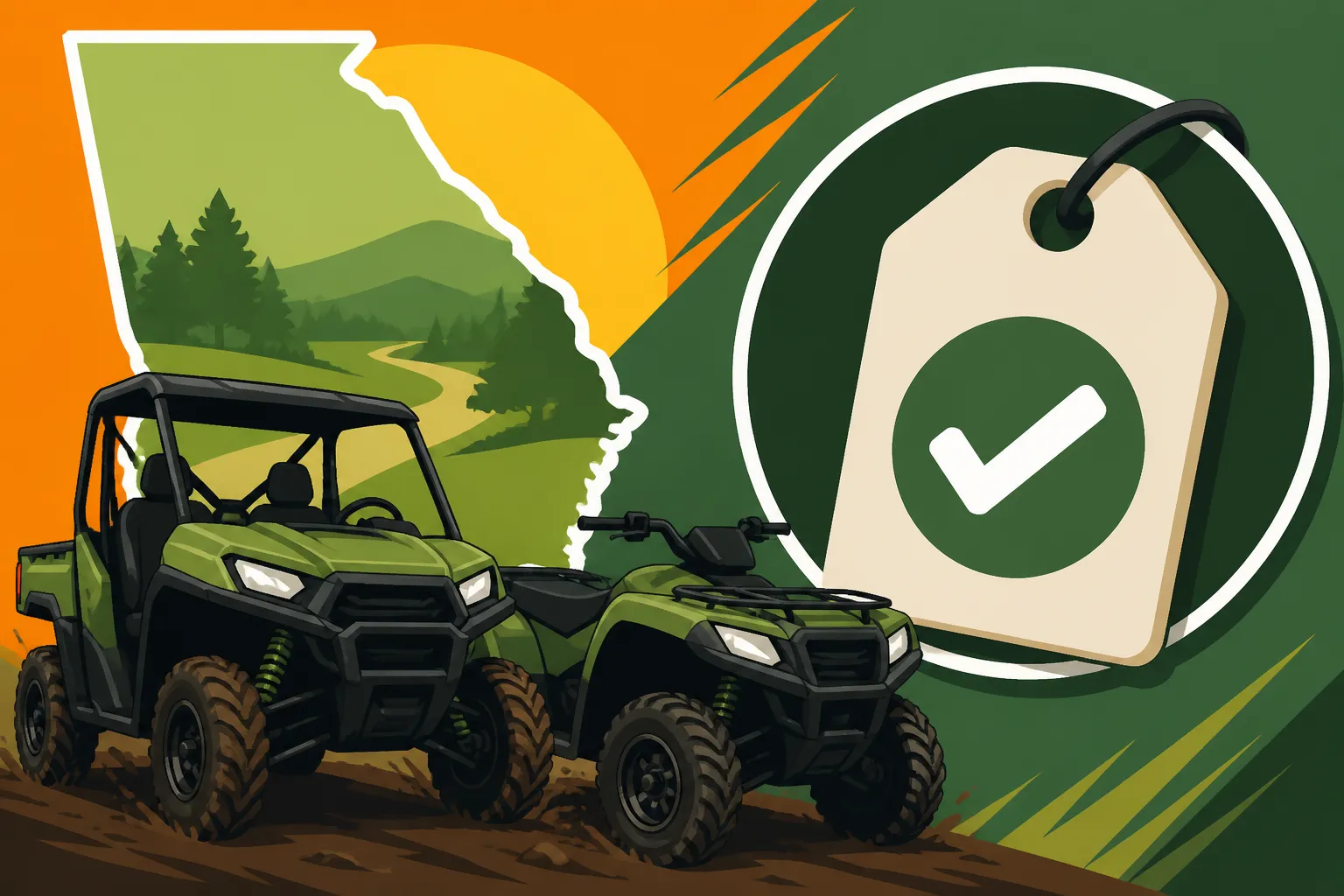
A WMA tag is an access requirement for certain vehicles on certain Wildlife Management Areas. It is separate from the machine’s registration or plate, and it does not grant blanket permission to ride across a WMA. Its purpose is to meet an access rule for an area where that rule applies.
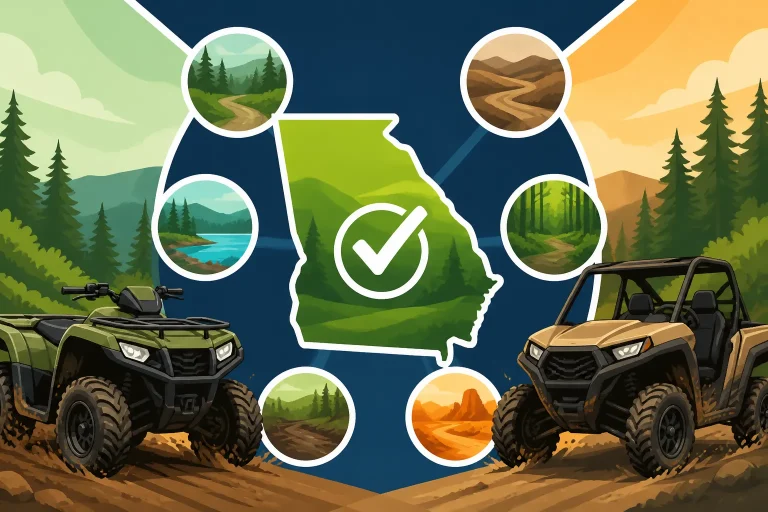
The first important distinction is that the requirement is not universal across every Georgia WMA. Georgia WMA tags are needed only on the Forest Service-owned WMAs identified by the applicable rules. A WMA’s name alone does not tell you whether a tag is required. Check the ownership and access information for the specific area you plan to visit.
That means two nearby properties managed as WMAs may have different requirements. One may require a vehicle access tag; another may not. Either way, the area can still have restrictions on where and when a motor vehicle may be used.
A tag also does not make a machine street-legal or turn a closed road into an open one. It does not replace permission to hunt, a required hunting license, a quota permit, or a separate permit for an OHV trail system. Think of it as one piece of the access puzzle—not a general riding pass.
| Requirement or document | What it generally relates to | What it does not do |
|---|---|---|
| WMA vehicle tag | Vehicle access on a WMA where a tag is required | Authorize riding on every road or trail |
| Hunting license or hunt authorization | Eligibility to hunt under the rules for that season and area | Replace a vehicle tag where one is required |
| Georgia Forest OHV permit | Riding on designated National Forest OHV systems where a permit applies | Authorize general riding on WMA roads |
| Machine registration or plate | Registration status for a qualifying machine | Grant access to a WMA or a closed road |
| Area-specific rules | Access hours, open routes, seasons and other local conditions | Automatically carry over to another WMA |
If you are unsure which kind of document a notice refers to, look at what it authorizes and where it applies. A vehicle tag is not the same thing as a permit charged per operator for a designated OHV system. The distinction matters: a machine can have a valid tag and still be operated where it is not allowed.
For more on the general limits on machine use in these areas, see Georgia WMA Vehicle Rule in Plain English. It’s also useful to understand that Georgia WMA Riding Only on Roads describes a different question from whether a tag is required: a tag does not expand the roads you can use.
When you need a tag—and how to check
Start by identifying the exact WMA, not just the county, nearby town or forest. WMA boundaries and land ownership can be complicated. A WMA may include land with different management responsibilities, and a nearby trail system may have its own rules and permit requirements.
The tag requirement applies only where the rules specify it. The practical approach is to check the current access information for the exact WMA and confirm whether it is among the Forest Service-owned areas with a vehicle-tag requirement. Do not assume that a tag is required everywhere, and do not assume it is unnecessary just because you have used a different WMA without one.
Use this sequence before you go:
- Confirm the area name and boundary. Match your intended entrance, road or parking location to the WMA’s official map or area description. A road that appears to lead to the WMA may cross private, state, county or federal land.
- Check who manages the relevant land. Determine whether the part you plan to enter falls under the Forest Service-owned WMA rules. If ownership is unclear, ask the responsible office rather than relying on an old map or a social media post.
- Read the current area-specific access rules. Look for a vehicle-tag requirement, allowed vehicle types, open routes, dates, hours and any hunting-season conditions.
- Check how the tag must be obtained and carried or displayed. Follow the instructions for that area. Do not assume a phone receipt, dashboard document or machine sticker is acceptable unless the applicable instructions say so.
- Check the rules again close to your trip. Access, closures and seasonal conditions can change. A tag does not override a temporary closure.
The distinction between “tag needed” and “riding allowed” is especially important. You may need a tag simply to bring a vehicle into a particular area under its vehicle-access rules. That does not necessarily mean you can use every route, travel at any time, or ride for recreation when there is no open access.
You should also confirm whether the requirement applies to your intended activity and vehicle. A person going in by car to a parking area may face a different practical situation from someone operating an ATV on a road. If the rules do not clearly say how they apply to your vehicle or trip, ask the area manager before relying on an interpretation.
For other access limits, including when road use is allowed, see Georgia WMA Riding Only on Hunt Days and Two Hours Before Sunrise: Georgia WMA Riding Hours. Those conditions can matter even after you have figured out whether a tag is required.
A tag does not replace hunting or riding permission
WMA access is governed by several separate layers of rules. A vehicle tag addresses only the layer it was issued for. It does not automatically authorize hunting, riding an OHV trail, entering a closed road, or taking a machine onto land outside the WMA.
Hunting permission is separate
If your trip includes hunting, check the requirements for the species, season and specific WMA. A hunting license, quota authorization, harvest record or other required permission is distinct from a vehicle tag. A tag should never be treated as proof that you are authorized to hunt.
Likewise, holding hunting authorization does not necessarily satisfy a vehicle-tag requirement. A hunter may need to meet both sets of rules when entering an area with a machine. If you are traveling with a group, each person should understand which permissions apply to them and which apply to the vehicle.
WMA rules can also distinguish between being on the property to hunt and using roads for access. A hunter’s presence in an area does not by itself open a closed road or permit off-road travel. Follow the posted restrictions and the current rules for that WMA.
Forest OHV permits are different
A Georgia Forest OHV permit relates to designated OHV systems, not general WMA vehicle access. It is an operator permit for the relevant forest riding system, while a WMA vehicle tag concerns vehicle access where the tag rule applies. A rider may need one, the other, both, or neither, depending on the location and activity.
Do not use an OHV permit for one trail system as a substitute for a WMA tag. The reverse is also true: a WMA tag does not give permission to ride a designated OHV system if that system requires its own permit. The two permissions have different purposes and apply in different places.
For the permit rules that apply to designated forest riding areas, see Georgia’s Day and Annual Forest OHV Permits. If you plan to visit a marked trail system, check its own permit and route rules rather than assuming WMA access covers it.
Registration is not access permission
A machine’s registration, plate or proof of ownership is also separate. Registration may be relevant to whether a machine qualifies for a particular road-use program, but it does not independently grant access to WMA roads or trails. A registered machine must still follow the rules of the land it is on.
The same is true of an out-of-state plate. Registration in another state does not make a road open on Georgia public land. Confirm the land manager’s rules and any route restrictions before riding.
If you need to sort out whether your machine has a separate registration requirement, Georgia WMA Access for a Quad can help frame the issue. For designated forest systems, Georgia National Forest Trail-Only Rule is another reminder that permitted access can be limited to specific routes.
Where and when you may operate a machine
A WMA tag is not a trail pass. In general, machine access in a WMA is constrained by the specific roads, dates and purposes identified by the area rules. Many WMA restrictions focus on roads open to motor vehicles rather than unrestricted travel across the property.
Do not assume an unmarked track is an approved ATV route. A path may be a closed road, a foot trail, a logging road, a private access route or a route intended for a different purpose. If signs, gates or the official map indicate that a road is closed, the tag does not authorize you to pass.
Rules can also depend on whether the trip is connected to an open hunting period. Check whether vehicle use is allowed only on designated hunt days or during a defined window around sunrise and sunset. These restrictions are separate from the tag requirement: you may have the correct tag and still be outside the allowed time or date.
The areas are not interchangeable, so avoid relying on what happened on a previous trip. A road open on one WMA may be closed on another. A road that is open during one season may have limited access at another time. A gate or sign at the entrance should be treated as meaningful, even if a navigation app shows a through route.
Before leaving home, confirm these points:
- Route: Is the specific road open to the type of vehicle you plan to use?
- Purpose: Is the access limited to hunting-related travel or another defined activity?
- Date: Does the road close outside particular hunting dates or seasons?
- Time: Are there restrictions tied to sunrise or sunset?
- Vehicle: Is an ATV or UTV allowed on that route, or is it limited to other vehicles?
- Temporary status: Is the road closed because of weather, maintenance, fire danger or another temporary condition?
- Boundary: Does the route remain on the WMA or cross onto another property with separate rules?
Treat a closed gate as a closure, not an invitation to find a way around it. Do not ride on a shoulder, around a barrier or through an adjacent field to bypass a restriction. A road may be closed to protect wildlife, prevent damage or keep vehicles out of an area that is not open for public use.
An ATV or UTV should also stay on the route it is allowed to use. Riding across a field, through timber or along an unofficial shortcut can create damage and may violate access conditions even if the machine has the correct tag. When the route is unclear, stop and check rather than guessing.
More detail on time limits is available in Two Hours Before Sunrise: Georgia WMA Riding Hours. For road and hunting-date restrictions, see Hunt Days and the Day Before.
Preparing for a WMA visit
A little checking before a trip can prevent a wasted drive or an access violation. Build the preparation around the exact WMA, your intended route and your reason for going. A generic search for “ATV riding in Georgia” is not enough to confirm that a specific road is open.
Make a short pre-trip checklist
Before loading the machine, make sure you can answer the following:
- Which WMA are you visiting, and which entrance will you use?
- Is the area subject to a vehicle-tag requirement?
- Do you know how to obtain and carry or display the required tag?
- Is the route open to your machine and intended activity?
- Are there date or time limits?
- Do any hunting licenses, quota permissions or other authorizations apply?
- Does your plan include a designated OHV trail system that requires a separate permit?
- Are there closures, posted restrictions or temporary notices?
- Does the route cross land managed by someone else?
Keep the relevant instructions accessible while traveling. A printed map or downloaded area information can be useful when mobile service is poor, but it should not replace current official access information. If you use a map app, treat it as a navigation aid—not proof that a road is open.
Ask the right question if the rules are unclear
When contacting the area manager, be specific. Instead of asking only, “Do I need a tag?”, give the WMA name, entrance or road, vehicle type, intended date and whether the trip is for hunting or recreation. That makes it easier to get an answer that applies to your actual plan.
Ask separately about the tag, road access and timing. For example, confirm whether the vehicle tag is required for your machine, whether your chosen route is open, and whether the date and time fit the area rules. One affirmative answer does not settle the others.
If you receive information that conflicts with a sign or current closure notice, follow the posted restriction while you seek clarification. Do not treat an old tag, old map or prior trip as a guarantee that conditions remain unchanged.
Keep the tag requirement in perspective
The tag is one administrative condition, not a substitute for responsible operation. Stay on permitted roads, respect gates and signs, avoid damaging wet or fragile surfaces, and give hunters and other visitors space. If an area is crowded or conditions are poor, changing plans is safer than forcing access.
The same practical approach applies to visitors from outside Georgia. Do not assume a permit or vehicle tag from another state will satisfy Georgia requirements. Check the local access rules for the area you are entering and separately confirm any applicable state or land-manager permissions. See Georgia Visitors From Other States for the broader visitor-permit questions.
Frequently Asked Questions
Does every Georgia WMA require a vehicle tag?
No. The tag requirement applies to specified Forest Service-owned WMAs, not every WMA in Georgia. Confirm the requirement for the exact area you plan to visit.
Does a WMA tag let me ride anywhere on the property?
No. It does not open closed roads, trails or off-road areas. Follow the route, date, time and purpose restrictions for that WMA.
Is a WMA vehicle tag the same as a forest OHV permit?
No. A WMA tag and a forest OHV permit serve different access purposes. Check the rules for both if your trip includes a WMA and a designated OHV trail system.
Does the tag replace a hunting license or quota authorization?
No. Hunting permissions and vehicle access requirements are separate. If you plan to hunt, check the requirements for the species, season and WMA as well as any vehicle-tag rule.
What should I do if I cannot tell whether my WMA requires a tag?
Check the current rules for the specific WMA and contact the responsible area office if the instructions are unclear. Provide the area, route, vehicle and planned date so the answer addresses your trip.
Disclaimer
This article is for general informational purposes only and does not constitute professional advice. Laws, prices and regulations vary by location and change over time. Consult a qualified professional for guidance on your specific situation.