Georgia WMA Riding After Sunset
Georgia WMA riding after sunset can be confusing: a limited vehicle-use window may extend beyond sunset, but that does not mean every road or WMA stays open for evening rides. The practical answer depends on the area’s current access rules, hunting dates, and road closures. Check those details before unloading, and treat the posted rules—not daylight alone—as your guide.
What the after-sunset window does and does not mean
Some Georgia Wildlife Management Areas allow certain vehicle use during a time window that can extend to two hours after sunset. That is a limited access period, not a general invitation to ride anywhere on a WMA after dark. The specific area’s rules, open dates, and road restrictions still control.
Sunset and the end of authorized riding time are not necessarily the same. If a WMA’s rules allow access until a stated time after sunset, riding may be permitted during that interval on roads open to the relevant vehicle use. Once the permitted window ends, continuing along the road can put you outside the authorized hours, even if you are close to your truck, camp, or parking area.
The time window also does not make every type of trip permissible. WMA motor vehicle access is commonly limited to designated or open roads, and the applicable hunting access rules may restrict when and why a rider can use them. Riding off-road, around a closed gate, or onto a closed route is not made legal by staying within the after-sunset period. Review Georgia WMA Riding Only on Roads before treating a WMA as a trail system.
There is another important distinction: a WMA’s vehicle rules are separate from general off-highway vehicle rules. A forest OHV permit, for example, does not automatically authorize riding on a WMA road that is closed or outside its permitted hours. Nor does an ATV registration, where applicable, override land-management restrictions. Check what applies to the specific property and activity rather than assuming that one permit covers all access.
The time allowance can also be easy to misread. “After sunset” does not mean “until it gets dark,” and it does not mean the road is open all night. If the rule gives a limited period after sunset, use the posted or published cutoff as the boundary. Plan to leave the WMA before that point, not to start a ride at the last possible minute.
Check the WMA’s dates, roads, and hunting conditions
Before you ride, identify the exact WMA and check its current regulations. Rules can differ between properties and may change with the season, a specific hunt, a temporary closure, or road conditions. A map showing a road is not proof that it is currently open to ATVs or UTVs.
Start with the area’s access dates. Some WMA vehicle access is tied to open hunting days or other designated periods. Do not assume that an open hunting season means every road is available every day, or that a WMA is open to recreational riding simply because you can enter the property. See [Georgia WMA Riding on a Non-Hunt Day] and Hunt Days and the Day Before for why the calendar matters.
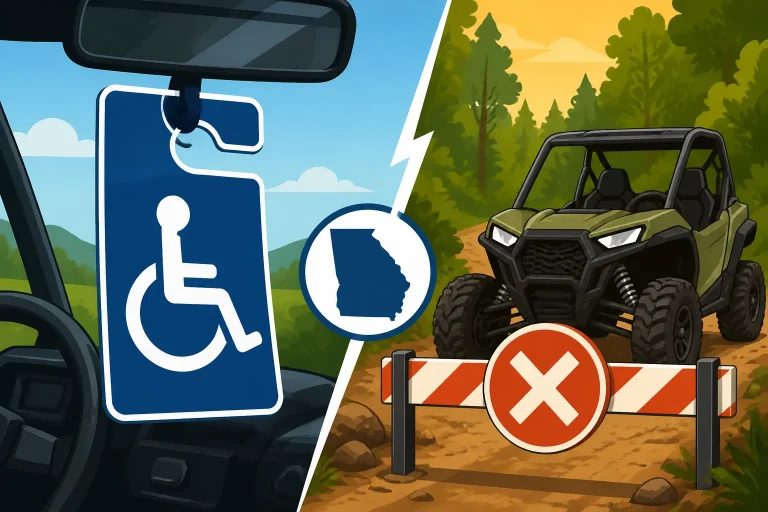
Next, check the road itself. A WMA may allow vehicle use only on roads designated for that purpose. A gate, sign, barricade, or temporary notice can indicate that a route is closed even when nearby roads remain open. Do not go around a barrier or follow another rider through a closed entrance. If the posted information conflicts with an older map or an online summary, follow the current closure signs and confirm the rule with the managing office.
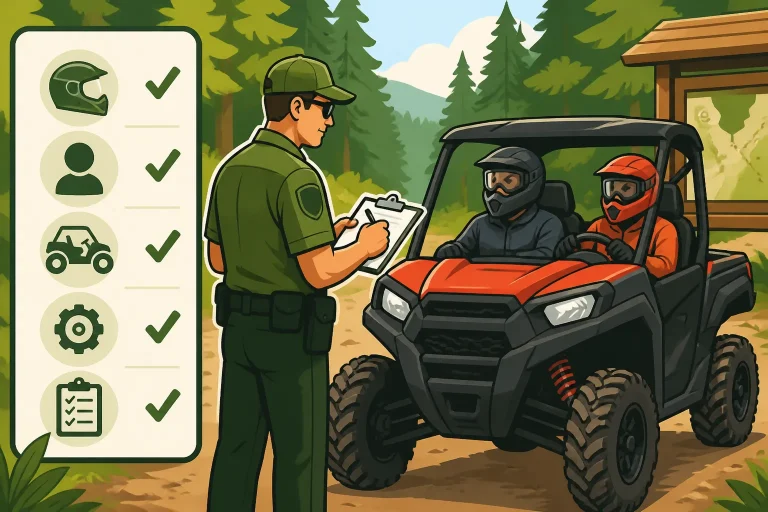
Use this checklist before leaving home:
| What to verify | Why it matters |
|---|---|
| The exact WMA and its current regulations | Rules are property-specific and may change by season or activity |
| Open dates and hunting access | Vehicle access may be limited to designated days or periods |
| The after-sunset cutoff | A limited window is not permission to ride all night |
| Which roads are open to your machine | WMA access may be restricted to designated roads |
| Gates, signs, and temporary closures | A route shown on a map may be closed on the ground |
| Age, supervision, or tag requirements | Separate rules may apply to operators and certain WMAs |
| Your return time and route | You need enough time to reach the exit before access ends |
If your planned ride depends on being in the area for a hunt, make sure you understand what counts as valid access for that WMA. Do not treat “I am near a hunting area” as equivalent to being authorized to hunt there. The relevant rules may require an active, lawful hunting purpose or impose other conditions. Georgia WMA Riding Only on Hunt Days explains why the date alone may not answer every access question.
Check whether a tag or other authorization is needed for the particular WMA. Requirements can depend on who manages the property and how it is being used. A general hunting license, an OHV permit, and a WMA-specific tag are not interchangeable. If the instructions are unclear, contact the appropriate DNR office before the trip. Georgia WMA Tags and When They Are Needed covers the role of those tags.
A good rule is to confirm the information twice: once when planning and again before riding. Weather, fire conditions, management work, or a local notice can affect access after you have made your plans. Keep a screenshot or printed copy of the relevant regulations, but remember that it does not supersede a closure posted at the entrance.
How to plan a ride that ends after sunset
The easiest way to avoid a rushed or uncertain trip is to plan around the cutoff rather than aiming for it. Choose a turn-around time that leaves a cushion for slow travel, a stuck machine, a passenger issue, or a road closure. If reaching the exit requires more time than you have before the permitted period ends, shorten the ride or leave earlier.
Use this process:
- Confirm the WMA and permitted dates. Check the current rules for the exact property, not just general guidance about WMA riding.
- Identify the roads you may use. Do not rely on a recreational trail map if the rules authorize only certain roads.
- Check the after-sunset limit and any activity conditions. Confirm whether your planned use and date are covered.
- Set a conservative turn-around time. Include time to return to the parking area before access ends.
- Tell someone your route and return plan. Share the WMA name, planned roads, and expected return time.
- Follow all signs and closures on site. If a road is blocked or the rules are unclear, turn back rather than improvising.
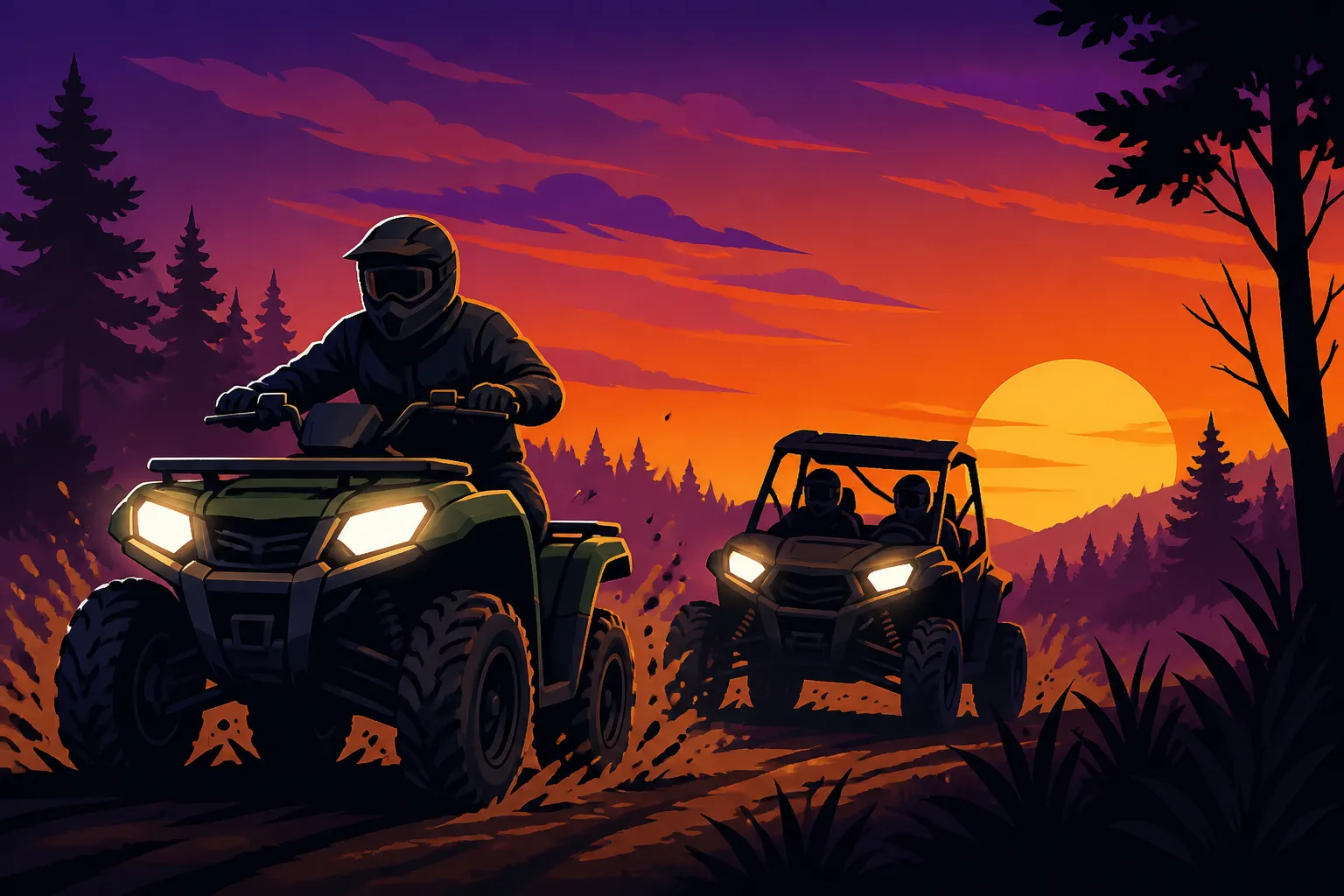
Darkness adds practical risks even when riding is still within the authorized period. Headlights help you see the road, but dust, trees, uneven ground, other vehicles, and wildlife can make visibility poor. A passenger may have a different view of hazards, and a UTV’s lights do not make it easy for other road users to judge its distance or speed. Reduce speed, leave extra space, and avoid riding beyond what you can clearly see and stop for.
Carry a charged phone, but do not assume you will have service throughout the WMA. A small flashlight and basic recovery supplies can help if you need to inspect a machine or walk a short distance. Tell your group what to do if someone becomes separated, and agree to stop at a safe place rather than sending riders in different directions. For more general considerations, see Georgia Rules for Riding After Dark.
Be especially cautious after rain or when a road is unfamiliar. Ruts and washouts can be harder to spot at night, and a route that is straightforward in daylight may be difficult to navigate after dark. Avoid testing an unknown road near the end of your authorized riding time. If the group is behind schedule, turn around by a known route instead of trying to save time on an unfamiliar shortcut.
If you are riding with young operators, passengers, or a group, confirm the age and supervision rules in advance. These requirements are separate from the time window and can vary with the property or use. Georgia WMA Age Rule is a useful starting point, but verify the specific WMA’s current regulations for the people riding with you.
If you are still on the WMA after the cutoff
If you realize you are approaching the end of the allowed period, stop adding distance to the trip and take the most direct permitted route toward the exit. Do not assume that a short extension is harmless or that reaching a parking area later will be overlooked. A time limit is part of the access rule.
If a machine breaks down or someone is injured and you cannot leave in time, prioritize safety. Contact emergency services when needed, and notify the property manager or law enforcement as soon as you can. Explain where you are and why you cannot exit within the permitted period. Do not attempt a dangerous repair, ride a damaged machine, or enter a closed road just to meet a deadline.
If you arrive after the cutoff, wait for lawful access rather than entering because the gate is open or another vehicle is leaving. An open gate does not necessarily mean the road is open to public riding. Likewise, if a group member is late, do not make an unauthorized trip back into the WMA to find them; use the agreed meeting plan and contact the appropriate authority if there is a safety concern.
For a routine evening ride that is not tied to authorized WMA access, a public trail system or private riding park may be a better fit. Check that location’s own hours and vehicle restrictions; permission at one property does not transfer to another. The key is to separate “the area is physically accessible” from “this specific ride is allowed.”
In short, riding after sunset on a Georgia WMA may be possible during a limited period, but it depends on the property’s current rules and the road and activity involved. Confirm the cutoff, dates, and designated routes before you go, then leave enough time to be off the WMA before access ends.
Disclaimer
This article is for general informational purposes only and does not constitute professional advice. Laws, prices and regulations vary by location and change over time. Consult a qualified professional for guidance on your specific situation.