Georgia Private Park Camping Rules
Camping at a Georgia ATV or UTV park can make a ride simpler, but campsite access does not automatically include trail access, and rules differ from one property to another. Before you reserve, check what kind of camping is offered, which riders and machines are covered, and how the park handles fires, quiet hours, pets, and overnight access.
Confirm what your reservation includes
A private off-road park sets its own camping and riding policies. A reservation might cover a campsite but require a separate riding pass, or it might be bundled with riding access for a specific number of days. Do not assume a campsite booking authorizes everyone in your group to ride.
Ask the park to confirm these details before paying:
- Whether the reservation includes trail access, and which dates and riders it covers.
- Whether each rider needs a separate riding pass or waiver.
- Whether guests who are camping but not riding need to register or pay an access charge.
- Whether your machine type and size are allowed on the trails.
- When you can check in, when you must check out, and whether late arrival is allowed.
- Whether you can leave your machine or trailer at the site overnight.
- Which forms of payment and reservation confirmation the park accepts.
A campground inside a riding park may have different rules from a nearby campground that simply offers access to trails. For a broader look at parks and their facilities, compare Georgia Private Off-Road Parks Compared and Georgia ATV Camping With Trail Access. If you are looking for an indoor option, Georgia Off-Road Parks With Cabins and Georgia Off-Road Parks With Full Hookups may help you narrow the search.
Private park rules are not forest permit rules
Georgia’s National Forest OHV permit system is separate from a private park’s admission and camping policies. Do not assume a forest permit covers riding at a private property, or that a private park pass covers riding on public forest trails. Check the rules for the specific place you plan to ride. Georgia’s Day and Annual Forest OHV Permits explains the public forest permit distinction.
Likewise, registration or a plate for a machine does not by itself grant access to a private park. The property may require a waiver, a park-issued pass, safety equipment, or compliance with its own machine and rider rules. Review Georgia Private Park Waivers and Rules before your trip, especially if you are bringing minors or renting a machine.
Get the exact camping setup in writing
“Camping available” can mean very different things: a tent site, a place to park an RV, a cabin, or an area where you can camp beside a trailer. Ask what the reservation actually provides. Check whether a site has a defined size, electrical or water hookups, a fire ring, or a place to park your tow vehicle and trailer. If the park has limited spaces, confirm that the site can accommodate your full setup rather than assuming there will be room on arrival.
Also ask whether campers can arrive after the office closes, and what to do if they do. Some properties may have check-in steps, gates, or access procedures that matter when you arrive late. Save the park’s instructions and a contact number before leaving home, since cell reception may be limited at some riding areas.
Compare the rules before choosing a site
Camping rules are property-specific. A park may allow tents but not generators, permit fires only in designated rings, or set quiet hours that differ from a nearby campground. Use the park’s written policies as the final word, and ask about anything that could affect your group or equipment.
| Detail to confirm | Why it matters | What to ask |
|---|---|---|
| Camping type | A tent site, RV space, and cabin may have different access and equipment rules. | What type of site am I reserving, and what does it include? |
| Riding access | Campsite and trail access may be sold or managed separately. | Which riders and dates are included in this booking? |
| Machine eligibility | Trail widths, terrain, and park rules can limit which machines are allowed. | Are my machine’s type, width, and passenger setup permitted? |
| Check-in and gates | Late arrival can complicate entry, especially if the office is closed. | How do I enter after hours, and where do I check in? |
| Fires and cooking | Open flames may be restricted or allowed only in designated areas. | Are campfires or charcoal grills allowed, and where? |
| Quiet hours | Generators, music, and vehicle noise can affect nearby campers. | What are the quiet hours, and are generators restricted? |
| Pets | Parks may restrict pets at campsites, on trails, or in common areas. | Are pets allowed, and what leash or cleanup rules apply? |
| Waste and facilities | Dump stations, restrooms, and trash services may be limited or separate. | What facilities are available, and what should I pack out? |
| Extra guests | A visitor may need to register even if they are not riding. | Do non-riding guests need a reservation, pass, or waiver? |
A quick phone call can prevent a common mix-up: thinking the campsite’s location means a machine can be ridden directly from it. Some parks may require riders to use designated routes between camp and trails, or to trailer machines to a staging area. Ask where machines can be operated and parked, and whether riding is permitted after trail hours.
Check trail and campsite restrictions together
A machine that fits your campsite may not fit the trails. Parks can set their own width limits, route restrictions, rider-age requirements, and passenger rules. Confirm that the specific vehicle you plan to bring is accepted, rather than relying on a general statement that the park is “UTV friendly.” If width could be an issue, measure your machine as equipped, including accessories that extend beyond the tires.
The same goes for equipment and riders. A park may have helmet, waiver, supervision, or age requirements even for riders who have used other properties. Check Georgia Private Park Age Minimums and Georgia Private Park Helmet Rules for related questions, then confirm the individual park’s current policy.
Follow campground rules while you are there
A riding park is both a recreation area and a place where people may be sleeping, preparing food, and moving around on foot. Camping rules are usually intended to keep the site safe and usable for everyone. Follow posted signs and staff directions, and do not assume a rule at one park applies at another.
Fires, cooking, and generators
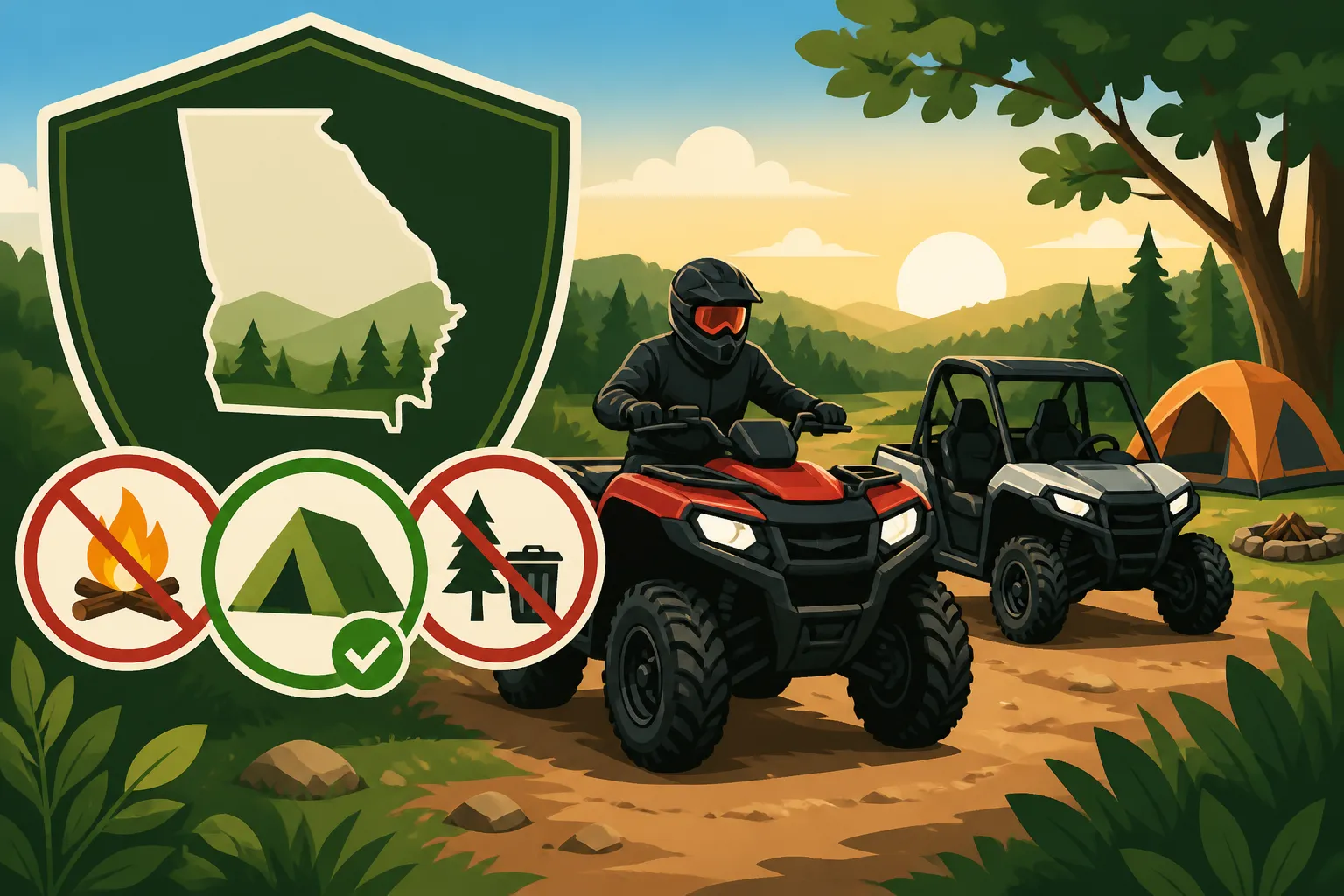
Before lighting a fire or running a grill, find out what the park permits and where. A park may restrict fires to a provided ring, prohibit fires during dry conditions, or ban certain types of cooking equipment. If the property allows a campfire, use only the designated area and follow any instructions about extinguishing it. Never leave a flame unattended, and do not burn trash.
Ask whether generators are allowed and whether there are limits on when they can run. A generator that seems reasonable during the day can disturb campers trying to sleep. Keep cooking equipment away from tents, trailers, fuel containers, and other flammable items, and bring a safe way to extinguish a small cooking fire.
Quiet hours and vehicle movement
Quiet hours may apply to music, generators, conversations, and machine operation. The riding day may end before the campground quiet period begins, so confirm the park’s schedule instead of assuming you can ride until dark. Even when trail riding has stopped, avoid revving engines or driving around the campsite unnecessarily.
Use only permitted routes for moving a machine between a site, staging area, and trail. Watch for pedestrians, children, pets, and vehicles, especially in low light. If the park does not allow riding through the camping area, shut the machine off and use the designated way to transport it.
Pets, alcohol, and shared areas
Pet policies may cover more than whether an animal can stay at the campsite. Ask whether pets are permitted in common areas, whether they must be leashed, and whether they can accompany riders. Keep pets secured so they cannot approach moving machines, other campers, or wildlife, and clean up after them.
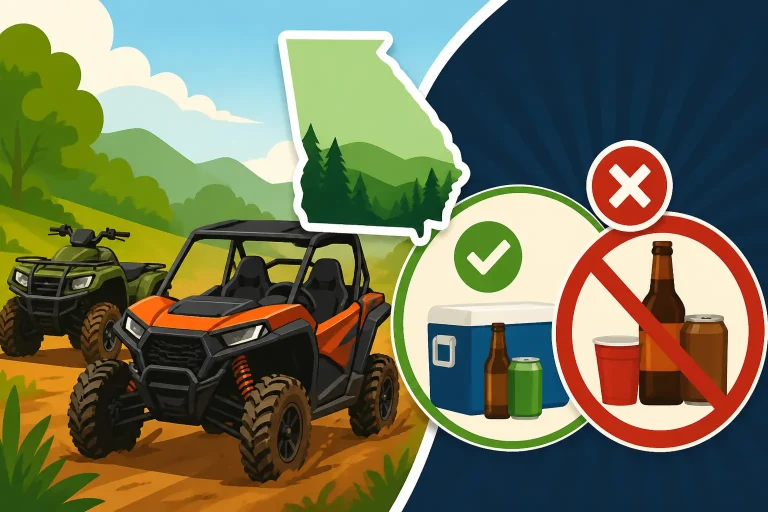
Alcohol policies can also be specific to the property and may apply differently to campsites, trails, and events. Check the park’s rules rather than relying on what is allowed at a different campground. A riding park may restrict riding after drinking regardless of whether alcohol is permitted at a campsite. See Georgia Private Park Alcohol Rules for more on the kinds of policies to confirm.
Keep campsites and shared facilities clean. Use the trash and waste options the park provides, and do not leave food or rubbish where animals can reach it. If restrooms, showers, or water are available, check where they are and whether access is included in your stay. Georgia Trailhead Restrooms and Water offers useful questions to ask when facilities matter to your plans.
Plan arrival, packing, and checkout
A little preparation reduces the chance of spending the first part of a riding weekend sorting out paperwork or campsite logistics. Save your reservation confirmation, park contact details, and any required forms where you can access them without a reliable signal. If the park requires waivers, check whether they must be completed before arrival and whether every rider or guardian needs to sign.
Before setting out, make sure the machine is ready for the park’s trails and that your group has the required protective equipment. A park may have its own inspection or safety requirements. Bring appropriate helmets and gear, and confirm passenger rules for the machine you will use. If you are renting, ask whether the rental provider supplies protective equipment and what you are expected to bring. For permit questions about public riding areas, Georgia Private Park Insurance Requirements is not a substitute for confirming the private park’s own terms; read the specific property’s insurance and waiver policy.
A practical pre-trip checklist:
- Confirm the campsite reservation, arrival window, and after-hours entry procedure.
- Verify whether trail access is included and identify which riders are covered.
- Check that the park accepts your machine and that it fits the routes you plan to ride.
- Read the waiver, age, helmet, passenger, and supervision requirements.
- Confirm rules for fires, grills, generators, pets, alcohol, and quiet hours.
- Ask about parking for your trailer, machine, and tow vehicle.
- Check what facilities are available and pack supplies the park does not provide.
- Save directions and a phone number in case the entrance or office is difficult to locate.
On arrival, check in before unloading or riding, even if you have already paid online. Ask staff to point out campsite boundaries, allowed machine routes, trail closures, and any temporary restrictions. If a posted sign conflicts with what you expected, pause and ask rather than taking a machine onto a route that may be closed or unsuitable.
At checkout, follow the park’s instructions for waste, site cleanup, and departure time. Return any park-issued items and report damage or a safety concern to staff. If your plans change and you need to leave early, ask whether the park requires a check-out step. Camping and trail access are privileges tied to the property’s rules, so clear communication is better than guessing.
When comparing options, focus on the fit between your group, machine, and campsite rather than choosing on one amenity alone. A site with hookups may not solve a trail-access problem, and a park that welcomes large UTVs may not offer the camping setup you need. Confirm both sides of the trip—overnight stay and riding access—directly with the property before you tow.
Disclaimer
This article is for general informational purposes only and does not constitute professional advice. Laws, prices and regulations vary by location and change over time. Consult a qualified professional for guidance on your specific situation.