Georgia OHV Permit Replacement If Lost
Losing a Georgia forest OHV permit can leave you unsure whether you can ride, whether you need to buy another one, or how to show proof at a trailhead. The right next step depends on what kind of permit you bought and whether you can recover its purchase record. Here’s how to sort that out before your next ride.
First, identify which permit is missing
Georgia OHV riders may encounter different permit systems depending on where they plan to ride. A permit for a national forest OHV trail system is not the same as a registration plate for a machine, a private park admission, or permission to use a wildlife management area. Replacing the wrong document—or assuming one permit covers every kind of access—can waste time and money.
If the missing item is a forest OHV permit, start by confirming whether it was a day permit or an annual permit and which operator it was issued to. Georgia’s forest OHV permit system is per operator, not per vehicle. That means the permit is associated with the rider, even if the rider uses more than one machine. See Georgia National Forest Permits Are Per Operator for how that distinction works.
An annual permit may be accepted across Georgia’s designated national forest OHV systems, but it does not grant permission to ride on every public or private property. Trail access still depends on the site being open, the machine meeting that system’s rules, and the rider following posted restrictions. One Annual Permit Covers All Six Georgia OHV Systems explains the scope of that annual permit.
Before trying to replace anything, check that the permit is actually lost. It may be in an email receipt, an online account, a printed packet, or a file saved on a phone. If another person purchased it for you, ask them to search their purchase records. A permit bought for someone else may not be valid for you simply because you have the receipt; the operator named on the permit matters.
| Missing item | What to check first | What it does not replace |
|---|---|---|
| Forest OHV permit | Purchase confirmation, account, email, or saved copy | Vehicle registration, private park admission, WMA permission |
| Georgia MPOHV registration document or plate | Registration records and the county tag office | A forest OHV permit |
| Private park wristband or admission proof | The park’s check-in or payment records | Public-land access permission |
| WMA access or hunting documentation | The rules for that specific WMA and activity | A forest OHV permit |
A permit may also be available in a format other than the paper copy you remember carrying. Check the purchase confirmation for instructions on viewing or printing it. If you bought through a third-party purchasing platform, start with the account or receipt associated with that transaction. Georgia Permits on Recreation.gov covers that purchasing route.
Do not treat a vehicle’s plate, registration, insurance card, or bill of sale as a substitute for an OHV trail permit. Those documents may be relevant for other purposes, but they do not automatically satisfy a trail system’s permit requirement.
How to recover or replace a lost permit
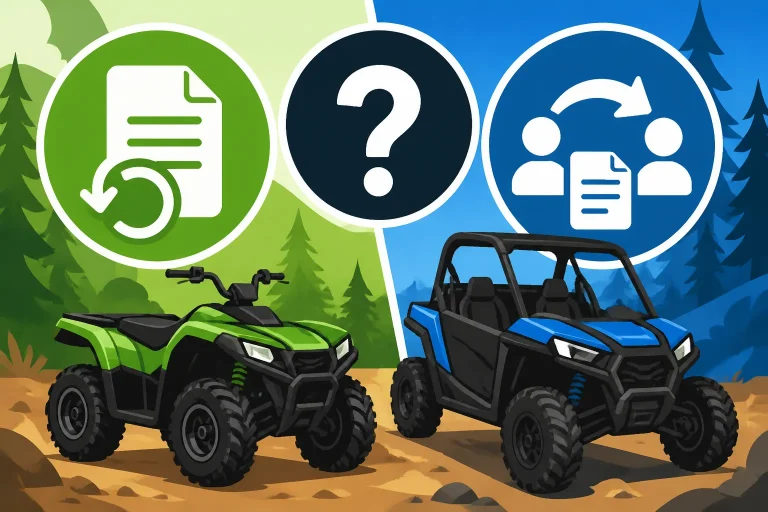
There may not be one universal replacement procedure for every permit type and purchase method. The safest approach is to recover the original record first, then ask the permit issuer what to do if the permit itself cannot be retrieved. Avoid buying another permit until you have checked the purchase record and confirmed whether a duplicate can be issued.
Use this sequence:
- Search your email and messages. Look for the purchase confirmation, receipt, or delivery message. Search by the trail permit name, the retailer or platform, and the date you bought it. Check junk, deleted, and archived folders as well.
- Sign in to the account used for the purchase. Look for order history, permits, passes, or downloadable documents. If someone else purchased the permit, ask that person to check the account.
- Check saved files and photos. Search your phone, computer, and cloud storage for a PDF, screenshot, or photo of the permit. A photo may help you locate the purchase information, but do not assume it will be accepted in place of the required permit format.
- Contact the seller or issuing office. Provide the purchaser’s name, the operator’s name, purchase date, permit type, and any order or confirmation number. Ask whether the original can be reprinted or reissued, and what proof of identity or purchase is needed.
- Ask what to carry while the issue is being resolved. Get a clear answer about whether a digital copy, receipt, or other record is acceptable at the trailhead. Do not rely on a guess or on another rider’s experience with a different permit.
- Keep the response with your riding documents. Save any instructions or confirmation the issuer provides, and make sure the permit itself is available in the required format before departing.
When you contact the seller or issuing office, make the request specific. “I lost my permit” is a start, but it may not be enough to identify the transaction. Include the permit type, operator name, purchase channel, approximate purchase date, and any receipt details you have. If you no longer have the original email, a payment record may help locate the order, although it may not prove that the permit was issued to you.
Ask whether the document can be reprinted, whether a replacement is available, and whether there is a replacement charge or other requirement. Policies and procedures can differ by issuer, and any current fee or deadline should be confirmed directly with the provider. A replacement should not be assumed to be free, automatic, or available at the trailhead.
The system’s non-transferable rule is important here. A permit belonging to a friend or family member is not a workaround for a lost permit issued to you. Georgia Permits Are Non-Transferable explains why a permit should not be passed between riders. Likewise, a lost permit is not the same as a permit that was never purchased; keep proof of the original purchase, but confirm whether it meets the trail system’s check-in requirements.
If you cannot recover the permit before leaving, contact the relevant issuer or ranger district before you travel. Ask whether the permit can be bought or reissued through an authorized channel on the day you plan to ride. Do not assume that a staffed office, kiosk, or trailhead will be open or able to solve the problem. Buying a Day Permit the Morning You Ride is useful if you are considering a new day permit rather than replacing an existing one.
If the permit is lost just before a ride
The most practical question is whether you can show a valid permit in the form the trail operator accepts. A receipt may establish that a purchase occurred, but it may not be equivalent to the permit. A screenshot may be convenient, but acceptance can depend on the permit’s terms and the way it is checked. Confirm the rule with the issuing organization rather than relying on a verbal assumption from a riding group.
If you have recovered a digital permit, check that the whole document is readable. Make sure the operator’s name and any identifying details are visible, and verify that the file opens without a data connection if cell service is limited. If the permit instructions require a printed copy, print it before leaving. Printing a Permit Before You Leave covers why preparing the document in advance is more reliable than trying to do it at the trailhead.
If you have only a receipt, contact the issuer and ask plainly: “Can I ride with this receipt while I wait for a replacement?” If the answer is no, or you cannot get a reliable answer, the cautious choice is to resolve the permit issue before riding. A receipt or payment-card entry is not a guarantee that a ranger or gate attendant will accept it as proof of authorization.
Remember that an operator permit covers the person named or otherwise associated with it, not every passenger or everyone riding in a group. Each operator should check their own permit status. One rider’s recovered document does not establish that the rest of the group is covered. Does a Passenger Need Their Own Georgia Forest Permit? helps distinguish operators from passengers.
A trail permit also does not ensure that a trail is open. Check access conditions before the trip, especially after storms or during seasonal closures. The permit is only one part of being ready to ride. Machine-width limits, trail designations, operating hours, and temporary closures still apply. At the trailhead, a ranger may check more than the permit, so have your identification and any other required documents available. See What a Ranger Checks at a Georgia OHV Trailhead.
If the lost document was a Georgia MPOHV registration rather than a forest permit, the replacement path is different. A registration plate or certificate relates to the machine and its registration record; a forest permit relates to trail access and the operator. Contact the appropriate registration office for registration-document questions, rather than asking a forest permit seller to replace a tag or certificate. Georgia MPOHV Registration Explained describes the separate registration system.
The same distinction matters if you ride at a private park. A park’s admission confirmation, wristband, waiver, or membership record is controlled by that park. A national forest permit will not replace a missing private park check-in credential. Contact the park directly and follow its current admission and waiver procedures.
Preventing another lost permit
A small amount of preparation can make a lost permit much less disruptive. Keep the original in the format the issuer requires, and maintain a backup that helps you recover it. A backup copy is a safeguard, not permission to ignore the official format or transfer rules.
Before riding:
- Save the purchase confirmation and permit file in a clearly named folder.
- Keep a copy in an email account you can access away from home.
- Print a backup if the permit instructions allow or require printing.
- Photograph or scan the permit for reference, while confirming whether that copy is accepted for check-in.
- Write down the purchase account or platform and the order number.
- Check that the operator named on the permit is the person who will ride.
- Store the permit with your identification and other ride documents, not loose in a gear bag.
- Recheck the permit and trail status before each trip, especially if the original purchase was a while ago.
A waterproof sleeve or document pouch can help protect a paper permit from mud and rain. If you shop for one through Amazon, check its dimensions and closure style so the permit stays readable and can be removed when required. A pouch is only a storage solution; it does not replace the permit or change the rules for presenting it.
Do not leave a permit attached to a machine if it can be removed, damaged, or taken when the vehicle is unattended. Keep it with the operator’s personal documents. If you ride with a group, each operator should manage their own permit rather than relying on one person to carry everyone’s paperwork.
When deciding whether to buy a new permit instead of pursuing a replacement, compare the available options with the planned ride. The cost and terms can vary, so check the provider for current figures and confirm whether a duplicate is possible first. A new purchase may be the practical answer when the original cannot be recovered in time, but it does not necessarily cancel or refund the lost permit. Georgia Permits Are Non-Refundable explains why it is worth checking the terms before making another purchase.
Keep the permit’s limits in mind as well. It authorizes only the access described by its terms; it does not make a closed trail open, authorize riding on unrelated roads, or override landowner restrictions. If you are unsure whether a specific place requires a different permit or permission, check with the land manager before setting out.
The simplest rule is to separate “I paid for a permit” from “I can show a valid permit that the trail operator accepts.” Recover the original record, ask the issuer about reprinting or replacement, and verify what form of proof is accepted before riding. That avoids an unnecessary second purchase when recovery is possible—and reduces the risk of reaching a trailhead without the document you need.
Disclaimer
This article is for general informational purposes only and does not constitute professional advice. Laws, prices and regulations vary by location and change over time. Consult a qualified professional for guidance on your specific situation.