Campfire Rules in Dry Weather
Campfire Rules in Dry Weather
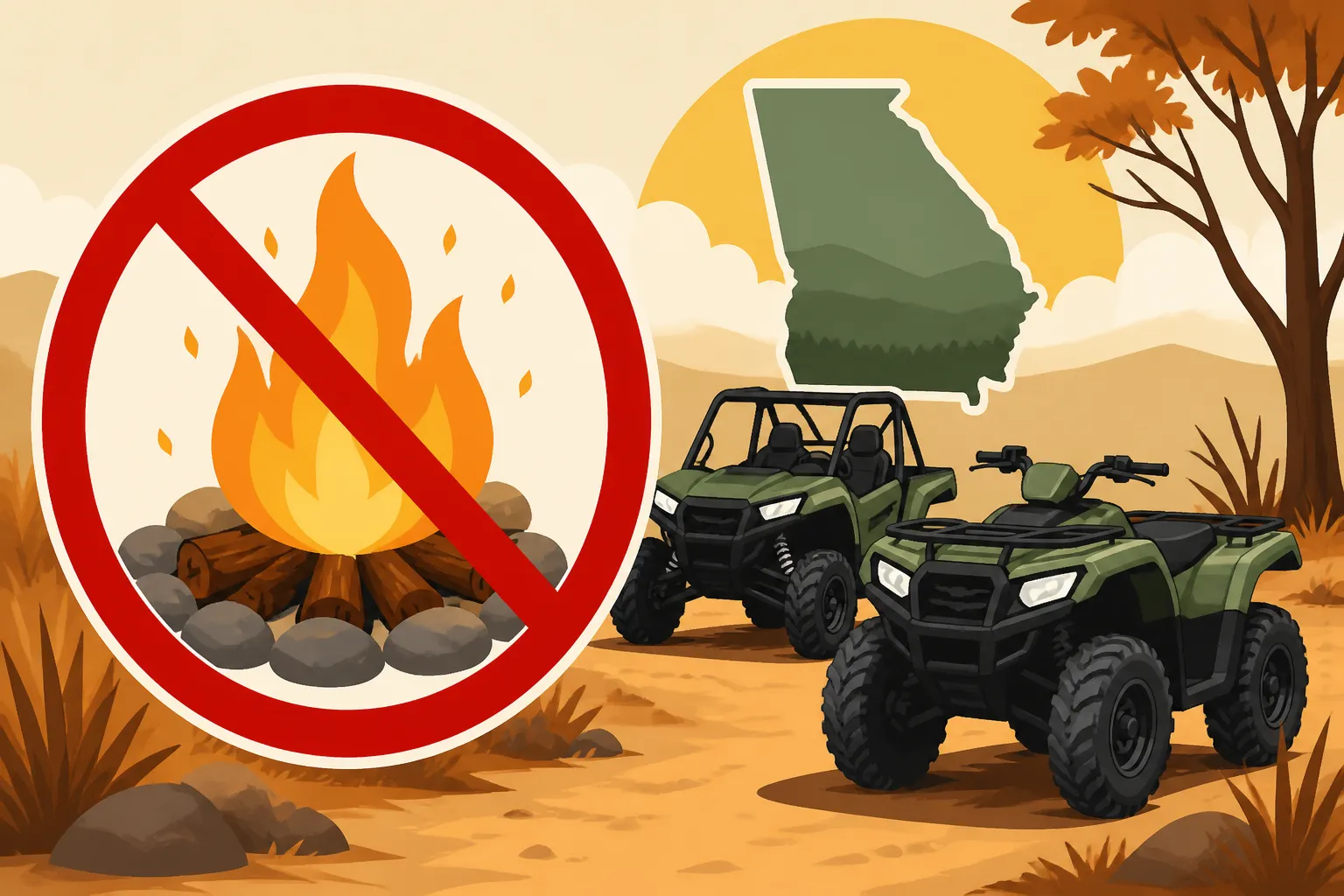
A campfire can seem like a natural part of an ATV or UTV weekend, but dry conditions can turn a small flame into a serious hazard. In Georgia, the rules depend on where you are camping, who manages the land and whether temporary fire restrictions are in effect. Check those details before you travel, then plan to skip the fire if conditions or instructions make it unsafe.
Check who manages the land before planning a fire
There is no single campfire rule that applies to every Georgia riding area. A national forest campsite, a private off-road park and a privately owned rural property can each have different requirements. The fact that a riding area allows campfires at one site does not mean they are allowed throughout the property or during every season.
Start by identifying the land manager for your campsite, not just the trail system you plan to ride. The manager may be a federal agency, a private park, a campground operator or a landowner. Look for the site’s current fire notices and camping rules, and contact the manager if the language is unclear. A posted fire ring is not, by itself, proof that a fire is currently allowed.
| Where you plan to camp | What to confirm before lighting a fire |
|---|---|
| National forest campground or riding area | Current forest fire restrictions, campground rules and whether fires are limited to designated rings |
| Private off-road park | Park-specific fire rules, permitted locations and any temporary closures or restrictions |
| Private land | The landowner’s permission and any applicable local fire restrictions |
| Dispersed or undeveloped site | Whether fires are allowed there at all, what equipment is required and whether restrictions are in effect |
For national forest riding, check current notices for the specific forest and recreation site. Rules can vary between areas, and temporary restrictions may change with weather and fire conditions. If your trip includes trail riding and a camp stay, check Georgia Fire Restrictions in Dry Months and Georgia Trail Conditions Before You Drive as part of your planning. A trail being open does not necessarily mean a campfire is permitted.
A permit for riding is not a campfire permit. A Georgia forest OHV permit applies to riding access and does not automatically grant permission to build a fire, camp anywhere or use a fire ring. Review Georgia National Forest Permits Are Per Operator for the riding permit distinction, then check camping and fire rules separately with the land manager.
Treat temporary restrictions as current instructions
Dry weather can lead to restrictions that apply even when a campsite has a permanent fire ring or fire grill. A restriction might prohibit open flames, limit fires to certain facilities or close a specific area. Follow the active notice for the site you are visiting rather than relying on what was allowed on a previous trip.
Check again close to departure. Conditions can change between the day you make a reservation and the day you arrive. If you cannot confirm whether a fire is allowed, don’t light one until the manager clarifies the rule. A battery lantern, headlamp or camp stove may be a practical alternative, but stoves can also be covered by separate restrictions. Confirm those rules too.
Private parks have their own policies, which can be more restrictive than a general assumption about camping. Read the posted instructions and ask staff about the exact location where you intend to camp. Georgia Private Park Camping Rules covers the kinds of site-specific policies to check before setting up.
Decide whether a fire is safe, even if it is allowed
Permission and safety are separate questions. A fire may be allowed under the site rules but still be a poor choice in windy, hot or exceptionally dry conditions. Dry leaves, pine needles, grass and low branches can carry flames beyond a fire ring. Wind can lift embers and carry them into brush or across a campsite.
Check the conditions where you are, not only the forecast for the nearest town. A sheltered valley, exposed ridge and campground clearing can feel very different. Pay attention to wind, vegetation, how dry the ground cover is and whether nearby brush is close to the fire area. If the wind is gusting, sparks are escaping or you cannot keep the fire contained, don’t light it or put it out.
Do not use a fire as a way to burn trash, packaging, food waste or yard debris. Those materials can produce harmful smoke, scatter burning pieces or leave debris behind. Use the campground’s designated disposal facilities and follow its instructions for food waste. Never assume that a fire ring makes burning refuse acceptable.
Use only an approved fire location
When fires are allowed, use the location and equipment the manager specifies. Keep the fire within the supplied ring or grill, and don’t move it, build a new ring or create an improvised fire site. Avoid placing a fire near dry vegetation, tents, vehicles, fuel containers or other equipment. Maintain the clearance required by the site; if no safe clearance is available, skip the fire.
Keep the fire small and manageable. A large fire needs more fuel, is harder to control and can send embers farther. Use only permitted firewood, and don’t cut standing trees or gather wood where the land manager prohibits it. Firewood rules can also help prevent pests and plant diseases from being spread, so follow local instructions rather than bringing wood from an unknown source.
Keep children and pets away from the fire area, and don’t leave the fire unattended. Assign one adult to watch it whenever it is burning. If the person supervising needs to leave, extinguish the fire first. Never leave a fire burning overnight, even if it appears to have settled into coals.
A campfire is not a safe place to refuel a machine, handle gasoline or store oily rags. Keep fuel and other flammable supplies well away from the fire. Make sure exhaust pipes and hot machine parts are not resting in dry grass or leaves after a ride. For related trail equipment checks, see Georgia Spark Arrestor Requirements; a spark arrestor does not make an open fire safe or replace campfire restrictions.
Bring what you need to put it out
Before lighting, make sure you have enough water and an appropriate tool to put the fire out. Don’t count on a nearby creek, campground spigot or another camper being available when you need it. A dedicated water container can help keep water close at hand; if you buy a collapsible carrier through Amazon or another retailer, test it for leaks before relying on it.
Have a shovel or another suitable tool ready if the site’s instructions call for one. Keep your phone accessible, but don’t rely on it as your only way to contact help; remote areas may have limited service. If fire conditions deteriorate, focus on getting people to safety and follow emergency instructions rather than trying to fight a fire beyond your ability.
Put the fire completely out and plan for a no-fire weekend
A fire is not out just because flames have disappeared. Coals and buried embers can remain hot and reignite when wind reaches them. Extinguish the fire before leaving the campsite, going to sleep or packing up for a ride.
- Stop adding fuel and let the fire burn down only while you can safely supervise it.
- Slowly pour water over the coals and ash, taking care to avoid steam and splatter.
- Stir the material with a shovel or other suitable tool so water reaches the hot parts underneath.
- Add more water and stir again. Repeat until the contents are cool, not merely covered in ash.
- Check around the fire ring for stray embers and dispose of ash only as the site directs.
If water is not permitted for a particular fire feature or the campground gives different instructions, follow those instructions. Don’t bury a fire to extinguish it; buried coals can stay hot and may surface later. Don’t pour ash into vegetation or leave warm material beside the ring. Ask the manager where cooled ashes belong if the site does not make that clear.
If you arrive and find an unattended or spreading fire, keep a safe distance and alert the campground staff or land manager. Call emergency services if there is immediate danger and you can do so safely. Avoid putting yourself in the path of smoke or flames, and don’t try to control a fire that is beyond what you can safely handle.
Keep the trip enjoyable without a campfire
A no-fire plan can make a dry-weather trip easier to manage. Pack headlamps and lanterns for lighting, and use only cooking equipment that the site currently allows. Bring food that can be eaten without cooking if restrictions might affect your plans. If a stove is essential, confirm that it is permitted under the current restrictions before relying on it.
If your campsite prohibits open flames, don’t try to get around the rule with a small ground fire, a portable fire bowl or a fire built inside a vehicle. Ask whether the restriction also covers specific cooking appliances. If there is no clear answer, choose a non-flame option.
A simple pre-trip check helps prevent a disappointing arrival:
- Confirm that overnight camping is allowed at your chosen location.
- Ask whether fires are allowed and whether they must be in provided rings.
- Check current restrictions shortly before leaving and again when you arrive.
- Find out whether cooking stoves have separate rules.
- Pack enough water and a suitable tool to extinguish a permitted fire.
- Be ready to enjoy the trip without a fire if conditions change.
For riders visiting multiple areas, don’t assume that one site’s rules apply to the next. A weekend itinerary may cross between a public riding area and a privately managed campground, each with its own fire policy. Check each overnight stop individually, and keep the manager’s contact information available in case notices change while you are on the road.
Disclaimer
This article is for general informational purposes only and does not constitute professional advice. Laws, prices and regulations vary by location and change over time. Consult a qualified professional for guidance on your specific situation.